How to Organize a Small Kitchen: A Step-by-Step Guide
Feeling overwhelmed by a small kitchen? You’re not alone—many people struggle with limited space and clutter. But don’t worry, organizing your tiny kitchen can make a huge difference in how it feels and functions.
To organize your small kitchen, start by decluttering—keep only essentials, sort items, and toss what you don’t need. Maximize storage using vertical shelves, wall hooks, and under-sink organizers.
Use labeled bins and drawer dividers to keep things tidy. Create dedicated zones for cooking, prep, and storage, placing frequently used items within easy reach.
Adopting these steps helps make your kitchen functional and clutter-free. Keep going to uncover smart tips for efficient space-saving and daily maintenance.
Key Takeaways
- Declutter by keeping only essential items and regularly reassess to prevent kitchen clutter buildup.
- Maximize vertical space with wall shelves, hooks, magnetic strips, and tiered stands for efficient storage.
- Organize cabinets using labeled, stackable containers and pull-out shelves for easy access and visibility.
- Use drawer dividers and trays to separate utensils and keep drawers neat and customizable.
- Create distinct kitchen zones for cooking, prep, and storage, with essentials within easy reach to streamline your workflow.
Declutter Your Small Kitchen Before Organizing
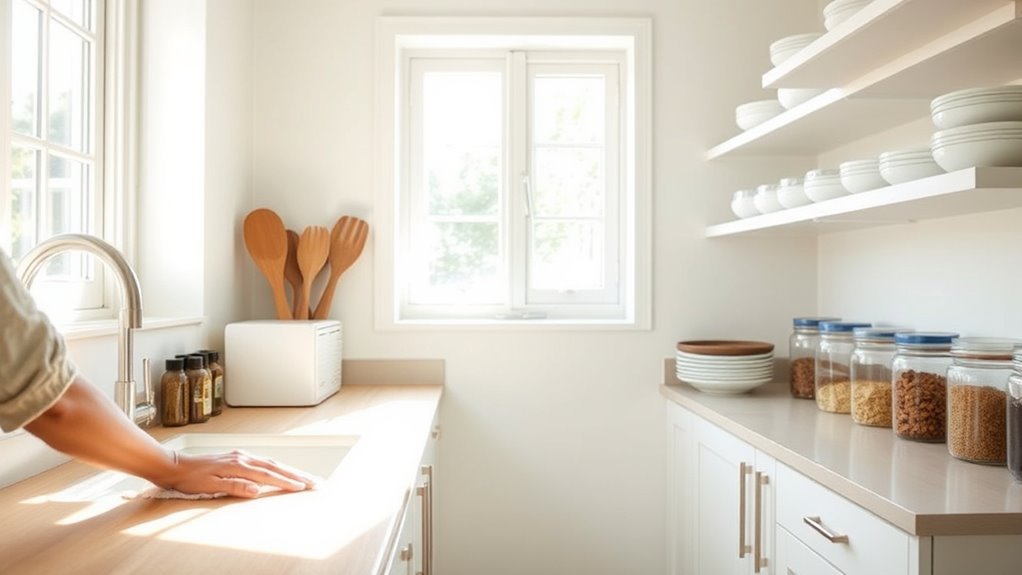
Before you start organizing, it’s important to declutter your small kitchen to create a clean slate. Focus on identifying your essentials—keep only what you use and love regularly.
Begin by decluttering your small kitchen, keeping only the essentials you regularly use and love.
Use simple decluttering methods like sorting items into keep, donate, or toss piles to stay aware of clutter. Adopting a minimalist mindset helps you optimize space and avoid overcrowding.
Next, think about storage solutions that also look nice, like attractive jars or baskets. This way, you maintain style without sacrificing practicality.
Use organization hacks like grouping similar items together and adding drawer dividers to maximize space. Regularly reassess what’s in your kitchen to prevent clutter from piling up.
Maximize Vertical Storage in Your Small Kitchen
When you maximize vertical storage in your small kitchen, you reveal valuable space that often goes unused. Start by installing wall-mounted shelves with sturdy brackets to keep essentials within reach without cluttering countertops.
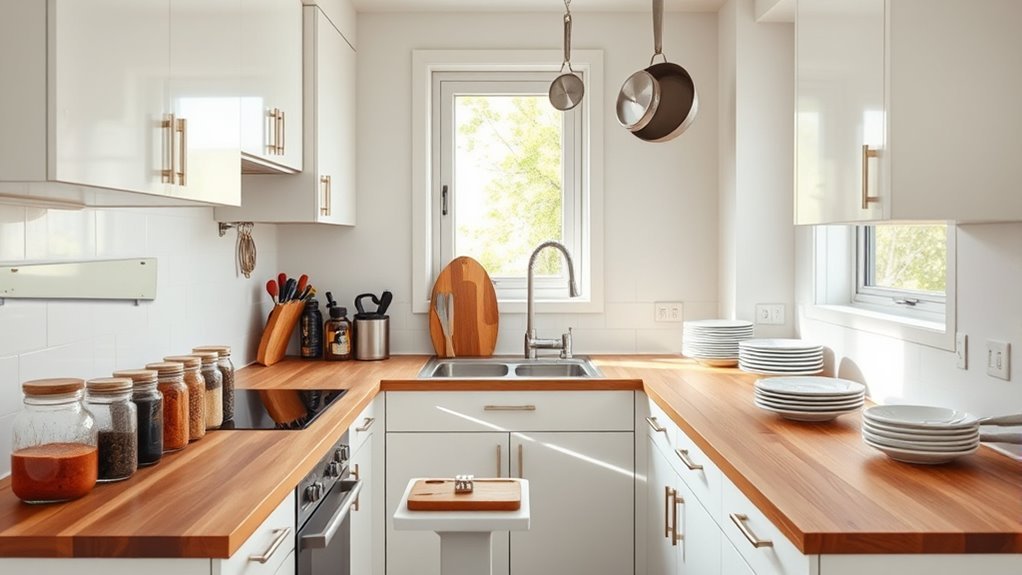
Use hanging racks and kitchen hooks to store pots, pans, and utensils, freeing up cabinet space. Magnetic strips are perfect for knives or metal tools, keeping them accessible and organized.
Consider pegboard storage; it’s customizable and great for hanging various kitchen gadgets. Ladder shelves add height and style, offering multiple levels for baskets and vertical planters that bring freshness and function.
Tiered stands efficiently stack spices or fruit, making good use of vertical space on countertops or shelves. By thinking vertically, you turn bare walls and empty corners into practical storage zones, making your kitchen feel larger and more organized without sacrificing style or convenience.
Use Multi-Functional Storage Furniture and Appliances
Although small kitchens can make storage tricky, choosing multi-functional furniture and appliances helps you maximize space without sacrificing utility. Opt for space-saving furniture like foldable tables or kitchen islands with built-in storage. These add prep space and neatly stow utensils or cookware.
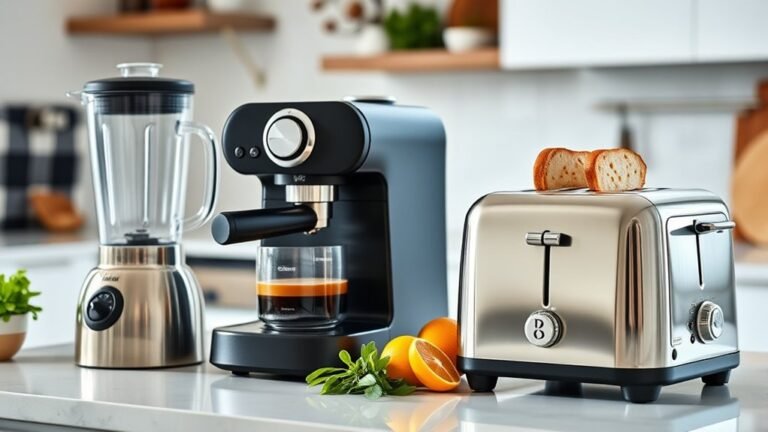
Versatile appliances, such as an air fryer that doubles as a convection oven, help reduce clutter by replacing multiple devices. You’ll save counter space and keep essentials within easy reach.
Here’s a quick look at practical multi-functional options:
| Item | Functionality |
|---|---|
| Foldable kitchen table | Dining surface + storage space |
| Kitchen island with drawers | Prep area + hidden storage |
| Air fryer & convection oven | Cooking + baking |
| Refrigerator with built-in water dispenser | Cooling + hydration |
Zone Your Kitchen for Cooking, Prep, and Storage
When you’re setting up your kitchen, it’s a good idea to create distinct zones for cooking, prepping, and storage. Think of it like giving each task its own little neighborhood—makes everything flow much more smoothly. Plus, when everything has a place, you won’t have to hunt around for that spoon or spice last minute.
And hey, don’t forget about using vertical storage! It’s a game-changer, especially in small kitchens. Shelves, hooks, or hanging racks can help you make the most of every inch, so your space stays organized and clutter-free.
Define Functional Kitchen Zones
Dividing your small kitchen into three main zones—cooking, prep, and storage—makes everything easier and more efficient. Take a look at your layout to find the best spots for each zone.
Place your cooking zone near the stove and oven so pots, pans, and utensils are within easy reach. For prep, pick a clear countertop area close to the sink for washing and chopping.
Use smart storage options like pull-out drawers and vertical racks to make the most of your space. Keep ingredients and cookware organized to save time and reduce clutter.
Focus on grouping related items together to improve your workflow. These tips will help you create a functional kitchen where everything has its place.
Optimize Workflow Efficiency
When you zone your kitchen for cooking, prep, and storage, you make your workflow smoother and avoid unnecessary steps. An efficient layout groups related tasks together so you spend less time moving around.
Create clear zones: keep cooking tools near the stove, prep supplies close to the counter, and storage items within easy reach. This setup helps you focus on your task without interruptions.
| Zone | Typical Items |
|---|---|
| Cooking | Pots, pans, spatulas, stove |
| Prep | Knives, cutting boards, mixing bowls |
| Storage | Pantry goods, dishes, small appliances |
| Cleaning | Sink, dish soap, trash bin |
| Utensils | Forks, spoons, knives |
Planning your kitchen workflow with these zones makes cooking more efficient and enjoyable.
Maximize Vertical Storage
Maximizing vertical storage transforms even the smallest kitchens into organized, functional spaces. You can start by installing pegboards or wall hooks to hang utensils and pots, freeing up drawer space. Magnetic strips offer a sleek way to store knives and metal tools within easy reach.
Ladder shelves and vertical racks utilize unused wall corners, perfect for stacking spices or cookbooks. Shelf risers double your cabinet capacity by creating extra layers for dishes or pantry items. Hanging baskets add accessible storage for fruits or veggies without sacrificing counter space.
Don’t forget over-the-door organizers—they’re ideal for storing cleaning supplies or extra snacks behind cabinet doors. By using these vertical solutions, you’ll zone your kitchen efficiently for cooking, prep, and storage, making every inch count.
Choose Space-Saving Containers for Pantry Staples
Because pantry space is limited in a small kitchen, choosing space-saving containers can make a big difference. You’ll want containers that not only save space but also keep your pantry organized and food fresh. Consider these top tips:
- Choose the right container sizes. Opt for stackable jars and clear bins that fit your pantry shelves perfectly. This way, you maximize every inch without overcrowding.
- Prioritize airtight seals. To keep your food fresh, pick containers that seal tightly. This helps prevent spills and keeps ingredients like flour or sugar from clumping.
- Use pantry labels wisely. Label each container clearly. This makes it easy to find what you need quickly and keeps your pantry looking tidy.
Look for decorative storage options that blend style with function. Don’t overlook budget-friendly choices—you can find affordable containers that work great without breaking the bank. Choosing the right containers transforms your pantry into an efficient, attractive space.
Organize Cabinets With Bins and Pull-Out Shelves
Transform your cabinets into efficient storage zones by adding bins and pull-out shelves. These upgrades make organization simple by maximizing every inch of space. Use bins to group similar items like snacks, baking supplies, or cleaning products so you can grab what you need quickly without rummaging.
Clear or labeled bins help you see contents at a glance, keeping things tidy and accessible. Pull-out shelves make deep cabinets more user-friendly by letting you slide items out instead of reaching blindly. They’re perfect for pots, pans, and small appliances that often get lost in the back.
Clear bins and pull-out shelves reveal contents instantly and simplify access to pots, pans, and appliances in deep cabinets.
Installing pull-out shelves also stops items from stacking too high, which can lead to clutter. With this setup, you’ll have an organized kitchen where everything has a designated spot. It makes cooking and cleaning way easier.
Prioritize cabinet organization with these smart tools to turn your small kitchen into a functional, stress-free space.
Optimize Drawer Space With Dividers and Trays
Make the most of your drawer space by adding dividers and trays that keep everything neat and easy to find. Good drawer organization simplifies your kitchen routine and prevents clutter. When you use utensil separation trays, each tool has its spot, making it quicker to grab what you need.
Here’s how to optimize your drawers effectively:
- Measure your drawers to pick dividers and trays that fit snugly, maximizing every inch.
- Separate utensils by type—forks, knives, spoons, and specialty tools—to keep things orderly and avoid mixing.
- Use adjustable dividers or modular trays so you can customize your layout as your kitchen tools change.
This method not only boosts efficiency but also protects your utensils from damage by reducing jostling. With proper drawer organization, you’ll enjoy a tidier space and faster access to your kitchen essentials.
Keep Frequently Used Items Within Reach in Small Kitchens
Keep your daily essentials right where you can grab them easily—that way, you won’t waste time searching for things when you’re in a hurry. Think about using vertical storage options; they’re great for freeing up counter space and keeping everything within sight so you don’t forget where you put things.
It’s also a good idea to set up specific zones for the stuff you use most often—like your cooking tools and ingredients. This little tweak can really help make your cooking process smoother and more enjoyable.
Prioritize Daily Essentials
In a small kitchen, having three to five daily essentials within easy reach can save you time and reduce clutter. To make the most of your space, focus on identifying what you truly need and keep those items where you use them most.
This helps prevent overcrowding and keeps your workflow smooth. Concentrate on these three categories:
- Cooking tools like spatulas, knives, and spoons you use every day.
- Staple ingredients such as salt, pepper, oil, or your favorite spices.
- Everyday dishes like plates, mugs, or glasses you reach for regularly.
Use Vertical Storage
Three key vertical storage solutions can transform your small kitchen by maximizing space and keeping frequently used items within easy reach. Start with wall-mounted racks and magnetic strips to store utensils, knives, or spice jars, freeing up counter space.
Use pegboard organizers for customizable storage, perfect for hanging pots or small tools. Shelf risers and vertical dividers help you stack plates, pans, and cutting boards neatly inside cabinets.
Incorporate hanging baskets or corner shelves to utilize unused wall corners for fruits or pantry items. Ladder shelves provide open storage for frequently accessed goods, while over-the-door storage adds hidden space for cleaning supplies or snacks.
Stackable bins keep smaller items organized vertically inside cupboards, making everything visible and accessible. These solutions make the most of your vertical space and keep your small kitchen tidy.
Designate Easy Access Zones
Maximizing vertical space is just one part of making your small kitchen work efficiently. To really save time and effort, you should create easy access zones for your most-used items. This way, you can grab what you need without digging through clutter.
Set up zones based on how often you use things. For example, keep coffee mugs, utensils, and spices near your prep area for daily use.
Store pots, pans, and cooking oils close to the stove in your cooking zone.
Place dish soap, sponges, and towels near the sink in your cleaning zone.
Optimize Under-Sink and Corner Storage
You can turn your under-sink and corner spaces into super functional storage areas by adding custom organizers and pull-out shelves. Start with under-sink solutions designed to maximize limited space while fitting around plumbing. Sliding baskets, tiered racks, or adjustable shelves make it easy to store cleaning supplies neatly and keep everything within easy reach. Using clear containers or labels helps you spot what you need quickly.
For corner cabinets, install lazy Susans or corner carousel units to make use of those awkward, deep spaces. These rotating organizers let you access items easily without digging through clutter. Alternatively, think about pull-out trays or swing-out shelves that bring the contents forward, saving you time and effort.
Daily Habits to Keep Your Small Kitchen Organized
Want to keep your small kitchen looking tidy? One easy trick is to get into the habit of decluttering right after you finish cooking. It’s amazing how much of a difference a quick tidy-up can make!
And don’t forget to clean as you go. That way, messes don’t pile up and become a bigger headache later on. It’s a simple habit that saves you time and keeps everything looking neat.
Just a few daily routines like these can really help maintain order and make your kitchen a more enjoyable space to cook and hang out in.
Declutter After Cooking
Clear your countertops and put away ingredients right after cooking to keep your small kitchen organized. This simple step helps manage clutter and makes sure your space is ready for the next meal.
Good habits include tidying up kitchen tools and containers immediately, which improves space efficiency and cuts down on mess buildup.
To make daily cleaning easier, store frequently used tools where you can reach them easily with smart storage solutions.
Dispose of or recycle packaging right away to prevent clutter from piling up.
Wipe down surfaces regularly to keep your workspace clean and inviting.
Clean As You Go
Maintain momentum in your small kitchen by adopting the “clean as you go” habit. This approach makes cleaning part of your cooking routine, so tidying up becomes second nature. It helps prevent clutter buildup and saves you time after meals.
Here’s a simple guide for daily cleaning routines:
| Task | When to Do It |
|---|---|
| Wipe counters | After prepping |
| Wash utensils | Immediately after use |
| Clear sink | Throughout cooking |
| Sweep floor | Daily or as needed |
| Organize pantry | Weekly |
Frequently Asked Questions
How Do I Budget for Small Kitchen Organization Supplies?
You can budget for small kitchen organization supplies by focusing on storage solutions that meet your needs without overspending. Start by making a list of what’s essential for your space.
Then, do some research online or check out discount stores for budget-friendly options. Look for multi-purpose organizers—they save money and free up space.
Set a clear spending limit and keep track of your purchases so you don’t go overboard. Remember, DIY projects can be a stylish and affordable way to create storage solutions too.
What Are the Best Lighting Options for Small Kitchens?
You might think adding lights will clutter your small kitchen, but under-cabinet lighting is sleek and saves space while brightening work areas.
Pendant lights above your island or dining spot add style without overwhelming the room. They create a focal point and improve ambiance.
Combining these options gives you layered lighting that’s both functional and visually appealing, making your small kitchen feel bigger and more inviting.
How Can I Childproof My Small Kitchen Effectively?
To childproof your small kitchen effectively, focus on child safety by securing cabinets with childproof locks and using high storage solutions to keep dangerous items out of reach. Store sharp tools and cleaning supplies in locked or raised spaces.
Use corner protectors on counters and keep small appliances unplugged when not in use. These steps help create a safer environment while making the most of your limited space.
What Colors Make a Small Kitchen Appear Larger?
Think of light colors as your kitchen’s open window. They bring in brightness and make the space feel bigger.
You should go for whites, soft blues, or pale grays because these colors visually expand your room. Color psychology shows they work well for this.
These shades use tricks like reflecting light and creating airy vibes to make your small kitchen seem larger.
Avoid dark hues. Instead, choose colors that symbolize openness and calm. This way, your kitchen feels welcoming and spacious.
How Often Should I Deep Clean a Small Kitchen?
You should deep clean your small kitchen about once a month to keep everything hygienic and prevent buildup. Using a kitchen cleaning checklist makes sure you don’t miss any spots, like appliances, countertops, and inside cabinets.
If you cook a lot or have kids and pets, you might want to clean more often—every two weeks can work well. Regular deep cleaning helps keep your kitchen fresh and organized, making daily chores easier and more enjoyable.
Conclusion
As you declutter and make the most of every nook, your small kitchen begins to come together like a perfect puzzle. Picture vertical shelves rising alongside multi-functional furniture, giving you extra storage without taking up much space.
Drawer dividers slide neatly into place, keeping utensils and small items organized. Space-saving containers help maximize every inch and keep things tidy.
Create zones for cooking, prepping, and storing that blend seamlessly with your daily routines. When everything has its place, your small kitchen feels more spacious and efficient.
Keep frequently used items within arm’s reach and optimize those tricky corners. This way, your small kitchen stays organized and feels cozy, turning space into a well-oiled, small-space kitchen.