How to Get Rid of Kitchen Ants: A Step-by-Step Guide
Dealing with kitchen ants can be really frustrating, especially when they keep invading your space and messing up your clean counters. If you’re tired of seeing tiny trails and wondering how to stop them, you’re not alone. Many people struggle with these persistent pests, but the good news is, there are simple steps you can take to get rid of them for good.
To get rid of kitchen ants, start by identifying their trails and entry points near windows, doors, or moist areas.
Clean your kitchen thoroughly, wiping surfaces and storing food in airtight containers to remove their food sources.
Use natural repellents like peppermint oil or vinegar and place safe baits carefully near trails.
Seal cracks with silicone caulk to block re-entry.
Maintain daily cleaning habits to keep ants away.
For tougher infestations, there’s more to investigate on tackling persistent ants effectively.
Key Takeaways
- Identify the ant species and find their nests near sinks, cabinets, or behind appliances for targeted control.
- Find and seal entry points like cracks and holes around windows, doors, and baseboards to block ant access.
- Clean kitchen surfaces, store food in airtight containers, and remove crumbs and spills daily to eliminate food sources.
- Use natural repellents like peppermint oil and place safe bait stations near ant trails, away from food areas.
- Maintain daily cleaning habits and seal gaps to prevent future invasions, and seek professional help if the problem persists.
Identify the Kitchen Ants Invading Your Home
Before you can effectively eliminate kitchen ants, you need to identify the type of ants invading your home. Different ant species prefer various kitchen habitats, so knowing which one you’re dealing with helps target your approach.
For example, odorous house ants often nest near moist areas like sinks, while carpenter ants favor damp wood around cabinets. Pharaoh ants thrive in warm, hidden spots such as behind appliances.
By observing where you spot ants most often—whether near food crumbs, water sources, or cracks—you can narrow down the species. Each ant behaves differently, from their nesting habits to their food preferences, so recognizing these patterns is key.
Observing ant locations and behaviors helps identify species and tailor effective control strategies.
Take note of their size, color, and movement to help with identification. Once you know the specific species and their preferred kitchen habitats, you’re better equipped to choose the right treatments and prevent further infestations.
How to Find Ant Trails and Entry Points
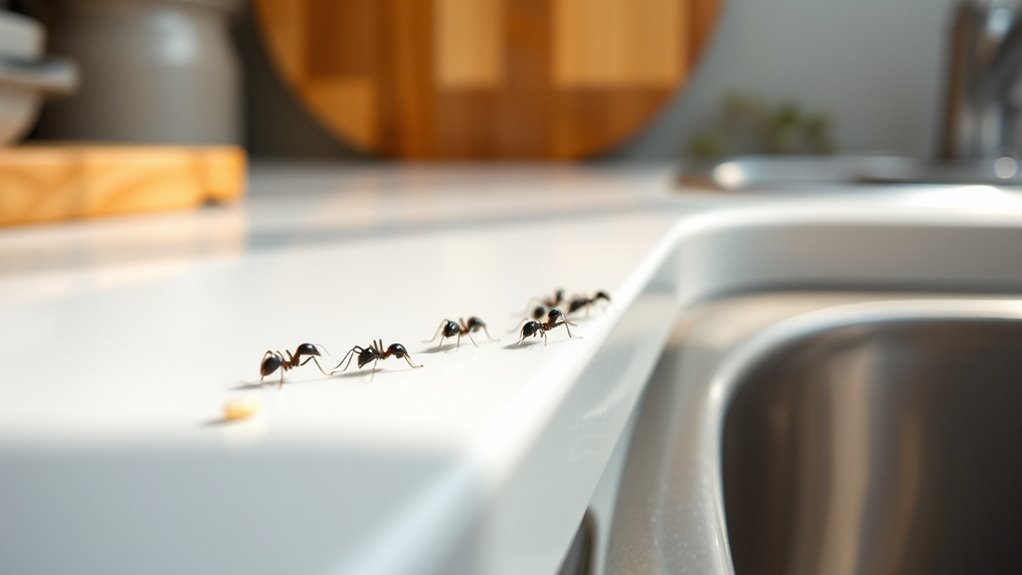
To find ant trails and entry points, just observe where the ants usually hang out. They often follow the same paths along baseboards, countertops, and near food sources, so keep a close eye on those areas. It’s pretty interesting to watch their movements—you might notice a line of ants heading in and out.
Next, look for tiny holes or cracks around windows, doors, and walls—that’s where they’re sneaking inside. Sometimes, these entry points are super small, almost like pinholes, so take your time inspecting. Spotting these trails and entry spots is key because it helps you figure out exactly where they’re getting in, so you can block their access and stop the invasion before it gets worse.
Identifying Common Ant Paths
When you want to tackle kitchen ants effectively, you need to identify their common paths first. Knowing how ants behave helps you spot their trail patterns easily.
Ants usually follow the same routes to find food and water, creating visible lines or shiny dirt paths on floors, walls, and counters. Check areas where crumbs, spills, or moisture gather, as these attract ants and influence their routes.
You’ll often see trails leading from hidden nests toward food sources. Watch for changes during different times of day, since ants might switch routes based on activity.
Locating Entry Holes
Although spotting ant trails helps, finding their entry holes is crucial to stopping them at the source. Ants follow established paths, so tracking these trails backward can lead you right to where they’re getting in.
Look for tiny cracks in walls, gaps around windows, doors, or plumbing fixtures where ants might sneak through. Pay special attention to areas with moisture or food residues, as these attract ants.
You can use a flashlight to spot small holes or watch for ants coming and going during peak times, usually early morning or late afternoon. Once you find these entry points, seal them properly to prevent more ants from invading your kitchen.
Why Do Kitchen Ants Invade?
Because ants are always on the lookout for food and water, your kitchen becomes a prime place for them to invade. Their behavior centers around efficient foraging, where worker ants leave scent trails to guide others to good food sources.
Your kitchen offers easy access to crumbs, spills, and moisture, all of which attract ants searching for nourishment. Their colony structure supports this organized search, with scouts exploring nearby nesting spots and sharing their findings with the colony.
Seasonal patterns also influence ant activity. During warmer months or dry spells, they tend to search indoors more, drawn by the moisture levels. They prefer nesting close to reliable food and water sources, often near plumbing or warm appliances.
Understanding these factors helps explain why ants invade your kitchen. Their survival instincts drive them to exploit your home’s resources efficiently.
How to Clean Your Kitchen to Remove Ant Food Sources
Start by wiping down all your kitchen surfaces to get rid of crumbs and spills that attract ants. Keeping everything clean is key to cutting off their food supply. Pay special attention to spots where food tends to gather, like countertops, sinks, and floors.
Next, work on better food storage habits. Put all food in airtight containers so ants can’t get to it. Don’t forget to seal pet food bags and clean up any spills right away.
To keep your kitchen ant-free, remember to take out the trash regularly and keep the bins clean. Avoid leaving dirty dishes in the sink overnight. And make it a habit to sweep and mop the floors daily to remove hidden food residues.
Using Natural Remedies to Repel and Kill Kitchen Ants
If you’re looking to keep those pesky kitchen ants at bay without reaching for harsh chemicals, there are some pretty effective natural remedies you can try. Things like essential oils, vinegar solutions, and homemade ant baits can do the trick. Let’s take a quick look at how each of these works to help you keep your kitchen ant-free in a safe and natural way.
Essential Oils That Work
When ants invade your kitchen, essential oils can be a natural and effective way to repel and eliminate them. These oils have strong scents that ants find overwhelming and unpleasant.
You can apply diluted oils around entry points, countertops, and pantry shelves to keep ants away without using harsh chemicals. It’s a simple, eco-friendly solution.
Here are three essential oils that work well:
- Peppermint oil: Disrupts ant trails and acts as a strong deterrent.
- Tea tree oil: Has antimicrobial properties and helps repel ants.
- Lemon oil: Masks scent trails and makes the environment less inviting for ants.
Vinegar Solutions For Ants
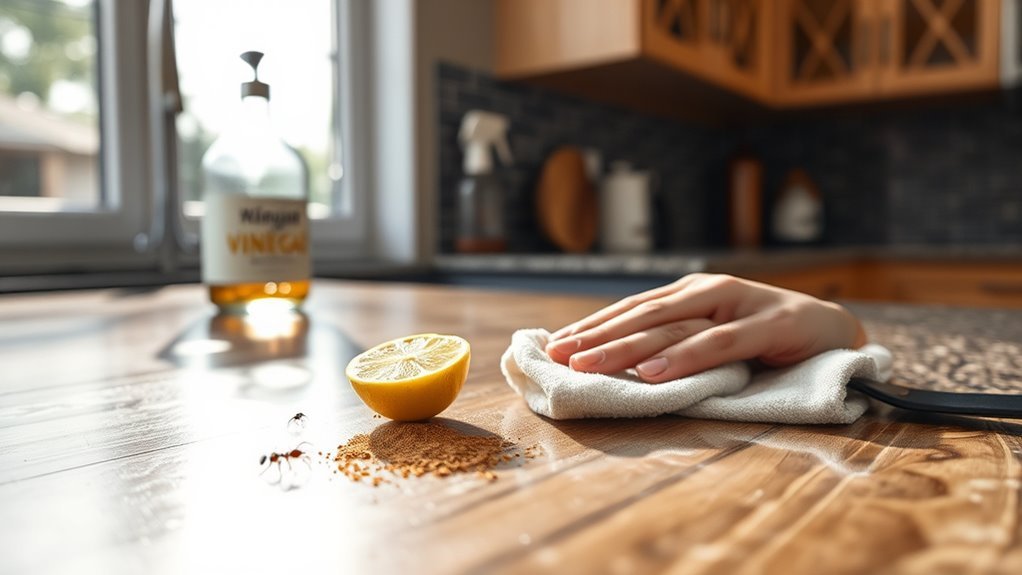
Besides essential oils, vinegar is another powerful natural remedy to keep ants away in your kitchen. You can make simple vinegar mixtures by mixing equal parts white vinegar and water in a spray bottle.
Spray this solution on ant trails, countertops, and entry points to disrupt their scent trails and stop them from coming back. The strong smell of vinegar is unpleasant to ants and helps keep them at bay.
Plus, vinegar is great for cleaning surfaces and removing food residues that attract ants. Using this mixture regularly not only repels ants but also naturally sanitizes your kitchen.
Just be careful not to spray directly on food or delicate surfaces. Incorporating this easy vinegar solution into your routine is a safe, affordable, and chemical-free way to control kitchen ants effectively.
Homemade Ant Baits
Although ants are persistent, you can outsmart them with homemade ant baits that use natural ingredients to attract and eliminate them. Start by experimenting with recipes that combine sweet and protein elements to appeal to different ant preferences.
Focus on baiting locations where ants are most active for the best results. You can create simple homemade traps with ingredients like sugar solutions or protein baits mixed with borax, which ants carry back to their colony.
Try these effective homemade baits:
- Sugar and borax solution to attract sugar-loving ants
- Peanut butter mixed with borax for protein-seeking ants
- Honey and baking soda traps for general attracting ants
Place your baits near trails, entry points, and kitchen corners to boost your chances of getting rid of those kitchen ants.
Using Ant Baits Safely in Your Kitchen
Since ant baits are meant to attract and poison ants, you’ll want to place them carefully so kids and pets can’t reach them. Different types—gel, liquid, or solid—work best in different spots, so pick what fits your kitchen layout.
Always read the label to understand each bait’s risks and instructions. For safe placement, put baits near ant trails, behind appliances, or under sinks—areas kids and pets can’t easily access.
Avoid placing baits on open counters or where food is prepared. Using small bait stations can help contain the poison and prevent accidental contact. Check and replace baits regularly to keep them effective.
Seal Cracks to Stop Kitchen Ants Returning
First things first, take a good look around your kitchen to spot any cracks or gaps where those ants might be slipping in. Sometimes they’re sneaky and hide in tiny little openings you might not notice at first. Once you’ve found these entry points, grab a strong sealant like silicone caulk and seal them up tight. That way, you’re blocking their way in completely. sealing these spots not only keeps your kitchen ant-free but also helps prevent them from coming back in the future.
Identify Entry Points
Finding and sealing entry points is key to stopping kitchen ants from coming back. Knowing how ants behave helps you find where they’re sneaking in.
They often enter through tiny cracks and gaps, especially if there’s food or moisture attracting them because of poor kitchen cleanliness. To find these entry points, start by inspecting baseboards, window frames, and door thresholds for small cracks.
Follow ant trails back to their source and see where they disappear. Also, check around plumbing and electrical outlets, as gaps can form there too.
Use Effective Sealants
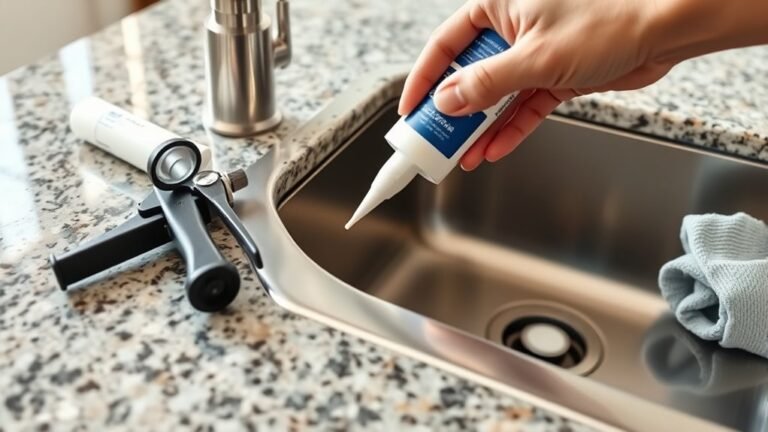
Once you’ve identified where ants are sneaking into your kitchen, the next step is to block those entry points with the right sealants. Choose the type that works best for your surfaces and cracks, like silicone for gaps around sinks and windows or acrylic caulk for smaller crevices.
Before applying, make sure to clean the area thoroughly so the sealant sticks properly. Use a caulking gun or squeeze tube for precise placement, and smooth the sealant with a putty knife or your finger to fill gaps completely.
Pay special attention to baseboards, cabinet joints, and any cracks in the wall. By mastering these application techniques and picking the right sealant, you’ll create a strong barrier that keeps ants out and helps keep your kitchen pest-free.
Daily Habits to Keep Your Kitchen Ant-Free
Although ants may seem persistent, adopting simple daily habits can keep your kitchen ant-free. Preventive measures focused on kitchen cleanliness are your first line of defense. You don’t have to overhaul your routine—just stay consistent with a few key actions.
Wipe down countertops and sweep floors every day to remove crumbs and spills that attract ants.
Store all food in airtight containers to prevent odors that lure ants inside.
Take out the trash regularly and clean bins to eliminate potential food sources.
Troubleshooting Persistent Kitchen Ants
Keeping up with daily cleaning habits usually keeps ants at bay, but sometimes they just won’t quit. If you notice persistent kitchen ants, consider their behavior and seasonal patterns.
Ants often come into homes during certain seasons when outdoor food sources are scarce, so they start exploring your kitchen more aggressively.
Pay attention to where ants trail and nest; they follow scent paths you can disrupt by cleaning with vinegar or soapy water.
If your usual methods don’t work, check hidden spots like behind appliances or inside cabinets where crumbs or moisture might attract them.
Remember, ants can build multiple nests, so removing one colony might not solve the problem completely.
Try sealing entry points and keeping the area dry to prevent new nests from forming.
Persistence is key—adjust your strategy based on ant behavior and seasonal changes to regain control of your kitchen.
When to Call Pest Control for Kitchen Ant Problems
If you’ve tried multiple DIY methods and still see ants swarming your kitchen, it might be time to call pest control. Recognizing the signs that an infestation has become severe can help you decide when professional help is needed.
When DIY methods fail and ants swarm your kitchen, it’s time to consider professional pest control.
Persistent trails, multiple ant species, or seeing ants inside walls often mean you should call in the pros. These signs show the problem is more serious than it seems.
Here are some key signs to consider pest control options:
- Ants keep coming back despite cleaning and baiting efforts.
- You see large numbers of ants or nests inside your home.
- DIY treatments haven’t reduced the infestation after several weeks.
Calling pest control ensures a thorough inspection and targeted treatment plan. Professionals can identify the ant species and use methods that aren’t available to consumers.
Don’t wait too long, as infestations can spread quickly and become harder to manage on your own. If you’re unsure, reaching out to pest control can save you time and frustration.
Frequently Asked Questions
Are Kitchen Ants Harmful to Humans or Pets?
Kitchen ants aren’t usually harmful to humans or pets, but their behavior can still cause issues. They invade your space searching for food, contaminating surfaces as they go.
You’ll want to focus on pest prevention to keep them out, like sealing cracks and cleaning up crumbs. While they don’t bite or spread diseases seriously, their presence can be annoying and unsanitary.
It’s best to manage them quickly to keep your kitchen clean and safe.
Can Kitchen Ants Contaminate Food?
Imagine tiny ants marching across your kitchen counter, their behavior driven by the search for food sources. Yes, these kitchen ants can contaminate your food as they crawl over crumbs, spills, and even stored items.
They carry bacteria picked up from dirty surfaces, spreading germs to your snacks and meals. You don’t want to risk your health by ignoring their presence. These little invaders can quickly turn your kitchen into a contamination zone.
Do Ants Bite or Sting Inside the Kitchen?
Ants inside your kitchen generally don’t bite or sting, but some species might pinch if they feel threatened.
Understanding ant behavior helps you realize they’re more interested in food than attacking you. To prevent any uncomfortable encounters, focus on maintaining good kitchen hygiene.
Clean up crumbs, store food properly, and seal entry points. This not only deters ants but also keeps your kitchen safer and more pleasant to use.
How Long Do Kitchen Ants Live?
Kitchen ants usually live for a few weeks to a few months, depending on their role and species. Worker ants, the common pests you see in kitchens, tend to have a shorter lifespan, often around one to three months.
Queens, on the other hand, can live for years and keep producing workers. Knowing how long they live helps you understand how quickly their populations can grow.
This also shows why ongoing control measures are necessary to keep an infestation under control.
Can Kitchen Ants Spread to Other Rooms in the House?
Yes, kitchen ants can definitely spread to other rooms in your house. They follow ant trails to find new food sources, so if they come across crumbs or spills elsewhere, they’ll quickly move in.
You’ll notice their trails extending beyond the kitchen as they search for more to eat. To stop this, clean up food messes promptly and block their entry points to prevent those trails from leading ants into other areas.
Conclusion
Now that you know how to spot, clean, and seal your kitchen against ants, it’s time to take action. Remember, ants are like tiny invaders. Once you cut off their food sources and entry points, their kingdom crumbles.
Keep up with daily habits to prevent re-infestation. Don’t hesitate to call in professionals if the problem persists. Your kitchen can be a fortress again, free from these persistent pests.
After all, a clean kitchen is the first step toward peace at home. Using effective ant control methods, you can enjoy a pest-free space once more.