Electric Stove With Coils Guide: What to Know Before You Buy
Are you tired of struggling with inefficient cooking appliances or constantly replacing parts on your stove? You’re not alone—many people find choosing the right stove overwhelming.
If you’re considering an electric stove with coils, it’s worth understanding what makes them a popular choice.
Electric Stove With Coils Guide: What to Know Before You Buy
If you’re considering an electric stove with coils, know they heat quickly and offer durable, budget-friendly cooking with easy part replacement.
They provide good temperature control but may have uneven heat and slower cooling.
Choose quality coil material and flat-bottom cookware for best results.
Keep coils and drip pans clean to maintain performance and safety.
You’ll find tips on energy use, maintenance, and key features that help you pick the perfect stove for your kitchen needs.
Key Takeaways
- Electric coil stoves heat quickly and offer consistent temperature control with visible glowing coils for easy monitoring.
- They have lower upfront costs and simple repair options but require regular maintenance to prevent wear and corrosion.
- Cast iron and stainless steel cookware with flat bottoms help improve heat distribution and cooking efficiency on coil burners.
- Cleaning involves removing coils and drip pans, using mild detergents, and unplugging the stove for safe maintenance.
- Energy efficiency is moderate; coils retain heat longer but tend to lose more energy at the edges compared to smooth-top or induction stoves.
Electric Coil Stoves Vs. Smooth Tops: How They Work
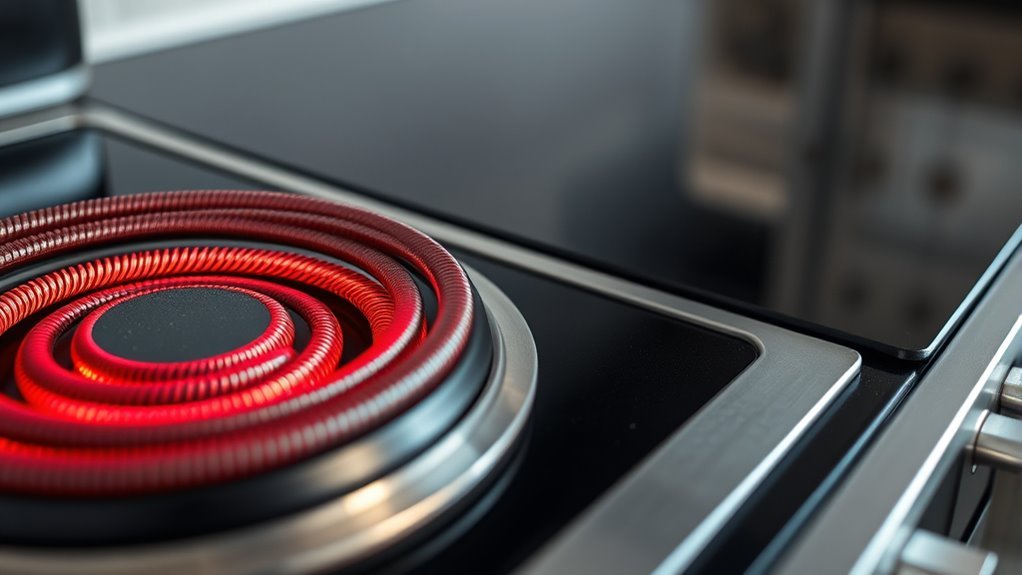
While both electric coil stoves and smooth tops use electricity to generate heat, they work in different ways that change how you cook.
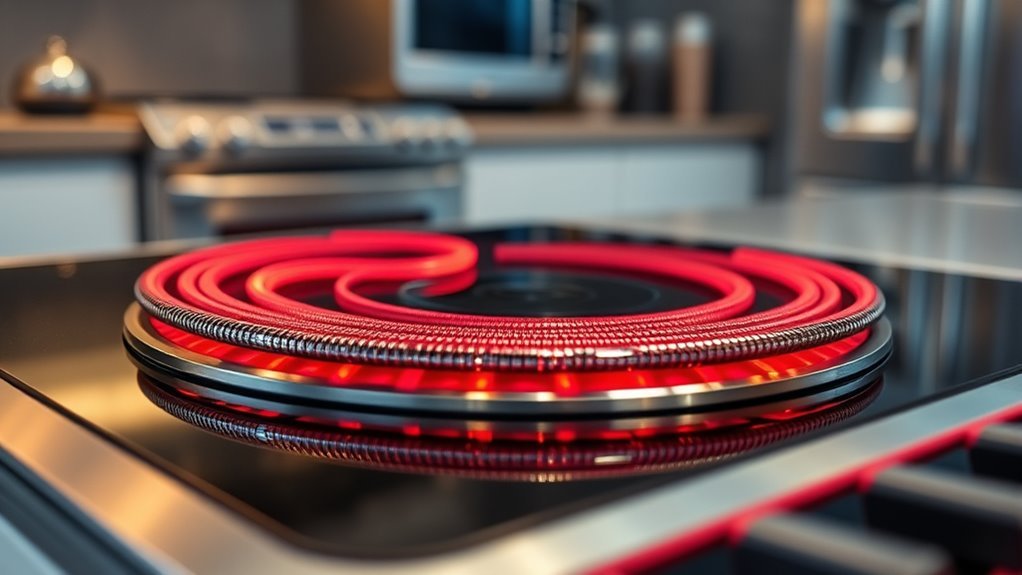
Electric coil stoves have exposed coils that heat up as electricity passes through them. You can see the coils glow red when they’re hot, giving you a visual cue about their temperature.
This direct heat transfer means the coil temperature adjusts quickly but isn’t always as precise as smooth tops. With coil stoves, the heating elements are separate from the cooktop surface, so you can easily replace coils if needed.
The coil temperature depends on how much electricity flows through them, controlled by your stove’s settings. Unlike smooth tops, which use radiant heat beneath a glass surface, coil stoves give you immediate, responsive heating. This influences your cooking style and how you control the heat.
Pros of Choosing an Electric Coil Stove
Anyone looking for a reliable and budget-friendly cooking option will find electric coil stoves appealing. One of the biggest affordability benefits is their lower upfront cost compared to smooth-top or gas stoves. This makes them a smart choice if you want solid performance without breaking the bank. Plus, coil stoves are easy to repair or replace since their parts are widely available and inexpensive.
When it comes to cooking efficiency, electric coils heat up quickly and provide consistent heat levels, giving you good control over your cooking. The coils retain heat well, so even after dialing down the temperature, you can continue simmering your dishes efficiently. You’ll also appreciate the durability of coil burners—they handle heavy pots and pans without damage.
What to Watch Out For With Coil Stoves
What challenges might you face when using an electric coil stove? One key issue is coil heat distribution. Unlike smooth-top stoves, coil burners may heat unevenly, creating hot and cool spots that can affect cooking results. You’ll need to adjust cooking times and stirring frequency to compensate.
Another thing to watch out for is coil stove efficiency. Coils take longer to heat up and cool down, which means you might use more energy compared to other stove types. This can impact your utility bills over time.
Moreover, coils are prone to wear and tear, such as warping or rusting, especially if not cleaned properly. Keep an eye on coil condition to maintain consistent performance.
Finally, coil stoves can be harder to clean since spills can get trapped under and around the coils, requiring extra effort. Being aware of these factors helps you manage your coil stove effectively.
Key Features to Evaluate in Electric Coil Stoves
Since electric coil stoves vary a lot in design and performance, focus on features that matter for usability and efficiency. Paying attention to these will help you find a stove that meets your cooking needs and performs reliably.
Focus on key features for usability and efficiency to find a reliable electric coil stove that suits your cooking needs.
- Coil Material and Quality – Look for coils that are durable, heat evenly, and last longer for consistent results.
- Heating Speed and Control – Choose stoves that heat up quickly and offer precise temperature control to give you more cooking options.
- Burner Layout and Size – A flexible arrangement helps you fit different pot sizes and cook multiple dishes at once.
- Ease of Cleaning – Removable coils and drip pans make cleanup easier, saving you time in the kitchen.
Choosing the Right Coil Size and Type for Your Kitchen
When you’re choosing a coil for your kitchen, it’s important to pick a size that fits your cookware. This way, you get even heating and more efficiency when you’re cooking. If the coil is too big or too small for your pots and pans, your food might not cook evenly.
Also, think about the material of the coil. Some options, like chrome or sealed coils, each have their perks. For example, sealed coils are generally easier to clean and tend to be more durable. Knowing the differences can help you pick the right coil that fits your cooking style and makes your cleanup easier.
Getting the right coil size and type can really make a difference in how well your stove performs and how easy it is to keep it looking good.
Coil Size Options
Choosing the right coil size for your electric stove can really improve your cooking experience. Knowing your coil options helps you match cookware and your needs more easily.
When comparing coil sizes, think about how they affect heat distribution and energy use. Here’s a quick look at the different sizes:
Small coils (4-6 inches) are great for simmering and small pots. Medium coils (6-8 inches) are versatile for everyday cooking. Large coils (8-10 inches) work well for bigger pans and heating up faster.
Some stoves have dual or expandable coils, which give you flexibility by adjusting the size as needed.
Coil Material Types
Coil materials play an essential role in how your electric stove performs and lasts. When choosing coils, you’ll find common materials like nickel-chromium and stainless steel.
Nickel-chromium coils heat up quickly and maintain consistent temperatures, making them great for fast cooking. Stainless steel coils are known for their durability and resistance to corrosion, which helps them last longer.
Some coils also have ceramic coatings to improve heat distribution and protect against wear. Think about your cooking habits when selecting a coil type: if you want quick, even heating, nickel-chromium is a solid choice.
If durability and low maintenance are more important, stainless steel might suit you better. Picking the right coil material helps you get the best performance and extends the lifespan of your stove.
How Different Cookware Affects Coil Stove Performance
Although electric coil stoves heat evenly, the type of cookware you use can really affect how fast and efficiently your food cooks. Knowing which cookware works well with your stove is key to getting the best performance.
Here’s how different cookware impacts your stove’s performance:
- Material Matters: Cast iron and stainless steel are great because they retain heat well and distribute it evenly, making them perfect for coil stoves.
- Flat Bottoms Work Best: Cookware with flat bottoms makes full contact with the coil, which helps transfer heat better and speeds up cooking.
- Avoid Warped or Thin Pans: Warped or very thin pans don’t sit evenly on the coil, leading to uneven heating and longer cooking times.
- Size and Weight: Heavier, properly sized pots or pans stay steady and keep a consistent temperature, unlike small or lightweight cookware that can cause uneven results.
Cleaning and Maintenance Tips for Electric Coil Stoves
To keep your electric coil stove cooking efficiently and safely, regular cleaning and maintenance are key. Start by unplugging the stove and letting the coils cool completely before you begin any coil burner care.
Remove the coil burners gently by pulling them away from the connection points. Wipe down the drip pans and the surface underneath with warm, soapy water to remove spills and grease.
Avoid soaking the coil burners; instead, clean them carefully with a damp cloth and mild detergent. For stubborn stains, a paste of baking soda and water works well without damaging the coils.
Dry all parts thoroughly before reassembling to prevent rust or electrical issues. Regular coil stove upkeep not only extends the life of your stove but also guarantees even heating and safer cooking.
Safety Tips When Using Electric Coil Stoves
When you’re using your electric coil stove, it’s super important to stay cautious to avoid burns or other injuries. One of the best ways to do that is by keeping those coils clean and in good shape. Not only does this help your stove work better, but it also makes things safer for you.
Preventing Burns And Injuries
When using an electric coil stove, taking simple precautions can greatly reduce the risk of burns and injuries. Prioritize burn prevention and injury awareness by following these essential tips:
- Always use pot holders or oven mitts when handling hot cookware to protect your hands.
- Turn pot handles inward to prevent accidental knocks and spills.
- Never leave the stove unattended while in use, especially when cooking with oil or high heat.
- Keep children and pets away from the stove area to avoid accidental contact with hot coils.
Proper Cleaning And Maintenance
Although electric coil stoves are durable, proper cleaning and maintenance are key to keeping them safe and working well. Make sure to regularly follow effective cleaning methods, like removing coils and drip pans to wipe away spills and debris.
Avoid using abrasive materials that might damage the surfaces. Instead, use gentle scrubbers or cloths with mild detergent to keep everything clean. For maintenance, check the coils for signs of wear or corrosion and replace any damaged parts right away to prevent electrical issues.
Always unplug the stove before cleaning to avoid shocks. Keeping burners free of buildup not only boosts performance but also lowers fire risks. Following these simple cleaning and maintenance steps will help your stove last longer and create a safer cooking environment every time.
How Energy Efficient Are Electric Coil Stoves Compared to Other Types?
How does an electric coil stove compare in energy efficiency to other stove types? While electric coil stoves aren’t the most efficient option, they do offer reasonable heating efficiency. Here’s what you should know about their energy savings:
- Heating Efficiency: Electric coils convert about 70% of their energy into heat for cooking. This is lower than induction stoves but similar to standard gas ranges.
- Heat Loss: Coils tend to lose more heat around the edges, making them less efficient than smooth-top electric or induction stoves.
- Energy Savings: They offer moderate savings compared to older gas stoves but usually use more electricity than induction models.
- Heat Retention: Coils stay hot longer after switching off, which can waste energy and pose safety risks if not careful.
Budgeting: What to Expect When Buying an Electric Coil Stove
When you’re looking to buy an electric coil stove, it’s a good idea to think about more than just the upfront cost. Sure, the initial price is important, but you also want to keep in mind what you’ll be spending on energy over time. Those ongoing electricity bills can add up, so it’s worth considering how energy-efficient the stove is.
And don’t forget about maintenance and possible repairs down the line. Some stoves might need more regular upkeep or could be more prone to certain issues, which can end up costing you more in the long run. Getting a clear picture of these costs will help you plan your budget better and avoid any surprises later on.
Initial Purchase Price
You can expect to spend anywhere from $200 to $600 on a new electric coil stove, depending on the brand, features, and size you choose. Understanding the initial cost is key for making a smart purchase and comparing value among models.
Here’s what influences the price:
- Brand reputation: Trusted brands often charge more but may offer better durability.
- Size and capacity: Larger stoves with more burners cost more upfront.
- Additional features: Timers, digital controls, and safety elements increase the price.
- Material quality: Stainless steel or heavy-duty finishes add to the initial cost.
Energy Consumption Costs
Although electric coil stoves usually cost less upfront, their ongoing energy use can really add up on your monthly bills. To keep these costs manageable, try some simple energy-saving tips.
For example, using flat-bottomed cookware helps transfer heat better, which cuts down cooking time and saves energy. Keep your burner coils clean to make sure they work efficiently.
Another good idea is to match your cookware size to the burner size. This way, you won’t waste energy heating up a bigger surface than you need. Also, turning off the stove a few minutes before your food is done allows the residual heat to finish the job, saving power.
Maintenance and Repair Expenses
Since electric coil stoves have fewer complex parts than other types, their maintenance and repair costs tend to be lower. You can keep expenses minimal by following some simple maintenance tips.
Regularly cleaning the coils and drip pans prevents buildup that could cause damage. Here’s what to expect regarding repair costs and upkeep:
- Coil replacements are affordable and easy, often costing less than $50.
- Drip pans and knobs are inexpensive and straightforward to replace.
- Annual inspections can catch issues early, avoiding costly repairs.
- Avoid harsh chemicals to maintain the stove’s surface and components longer.
Frequently Asked Questions
Can Electric Coil Stoves Be Used During a Power Outage?
No, you can’t use electric coil stoves during a power outage since they rely on electricity to heat up.
For safety during a power outage, it’s a good idea to have alternative cooking options like a gas stove, camping stove, or even a grill.
These options help you prepare meals safely when the power’s out, so you’re not left without a way to cook or heat food during emergencies or outages.
Are There Any Common Repair Issues With Electric Coil Stoves?
Yes, common repair issues with electric coil stoves often involve coil maintenance, like burnt-out coils or loose connections. You’ll want to check your coils regularly to keep heating efficient.
Faulty coils can cause uneven heating or stop the burner from turning on. Keep an eye on the control switches and wiring too, as these parts can wear out over time.
Staying proactive with maintenance helps you avoid costly repairs in the long run.
How Long Does the Average Electric Coil Stove Last?
You’d think your electric coil stove would last forever since it’s so simple, right? Actually, with proper coil maintenance tips like regular cleaning and avoiding harsh spills, you can expect it to last about 13 to 17 years.
Lifespan factors like usage frequency, heat settings, and how well you care for the coils play a big role. So, treat it well, and it’ll keep cooking up a storm for quite a while.
Do Electric Coil Stoves Emit Any Harmful Radiation?
No, electric coil stoves don’t emit harmful radiation that affects your health. When you use one, the radiation safety concerns are minimal because the coils produce infrared heat, not ionizing radiation.
You can focus on coil efficiency to save energy and cook better rather than worrying about radiation. Just make sure your stove is in good condition, and you’ll be safe while enjoying efficient heating for your meals.
Can Electric Coil Stoves Be Installed in Outdoor Kitchens?
Yes, you can install electric coil stoves in your outdoor kitchen setup. They offer benefits like quick heating and easy temperature control, making outdoor cooking more convenient.
Just make sure the area is properly sheltered to protect the stove from weather damage. Also, ensure your outdoor kitchen has enough electrical wiring and outlets to safely support the stove’s power needs.
This way, you’ll enjoy reliable cooking performance outdoors without any hassle.
Conclusion
You might’ve heard electric coil stoves are outdated, but they still offer reliable heating and affordability that many smooth tops can’t match.
Before you buy, think about coil size, energy efficiency, and how much maintenance they need to fit your kitchen’s needs.
While they may require a bit more care, coil stoves deliver consistent performance and safety when used properly.
Don’t dismiss them too quickly—they could be the perfect fit for your kitchen and your cooking style.
When choosing an electric stove with coils, remember these points to make the best decision for your home.