Your Guide to Built in Microwave Ovens: Choosing With Confidence
Finding the perfect built-in microwave oven can feel overwhelming, especially with so many options out there. Many people struggle with choosing one that fits their space, needs, and style. You’re not alone in this—navigating features and specs can be confusing.
You’ll want to measure your kitchen space and consider ventilation when choosing a built-in microwave. Match the wattage to your cooking needs—higher watts cook faster, and sensor cooking makes things easier by adjusting time automatically.
Look for user-friendly controls and a style that fits your kitchen’s vibe. Compare brands for reliability and warranties to avoid surprises.
If you want a smooth cooking experience and smart features, exploring your options will reveal the best fit.
Key Takeaways
- Measure your available cabinet space and ensure proper ventilation before choosing a built-in microwave. This helps it fit seamlessly into your kitchen design.
- Pick a microwave wattage based on what you mainly do. For reheating, 700-900W works well. For most cooking tasks, go for 1000-1200W. If you want faster cooking, choose 1200W or higher.
- Look for models with sensor cooking technology. It automatically adjusts power and time, so your food doesn’t overcook and results stay consistent.
- Consider features that make your life easier, like simple controls, preset options, and a design style that matches your kitchen’s look and feel.
- Do some research on top brands, compare warranties, and read customer reviews. This helps ensure you get a reliable microwave that offers good service and satisfaction over the long run.
What Size Built-In Microwave Fits Your Kitchen Best
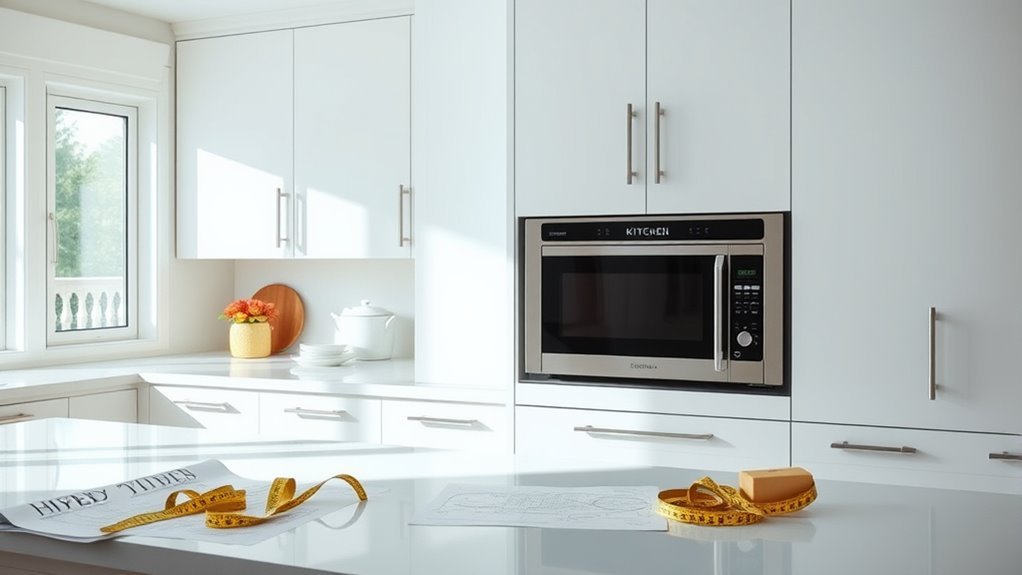
How do you know which built-in microwave size works best in your kitchen? Start by measuring the available space carefully, focusing on microwave dimensions that fit seamlessly into your layout.
You don’t want a microwave that’s too large, crowding your counters, or too small, limiting cooking capacity. Consider the width, height, and depth of the niche where you plan to install it.
Keep in mind that built-in microwaves often need extra clearance for ventilation, so check the manufacturer’s specs. Think about how the microwave will blend with your cabinetry and appliances.
Ensure proper ventilation clearance and consider how the microwave complements your cabinetry and appliances.
A well-chosen size complements your kitchen’s flow and functionality. If your kitchen is compact, a smaller microwave with efficient dimensions might be best. Larger kitchens can handle bigger units without sacrificing style.
Microwave Power and Cooking Performance Explained
Understanding microwave power is essential when choosing a built-in model that fits your cooking needs. The wattage directly affects how efficiently your microwave cooks and what techniques you can use.
Higher wattage means faster, more even cooking, while lower wattage might require longer times and some careful adjustments.
Here’s a quick guide to microwave power and performance:
| Power (Watts) | Cooking Speed | Best For |
|---|---|---|
| 700-900 | Moderate | Reheating and simple meals |
| 1000-1200 | Fast | Most cooking tasks |
| 1200+ | Very fast and even | Complex dishes and efficiency |
Why Sensor Cooking Can Change How You Microwave
Although traditional microwaves rely on preset times and power levels, sensor cooking takes the guesswork out of your meal prep. This technology uses built-in sensors to detect humidity and temperature inside the microwave, adjusting cooking time and power automatically.
By doing this, it improves cooking efficiency and delivers perfectly heated or cooked food every time. You won’t have to worry about overcooking or undercooking your meals anymore.
It enhances cooking efficiency, ensuring your food is perfectly heated without the hassle of overcooking or undercooking.
With sensor advantages like these, you save time and avoid constantly checking your food or manually changing settings. The microwave does all the work for you.
Here’s what sensor cooking offers:
- Automatically senses moisture levels to optimize cook time
- Adjusts power levels dynamically for even heating
- Reduces energy use by preventing overcooking
- Provides consistent results without guesswork
Sensor cooking really changes how you microwave, making meal prep easier, faster, and more reliable.
Convenience Features to Look For in Built-In Microwaves
When you’re shopping for built-in microwaves, one of the cool features to keep an eye out for is smart sensor technology. It automatically adjusts cooking times, so your food comes out just right without you having to guess or keep checking. It’s like having a little helper in the kitchen making sure everything is cooked perfectly.
And of course, easy-to-use controls are a must. You don’t want to be fumbling around trying to figure out complicated buttons or settings. Simple, intuitive controls make your life so much easier, letting you get your microwave going quickly and without any stress. These kinds of features really help save time and keep your kitchen routine running smoothly.
Smart Sensor Technology
When you want hassle-free cooking, smart sensor technology in built-in microwaves takes the guesswork out of heating and defrosting. It uses moisture and temperature sensors to automatically adjust cooking time and power, so your meals are perfectly heated without you needing to monitor.
This smart tech saves you time and energy while reducing the chances of overcooking or undercooking food. Plus, its accuracy means your microwave easily adapts to different food types and quantities.
Here’s what smart sensor technology offers you:
- Precise cooking adjustments based on food moisture levels
- Automated defrosting that prevents partially frozen spots
- Consistent results without needing to manually set the time
- Energy-efficient operation by optimizing power use
With these benefits, your built-in microwave becomes a reliable kitchen helper.
Easy-to-Use Controls
Smart sensor technology handles cooking settings automatically, but having easy-to-use controls allows you to customize and operate your built-in microwave quickly and intuitively.
Look for user-friendly features like touchpads or dial controls that respond effortlessly to your input.
Clear icons and readable text on intuitive displays help you select options without confusion or guesswork.
Some models come with presets for common tasks, saving you time and effort.
You’ll also appreciate controls that give immediate feedback, so you know your selections are registered.
These convenience features make your microwave fit seamlessly into your cooking routine, making meal prep smoother and more enjoyable.
Prioritize simple, straightforward controls that match your style to get the most out of your built-in microwave oven.
Built-In Microwave Styles to Match Your Kitchen
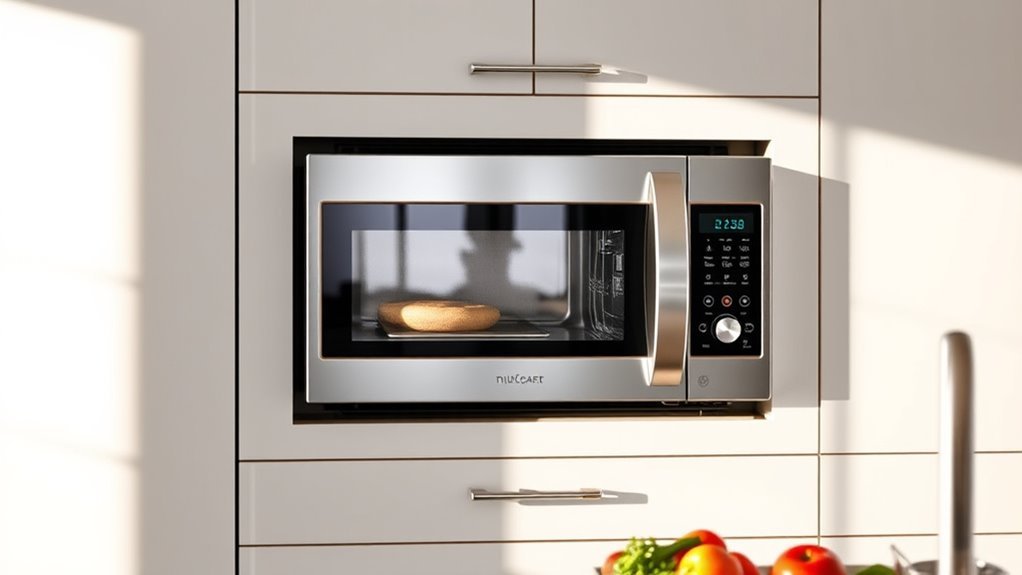
When you’re picking out a built-in microwave, it’s a good idea to think about the overall style of your kitchen. Whether your space has a sleek, modern vibe or a cozy, traditional feel, there’s a built-in microwave style that can match perfectly. It’s all about finding something that blends in seamlessly with your existing decor.
You’ll also want to consider whether you prefer an integrated model or a countertop one. Integrated microwaves are built right into your cabinetry, giving your kitchen a clean, streamlined look. On the other hand, countertop models are more flexible—they’re easy to place and move around if needed. Think about how much space you have and what fits best with how you use your kitchen. Let’s explore how these different styles can fit into your setup so you can choose the perfect match.
Contemporary Versus Traditional Designs
Although both contemporary and traditional built-in microwave designs serve the same function, they offer distinct aesthetics that can dramatically influence your kitchen’s overall look. You’ll want to think about how each style complements your space, balancing modern vibes with classic charm for the perfect harmony.
Contemporary models tend to have sleek lines and minimalist features, while traditional options highlight detailed craftsmanship and warm finishes. To choose wisely, focus on color coordination that matches your cabinets and appliances.
Material choices also matter, as they can boost style versatility. Make sure the microwave’s functionality is balanced—easy to use without sacrificing style. Lastly, consider how well it integrates into your kitchen for a seamless, cohesive appearance.
Integrated Versus Countertop Options
Choosing between contemporary and traditional microwave designs naturally leads to deciding how you want your microwave to fit into your kitchen’s layout. You can opt for integrated models, which offer built-in benefits like a seamless look and space-saving design. Alternatively, countertop microwaves provide the convenience of easy placement and portability.
Here’s a quick comparison to help you decide:
| Feature | Integrated Microwave |
|---|---|
| Appearance | Sleek, built-in look |
| Space | Saves counter space |
| Installation | Needs professional setup |
| Mobility | Fixed in place |
| Feature | Countertop Microwave |
| Appearance | Freestanding |
| Space | Uses counter space |
| Installation | Plug and play |
| Mobility | Easily moved |
Think about your kitchen’s flow and your daily needs to make a confident choice.
Planning Installation and Cabinet Compatibility
Before installing a built-in microwave oven, make sure your cabinet space can handle its size and ventilation needs. Checking these details ensures your microwave works safely and efficiently.
Start by measuring your cabinet dimensions precisely, including depth, width, and height. Don’t forget to look at ventilation options—choose models that have proper airflow to prevent overheating.
Electrical considerations are also important. Confirm your kitchen’s wiring can support the microwave’s power needs and that outlets are easy to access.
Keep these points in mind:
- Compare your cabinet measurements to the microwave’s specifications for a snug fit.
- Consider ventilation options like built-in fans or external vents.
- Make sure your electrical setup supports the required voltage and outlets are conveniently placed.
- Think about how the microwave will look in your kitchen and if it’s easy to reach and use.
Comparing Built-In Microwave Brands and Warranties
When you’re picking out a built-in microwave, it’s a good idea to check out some of the top brands and see which one feels like the right fit for your kitchen. Don’t forget to look into their warranty coverage too — it can really make a difference if something goes wrong.
It’s also helpful to see how each company handles repairs or replacements. Knowing their service options upfront can save you a lot of time and headaches later on. Basically, a little research now can make the whole process much smoother!
Top Brands Overview
Several top brands dominate the built-in microwave market, each offering distinct features and warranty options that can impact your long-term satisfaction. When choosing, consider brand reputation and customer reviews to guarantee reliability and performance. Some brands excel in innovative technology, while others focus on sleek design or energy efficiency.
Understanding these differences helps you pick a model that fits your needs and style. Panasonic is known for inverter technology and consistent cooking results. Bosch is praised for premium build quality and modern aesthetics.
GE offers a variety of models with user-friendly controls. KitchenAid focuses on powerful performance and stylish design. Checking customer reviews alongside brand reputation will guide you to a trusted choice that suits your kitchen perfectly.
Warranty Coverage Details
Warranty coverage can make a big difference in your peace of mind and long-term investment when choosing a built-in microwave. You’ll want to compare warranty duration carefully, as some brands offer one-year protection while others extend up to three or five years.
Longer warranty durations can save you money on repairs down the line. Be sure to review coverage limitations, too. Some warranties exclude parts like glass doors or internal electronics, or require professional installation to stay valid.
Understanding these details helps you avoid surprises later. By comparing brands’ warranty terms side-by-side, you can pick a microwave that not only fits your kitchen but also protects your investment with solid, clear coverage.
Comparing Service Options
How do you decide which built-in microwave brand offers the best service options? Start by examining warranty comparisons closely—look at the length, coverage details, and what’s excluded.
Next, think about the availability and responsiveness of customer support. Some brands offer 24/7 help, while others have limited hours.
Also, check if the manufacturer provides in-home repairs or if you need to visit a service center.
Finally, consider extended service plans that might cover parts and labor beyond the standard warranty.
When comparing service options, focus on:
- Warranty length and coverage specifics
- Customer service accessibility and response times
- Repair options, whether in-home or at a service center
- Availability of extended service plans
These factors will help you pick a brand that offers peace of mind and reliable support.
How Much Should You Spend on a Built-In Microwave?
Wondering how much you should spend on a built-in microwave? Start by thinking about your budget carefully. Built-in microwaves range from around $300 to over $1,200, depending on features, brand, and size.
If you want basic functionality without extra bells and whistles, models in the $300 to $600 range will do the job. But if you’re after advanced features like convection cooking, sensor controls, or a sleek design to match your kitchen, expect to spend $700 or more.
Troubleshooting Built-In Microwave Problems
Spending wisely on a built-in microwave means you’ll want it to work reliably for years. When problems pop up, quickly figuring out the cause helps you avoid costly repairs or replacements. Common issues include door problems, uneven heating, strange noises, and display glitches. Don’t forget to check for power supply issues or ventilation needs that might affect performance.
Here are some tips to troubleshoot your microwave:
- Check your user manual’s troubleshooting section for model-specific advice.
- Make sure the door latch and seal are clean and close properly.
- Regularly clean the vents to prevent overheating and keep airflow smooth.
- Listen for unusual noises that could point to motor or magnetron issues.
Following these simple maintenance tips can help extend your microwave’s lifespan and keep it running smoothly. If problems keep happening, it’s best to call in a professional to avoid causing more damage.
Should You Choose a Built-In or Countertop Microwave?
When deciding between a built-in or countertop microwave, think about your kitchen’s layout, available space, and how you plan to use the appliance. Countertop microwaves are portable and easy to install, so you can move or replace them without much hassle. They tend to take up counter space, but they’re affordable and offer quick access.
Built-in microwaves give your kitchen a seamless look and save valuable counter space. They can be installed at eye level or within cabinets, making them more ergonomic and helping your kitchen flow better. If you’re remodeling or want a sleek design, a built-in model is a great fit.
If you want convenience and flexibility without changing much in your kitchen, a countertop microwave works well. But if you prefer a polished, integrated look and want to make the most of your space, a built-in microwave is the better choice. Your decision should balance style, function, and your kitchen’s layout.
Frequently Asked Questions
How Do Built-In Microwaves Affect Home Resale Value?
Built-in microwaves can boost your home resale value by making your kitchen look more stylish and integrated. They give a sleek, seamless appearance that many buyers find appealing.
These appliances match modern trends that favor streamlined, high-end kitchen gadgets. When potential buyers see a built-in microwave, they often think the kitchen is more upscale and thoughtfully designed.
Can Built-In Microwaves Be Repaired Easily at Home?
You can handle some built-in microwave repairs at home, especially basic troubleshooting like checking the door latch or replacing a fuse.
But DIY repairs can get tricky because these units are built-in and might need special tools or parts.
If you’re comfortable with electronics and follow safety tips, you might fix minor issues yourself.
For more complicated problems, it’s best to call a professional to avoid damaging your microwave or voiding your warranty.
Are Built-In Microwaves Energy Efficient Compared to Other Types?
Yes, built-in microwaves generally use less energy than countertop models because they’re designed for efficient, targeted heating.
You’ll save on energy bills over time, but keep in mind that installation costs can be higher since they need professional fitting.
If reducing energy use in your kitchen is a priority, a built-in microwave is a smart choice despite the upfront installation expense.
What Safety Features Are Unique to Built-In Microwaves?
You’d think built-in microwaves just blend in, but they actually pack unique safety features. They often include better child safety locks, so curious little hands can’t accidentally start them.
Plus, strict installation guidelines make sure they’re securely mounted, reducing risks of tipping or electrical hazards. So, while they seem like just another kitchen appliance, built-ins quietly keep your family safer by design and proper setup.
How Do Built-In Microwaves Impact Kitchen Ventilation?
Built-in microwaves can affect your kitchen’s ventilation systems by integrating directly into cabinetry, which sometimes limits air circulation around the unit. You’ll want to make sure your ventilation system is designed to handle the microwave’s heat and steam output properly.
Many built-in models include venting options that connect to your existing kitchen exhaust. This helps maintain good air circulation and prevents moisture buildup. Proper installation is key to keeping your kitchen fresh and comfortable.
Conclusion
Choosing the right built-in microwave is like finding the perfect puzzle piece for your kitchen. It has to fit just right and work seamlessly.
By considering size, power, features, style, and budget, you’ll confidently pick a microwave that suits your cooking style and space.
Whether you prioritize sensor cooking or sleek design, the right choice will make your kitchen flow effortlessly and improve your everyday meals.
Your ideal built-in microwave is waiting to complete your culinary picture.