What Should Be My Freezer Temperature? The Complete Answer
Many people struggle with keeping their food fresh and safe in the freezer. It’s frustrating when ice crystals form or freezer burn spoils your favorite items. You’re not alone—finding the right temperature can be tricky.
You should set your freezer to 0°F (–18°C) to keep your food safe and fresh. This temperature slows bacterial growth and preserves flavors and textures.
Keeping the temperature steady prevents ice crystals and freezer burn. Airtight packaging also helps maintain moisture and quality.
Different foods have slightly different ideal settings, like ice cream needing colder temps.
Regularly check your freezer’s temperature and seals to avoid fluctuations.
Want to learn how to optimize your freezer’s performance and troubleshoot issues?
Key Takeaways
- Set your freezer to 0°F (–18°C) for the best food safety and to keep things fresh longer.
- Keep the temperature stable so your food doesn’t get damaged by ice crystals or freezer burn.
- Use airtight packaging to lock in moisture and help your food stay tasty and with the right texture.
- Check the temperature regularly with a good thermometer, especially after power outages.
- Don’t forget to defrost and clean the seals often to keep your freezer working properly.
What Is the Ideal Freezer Temperature for Food Safety?
How cold should your freezer be to keep food safe? To ensure proper food preservation and prevent spoilage, you need to keep your freezer at the right temperature.
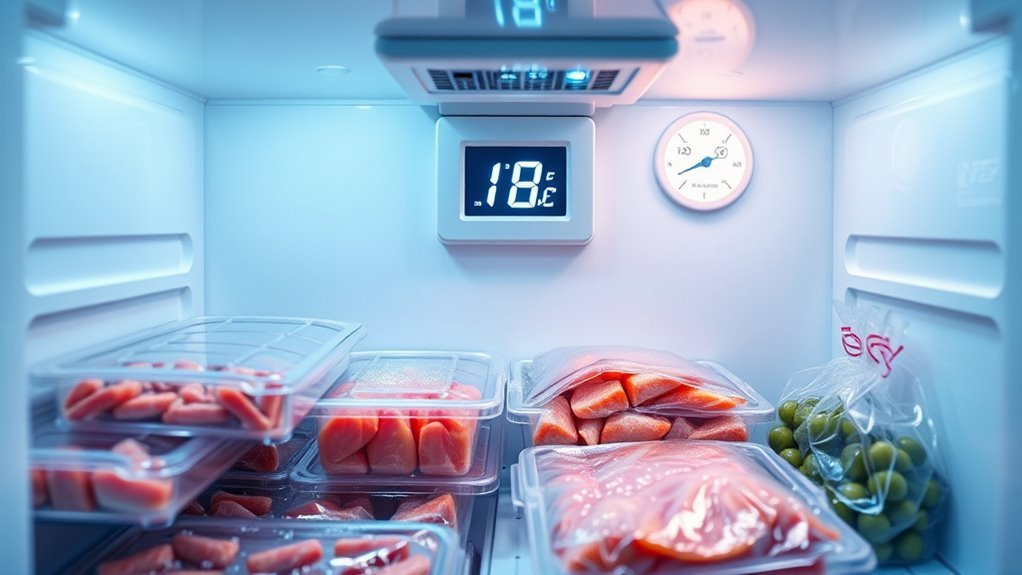
According to safety guidelines, the ideal freezer temperature is 0°F (–18°C). This temperature effectively slows bacterial growth, helping your food stay safe and fresh longer.
The ideal freezer temperature is 0°F (–18°C) to slow bacterial growth and keep food fresh longer.
If your freezer is warmer than this, food may start to spoil faster, increasing the risk of foodborne illnesses. Keeping it at 0°F or colder means you can store meats, vegetables, and leftovers safely without worrying about them going bad quickly.
Make sure to regularly check your freezer’s temperature with a reliable thermometer to keep it consistent.
Following these tips helps protect your health and makes your food last longer. Remember, maintaining the proper freezer temperature is key to good food preservation.
Why You Should Keep Your Freezer Below 0°F (–18°C)
You really want to keep your freezer below 0°F (–18°C). Why? Well, it helps stop bacteria from growing, which keeps your food safe to eat. Plus, when your freezer is at this temperature, your food stays fresh longer and keeps its flavor and texture better.
Preventing Bacterial Growth
Because bacteria thrive at temperatures above freezing, keeping your freezer below 0°F (–18°C) is essential to prevent their growth and guarantee food safety. At higher temperatures, bacterial growth speeds up, increasing the risk of foodborne illness.
By maintaining a colder environment, you effectively stop bacteria from multiplying, helping preserve your food’s safety.
| Temperature Range | Bacterial Growth Rate | Food Safety Risk |
|---|---|---|
| Above 40°F (4°C) | Rapid | High |
| 32°F to 40°F (0-4°C) | Slow | Moderate |
| Below 0°F (–18°C) | Minimal/None | Low (Safe) |
Keeping your freezer at or below 0°F (–18°C) minimizes bacterial growth, ensuring your food stays safe for longer periods.
Maintaining Food Quality
Although freezing stops bacterial growth to preserve food, keeping your freezer below 0°F (–18°C) is equally important for maintaining quality. When you keep this temperature steady, your food stays fresh and flavorful longer.
Here’s why it matters:
- Slower enzyme activity helps preserve texture and taste.
- Less moisture loss prevents freezer burn, keeping food appealing.
- You can store food longer without losing its nutritional value.
- Consistent freezing avoids thaw-refreeze cycles that hurt quality.
How Freezer Temperature Affects Food Quality and Texture
You’ll see that the temperature inside your freezer really matters when it comes to how your food turns out. If it’s too warm or keeps fluctuating, ice crystals can form in ways that mess with the texture of your food. That’s why keeping a consistent, cold temperature is so important.
When the freezer temperature isn’t steady, or if it’s not cold enough, you might notice something called freezer burn. It affects the flavor and overall quality, making your food less tasty and less appealing. Knowing how temperature changes impact your food can help you keep it tasting fresh and delicious for longer.
Ice Crystal Formation Impact
When your freezer temperature fluctuates, it directly influences the size of ice crystals that form within your food. Larger ice crystals can rupture cell walls, causing a loss of moisture and negatively affecting texture and flavor. To keep your food at its best, focus on these key points:
- Keep your freezer at a consistent temperature, ideally at or below 0°F (-18°C), to form smaller ice crystals.
- Rapid freezing promotes smaller ice crystals, which helps preserve moisture retention.
- Avoid opening the freezer door too often, as temperature swings encourage larger ice crystal growth.
- Check the temperature regularly to ensure uniform freezing and prevent texture problems.
Freezer Burn Causes
Maintaining a stable freezer temperature isn’t just about controlling ice crystal size—it also helps prevent freezer burn, which can ruin your food’s quality and texture.
Freezer burn happens when moisture escapes because of temperature fluctuations or poor packaging. When your freezer isn’t consistently cold enough, ice inside the food sublimates, turning directly from solid to vapor.
This leaves dry, tough spots on your food. The moisture loss not only messes with the texture but also impacts flavor and appearance.
To keep freezer burn at bay, set your freezer at or below 0°F (-18°C). Make sure your food is stored in airtight packaging to lock in moisture.
Doing this will help your food stay fresher longer, keeping both taste and texture intact without the damage caused by freezer burn.
Texture Changes Over Time
Although freezing keeps food safe for a long time, the temperature inside your freezer really affects how its texture changes over time. When your freezer is set too high, ice crystals get bigger, which can damage cell walls and make the texture less appealing.
Freezer aging speeds up if the temperature fluctuates, causing repeated thawing and refreezing. This process further breaks down the food’s texture. To keep your food quality high, here are some tips:
- Keep your freezer at 0°F (-18°C) or lower to prevent large ice crystals from forming.
- Try not to open the door too often, so the temperature stays stable.
- Use airtight packaging to stop moisture loss and avoid freezer burn.
- Eat frozen foods within the recommended time to reduce the effects of freezer aging.
What Freezer Temperature Should You Set for Different Foods?
Since different foods freeze best at varying temperatures, you’ll want to adjust your freezer settings accordingly to preserve quality and safety. For instance, meat and poultry freeze well at 0°F (-18°C), which keeps them safe and maintains texture.
Fruits and vegetables can handle slightly higher temperatures, around 0°F to 10°F (-18°C to -12°C), to prevent freezer burn while preserving nutrients. Ice cream requires a colder setting, ideally below 0°F, to stay creamy.
To keep everything organized and easy to find, use practical freezer organization tips like grouping similar items and placing newer products behind older ones. Pair this with clear food labeling practices—label packages with contents and freezing dates—to avoid guesswork and reduce waste.
How to Adjust Your Freezer Temperature Correctly
Start by finding your freezer’s temperature control, which is usually a dial or digital panel inside or on the door. Setting it correctly helps keep your food fresh and saves energy.
Next, check the current temperature setting and note what it shows. Use the control dial or buttons to set your freezer to about 0°F (-18°C), the recommended temperature.
Give your freezer at least 24 hours to stabilize after making any changes. This ensures the temperature is accurate and consistent.
Try not to adjust the settings too often. Frequent changes can lead to uneven cooling and might damage your stored items.
How to Check and Monitor Your Freezer Temperature Accurately
After setting your freezer to the ideal temperature, you’ll want to make sure it stays consistent. To do this, use a reliable freezer thermometer.
There are a few types of thermometers, but the main categories are digital and analog. Digital thermometers give quick, accurate readings and often have features like alerts and memory functions.
Analog thermometers are simple, don’t need batteries, and are easy to read. However, they might not be as precise as digital models.
Place the thermometer in the coldest part of your freezer to get the most accurate reading. Check it regularly, especially after power outages or when you’ve adjusted the temperature.
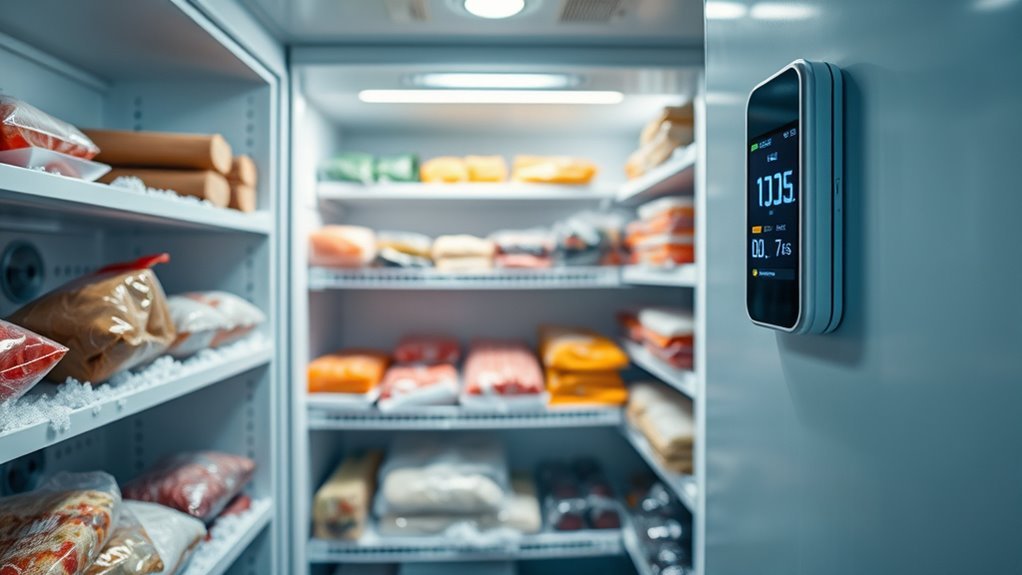
If your freezer doesn’t have a built-in thermometer, a standalone digital model can help you monitor temperature fluctuations closely.
How to Tell If Your Freezer Temperature Is Too High or Too Low
How can you tell if your freezer’s temperature is off? You’ll notice signs when it’s too high or too low, which can affect food safety and quality. Here’s what to watch for:
1. Ice Build-up or Frost
Excessive frost may mean your freezer is too cold or has temperature fluctuations causing moisture buildup.
2. Soft or Partially Thawed Food
If food isn’t fully frozen, the temperature might be too high, risking spoilage.
3. Freezer Alarms
Many freezers have alarms that alert you when temperatures deviate from the set range. Don’t ignore them.
4. Unusual Noise or Constant Running
This can indicate the freezer is struggling to maintain temperature, signaling it’s too warm or too cold inside.
How to Keep Your Freezer Running Efficiently and Save Energy
Want to keep your freezer running smoothly and save some energy? It’s pretty simple—just set it to the right temperature and give it some regular TLC. For example, cleaning those coils every now and then and making sure the door seals tight can really make a difference. Let’s look at some easy ways to boost your freezer’s performance and cut down on your electricity bill.
Optimal Freezer Temperature Settings
Although you might not think much about it, setting your freezer to the right temperature can really make a difference in keeping food fresh and saving energy.
For the best results, aim to keep your freezer between 0°F (-18°C) and -5°F (-20°C). This range helps preserve your food properly without wasting electricity.
Try not to change the temperature often, as that can disrupt the freezer’s performance and use more power. Instead, set it once and leave it be.
Use a freezer thermometer to check the actual temperature regularly. This way, you can make precise adjustments and stay on track.
Also, keep your freezer moderately full. Too empty or too packed can make cooling less efficient and affect how well it maintains the temperature.
Proper Freezer Maintenance Tips
When you maintain your freezer properly, it runs more efficiently and uses less energy, saving you money in the long run.
Start by regularly defrosting your freezer if it’s not a frost-free model to prevent ice buildup. Keep door seals clean and intact to avoid cold air leaks.
Use freezer organization tips like grouping similar items and labeling them clearly; this helps you find things quickly and reduces the time the door stays open.
Clean the condenser coils at least twice a year to improve efficiency. If you’re considering an upgrade, energy-efficient models often come with better insulation and advanced features that cut energy use.
Energy-Saving Freezer Practices
Maintaining your freezer properly sets the stage for energy-saving habits that keep it running efficiently. To maximize energy efficiency and reduce costs, follow these tips:
- Choose energy-efficient appliances when replacing your freezer to lower overall energy consumption.
- Use smart thermostats to monitor and adjust your freezer’s temperature remotely, ensuring it stays at the ideal setting without wasting power.
- Keep your freezer full but not overcrowded. A full freezer retains cold better and runs less often.
- Avoid opening the door too frequently, as warm air entering makes the freezer work harder.
What to Do If Your Freezer Temperature Fluctuates Frequently
If your freezer temperature keeps fluctuating, it’s important to act quickly to prevent food from spoiling and to save energy. First, check the insulation around your freezer. Poor insulation lets warm air in, which causes those temperature swings.
Next, inspect and clean the temperature sensors. Dust or damage can mess with the readings, making the freezer cycle on and off unpredictably. Also, make sure the door seals tightly to keep the cold air in.
Here’s a quick troubleshooting guide:
| Issue | What to Do |
|---|---|
| Poor freezer insulation | Add insulating panels or move the freezer to a cooler spot |
| Faulty temperature sensors | Replace or recalibrate the sensors |
| Door seal problems | Clean or replace the door gasket |
Fixing these issues helps keep the temperature steady, which saves energy and keeps your food safe. If the problem continues, it might be time to call a professional technician to check out your freezer’s cooling system.
How Seasonal Changes Impact Your Freezer Temperature and Food Storage
As the seasons change, your freezer’s temperature can be affected by shifts in ambient room temperature and humidity levels. These seasonal adjustments are important to keep your freezer running properly and your food safe.
You’ll notice temperature changes more during extreme weather—hot summers or cold winters—that can make your freezer work harder or less efficiently.
To handle these changes well, consider monitoring your freezer temperature regularly during seasonal shifts. It’s also helpful to adjust the thermostat slightly to account for ambient temperature changes.
Make sure there’s proper ventilation around the freezer to prevent overheating in warmer months. And don’t forget to check door seals for tightness to avoid warm air getting in during humid or cold periods.
Frequently Asked Questions
Can Freezing Kill Bacteria on Food?
Freezing won’t kill bacteria on food; it only stops bacteria survival by putting them in a dormant state. When you use proper freezing methods, the cold temperatures slow down bacterial growth but don’t eliminate them.
Once the food thaws, bacteria can become active again and multiply. So, freezing helps preserve food safely but doesn’t sanitize it. You still need to cook or handle food properly to kill harmful bacteria.
How Long Can Frozen Food Be Stored Safely?
You can store most frozen food safely for several months—usually between 3 and 12 months depending on the type. Keep an eye on the shelf life to make sure it stays fresh and safe to eat.
When you’re ready to use it, always follow safe thawing methods like thawing in the fridge, cold water, or microwave. This helps prevent bacteria growth and keeps your food safe.
Avoid thawing at room temperature, as it can lead to bacteria multiplying and make your food unsafe or less tasty.
Does Freezer Frost Buildup Affect Temperature Accuracy?
Yes, frost formation can affect the accuracy of your freezer’s temperature. When frost builds up, it can reduce cooling efficiency by up to 30%.
As frost accumulates, it acts like an insulator on the freezer walls. This makes your appliance work harder and can mess with temperature readings.
To keep your freezer running smoothly and maintain accurate temperatures, it’s a good idea to defrost it regularly and clear away any frost buildup.
Can I Freeze Cooked Leftovers More Than Once?
You shouldn’t freeze cooked leftovers more than once because it risks leftover safety.
Each time you thaw and refreeze, bacteria can multiply, increasing the chance of foodborne illness.
Instead, follow proper reheating guidelines: only reheat leftovers once to an internal temperature of 165°F (74°C).
To avoid waste, freeze leftovers in smaller portions so you only thaw what you’ll eat, keeping your food both safe and tasty.
What’s the Best Way to Organize Items in a Freezer?
Your freezer can feel like a bottomless pit if you don’t manage it right! For the best organization, group similar items together—meats, veggies, and leftovers each get their own zone.
Use clear, labeled containers or bags to keep everything neat and easy to find. Rotate older items to the front so nothing gets lost in the back.
This will save you time and help reduce waste every time you open the door.
Conclusion
Your freezer is like a fortress, protecting your food from spoilage and keeping it fresh. Keeping it at or below 0°F (–18°C) is the best way to ensure safety and quality.
Adjusting the temperature correctly helps your freezer work efficiently. Stay alert for any changes, especially during seasonal shifts, to keep your food secure.
By mastering your freezer’s settings, you’ll safeguard your meals and save energy. Remember, the ideal freezer temperature is essential for a reliable and efficient kitchen.