How to Fix a Clogged Kitchen Sink: A Step-by-Step Guide
Are you tired of dealing with a sluggish or clogged kitchen sink? You’re not alone—many people struggle with this frustrating issue in their homes. Luckily, fixing a clogged sink doesn’t have to be a headache.
If your kitchen sink is clogged, start by removing visible debris and try a baking soda and vinegar mix followed by hot water. Use a plunger to create pressure and clear blockages, or a drain snake for tougher clogs.
If that doesn’t work, clean out the P-trap underneath the sink. Avoid harsh chemicals to protect your pipes, and remember to prevent future clogs by using strainers and hot water regularly.
Keep following these tips to master clearing your sink effortlessly.
Key Takeaways
- Look out for signs like slow draining, gurgling sounds, or bad odors before you start fixing anything.
- Remove any visible gunk, then pour baking soda followed by vinegar down the drain. Let it fizz for about 15 minutes.
- Grab a plunger with a good seal and push down forcefully for 15 to 20 seconds to try and loosen the clog.
- If that doesn’t work, try using a drain snake or take out the P-trap to clean out any buildup.
- Skip harsh chemicals and instead flush the drain with hot water. Doing regular maintenance can help prevent future clogs.
Quick Fixes to Clear a Clogged Kitchen Sink
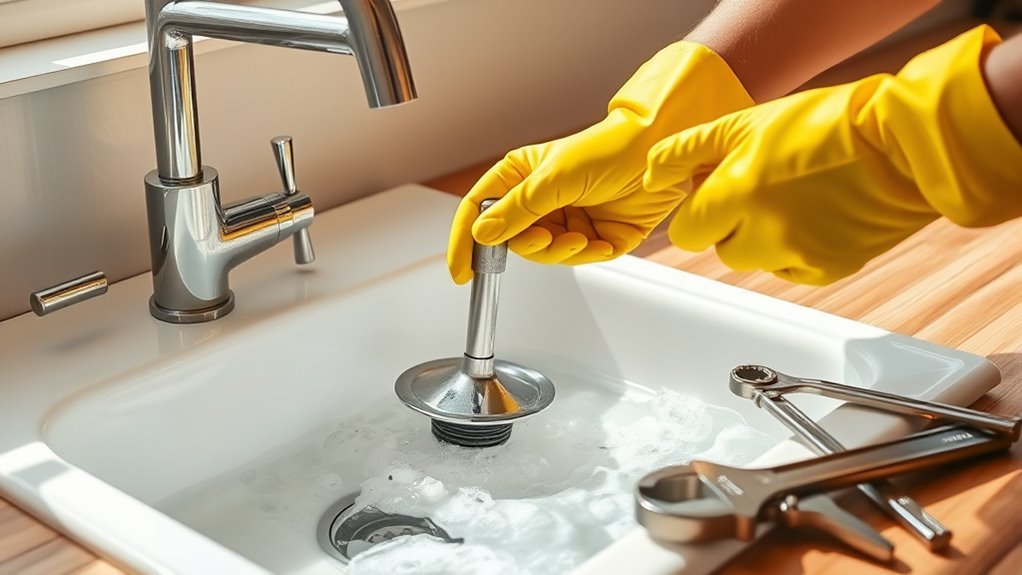
Start by removing any visible debris from the sink drain to help water flow better. Clearing out food scraps, grease buildup, or other blockages that slow things down is key.
Next, try pouring a mixture of baking soda and vinegar down the drain. Let it fizz for about 15 minutes before flushing with hot water to break down minor clogs.
Pour baking soda and vinegar down the drain, let it fizz 15 minutes, then flush with hot water.
If that doesn’t do the trick, use a sink plunger—seal the drain, pump vigorously, and see if the blockage loosens. Avoid harsh chemical cleaners, as they can damage your pipes and harm the environment.
Remember, quick fixes like these keep your sink flowing smoothly and help prevent bigger problems. Regular drain maintenance improves kitchen hygiene and saves you money on repairs.
How to Spot a Clogged Kitchen Sink
You’ll know your kitchen sink is clogged when the water starts draining really slowly or just sits there, forming a little pool around the basin. Sometimes, you might even hear gurgling noises coming from the drain, which is a pretty clear sign something’s not right. And let’s not forget those unpleasant odors that can start to stink up your kitchen—that’s another clue something’s clogged up. Keep an eye out for these signs so you can catch the problem early before it gets worse.
Common Clog Symptoms
Several signs can alert you to a clogged kitchen sink before it causes serious problems. Recognizing these symptoms early helps you fix the issue and avoid costly repairs.
Common signs include slow-draining water, gurgling sounds, and unpleasant odors coming from the sink. You might also notice water pooling around the drain or backing up when using the garbage disposal.
These problems often happen because food scraps, grease buildup, or soap residue block the pipes. If you see any of these warning signs, it’s important to act quickly.
Ignoring them can lead to bigger blockages or leaks that are harder to fix. By catching these symptoms early, you can either fix the clog yourself or know when to call a professional plumber.
Drain Water Behavior
One key way to spot a clogged kitchen sink is by watching how the water drains. Pay close attention to the pattern and flow—this can help you catch issues early.
Here are four signs to look out for:
- Water pools in the sink instead of draining quickly.
- The water level rises slowly each time you run the tap.
- You hear gurgling sounds as water struggles to go down.
- Water backs up into the sink or nearby drains.
If you notice any of these signs, it’s likely your sink is clogged. Acting quickly can prevent bigger problems and damage. Keep an eye on how water flows to catch issues before they get worse.
Essential Tools for Clearing a Clogged Sink
Having the right tools on hand can make clearing a clogged kitchen sink faster and less frustrating. To tackle the issue effectively, you’ll want a few essentials grounded in plumbing basics.
Start with a pair of adjustable pliers—they help you loosen slip nuts under the sink without damaging pipes. A plumber’s wrench is another handy tool, perfect for stubborn fittings.
Don’t forget a drain snake or auger; it’s designed to reach deep clogs that regular tools can’t clear. For minor blockages, a simple wire hanger, straightened out, can work in a pinch.
Finally, keep a bucket and towels nearby to catch any water spills during sink maintenance. Having these tools ready means you can address clogs confidently and prevent future issues by understanding your sink’s plumbing system better.
This preparation guarantees you won’t be caught off guard when the next clog happens.
Clear Standing Water With a Plunger
Start by placing the plunger firmly over the drain to create a tight seal. The key to clearing standing water effectively is mastering the right plunger technique. Follow these steps:
- Make sure the sink has enough standing water to cover the plunger’s cup. This helps maintain a good seal and creates better suction.
- Use quick, forceful plunges, pushing down and pulling up without breaking the seal. This motion helps loosen the clog.
- Keep plunging for about 15-20 seconds. Feel for resistance as the clog starts to break up.
- After plunging, quickly pull the plunger away to let the water drain. Check if the blockage has cleared.
If the water still drains slowly or remains, repeat the process a few more times. This technique targets clogs caused by trapped debris and standing water, helping to restore normal flow without harsh chemicals.
With steady, deliberate plunges, you can often clear minor blockages yourself and avoid calling a plumber.
Use a Drain Snake to Remove Tough Blockages
Use a drain snake when plunging hasn’t cleared the clog, especially for tougher blockages lodged deeper in your pipes. This tool helps you reach and break up debris that a plunger can’t dislodge.
Insert the snake’s coil into the drain, then twist and push it forward. Use effective snake techniques to snag or break apart the clog. Carefully pull the snake out while continuing to twist.
Flush the drain with hot water to clear away loosened debris. Different drain snakes work better for various types of clogs, so choosing the right one makes maintenance easier.
Here’s a quick guide on different drain snakes and their uses for better drain maintenance tips:
| Snake Type | Best For | Usage Tips |
|---|---|---|
| Manual Snake | Small clogs, tight spaces | Turn slowly, avoid pipe damage |
| Power Auger | Large blockages | Use with caution, steady pressure |
| Drum Snake | General household clogs | Smooth feed, retract slowly |
| Flat Tape Snake | Narrow, long pipes | Keep tension to avoid kinks |
| Spring Snake | Grease buildup | Apply steady twisting motion |
Use a Homemade Natural Cleaner for Kitchen Sink Clogs
If you prefer a chemical-free approach, you can tackle kitchen sink clogs using a homemade natural cleaner made from common household ingredients. This method relies on natural ingredients and eco-friendly solutions that are safe for your pipes and the environment. Here’s how to do it:
- Pour half a cup of baking soda down the drain.
- Follow with half a cup of white vinegar. You’ll notice fizzing as the ingredients react.
- Let the mixture sit for 15-20 minutes to break down grease and debris.
- Flush the drain with boiling water to clear loosened clogs and residue.
This simple process avoids harsh chemicals and helps maintain your plumbing naturally. Using these eco-friendly solutions not only clears your sink but also reduces your environmental footprint. Repeat as needed to keep your drain flowing smoothly without relying on commercial drain cleaners.
Remove and Clean the P-Trap
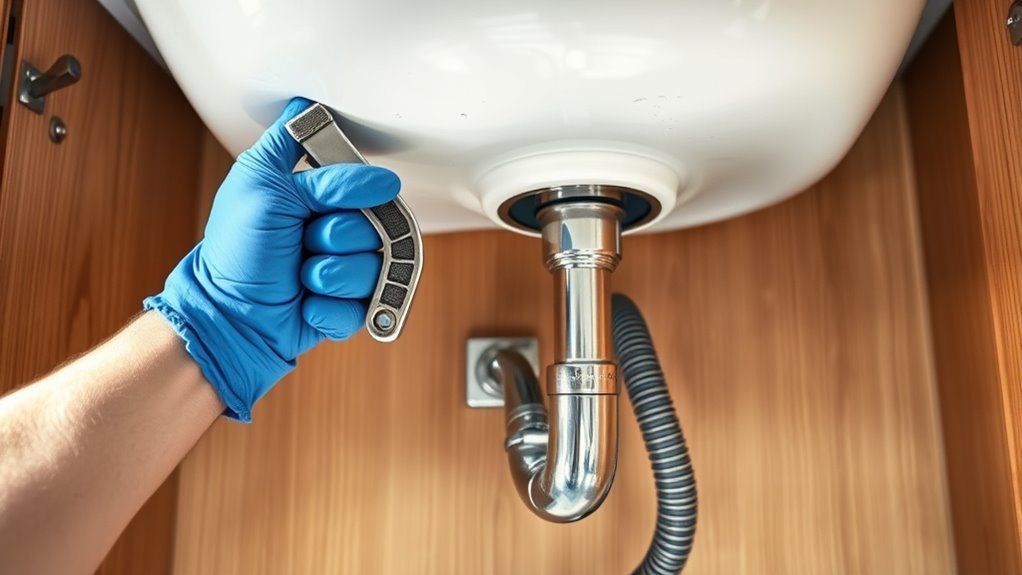
Loosen the slip nuts on the P-trap under your kitchen sink to remove this curved pipe section that often traps debris and causes clogs. Before you start, place a bucket underneath to catch any water and protect your cabinet from spills.
Carefully unscrew the nuts by hand or use pliers if needed, but don’t overtighten when reassembling. Once removed, inspect the P-trap for buildup like food particles, grease, or hair.
Use a bottle brush or old toothbrush with warm soapy water to clean the inside thoroughly. Rinse it well and check for cracks or damage as part of your P-trap maintenance routine. Replacing it if necessary prevents future leaks.
Always prioritize plumbing safety by turning off the water supply before beginning. After cleaning, reattach the P-trap securely, making sure the slip nuts are tight but not stripped.
Testing your sink afterward guarantees the clog is cleared and no leaks remain.
Common Mistakes to Avoid When Fixing a Clogged Kitchen Sink
Don’t just grab any harsh chemicals off the shelf—they can actually damage your pipes and make the clog worse. It’s better to use safer, more effective methods first. Before you dive in, double-check that you have the right tools on hand, so you don’t end up feeling frustrated or stuck halfway through. Skipping these steps can lead to more headaches down the road, so taking your time and avoiding these common mistakes will save you a lot of trouble in the long run.
Using Harsh Chemicals
Although harsh chemicals might seem like a quick fix for a clogged kitchen sink, they often cause more harm than good. You should avoid relying on these substances for several reasons:
- They can damage your pipes, leading to costly repairs.
- Harsh chemicals pose serious risks to your health if not handled properly.
- They harm the environment, contaminating water sources and killing beneficial bacteria.
- There are effective eco-friendly alternatives like baking soda and vinegar or enzymatic drain cleaners that clear clogs without the negative side effects.
Choosing these safer options not only protects your plumbing but also keeps your home and planet healthier. Always prioritize chemical safety and consider greener solutions before reaching for harsh chemicals.
Ignoring Proper Tools
Three common mistakes can make fixing a clogged kitchen sink much harder, and one of the biggest is ignoring the proper tools. When you jump into DIY solutions without the right tools, you risk wasting time and possibly damaging your plumbing.
Using makeshift tools or household items rarely works and often causes more problems. Instead, gather essential tools designed specifically for sink clogs.
| Tool | Purpose |
|---|---|
| Plunger | Dislodges blockages |
| Drain Snake | Reaches deep clogs |
| Adjustable Wrench | Removes trap fittings |
| Bucket | Catches water spills |
| Rubber Gloves | Protects your hands |
Choosing the right tools makes the repair process smoother and safer. It also helps you avoid unnecessary frustration.
When to Call a Professional Plumber
If your DIY efforts haven’t cleared the clog or the blockage keeps returning, it’s time to call a professional plumber. Knowing when to seek expert help can save you time, money, and stress, especially with plumbing emergencies where signs of urgency are critical.
Here are four clear signs you should call a plumber:
- Water backs up into other drains or your dishwasher, indicating a deeper blockage.
- You notice foul odors that don’t go away after cleaning.
- The sink leaks or shows water damage around the pipes.
- Your attempts to use plungers or drain snakes fail repeatedly.
Ignoring these signs might make the problem worse, leading to costly repairs or water damage. Professionals have the right tools and expertise to diagnose and fix complex clogs safely and quickly.
Don’t wait too long—calling a plumber promptly keeps your kitchen functional and stops plumbing problems from getting worse.
Prevent Clogs and Keep Your Kitchen Sink Smelling Fresh
To keep your kitchen sink running smoothly and smelling fresh, adopt simple habits that prevent clogs before they start. Preventive maintenance is key: avoid pouring grease, coffee grounds, and large food scraps down the drain. Use a drain strainer to catch debris and empty it regularly.
Make sure you run hot water for a few seconds after every use to flush away any residue. Regular cleaning is just as important. Once a week, pour a mixture of baking soda and vinegar down the drain, followed by hot water. This natural solution breaks down buildup and eliminates odors without harsh chemicals.
Also, wipe down the sink and faucet to prevent mold and mildew growth.
Frequently Asked Questions
Can Clogged Kitchen Sinks Cause Health Issues?
Yes, clogged kitchen sinks can cause health issues by trapping bacteria and mold in stagnant water.
This can lead to unpleasant odors and potential contamination.
You should prioritize clog prevention and sink maintenance to keep your kitchen safe and clean.
Regularly clearing debris and avoiding grease buildup helps prevent blockages.
Keeping your sink flowing smoothly isn’t just about convenience. It protects your household’s health by reducing harmful germs that thrive in clogs and slow drains.
What Types of Chemicals Damage Sink Pipes?
Imagine Sarah used a harsh drain cleaner on her PVC pipes, which caused corrosion and leaks.
Chemicals like strong acids or alkalis can damage pipe materials such as PVC, copper, or cast iron.
You should avoid those and opt for chemical alternatives like baking soda and vinegar, which are gentler.
Using safe options protects your pipes from deterioration, saving you costly repairs and keeping your kitchen sink in top shape.
How Does Water Hardness Affect Sink Clogs?
Water hardness directly affects sink clogs by causing mineral buildup inside your pipes. When hard water flows through, minerals like calcium and magnesium deposit on pipe walls, narrowing the passage and slowing drainage.
Over time, this buildup traps debris, which makes clogs worse. You’ll notice your sink drains slower if your water is high in minerals. To prevent this, think about using a water softener or cleaning your pipes regularly to reduce mineral buildup and keep water flowing smoothly.
Are Garbage Disposals Linked to Frequent Clogs?
If you don’t maintain your garbage disposal properly, you’ll probably face frequent clogs.
Imagine Sarah, who ignored disposal maintenance and kept tossing fibrous vegetable peels down the drain; her sink clogged every month.
Proper food waste management, like grinding small amounts and avoiding grease, can help prevent blockages.
You’ve got to clean your disposal regularly and be mindful of what you feed it to keep your sink flowing smoothly and clog-free.
Can Sink Clogs Impact Dishwasher Performance?
Yes, sink clogs can definitely impact your dishwasher’s performance. When your kitchen sink is clogged, water drains more slowly, which can cause the dishwasher to drain poorly or even back up.
This can lead to dirty dishes and potential damage to your appliance. To keep everything running smoothly, try to prevent clogs by regularly cleaning your sink drains and avoiding food particles going down the drain.
Staying on top of this helps maintain both your sink and dishwasher’s performance.
Conclusion
Clogged kitchen sinks affect over 60% of households at least once a year, so you’re definitely not alone. Using simple tools like a plunger or drain snake can often clear the blockage without calling a plumber.
Avoid common mistakes that can make the clog worse, and remember that regular maintenance helps prevent buildup and odors. A quick routine check can save you from future headaches.
If the clog persists despite your efforts, don’t hesitate to call a professional. With these tips, you’ll keep your kitchen running smoothly and stress-free, even when facing a stubborn sink clog.