How to Get Rid of Kitchen Gnats: A Step-by-Step Guide
Dealing with kitchen gnats can be incredibly frustrating. Many people struggle with these tiny pests buzzing around their countertops and food, making mealtime less enjoyable. If you’re tired of swatting at gnats or seeing them hover over your produce, you’re not alone.
Fortunately, there are simple, effective ways to get rid of these pesky insects and keep your kitchen gnat-free.
To get rid of kitchen gnats, start by identifying their breeding spots like overripe fruit, drains, or damp soil. Cut off moisture by fixing leaks, drying surfaces, and avoiding overwatering plants.
Use traps with apple cider vinegar or wine near problem areas. Clean your kitchen thoroughly, seal food tightly, and empty trash regularly.
If gnats persist, natural or chemical treatments might be needed. Keep these steps in mind, and you’ll soon uncover more ways to keep gnats away for good.
Key Takeaways
- Identify and eliminate gnat breeding sites by removing overripe fruits, vegetable scraps, and moist organic matter from the kitchen. Keeping your space clean helps prevent future infestations.
- Use apple cider vinegar or wine traps near fruit bowls, drains, and trash bins to attract and capture gnats effectively. These traps are simple and work well.
- Thoroughly clean kitchen surfaces, empty trash regularly, and keep areas dry and clutter-free. This disrupts gnat habitats and makes your kitchen less inviting.
- Avoid overwatering houseplants and fix leaks or standing water. Reducing moisture is key because gnats need damp environments to develop.
- Apply natural repellents or chemical treatments only if gnats stick around. Always follow safety instructions for the most effective control.
How to Identify Kitchen Gnats and Their Breeding Spots
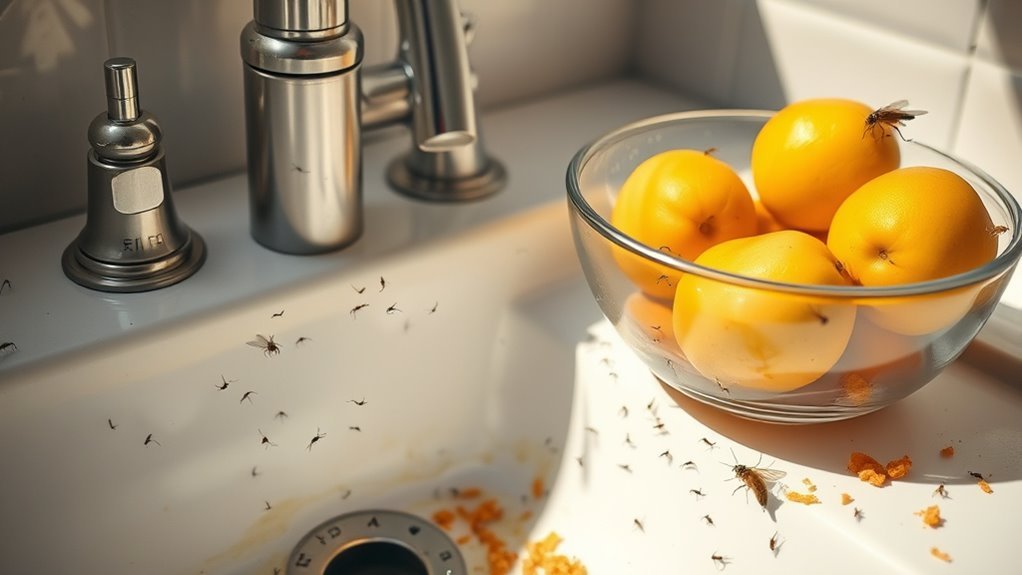
How can you tell if those tiny flying insects in your kitchen are gnats? First, notice their size and behavior—gnats are small, usually less than a quarter-inch, and hover near food or plants.
Understanding the gnat life cycle helps you identify them better. They lay eggs in moist, organic matter where their larvae can thrive, so spotting these breeding conditions is essential.
Knowing the gnat life cycle is key—they lay eggs in moist, organic material where larvae develop rapidly.
Look for damp spots like overripe fruits, vegetable scraps, or even soil in houseplants. These areas provide the perfect environment for gnats to breed quickly.
You might also see small clusters of larvae or pupae in these spots. Since their life cycle can complete in under two weeks, catching them early is vital.
Why Moisture Attracts Kitchen Gnats
Since gnats thrive in moist, organic environments, understanding why moisture draws them in can help you control their presence. Moisture sources like sink drains, damp sponges, overwatered plants, and leaky pipes create ideal breeding spots. These wet areas are perfect for gnats to lay eggs, which hatch into larvae that feed on decaying organic matter.
The gnat lifecycle depends heavily on moisture. Without it, they can’t complete their development. Moist environments keep larvae hydrated and nourished, speeding up their growth. By targeting moisture sources, you cut off the essential conditions gnats need to reproduce.
You’ll often find gnats clustering near fruit bowls or compost bins because these spots combine organic material with moisture. To reduce their attraction, focus on drying out these areas and fixing leaks. This way, you disrupt their lifecycle and lower the chances they’ll invade your kitchen again.
Quick Ways to Stop Kitchen Gnats From Spreading
Although kitchen gnats can multiply quickly, you can stop their spread by acting fast and targeting key breeding spots. Start by placing gnat traps near fruit bowls, drains, and trash cans where gnats tend to gather. These traps lure and catch adult gnats, helping to reduce their numbers right away.
Next, try prevention strategies like covering ripe fruit and sealing trash bins tightly to cut off their food sources. Check for any standing water or damp spots and dry them up quickly since these are prime breeding areas. Avoid overwatering houseplants, and consider using sand or gravel on the soil surface to stop gnats from laying eggs.
Quickly removing spoiled food and keeping surfaces dry also helps prevent gnats from multiplying. Combining gnat traps with these prevention tips will effectively halt their population growth. Acting swiftly is key to stopping gnats before they become a bigger problem.
Cleaning Your Kitchen to Get Rid of Gnats
Start by thoroughly cleaning your kitchen to eliminate the places where gnats breed and hide. Focus on clearing crumbs, spills, and food residues from countertops, sinks, and floors.
Empty and clean your trash bins regularly, as gnats are attracted to decomposing matter. Improve your kitchen organization by storing fruits and vegetables properly—use sealed containers or refrigeration to prevent overripe produce from attracting gnats.
Avoid leaving fruit out in the open for extended periods. Check drains and clean them to remove organic buildup where gnats can lay eggs. Wipe down cabinets and pantry shelves, removing any forgotten food sources.
Maintaining a clutter-free and organized kitchen limits gnat-friendly environments, making it harder for them to thrive. Regularly washing dishcloths and sponges also helps reduce breeding grounds.
Natural Remedies to Eliminate Kitchen Gnats Fast
Dealing with kitchen gnats can be really frustrating, but the good news is there are some natural remedies you can try that work quickly and are safe around your home.
One popular method is setting up a simple apple cider vinegar trap. Just pour some apple cider vinegar into a small bowl, add a few drops of dish soap, and cover it with plastic wrap. Poke tiny holes in the top, and the gnats will be attracted to the vinegar, get trapped, and won’t be able to escape.
Another effective trick is using essential oils as a natural repellent. Oils like peppermint, eucalyptus, or citronella can help keep those pesky gnats away. Just mix a few drops with water in a spray bottle and spritz around your kitchen, especially near the fruit and trash areas.
If you’re looking to make your own fruit fly spray, combining water, a splash of dish soap, and a little bit of apple cider vinegar in a spray bottle can do the trick. Spray it directly on the gnats or around your kitchen to reduce their numbers quickly.
These simple, natural solutions are a great way to control gnats without resorting to harsh chemicals, making your kitchen a more pleasant space again.
Apple Cider Vinegar Trap
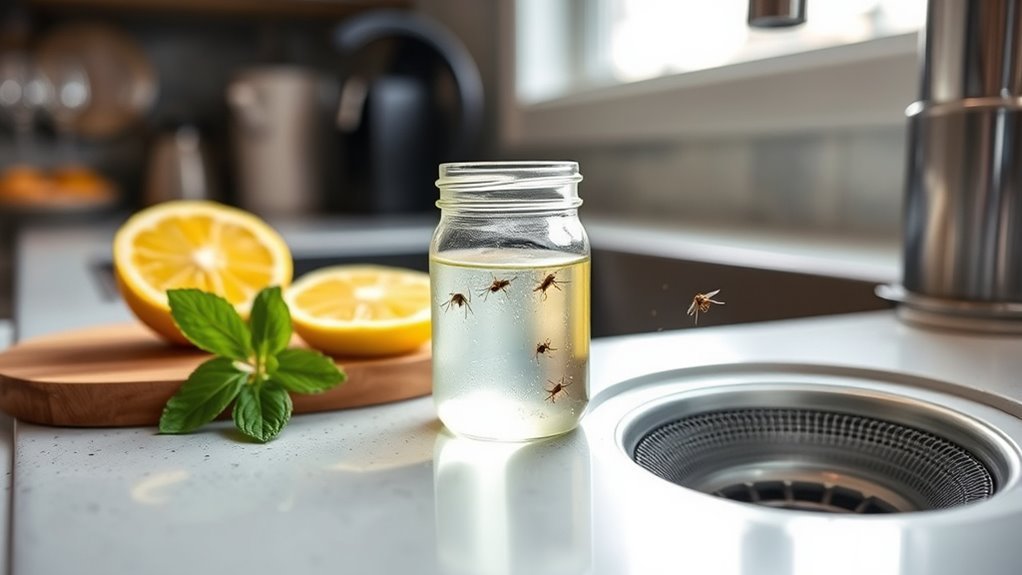
One of the simplest and most effective ways to trap kitchen gnats involves using apple cider vinegar. Its strong smell acts as a natural gnat attractant, drawing these tiny pests right to your trap.
To set it up, pour apple cider vinegar into a small bowl or jar. Add a few drops of dish soap to break the surface tension so gnats can’t escape once they land.
Cover the container with plastic wrap and poke small holes in it to let gnats in but keep them trapped. Place your trap near problem areas like fruit bowls or trash bins.
Within a day or two, you’ll notice fewer gnats buzzing around. This method is both easy and highly efficient for quick relief.
Essential Oils Repellent
While apple cider vinegar traps lure gnats in, essential oils work by keeping them away altogether. You can use specific essential oils known for their repellent properties to create an effective natural barrier against kitchen gnats.
Some essential oils mask the scents gnats are attracted to, deterring them from settling in your space. Try mixing essential oils for even better results.
Here are some effective blends and oils to consider:
- Peppermint and eucalyptus oil blend for a strong, fresh scent that repels gnats.
- Tea tree oil alone, known for its insect-repelling qualities.
- Lavender combined with citronella oil, calming for you but offensive to gnats.
Place diffusers or cotton balls soaked in these oils around your kitchen to keep gnats at bay naturally.
DIY Fruit Fly Spray
Spray a homemade fruit fly spray around your kitchen to quickly reduce the gnat population. You can make an effective homemade gnat spray using simple natural ingredients like apple cider vinegar, dish soap, and water.
Mix one cup of apple cider vinegar with a few drops of dish soap and two cups of water in a spray bottle. The vinegar attracts gnats, while the dish soap breaks the surface tension, trapping and killing them.
Spray this solution on countertops, near trash bins, and around fruit bowls where gnats gather. Using this natural homemade gnat spray is safe, non-toxic, and easy to prepare, helping you eliminate gnats fast without harsh chemicals.
Repeat daily until gnats disappear for best results.
How to Make Homemade Traps for Kitchen Gnats
Creating homemade traps for kitchen gnats is an easy and effective way to cut down their numbers fast. Knowing how gnats behave helps you design traps that lure and catch them quickly. They’re attracted to fermenting or sweet-smelling stuff, so your traps should use these as bait for the best results.
Here are three simple homemade trap ideas:
- Apple Cider Vinegar Trap: Fill a container with apple cider vinegar and add a few drops of dish soap. The soap breaks the surface tension, trapping gnats when they land.
- Fruit Trap: Put overripe fruit in a bowl and cover it with plastic wrap. Poke small holes in the wrap so gnats can get in but can’t escape.
- Wine Trap: Use leftover wine in a jar with a funnel. The funnel helps draw gnats inside and keeps them from getting out.
Place traps near areas where gnats gather, like fruit bowls or trash cans. Regularly replacing the bait keeps the traps working well and helps keep your kitchen gnat-free.
When to Use Chemical Treatments for Kitchen Gnats
You might want to turn to chemical treatments when the gnats are really taking over, especially if they’re multiplying fast and your homemade traps just aren’t doing the trick. It’s important to choose safe options to keep your family and pets protected while you tackle the problem. Knowing when to use these treatments and how to do it properly can help you take back control without any unnecessary hazards.
Signs Chemical Use Needed
Several clear signs indicate when chemical treatments become necessary for tackling kitchen gnats. If you notice that gnats persist despite thorough cleaning and natural remedies, it may be time to evaluate chemicals.
Since gnats reproduce rapidly, understanding their life cycle helps you act before larvae become adults, preventing a bigger infestation. Look out for these signs:
- Persistent swarms near sinks, drains, or trash bins after non-chemical attempts
- Visible larvae in moist areas that keep reappearing
- Rapid increase in gnat numbers over several days
When using chemicals, always prioritize safety. Follow label instructions closely to protect yourself and your family, and avoid overuse, which can be harmful and ineffective.
Choosing Safe Treatment Options
Although chemical treatments can effectively eliminate kitchen gnats, choosing safe options is essential to protect your health and home environment. You should opt for products with safe ingredients that maintain high treatment effectiveness without harmful side effects. Use chemicals only when natural methods fail or infestations worsen.
Here’s a quick guide on when to use certain treatments:
| Treatment Type | When to Use |
|---|---|
| Natural sprays | Mild infestations, prefer safe ingredients |
| Chemical sprays | Severe infestations, quick treatment needed |
| Gel baits | Targeted treatment, less airborne chemicals |
| Insect growth regulators | Long-term prevention, disrupt lifecycle |
How to Store Food to Prevent Kitchen Gnats
When storing food, keeping it sealed tightly can stop gnats from getting inside and laying eggs. Proper sealing is essential to effective food storage, so use airtight containers to block access to your pantry staples. This simple step reduces the chance of gnats finding a food source and multiplying.
To keep your kitchen gnat-free, focus on using airtight containers for grains, flours, and snacks. Regularly check your pantry for spills or opened packages, and discard expired or spoiled foods promptly.
Keeping your pantry organized helps you spot potential gnat attractants quickly. Always transfer food from original packaging into sealed containers when possible. This prevents gnats from being drawn to exposed food. By prioritizing airtight storage and proper sealing, you’ll reduce the risk of infestations and keep your kitchen cleaner and healthier.
Keeping Your Kitchen Dry to Avoid Gnats
If you want to keep gnats at bay, the first thing you should do is get rid of any standing water in your kitchen. Gnats love moist places, so drying up those spots makes a big difference.
Also, don’t forget to wipe down your counters and surfaces regularly. And if you notice any leaky faucets or pipes, make sure to fix them right away. Staying on top of these little things will help keep your kitchen dry and less attractive to those pesky gnats.
Eliminate Standing Water
Since gnats thrive in moist environments, eliminating standing water is crucial to keep them away from your kitchen. You can’t let moisture linger, so focus on drain maintenance and moisture control to disrupt their breeding grounds.
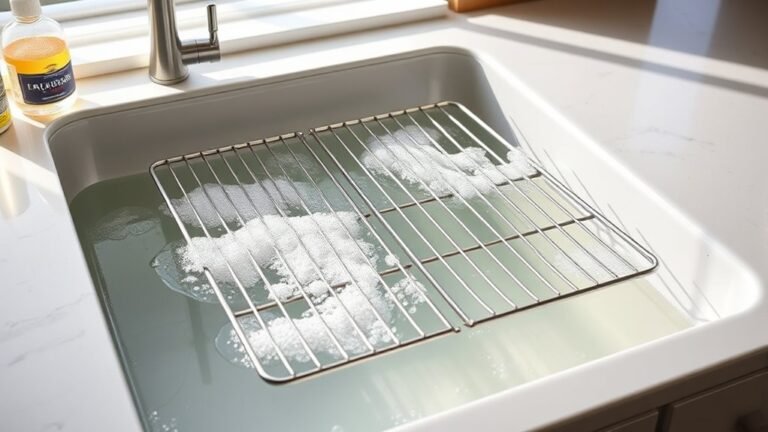
Regularly check and clear your sink drains, as clogs create perfect spots for gnats to multiply. Also, make sure no water pools under your refrigerator or dishwasher.
Pay attention to places where condensation builds up, like around pipes or windows. Fix leaky faucets and pipes immediately. Empty and dry pet water bowls daily.
Use a drain cleaner weekly to prevent buildup. These simple steps can make a big difference in keeping gnats out of your home.
Wipe Surfaces Regularly
Moisture doesn’t just collect in drains or under appliances; it can also linger on countertops, cabinets, and other surfaces. To keep gnats away, you need to wipe these areas regularly.
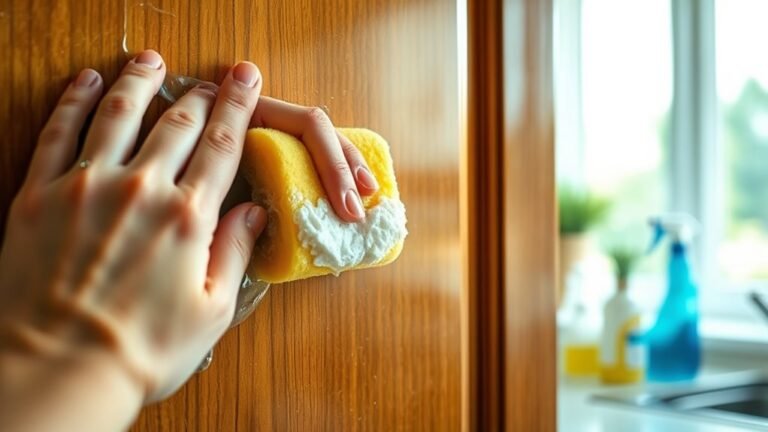
Incorporate wiping into your cleaning routine by using a clean cloth or sponge to dry surfaces after cooking or cleaning. Stick to a consistent schedule, ideally wiping down your kitchen surfaces daily to prevent moisture buildup.
This simple habit disrupts the damp environment gnats thrive in, making your kitchen less inviting to them. By staying vigilant and keeping surfaces dry, you’re cutting off a key part of their lifecycle.
Make wiping a routine. It’s one of the easiest and most effective steps you can take to control gnats.
Fix Leaky Faucets
Even a small drip from a leaky faucet can create the damp conditions gnats love. To keep your kitchen dry and gnat-free, it’s important to fix plumbing issues quickly. Ignoring faucet repairs wastes water and can invite these pests to breed.
Here’s how you can handle leaky faucets effectively:
- Check your faucets regularly for drips or moisture buildup.
- Replace worn-out washers or seals to stop leaks.
- If leaks continue after basic repairs, call a professional.
Long-Term Tips to Keep Your Kitchen Gnat-Free
To keep your kitchen gnat-free over time, you’ll need to develop consistent habits that target their breeding spots. Start by using effective prevention methods like regularly emptying trash bins and cleaning drains where moisture and organic matter build up.
Stick to good kitchen hygiene practices such as wiping down counters, washing dishes promptly, and storing fruits and vegetables in sealed containers. Avoid leaving damp sponges or cloths around, since gnats love moist environments.
Take out the compost regularly and make sure your garbage cans have tight-fitting lids. Keep an eye on leaks or standing water and fix them quickly to eliminate gnat habitats. Using these habits consistently will break the gnat life cycle and keep their numbers down.
Frequently Asked Questions
Can Kitchen Gnats Bite Humans or Pets?
Kitchen gnats don’t bite humans or pets because they mainly feed on decaying organic matter, not blood. You won’t feel any bites or stings from them. Still, they can be pretty annoying and might spread bacteria.
To keep your home safe, focus on pest prevention. Keep your kitchen clean and get rid of food sources that attract gnats. This way, you’ll reduce their presence without worrying about bites or health issues.
Are Kitchen Gnats Harmful to Food Safety?
Kitchen gnats aren’t directly harmful to food safety, but they can carry bacteria and contaminate your food.
You should focus on gnat prevention tips like keeping your kitchen exceptionally clean—clean spills, take out trash regularly, and store food properly.
By staying proactive, you’ll reduce their presence and protect your food from potential contamination.
Don’t let gnats multiply; maintaining a clean kitchen is your best defense.
Do Kitchen Gnats Spread Diseases?
Kitchen gnats don’t usually spread diseases to people, but you shouldn’t ignore them. Their quick life cycle means they multiply fast, which can increase the chance they contaminate your food or surfaces.
You should keep your kitchen clean by wiping up spills, getting rid of overripe fruit, and emptying the trash regularly. This helps break their breeding cycle and keeps your kitchen safer and more comfortable for you and your family.
How Quickly Do Kitchen Gnats Reproduce?
Kitchen gnats reproduce quickly, completing their lifecycle in about one to two weeks. You’ll notice high reproduction rates because a single female can lay hundreds of eggs in moist, organic matter.
These eggs hatch into larvae within days, then pupate and emerge as adults ready to breed again. Because of this rapid cycle, gnats can multiply fast, so acting quickly is key to controlling their population before it explodes.
Can Gnats Infest Other Areas Besides the Kitchen?
Of course, gnats are thrilled to RSVP to every room party, not just your kitchen! They invade bathrooms, potted plants, and even your pantry—because who wouldn’t want to crash those spots?
Knowing their gnat life cycle helps you time your prevention tips perfectly. Keep drains clean, avoid overwatering plants, and seal food tightly.
Otherwise, expect these tiny unwelcome guests to multiply and spread faster than your patience!
Conclusion
Getting rid of kitchen gnats takes persistence, but remember, “a stitch in time saves nine.” By identifying breeding spots, keeping surfaces dry, and storing food properly, you can stop these pests before they multiply.
Use natural remedies first, turning to chemical treatments only when necessary. Stay consistent with cleaning and moisture control, and your kitchen will stay gnat-free for good.
With these steps, you’ll enjoy a fresh, pest-free cooking space in no time. Kitchen gnats won’t stand a chance when you follow this plan.