How to Organize Kitchen Cabinets and Drawers: A Step-by-Step Guide
Many people struggle with keeping their kitchen cabinets and drawers organized, and you’re not alone. Clutter can quickly take over, making it hard to find what you need and turning cooking into a frustrating chore.
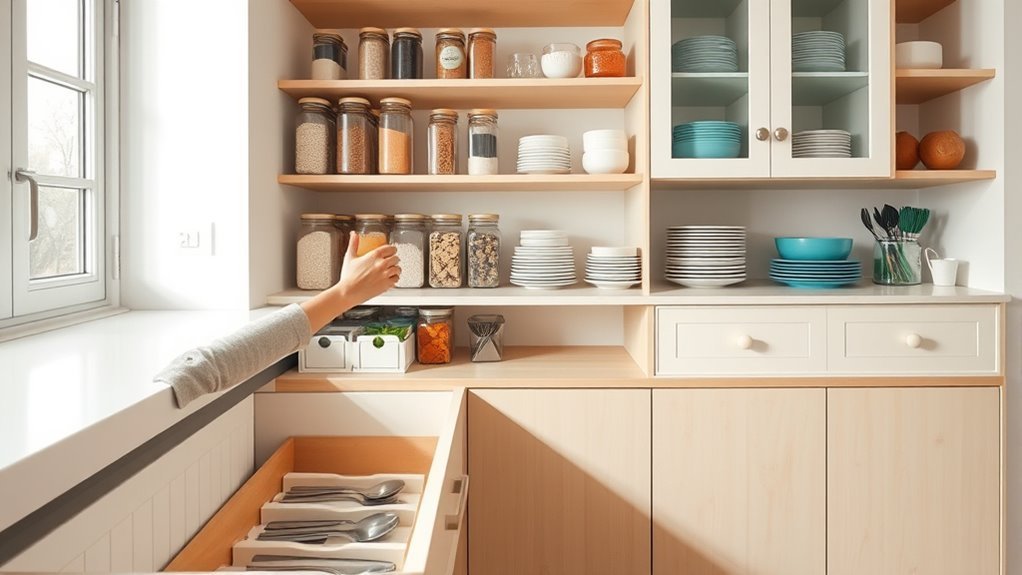
Start by clearing out all cabinets and drawers, then sort items by usage frequency, placing daily essentials within easy reach. Assess your storage needs to choose organizers like dividers and pull-out trays that fit your space.
Maximize vertical space using adjustable shelves or wall-mounted racks. Group utensils and pantry items for quick access, and label containers for easy identification.
Maintain this system with simple daily habits, and you’ll soon enjoy a more efficient, clutter-free kitchen. Learn how to refine each step for lasting order.
Key Takeaways
- Empty all cabinets and drawers, then sort items into keep, donate, and discard piles to declutter effectively.
- Group kitchen items by how often you use them, and store daily essentials where they’re easiest to reach.
- Think about your storage needs and use drawer organizers, adjustable shelves, and vertical dividers to make the most of your space.
- Maximize vertical space by adjusting shelf heights and adding multi-tiered or wall-mounted racks.
- Protect and organize pots, pans, lids, and utensils with dividers and protectors, and develop regular habits to keep everything neat.
Clear Out and Declutter Your Kitchen Cabinets and Drawers
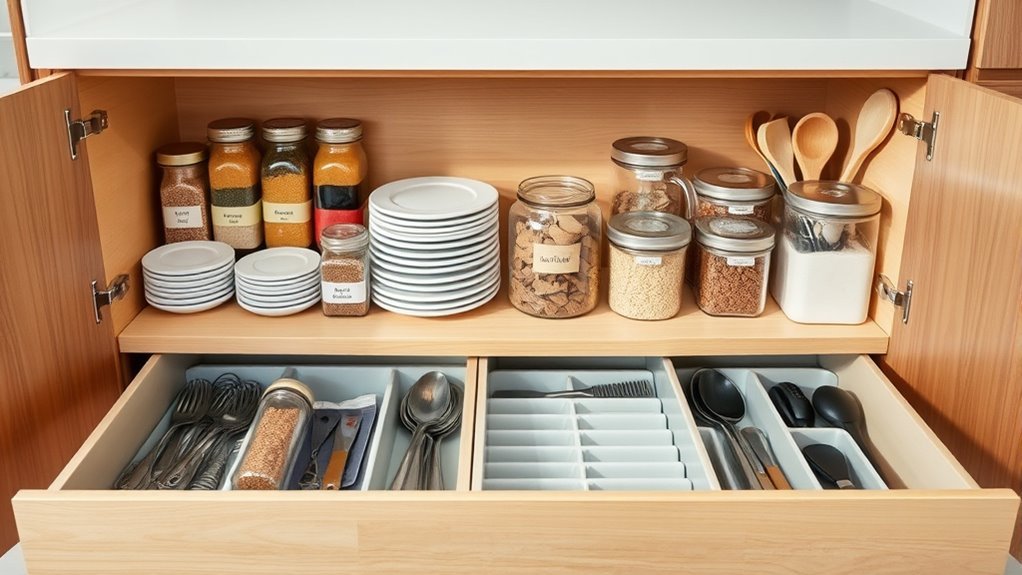
Start by emptying all your kitchen cabinets and drawers completely. This clears the way for a fresh start and helps you see exactly what you have. As you remove items, sort through everything carefully.
Keep what you regularly use and consider setting aside duplicates, expired goods, or items you no longer need for a kitchen donation. Donating gently used kitchen tools and dishware benefits others and frees up your space.
Next, think about seasonal rotation. Store off-season items like holiday dishware, special baking tools, or summer grilling accessories in less accessible spots. This saves prime cabinet space for everyday essentials.
Consider seasonal rotation by storing off-season kitchen items in less accessible areas to save space for daily essentials.
This strategy keeps your kitchen streamlined and prevents clutter from piling up. Clearing and decluttering your cabinets not only simplifies organization but also makes your kitchen more functional.
You’ll enjoy cooking and find what you need faster when you’ve thoughtfully cleared out and donated unwanted items while planning for seasonal rotation.
Sort Items by How Often You Use Them
After clearing out your cabinets, start grouping items based on how often you use them. Sorting by frequency helps you focus on what’s essential, making daily cooking easier.
Place items you use every day in easy-to-reach spots. Less-used items can go higher or deeper in your cabinets, so they’re out of the way but still accessible when needed.
Use your everyday items, like coffee mugs and spices, for quick access. Seasonal bakeware or large appliances can be stored away until needed.
Here’s a simple guide to help you sort by how often you use things:
| Usage Frequency | Examples |
|---|---|
| Daily | Coffee mugs, utensils |
| Several times a week | Plates, pots |
| Weekly | Baking pans, mixing bowls |
| Monthly | Specialty gadgets |
| Rarely | Holiday dishes, large appliances |
This method keeps your kitchen organized and clutter-free, making everything easier to find.
Assess Your Storage Needs Before Choosing Solutions
First things first, take a good look at everything you have in your kitchen. Make a list of all the items you need to store so you can get a clear picture of what’s really necessary. Once you know what you’re working with, think about any tricky spots—like weird cabinet shapes or tight spaces—that might make storage a bit more challenging. Knowing these details upfront will help you pick the right storage solutions that fit your kitchen perfectly.
Inventory Your Kitchen Items
Before choosing storage solutions, take a good look at all your kitchen items. Gather everything from your cabinets and drawers so you can see exactly what you have.
Making a detailed inventory helps you understand the types and amounts of items you need to store. Then, group similar items like baking supplies, cookware, utensils, and pantry goods together.
This makes it easier to figure out how much space each category needs and which storage options will work best. Organizing your items this way helps you avoid buying unnecessary containers and ensures every item has a designated spot.
In the end, your kitchen will be more functional and clutter-free.
Identify Storage Challenges
One key step in organizing your kitchen cabinets is identifying your storage challenges. Start by analyzing your kitchen layout to spot clutter hotspots and accessibility issues that slow you down. Consider how your functional zones match your daily tasks and if multi-purpose items have a dedicated spot.
Think about seasonal items—do they take up valuable everyday space? Focus on space optimization by checking if your current setup supports ergonomic design and visual organization, making it easier to find what you need. Pinpoint where your storage solutions fall short and where you can improve.
This will help you tailor your organization to your needs and create a kitchen that’s both efficient and enjoyable to use.
Choose the Best Storage Solutions for Your Cabinets
Looking to make the most of your cabinet space? The key is to pick storage solutions that fit your items just right. Drawer organizers, for example, are fantastic for keeping utensils and small tools neat and easy to find. They help you stay organized without any hassle.
When choosing storage options, think about ones that maximize every inch of your cabinet without creating clutter. It’s all about finding that perfect balance between functionality and keeping your kitchen looking tidy.
Maximize Cabinet Space
Although kitchen cabinets provide valuable storage, you’ll want to choose the right solutions to truly maximize their space. Start by evaluating your kitchen zones and planning functional layouts that make sense for how you cook and store items.
Here’s how you can maximize cabinet space effectively:
- Use adjustable shelves to customize storage heights, fitting taller items without wasting space.
- Install pull-out trays or lazy Susans to access items in deep or corner cabinets easily.
- Add vertical dividers for trays and cutting boards to keep them upright and organized.
Select Drawer Organizers
When you want to keep utensils, gadgets, and small kitchen tools neatly arranged, choosing the right drawer organizers makes a big difference. Start by checking out your drawer types—deep drawers work great with adjustable dividers, while shallow ones do better with custom trays.
Think about the materials too. Bamboo is durable and has a natural look, plastic is budget-friendly and easy to clean, and metal adds a sleek, modern vibe. Pick materials that match your kitchen style and can handle daily use.
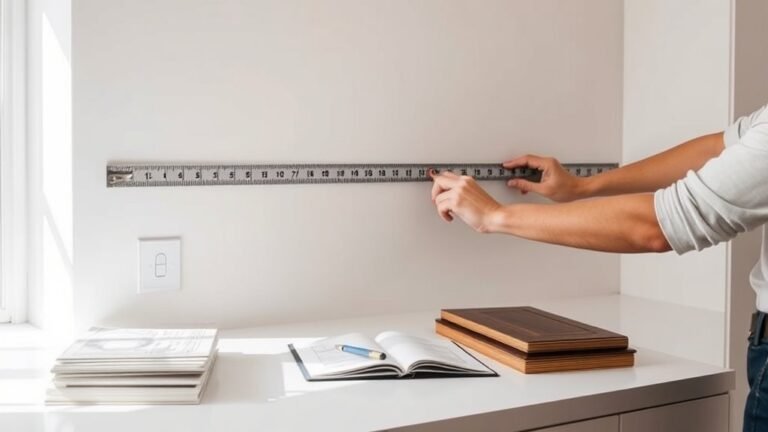
Make sure to measure your drawers carefully to get a perfect fit. By selecting organizers suited to your drawer types and materials, you’ll create a tidy, efficient space. It’ll make cooking and cleanup way quicker and more enjoyable.
Maximize Vertical Space With Shelves and Racks
Adding extra shelves and racks can instantly boost your kitchen cabinet’s storage capacity by using the often-overlooked vertical space. To make the most of this, focus on these three key strategies:
- Adjust shelf height to fit your items perfectly. Customizing shelf height allows for efficient vertical stacking, so you won’t waste any space. Use shelf dividers to keep stacked items stable and easy to access.
- Install multi-tiered racks and tiered organizers inside cabinets. These add extra layers for smaller items, creating storage that’s both functional and attractive.
- Consider wall-mounted shelves and overhead racks in your kitchen. Proper placement here maximizes unused wall space, freeing up cabinet room and keeping essentials within reach.
Organize Pots, Pans, and Lids Efficiently
Want to make better use of your kitchen space? One simple trick is to stack your pots and pans neatly inside your cabinets. It keeps everything organized and frees up some much-needed room.
And don’t forget about those lids! Storing them vertically with a rack or organizer makes them super easy to grab and prevents clutter from piling up. Using special cabinet organizers designed for cookware can really help keep everything accessible and looking tidy.
Stack Pots and Pans
Stacking pots and pans efficiently saves space and keeps your kitchen organized. To master stacking techniques, focus on these three key points:
- Pan placement and weight distribution: Start with the heaviest, largest pots at the bottom and stack lighter pans on top. This helps prevent damage and keeps everything stable.
- Pot protection and material considerations: Use felt or silicone protectors between pots and pans to avoid scratches, especially for nonstick or delicate surfaces.
- Size variations and accessibility options: Nest pots by size to save space, but keep your most-used items within easy reach to make cooking more convenient.
Store Lids Vertically
Once your pots and pans are neatly stacked, handling lids can bring even more order to your kitchen cabinets. Storing lids vertically saves space and makes it easier to find the right one quickly.
You can use vertical dividers designed for lid storage or repurpose a magazine holder. Place the dividers inside a cabinet or drawer, then arrange lids upright between them.
This method prevents lids from piling up and keeps them visible. It also reduces the risk of scratching or damaging lids stacked on top of each other.
Vertical lid storage maximizes your cabinet space and streamlines your cooking prep. Keeping lids organized this way means less time searching and more time enjoying your kitchen.
Use Cabinet Organizers
Maximize your cabinet space by using specialized organizers for pots, pans, and lids. Picking the right cabinet styles and organizational tools can help your kitchen look great and work better.
Here are three space-saving ideas to consider:
- Adjustable drawer dividers help you separate pots and pans neatly, making everything easier to access and keeping your kitchen tidy.
- Vertical racks or tiered shelves make the most of vertical space and stop stacking damage. You can find options in different materials to match your cabinet style.
- DIY organizers are budget-friendly and customizable. They fit your specific needs and boost usability without sacrificing style.
Arrange Kitchen Utensils and Cutlery for Quick Reach
Start by grouping your kitchen utensils and cutlery based on how often you use them. Prioritize utensil placement so your most-used items are within easy reach. This reduces time spent searching and makes meal prep quicker.
Next, focus on cutlery visibility by using dividers or trays that separate forks, knives, and spoons clearly. Transparent or open organizers help you see everything at a glance, making it easier to grab what you need.
Consider arranging utensils vertically or by type for quick identification. Here’s a simple layout to guide your organization:
| Item Type | Placement Priority | Storage Solution |
|---|---|---|
| Everyday | Front drawer | Divided tray |
| Occasional | Middle drawer | Utensil holder |
| Rarely Used | Cabinet container | Lidded box or basket |
Keep frequently used utensils upfront, and store less-used items away but still accessible. This approach maximizes efficiency and keeps your kitchen organized and functional.
Organize Pantry Items for Visibility and Freshness
Although pantry items come in all shapes and sizes, organizing them for visibility and freshness can save you time and reduce waste. Start by grouping similar items together, like grains, snacks, and canned goods. This way, you can quickly spot what you need and avoid buying duplicates.
Next, use clear containers or jars to store loose items. Transparent storage lets you see what’s inside at a glance, helping you keep track of freshness and avoid expired products. Finally, place older items toward the front and newer purchases in the back. This rotation method keeps everything fresh and minimizes spoilage.
- Group like items for easy access and inventory checks.
- Use clear containers to improve pantry visibility and freshness.
- Rotate stock by placing older products upfront to maintain freshness.
These simple steps make it easy to keep your pantry organized, visible, and fresh every day.
Label Containers and Shelves to Keep Things Easy
When you label containers and shelves, you make it easier to find and return items quickly. Start by choosing a clear label design that matches your kitchen’s style—simple fonts and contrasting colors work best for readability.
Think about the containers you use; airtight jars, bins, and baskets all benefit from labels that specify contents like “Flour,” “Pasta,” or “Snacks.” Use waterproof or laminated labels to withstand spills and humidity.
Place labels on both containers and shelf edges so you can identify items whether they’re inside or stored away. Consistent label placement helps keep things organized and speeds up your cooking routine.
If you store similar container types, add extra info like expiration dates or usage instructions on the labels. Clear, well-thought-out labeling reduces clutter and prevents misplacing items, making your kitchen more efficient every day.
Maintain Kitchen Organization With Easy Daily Habits
If you want your kitchen to stay tidy long-term, adopting simple daily habits makes all the difference. By adding small routines, you’ll keep your cabinets organized and enjoy cooking without stress from clutter.
Simple daily habits transform your kitchen, keeping cabinets organized and cooking stress-free.
Here are three easy daily habits to keep your kitchen in top shape:
- Daily cleaning: Wipe down countertops and cabinet handles after each meal prep. This helps prevent grime buildup and keeps your space inviting.
- Return items immediately: Always put pots, pans, utensils, and ingredients back in their spots right after use. It saves time and keeps things orderly.
- Quick nightly reset: Spend 5 minutes at the end of the day tidying drawers and shelves. This simple step ensures everything stays organized and ready for your next cooking session.
Stick to these habits, and you’ll find your kitchen cabinets and drawers stay neat, making cooking easier every day.
Frequently Asked Questions
How Often Should I Deep Clean My Kitchen Cabinets and Drawers?
You should aim for a deep cleaning every three to six months to keep your kitchen cabinets and drawers in good shape. This schedule helps prevent grease buildup, dust, and food residue from piling up.
To maintain your cabinets, wipe up spills right away and use gentle cleaners to protect the finish. Regularly checking for expired items also keeps everything fresh.
Sticking to this routine makes your kitchen cleaner and more organized without much effort.
What Materials Are Best for Organizing Kitchen Drawers?
Imagine cluttered drawers next to neatly separated ones. Drawer dividers and kitchen trays create that clear contrast. You’ll want durable materials like bamboo or plastic since they’re easy to clean and resist moisture.
Bamboo adds a natural touch, while plastic trays offer customizable sections for utensils and gadgets. Using adjustable drawer dividers helps you maximize space and keep everything visible and accessible.
With these materials, your kitchen drawers stay tidy and functional effortlessly.
Can I Organize Cabinets Without Buying New Storage Containers?
Yes, you can definitely organize cabinets without buying new storage containers. Use drawer dividers to separate utensils or small items, making everything easier to find.
Shelf risers help you maximize vertical space, so you can stack plates or cups without clutter. You can also repurpose jars, baskets, or boxes you already have to keep things tidy.
With a bit of creativity, your cabinets can look organized without extra spending.
How Do I Prevent Pests in Pantry Storage Areas?
Did you know 48% of households face pest problems due to improper storage? To prevent pests in your pantry, start by identifying what kind of pests you’re dealing with.
Use airtight storage solutions like glass jars or sealed bins to keep food fresh and pests out. Regularly clean shelves and check for expired items.
Keeping everything sealed and tidy not only keeps pests away but also makes your pantry more organized and safe.
Are There Eco-Friendly Options for Kitchen Organization Products?
Yes, you can definitely choose eco-friendly containers made from sustainable materials like bamboo, glass, or recycled plastic. These options help reduce waste and are often more durable.
When organizing your kitchen, look for products labeled as sustainable or biodegradable to minimize environmental impact. Using eco-friendly containers not only keeps your pantry tidy but also supports a greener lifestyle.
Conclusion
By clearing clutter and sorting items by use, you’ll create a kitchen that flows smoothly. Think of your cabinets as a stage where every utensil and pantry item has its perfect spot, ready to shine when you need it.
With labels and smart storage, keeping everything in order becomes much easier. It’s all about making your kitchen both functional and inviting.
So, take these steps today. Watch your kitchen transform into a space where efficiency and ease work together perfectly, thanks to a well-organized kitchen cabinet and drawer system.