Counter Depth vs. Standard Depth Refrigerator: Which Is Better?
Feeling overwhelmed trying to choose the right refrigerator for your kitchen? You’re not alone—many people struggle with balancing style, space, and storage needs.
The decision between a counter depth vs. standard depth refrigerator can be tricky, especially with so many options out there.
Choosing between a counter depth and standard depth refrigerator depends on your kitchen space and storage needs. If you want a sleek, built-in look that fits flush with cabinets, counter depth is great but usually offers less capacity and costs more.
Standard depth models give you more storage and flexibility but can stick out and affect kitchen flow. Your choice hinges on balancing style, space, and budget, and there’s more to contemplate about efficiency and features ahead.
Key Takeaways
- Counter depth refrigerators offer a sleek, built-in look by sitting flush with cabinetry, which really enhances your kitchen’s style and flow.
- Standard depth refrigerators provide much more storage capacity, making them perfect for larger families or those who need to store lots of food.
- Counter depth models usually use less total energy, but they tend to have higher energy use per cubic foot compared to standard ones.
- Standard depth refrigerators are generally more budget-friendly, come in a variety of sizes, and are easier to install.
- Counter depth units work well in modern, smaller kitchens where you want better traffic flow, while standard depth models fit larger kitchens that need maximum storage.
What Is a Counter Depth Refrigerator?
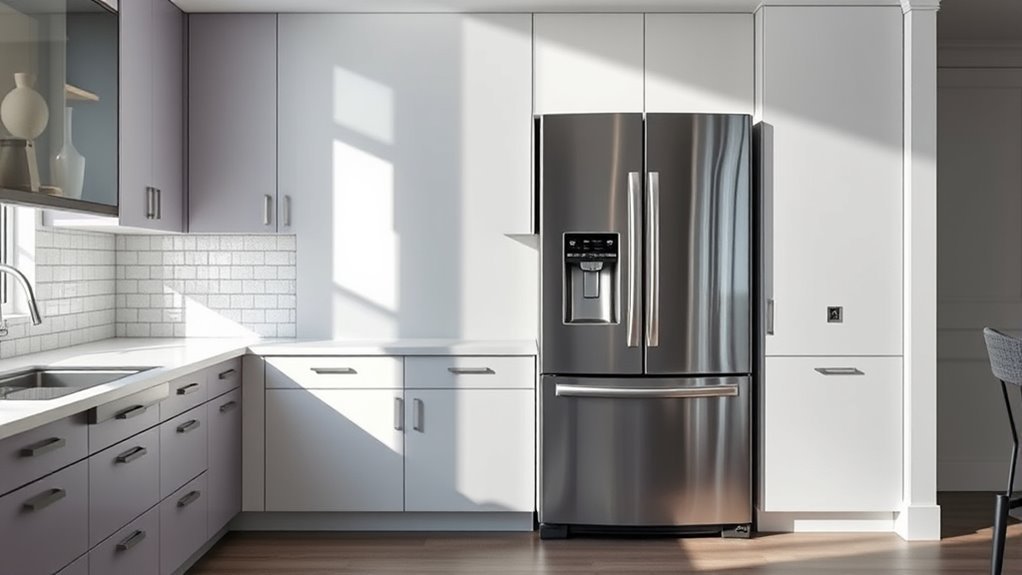
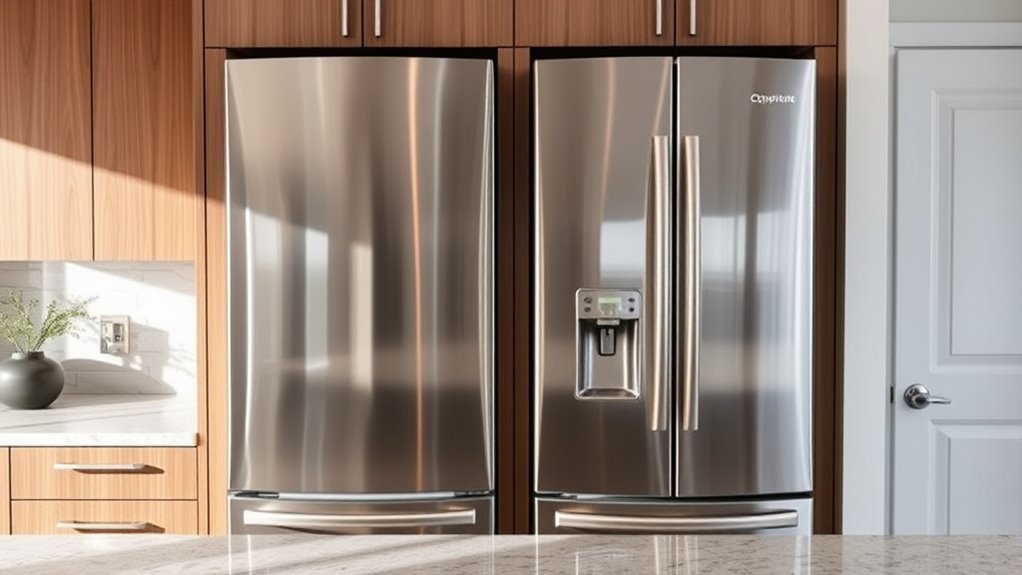
Although counter depth refrigerators may look similar to standard models, they’re designed to sit flush with your kitchen cabinets and countertops. This creates a sleek, built-in look that boosts your kitchen’s style.
Counter depth refrigerators sit flush with cabinets, creating a sleek, built-in look that enhances your kitchen’s style.
When you choose a counter depth model, you get benefits like better traffic flow and a less bulky feel. It makes your kitchen seem more spacious and organized.
You’ll notice how these refrigerators minimize the gap between the appliance and your cabinetry, giving your kitchen a custom, high-end vibe.
Counter depth refrigerators are typically shallower than standard models, so they don’t stick out as far into the room. This makes moving around easier and keeps your kitchen layout more practical.
With these benefits, you get both style and function, blending your refrigerator seamlessly into your kitchen’s design without sacrificing usability.
What Is a Standard Depth Refrigerator? Storage Benefits Explained
A standard depth refrigerator typically measures about 30 to 36 inches deep. It provides plenty of interior space, so you can store all your groceries comfortably. Compared to counter depth models, standard depth fridges usually have wider shelves and more capacity, making them great for larger families or those who like to keep a lot of food on hand.
That said, because they’re a bit bigger, they can stick out beyond your cabinets, which might affect the overall look and flow of your kitchen. So, it’s a good idea to measure your space carefully before choosing one!
Definition and Dimensions
Standard depth refrigerators usually measure about 30 to 36 inches from front to back, matching closely with your kitchen counters. This size helps the fridge blend smoothly with most kitchen styles, keeping a balanced and sleek look.
Unlike counter depth models, standard depth refrigerators stick out a bit beyond your cabinets, giving you more interior space. They come in a wider range of sizes and configurations, so you can find one that fits your needs best.
While they may protrude slightly, their extra depth means you can store larger items without squeezing. If you’re looking to maximize storage without changing your kitchen’s overall look, a standard depth refrigerator might be just right for your space and lifestyle.
Maximizing Interior Storage
When you choose a standard depth refrigerator, you get extra interior space that makes it easier to store bulkier items. This extra depth allows you to fit larger containers, tall bottles, and family-sized trays without constantly rearranging.
You’ll find that organizing your groceries becomes simpler too. Wider shelves and deeper compartments give you more flexibility to arrange everything logically. This makes accessing items a lot easier and less frustrating.
Adjustable shelves and clear bins are useful features that let you customize the layout to suit your needs. Overall, a standard depth fridge offers practical storage benefits if you prioritize space and easy access over a sleek, flush kitchen look.
Common Kitchen Fit Issues
Choosing a refrigerator that fits well in your kitchen can be just as important as maximizing interior storage. When considering a standard depth refrigerator, you need to carefully measure your kitchen dimensions to avoid common fit issues.
These models typically extend beyond the counter, which might disrupt your appliance alignment and overall kitchen flow. If your space is tight, a standard depth fridge can create awkward gaps or block pathways.
On the other hand, counter depth refrigerators align better with cabinetry and counters, offering a streamlined look but often sacrificing some storage capacity. To guarantee a smooth fit, double-check door swings, clearance for ventilation, and proximity to other appliances.
Counter Depth vs. Standard Depth: Size and Capacity Compared
Although counter depth refrigerators save space by aligning with your cabinets, they usually offer less storage compared to standard depth models. You’ll appreciate the improved design aesthetics and better kitchen flow with counter depth. But if capacity matters most, standard depth might be your pick.
Here’s a quick comparison to help you decide:
| Feature | Counter Depth | Standard Depth |
|---|---|---|
| Depth (inches) | 24-30 | 30-36 |
| Width (inches) | 30-36 | 30-36 |
| Average Capacity | 18-22 cubic feet | 22-28 cubic feet |
| Kitchen Flow Impact | Better flow, sleek look | Slightly protrudes |
| Storage Convenience | Less deep, easier access | More space, deeper |
Counter depth models keep your kitchen streamlined but sacrifice storage. Standard depth gives you more room but can affect the kitchen flow. Choose based on whether you prioritize aesthetics or capacity.
Which Refrigerator Saves More Kitchen Space?
How much kitchen space can you actually save with a counter depth refrigerator? These models are designed to align with your countertops, reducing the fridge’s footprint and increasing space efficiency. Unlike standard depth refrigerators, which can protrude beyond your cabinetry, counter depth options keep walkways clear and create a more streamlined look.
If you have a smaller kitchen or want to maximize open floor space, a counter depth fridge is a smart choice. It frees up room around your kitchen, making it easier to move and work. Plus, this increased space efficiency often improves kitchen aesthetics by giving your space a built-in, tailored appearance.
That said, you’ll sacrifice some interior capacity with counter depth models compared to standard depth refrigerators. But if saving kitchen space and enhancing your kitchen’s visual flow are priorities, the counter depth fridge wins in this category. It’s all about balancing your storage needs with your space goals.
Energy Efficiency: Counter Depth vs. Standard Depth Models
When you’re trying to decide between a counter depth and a standard depth refrigerator, one of the main things to consider is how they stack up in terms of energy consumption and efficiency. It’s pretty important because it can directly impact your utility bills, and nobody wants surprises on their monthly statement, right? So, let’s take a closer look at what factors you should be checking out to make the best choice for your home.
Energy Consumption Comparison
Because energy efficiency plays a significant role in your appliance choices, comparing the energy consumption of counter depth and standard depth refrigerators is essential.
Counter depth models usually have less internal volume, which often results in lower energy consumption. However, this smaller size can mean you might need to run the fridge more often or use extra storage, which could offset the savings.
Standard depth refrigerators generally have larger capacities, which can increase energy use. But their efficient design sometimes balances this out.
In terms of energy efficiency, the difference between the two isn’t always drastic. Your actual consumption depends on factors like usage habits and model features, so consider these alongside size when aiming to save energy and reduce utility costs.
Efficiency Ratings Explained
Although counter depth and standard depth refrigerators differ in size, their energy efficiency ratings give a clearer picture of how they actually perform. You’ll see that energy ratings show how much power a model uses in a year, while efficiency metrics compare energy use relative to storage capacity.
This allows you to compare models even if they’re different sizes. Here’s a quick comparison to help you visualize the differences:
| Model Type | Energy Rating (kWh/year) | Efficiency Metric (kWh/cu.ft./year) |
|---|---|---|
| Counter Depth | 450 | 4.5 |
| Standard Depth | 600 | 3.8 |
| Average Range | 400-650 | 3.5-5.0 |
Impact on Utility Bills
Understanding the energy ratings and efficiency metrics helps you estimate how much each refrigerator type will affect your monthly utility bills. When you compare energy use between counter depth and standard depth models, you’ll see that standard depth refrigerators often save you more on utility costs.
That’s mainly because they usually have larger capacities and more efficient compressors, which cut down energy consumption per cubic foot. Counter depth models, while stylish and space-saving, sometimes use a bit more power due to their compact design and less insulation.
But the difference in energy use isn’t huge. So, your decision should also consider your space and style preferences. Ultimately, knowing the specific energy ratings on each model gives you a clearer picture of potential savings and helps you choose the best fit for your budget.
Best Kitchen Layouts for Counter Depth and Standard Depth Refrigerators
Where you place your refrigerator can really impact your kitchen’s flow and functionality.
Counter depth refrigerators work best when you want a sleek, integrated look without disrupting traffic. They sit flush with your cabinets, making the most of space in smaller kitchens or open layouts.
You can position them near prep areas without worrying about doors blocking walkways.
In contrast, standard depth refrigerators are better when storage capacity is a priority.
If your kitchen has a spacious pantry or wide aisles, placing a standard depth fridge on a less-traveled wall keeps it accessible but unobtrusive.
This setup works well in U-shaped or L-shaped kitchens where you can create a dedicated storage zone without blocking circulation.
How Grocery Habits Influence Refrigerator Choice
Your grocery habits really shape what kind of fridge is best for you. If you’re someone who hits the store often or likes to buy in bulk, you’ll need a fridge with enough space to accommodate those larger or more frequent shopping trips. It’s all about making sure you have enough room to store everything comfortably.
And don’t forget to think about how much space you need for your perishable items. If you tend to buy fresh produce, dairy, or meats frequently, you’ll want a fridge that can keep all that food fresh and easily accessible. Choosing the right fridge is all about matching it to your shopping style and storage needs.
Shopping Frequency Impact
How often you shop for groceries plays a big role in choosing between a counter depth and a standard depth refrigerator. If you shop frequently, a counter depth fridge might be better because it offers easier access and fits seamlessly into your kitchen, making quick restocks simple.
On the other hand, if you shop less often, a standard depth refrigerator gives you more storage space to handle larger quantities. This means fewer trips to the store and more room for fresh produce, leftovers, and beverages.
Think about how much space you need regularly. Your choice should match your shopping habits to make things more convenient and efficient. Matching your fridge’s storage to how often you shop helps keep food fresh without taking up too much kitchen space.
Bulk Buying Considerations
Shopping frequency affects not just the fridge size you need but also how well it handles bulk purchases. If you often buy in bulk, a standard depth refrigerator generally offers more interior space, making it easier to store large quantities without sacrificing accessibility.
Think about storage strategies that make the most of shelf and drawer space so you can organize bulk items efficiently. Counter depth models can be stylish and space-saving but might limit your ability to store oversized packages or big containers.
Consider how you arrange your groceries too. Adjustable shelves and door bins can give you more flexibility for different sizes and shapes of items. Ultimately, your grocery habits should guide your choice.
If bulk buying is common for you, choose a fridge that supports effective storage and can meet your volume needs.
Perishable Item Storage
Because perishable items need consistent, ideal temperatures, how you shop and store groceries really matters in choosing the right refrigerator.
If you want to keep things fresh, look for a model that supports your organization. For example, standard depth refrigerators usually have more space and adjustable shelves, making it easier to separate fruits, vegetables, and dairy.
Counter depth refrigerators fit flush with your cabinets but might limit storage options, which can make organizing perishables more challenging.
Think about how often you buy fresh produce and how much space you need to keep everything visible and accessible.
Your grocery habits directly affect how well your fridge maintains freshness and prevents spoilage. So, choose a fridge that matches how you handle perishable item storage.
Features and Customization: Counter Depth vs. Standard Depth
While both counter depth and standard depth refrigerators serve the same basic purpose, they offer distinct features and customization options that can affect your kitchen’s functionality and style. Counter depth models focus on design and flow by aligning flush with your cabinetry, giving a sleek, integrated look. Standard depth units, however, maximize internal capacity but may stick out, affecting room movement.
Counter depth refrigerators blend seamlessly with cabinetry, while standard depth models prioritize spacious storage despite extending into the room.
Here’s what to consider:
- Customization Options: Standard depth refrigerators often come with more configurations, like adjustable shelves and storage compartments.
- Exterior Finish Choices: Counter depth models usually offer premium finishes to match modern kitchens.
- Door Styles: Both types provide options like French door, side-by-side, and top or bottom freezer designs, but standard depth units may have more variety.
- Smart Features: You’ll find Wi-Fi connectivity and touchscreens in both, but standard depth refrigerators tend to include more advanced tech options.
Deciding between them depends on whether you want a seamless kitchen flow or maximum storage customization.
Pricing and Installation: Counter Depth vs. Standard Depth
Although counter depth refrigerators offer a sleek, built-in look, they usually come with a higher price tag compared to standard depth models. Factors like design complexity and materials used make counter depth units more expensive because they’re custom-fit and stylish.
Standard depth refrigerators are generally more affordable and come in a wider range of brands and sizes. When it comes to installation, counter depth models often need precise measurements and may require modifications to your cabinetry or countertops to fit properly.
This can increase the overall cost and make installation more complicated. Standard depth refrigerators usually fit within existing spaces without extra adjustments, making setup quicker and less expensive.
When to Choose Counter Depth or Standard Depth Refrigerators
The choice between counter depth and standard depth refrigerators depends on your kitchen layout, style preferences, and budget. To figure out what works best for you, think about these points:
- Kitchen Aesthetics: If you want a sleek, built-in look that matches your cabinets, a counter depth model helps your appliances blend in seamlessly.
- Space Constraints: For smaller kitchens or tight spaces, counter depth refrigerators save room, making it easier to move around and leaving more countertop space.
- Storage Needs: If you need maximum storage and flexibility, standard depth units usually offer more interior space and larger capacity.
- Budget Considerations: Counter depth refrigerators tend to cost more upfront and might involve higher installation costs because they often require custom fitting.
Frequently Asked Questions
How Do Counter Depth and Standard Depth Refrigerators Differ in Noise Levels?
You’ll find that noise levels between counter depth and standard depth refrigerators mainly depend on their compressor types and noise insulation quality.
Counter depth models often have better noise insulation to fit seamlessly in kitchens, which helps reduce sound.
Standard depth units might use compressors that run louder because of their higher capacity.
Are There Differences in Warranty Coverage Between Counter Depth and Standard Depth Models?
Warranty wonders won’t wildly waver between counter depth and standard depth refrigerators. You’ll find warranty duration and coverage specifics pretty parallel, as manufacturers usually offer similar protection regardless of depth.
Don’t expect dramatic differences in what’s covered or how long it lasts. Instead, focus on brand reputation and model quality, since those factors often dictate warranty strength more than the fridge’s size or style.
Which Refrigerator Type Is Easier to Repair or Maintain?
You’ll find standard depth refrigerators easier to repair because they offer better repair accessibility, with more space behind for technicians to work.
This often leads to lower maintenance costs since parts are easier to reach and replace. Counter depth models can be trickier due to their compact design, which may increase repair time and costs.
Do Counter Depth Refrigerators Have More Limited Color or Finish Options?
Did you know that over 70% of refrigerators come in just three colors? Yes, counter depth refrigerators usually have more limited color options and finishes compared to standard depth models.
You’ll often find them in stainless steel, white, or black finishes, with fewer bold or custom choices.
How Do These Refrigerators Compare in Terms of Resale Value?
You’ll find that resale trends show standard depth refrigerators often hold value better because of their larger capacity. This makes them appealing to buyers who prioritize storage space.
Market preferences are shifting, though. Many buyers now prefer counter depth models for their sleek look and how well they fit into modern kitchens, which can boost resale appeal.
Ultimately, your choice should depend on your local market’s demand. Both types have resale value advantages, depending on what buyers in your area are looking for.
Conclusion
Choosing between a counter depth and standard depth refrigerator isn’t just about size—it’s about your lifestyle. Think of it as picking the perfect pair of shoes: one fits seamlessly into your kitchen’s flow, while the other offers roomy comfort for your groceries.
Ultimately, you’ll want to balance space, storage, and style to find your perfect match. When it comes to counter depth versus standard depth refrigerators, the best choice depends on your needs and preferences.
So, which fridge will keep your kitchen—and your life—running smoothly? The decision is yours, but understanding the differences can help you pick the right one for your space and style.