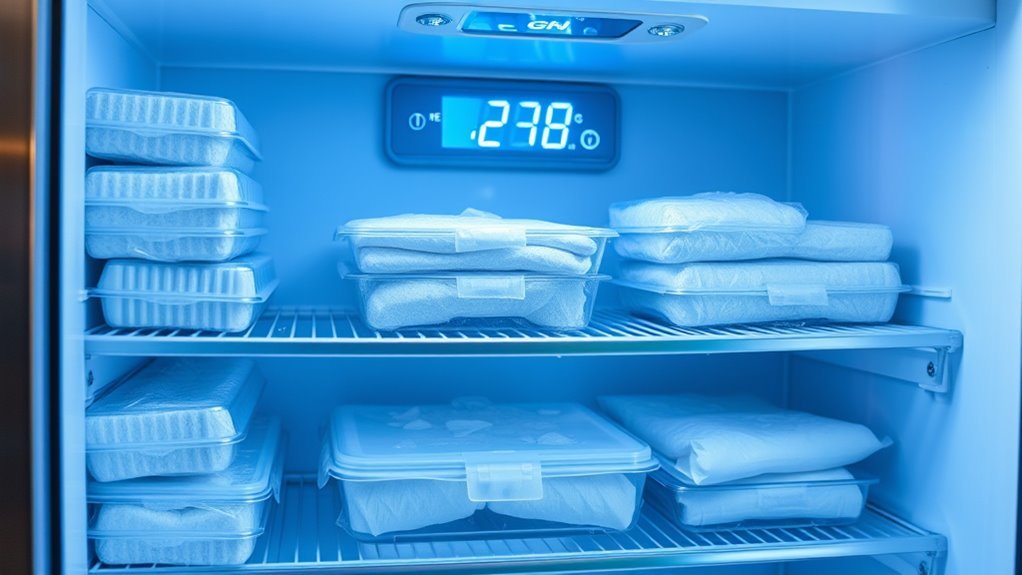
What Temp for Freezer? The Complete Answer
Many people struggle with keeping their freezer at the right temperature. It’s easy to wonder if your food is safe or wasting energy by setting it too cold or too warm. Don’t worry—you’re not alone in this.
You should keep your freezer at 0°F (-18°C) to guarantee food stays fresh and safe by stopping bacterial growth and preserving quality. Setting it colder wastes energy and can cause freezer burn, while warmer temps risk spoilage.
Check the dial regularly, use a thermometer for accuracy, and organize your freezer to maintain even cooling. Proper sealing and occasional defrosting help keep things efficient.
Keep going to uncover tips on maintaining ideal freezer temps and troubleshooting common issues.
Key Takeaways
- The ideal freezer temperature for food safety and preservation is 0°F (-18°C).
- Keeping it at -18°C slows bacterial growth, prevents spoilage, and keeps your food fresh.
- Temperatures above 0°F can lead to spoilage, while going too cold can cause freezer burn and texture issues.
- Use a thermometer to check the temperature and adjust the setting gradually, waiting 24 hours between changes for accuracy.
- Regularly inspect door seals, defrost when frost exceeds 1/4 inch, and stay organized to ensure proper cooling.
What Is the Best Freezer Temperature to Keep Food Safe?
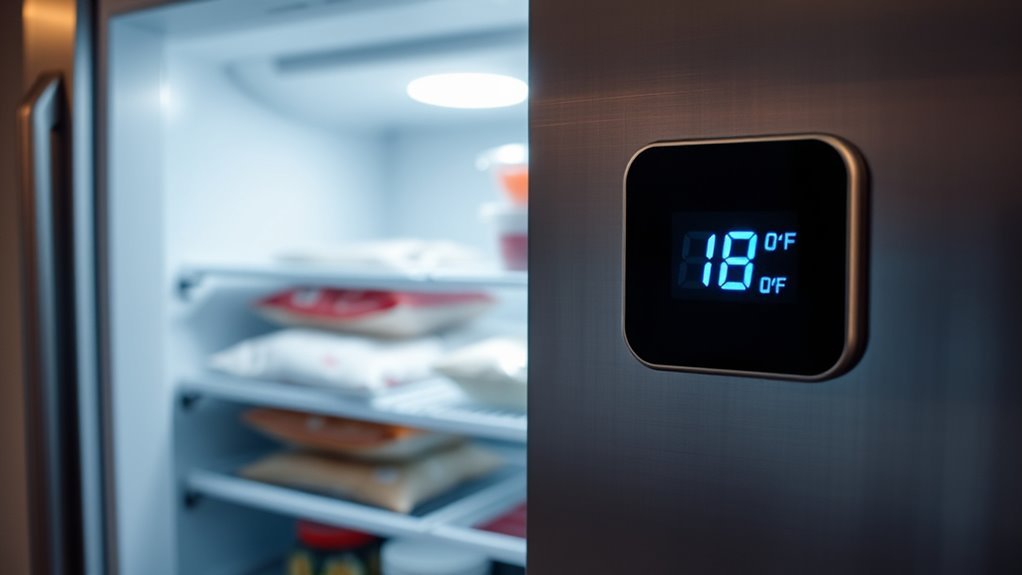
To keep your food safe and maintain its quality, set your freezer temperature to 0°F (-18°C). This stops bacterial growth and helps preserve your food’s texture and flavor.
When your freezer stays at this level, you’re ensuring maximum food safety by preventing spoilage and contamination. Good freezer organization is also important.
Arrange items so air can circulate freely. This helps keep the temperature consistent throughout. Use clear, labeled containers or bags to avoid keeping food longer than necessary, which can hurt safety and taste.
Group similar foods together to find what you need quickly. This also reduces the time the freezer door stays open, keeping everything colder.
Why Is -18°C (0°F) the Ideal Freezer Temperature?
Maintaining your freezer at -18°C (0°F) not only stops bacterial growth but also keeps food quality high over time. This temperature is just right—well below the freezing point of water—making sure your food stays solid and safe.
At -18°C, you get the best food preservation by slowing down enzymatic activity and preventing spoilage without freezing food too hard. It’s a sweet spot that works for keeping food fresh.
-18°C strikes the perfect balance, slowing spoilage while preserving food texture and freshness.
This temperature also balances energy efficiency. If you set your freezer colder, it uses more electricity and increases your costs without much benefit. Warmer settings could cause partial thawing, which isn’t good for food safety.
Keeping your freezer at -18°C helps control frost buildup too. Too much frost can reduce efficiency and take up valuable space. Maintaining this ideal temperature minimizes ice formation and keeps your freezer running smoothly.
How Does Freezer Temperature Affect Food Quality and Texture?
How exactly does freezer temperature impact the quality and texture of your food? When you keep your freezer at the right temperature, usually around -18°C (0°F), you maximize food preservation by slowing down enzyme activity and bacterial growth. This helps your food stay fresh longer and prevents spoilage.
If the temperature fluctuates or isn’t cold enough, ice crystals can grow larger inside the food, damaging cell walls. This leads to a loss in texture, making fruits soggy and meats mushy once thawed.
Conversely, maintaining a consistent, proper freezing temperature helps preserve the original structure of your food, locking in moisture and nutrients. So, by controlling your freezer temperature carefully, you ensure your meals taste better and keep their texture closer to fresh, even after long storage.
You’ll notice the difference when you serve frozen food that hasn’t suffered from improper freezing conditions. Proper freezer temp helps keep food quality and texture intact, making every meal more enjoyable.
What Happens If Your Freezer Is Too Warm or Too Cold?
Getting the freezer temperature just right is key, but what happens when it gets too warm or too cold? If your freezer runs too warm, your food can spoil and bacteria may grow because it won’t stay frozen properly.
On the flip side, if it’s too cold, the quality of your food can suffer due to freezer burn and texture changes. These issues often come from freezer malfunctions or temperature swings.
Here’s what to watch for:
- Warm freezer temps cause ice crystals to melt, making food soggy and unsafe.
- Too cold, and you’ll use more energy and risk freezer burn.
- Changing temperatures can shorten how long your food stays good.
- A malfunction might lead to inconsistent cooling, damaging your stored items.
Best Freezer Temperatures for Meat, Veggies, and Leftovers
Although freezer temperatures might seem straightforward, setting the right level for different foods can make a big difference in preserving their quality and safety. Proper meat storage, vegetable preservation, and leftover management all depend on specific freezing techniques to keep everything fresh and prevent spoilage.
Here’s a quick guide to help you optimize your freezer’s temperature settings:
| Food Type | Ideal Freezer Temperature (°F) |
|---|---|
| Meat | 0 to 5 |
| Vegetables | 0 to 10 |
| Leftovers | 0 to 5 |
| Fish & Seafood | 0 to 5 |
| Baked Goods | 0 to 10 |
For meat, keeping your freezer between 0 and 5°F locks in nutrients and texture. Vegetables do better a bit warmer, around 0 to 10°F, to avoid freezer burn while staying crisp. Leftovers should stay at 0 to 5°F to prevent bacterial growth.
Using these freezing techniques will help your food last longer and stay safe to eat.
How to Check and Set Your Freezer Temperature Correctly
Want to make sure your freezer is working its best? First, find the temperature control dial inside your freezer. It’s usually easy to spot, but don’t rely on just the dial to tell you the real temperature. Grab a freezer thermometer—it’s the best way to get an accurate reading.
Once you have the thermometer in place, check the temperature. If it’s not quite right, turn the dial a little at a time. Give it a few hours, then check again to see if it’s at the perfect spot. Adjust as needed until your freezer is maintaining that ideal temperature.
Locate Temperature Control Dial
Finding the temperature control dial in your freezer is the first step to keeping your food fresh and properly frozen. The location of the dial can vary depending on your model, so knowing where to look makes adjusting the temperature easier.
Typically, you’ll find the dial inside the freezer compartment, often on the back or side wall. It might also be near the freezer door hinge or on the ceiling area.
Sometimes, the control panel is above or below the freezer section, or behind the kickplate or grille at the base of the freezer. Once you find the dial, you can set it to your desired temperature.
Knowing exactly where the dial is helps you maintain the right freezer conditions without any guesswork.
Use Thermometer For Accuracy
When you want to make sure your freezer is at the right temperature, using a thermometer is the most reliable way. Different types like digital, dial, and probe help you get accurate readings.
Before trusting the numbers, check how to calibrate your thermometer. Some need manual adjustment, while others self-calibrate. Place the thermometer in the center of the freezer and wait a few hours for a stable reading.
Here’s a quick guide:
| Thermometer Type | Accuracy Level | Calibration Method |
|---|---|---|
| Digital | High | Battery reset or manual |
| Dial | Moderate | Manual dial adjustment |
| Probe | High | Factory calibrated |
Using the right thermometer and keeping it properly calibrated helps you maintain the perfect freezer temperature and keep your food safe.
Adjust Settings Gradually
Although it might be tempting to change your freezer’s temperature settings quickly, you should adjust them gradually to avoid overcooling or undercooling. Making small adjustments helps keep a stable environment and ensures your food stays properly frozen without wasting energy.
Follow these steps for effective gradual changes:
- Change the setting by 1-2 degrees Fahrenheit at a time.
- Wait 24 hours after each adjustment to let the temperature stabilize.
- Use a freezer thermometer to monitor the actual temperature accurately.
- Only repeat adjustments if necessary, based on thermometer readings.
Tips to Keep Your Freezer Temperature Steady
To keep your freezer temperature steady, you need to manage a few key factors that can cause fluctuations. First, make sure your freezer insulation is intact and effective. Poor insulation lets warm air seep in, causing temperature changes that can spoil your food. Check door seals regularly for cracks or gaps, and replace them if needed to keep a tight seal.
Try not to open the freezer door too often or leave it open for long periods. Warm air entering forces the compressor to work harder, which affects the temperature. Keep the freezer stocked but not overcrowded; a balanced load helps retain cold air and maintains a steady temperature.
Place your freezer away from heat sources like ovens or direct sunlight, which can strain its cooling system. Finally, clean the condenser coils regularly to improve efficiency. Following these tips will help you keep your freezer temperature steady and your food fresh longer.
How Organizing Your Freezer Helps Maintain Cold Temperatures
Organizing your freezer is a great way to keep it colder. When everything is orderly, there’s plenty of space for air to circulate around your items. That airflow is key to maintaining a consistent temperature.
Plus, when your freezer is neat and well-organized, you can find what you need quickly. You won’t have to leave the door open for long trying to dig through everything. That not only keeps your food at a stable temperature but also helps save energy.
Efficient Airflow Management
When you organize your freezer properly, cold air can circulate more freely, helping it maintain a consistent temperature. Managing airflow patterns inside is essential because blocked air disrupts cold zones, causing uneven cooling.
To optimize airflow and keep your freezer efficient, follow these steps:
- Avoid overpacking and leave space between items for air to flow.
- Arrange items by size, placing larger ones at the back where cold zones are strongest.
- Use bins or baskets to group similar items and prevent clutter that restricts airflow.
- Regularly defrost and clean vents to keep air moving unobstructed.
Minimize Door Opening
Although opening the freezer door is sometimes necessary, keeping it open less often helps maintain a stable cold temperature. Every time you open the door, warm air gets in, disrupting air circulation and making the freezer work harder.
To minimize this, organize your freezer so you can quickly find what you need. Use clear bins or label shelves to reduce the time the door stays open.
It’s also important to regularly check door seals for cracks or gaps. Tight seals stop cold air from escaping and warm air from sneaking in.
When you close the door promptly, you help keep temperatures steady, protect your food, and save energy. By organizing smartly and maintaining good seals, your freezer stays efficient and your food stays frozen longer.
When Should You Defrost Your Freezer?
If frost builds up inside your freezer, it’s a clear sign that it’s time to defrost. Ice buildup takes up space and makes your freezer work harder, which uses more energy. To keep things running smoothly, you should keep an eye on how often you defrost.
Here are four signs that tell you it’s time to defrost:
- Ice is thicker than 1/4 inch on the walls or shelves.
- The door seals become stiff or don’t close properly because of frost.
- Food items start sticking together or the walls feel wet.
- The freezer isn’t cooling well and struggles to keep the right temperature.
Regularly defrost based on these signs to keep your freezer running efficiently and extend its lifespan. Most households find that defrosting every 6 months works well, but if you use it heavily or live in a humid area, you might need to do it more often. Keep an eye on the ice buildup and adjust your defrost schedule to prevent problems before they start.
How to Troubleshoot Common Freezer Temperature Problems
Keeping your freezer free of frost helps maintain its efficiency, but temperature issues can still happen. If you notice fluctuations, start by checking the door seal for damage or gaps since leaks let warm air in.
Next, make sure your freezer isn’t overloaded, which can block airflow and cause uneven cooling. If the temperature still varies, check the thermostat settings and adjust them to around 0°F (-18°C), which is usually recommended.
Freezer problems like a faulty compressor or fan can also be to blame. Listen for unusual noises or see if the compressor runs all the time. If it does, try defrosting the freezer fully and cleaning the coils to boost performance.
If these steps don’t fix the problem, it’s best to call a professional technician. Troubleshooting these common issues will help keep your freezer running smoothly and at the right temperature.
Frequently Asked Questions
Can Freezer Temperature Affect Energy Consumption?
Yes, freezer temperature can affect energy consumption. When you set your freezer too cold, it uses more energy than necessary, which reduces efficiency.
On the other hand, if it’s too warm, your food might spoil. You should aim for the ideal setting—around 0°F (-18°C)—to keep food safe and save energy.
This way, you save money and help the environment without sacrificing performance.
How Long Can Food Stay Safe at Different Freezer Temperatures?
You can keep food safe almost indefinitely at 0°F (-18°C), but the quality might decline after a year, especially for meats.
Food safety experts say most frozen items stay at peak quality for 3 to 12 months depending on how long they’re stored and how steady the temperature remains.
If your freezer is warmer, like 10°F (-12°C), food safety drops. It’s best to eat items within a few months to prevent spoilage or freezer burn.
Always label your food and check it regularly to stay on top of freshness.
Does Freezer Temperature Impact Frost Buildup Speed?
Yes, freezer temperature directly impacts how quickly frost builds up. When your freezer temperature fluctuates, moisture tends to condense and freeze on the surfaces, speeding up frost formation.
Keeping a steady, cold temperature helps reduce these fluctuations and slows down how fast frost forms. So, if you want to keep frost at bay, try not to open the door too often and maintain a consistent temperature.
This way, you prevent excess moisture from turning into frost inside your freezer.
Are There Differences in Temperature Needs for Chest vs. Upright Freezers?
Yes, there are differences between chest freezers and upright freezers when it comes to temperature needs.
Chest freezers tend to keep cold temperatures more efficiently because of their design. You can usually set them a bit higher without risking the safety of your food.
Upright freezers, on the other hand, might need a slightly lower setting. They open more often and tend to lose cold air faster.
Adjust the temperature based on how you use your freezer to keep your food frozen and save on energy costs.
Can Freezer Temperature Influence the Effectiveness of Ice Packs?
Like a well-tuned engine, your freezer’s temperature directly impacts ice pack efficiency. If it’s not cold enough, your ice packs won’t freeze solid, so they won’t stay cold as long.
For the best results, keep your freezer at 0°F (-18°C). This ensures your ice packs reach their full cooling potential, keeping your food and drinks chilled effectively.
Conclusion
Keeping your freezer at the perfect temperature, around -18°C (0°F), is like giving your food a cozy, icy hug that keeps it safe and fresh forever. If it’s too warm, spoilage can sneak in, and if it’s too cold, your food’s texture might suffer.
Stay organized, defrost when needed, and check the temperatures regularly to avoid freezer chaos. A well-maintained freezer ensures your food stays fresh and safe for longer.
Follow these tips, and your freezer will work like a superhero, protecting your meals with icy precision every single day. Maintaining the right freezer temperature is key to keeping your food fresh and delicious.