How to Snake a Kitchen Sink: A Step-by-Step Guide
Dealing with a clogged kitchen sink is a common headache that many of us face. It’s frustrating when water doesn’t drain, and you’re left scrambling for a quick fix.
You’re not alone—knocking out those stubborn blockages is something many homeowners struggle with.
To snake your kitchen sink, first clear the area under the sink and put on gloves. Place a bucket under the P-trap and run hot water to loosen the clog.
Feed a manual or powered drain snake gently into the drain, twisting clockwise to break up blockages without forcing it. Pull out debris, then clean and oil your snake to prevent rust.
If that doesn’t do the trick, knowing when to call a plumber is essential.
Keep exploring for detailed tips and tricks to keep your sink flowing smoothly.
Key Takeaways
- Clear out the area under the sink, put on gloves, and place a bucket under the P-trap. Run hot water to loosen minor clogs before you start snaking.
- Gently insert the snake into the drain, turning it clockwise to break up the clog without damaging your pipes.
- Use a manual snake for small blockages, and switch to a powered snake for tougher clogs. Adjust the speed as needed.
- Once the clog is cleared, carefully pull out the snake while flushing with hot water to wash away any debris.
- Clean the snake with hot water, dry it off, apply some lubricant, and store it properly to keep it in good shape.
What Causes Kitchen Sink Clogs And How Can You Spot Them?
Kitchen sink clogs usually happen when food particles, grease, or soap scum build up in the drain over time. You’ll often find grease buildup and food debris sticking to the pipes, especially if you’re not careful with disposal.
Improper disposal, like rinsing fats or scraps down the drain, makes the problem worse. Hair buildup might be less common in kitchen sinks but can still contribute if you have a multi-purpose sink area.
Foreign objects accidentally dropped into the sink can block the flow too. Faulty plumbing and aging pipes also play a role; older pipes might corrode or narrow, causing more clogs.
Sink design matters as well—some models trap debris more easily, leading to backups. You’ll notice signs like slow draining water, gurgling sounds, or unpleasant odors.
Spotting these early means you can fix the problem before it gets worse, saving you time and hassle.
The Tools You Need To Snake Your Kitchen Sink
Clearing a clogged sink requires the right tools to get the job done efficiently. For effective drain cleaning, you’ll need a few essential plumbing tools.
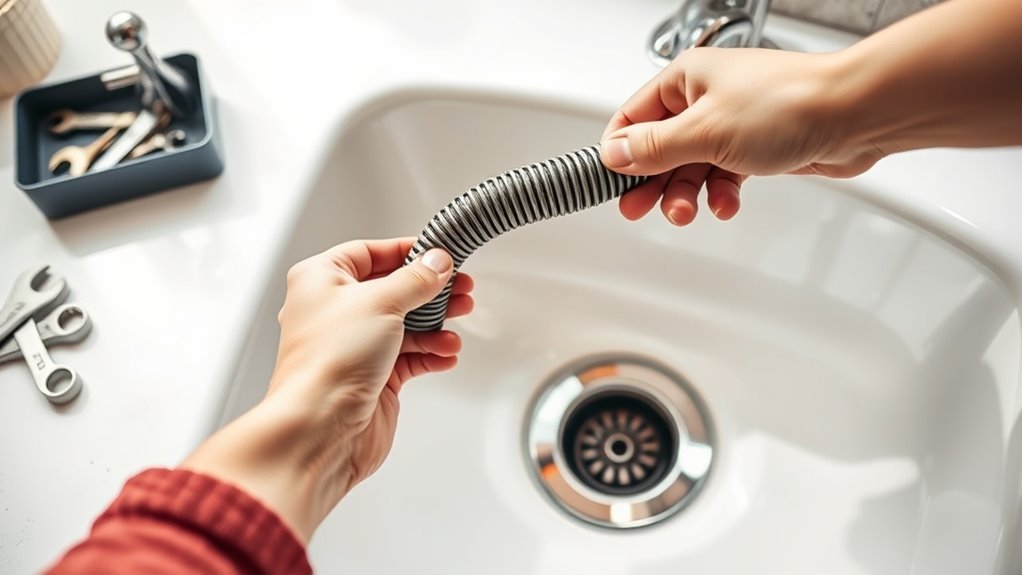
Start with a drain snake or auger—this flexible tool is designed to reach deep clogs and break them up. A manual snake works well for minor blockages, while powered versions are better for tougher obstructions.
You’ll also want a pair of rubber gloves to protect your hands and a bucket to catch any water or debris that spills out. Having a flashlight helps you inspect the pipes and make sure you’ve cleared the clog completely.
A wrench or pliers can come in handy for loosening pipe connections if needed. With these plumbing tools in hand, you’re ready to tackle most kitchen sink clogs effectively.
Being prepared with the right equipment makes drain cleaning less messy and saves you time.
How To Use Manual Vs. Powered Kitchen Sink Drain Snakes
When you’re using a manual snake, you’re in charge of the speed and direction — you control it all by hand. This gives you that real-time feel for what’s happening, so you can be pretty precise about working through the clog. It’s great if you want a more hands-on approach and can handle a bit of patience.
On the flip side, powered snakes do a lot of the heavy lifting for you. They’re especially handy when you’re dealing with stubborn blockages that just won’t budge with manual effort. Plus, they work faster and require less physical effort on your part. Knowing when to pick each tool can really make your job easier and help clear that drain more effectively.
Manual Snake Operation
Grab your manual drain snake and prepare to feed it into the sink’s drainpipe slowly, turning the handle clockwise to navigate bends and break up clogs. Using proper manual snake techniques is key to effective snaking. Apply steady pressure without forcing the snake, which could damage your pipes.
When you feel resistance, rotate the handle to break through the blockage or hook debris. Pull the snake out periodically to clear debris from the coil before continuing. Manual snakes give you more control over the process, letting you feel the clog’s location and texture.
Remember to wear gloves and keep a bucket handy to catch any mess. With patience and these techniques, you’ll clear most kitchen sink clogs efficiently without needing powered tools.
Powered Snake Advantages
Powered drain snakes offer a faster and more efficient way to tackle tough kitchen sink clogs compared to manual snakes. When you use a powered snake, the motor quickly spins the cable through the drain, breaking up blockages with less effort. This efficiency saves you time and frustration, especially with stubborn clogs.
Powered snake convenience also stands out. You don’t have to crank by hand, which reduces physical strain. Plus, many models come with adjustable speeds for better control. While manual snakes work well for minor clogs, powered snakes handle deeper or tougher obstructions more effectively.
If you want a reliable, less tiring method, choosing a powered snake will make snaking your kitchen sink quicker and easier.
Preparing Your Kitchen Sink For Snaking
Before snaking your kitchen sink, clear the area under the sink and remove any items that might get in your way. This makes it easier to access the pipes and helps prevent accidents or damage to your belongings.
Next, put on gloves to stay hygienic and protect yourself from bacteria and debris. Place a bucket under the P-trap to catch any water or gunk that might spill during the process.
It’s also a good idea to run some hot water first. This helps loosen minor clogs and keeps your drain in better shape. Keep some towels or rags nearby to quickly wipe up any spills.
Make sure your workspace is well-lit so you can see clearly what you’re doing. Finally, check that you have all the tools you need ready before you start snaking. This preparation will save you time and make the job go smoothly.
Step-By-Step Guide To Snaking Your Kitchen Sink Drain
Start by finding the cleanout plug or removing the P-trap under your sink to get to the drain pipe.
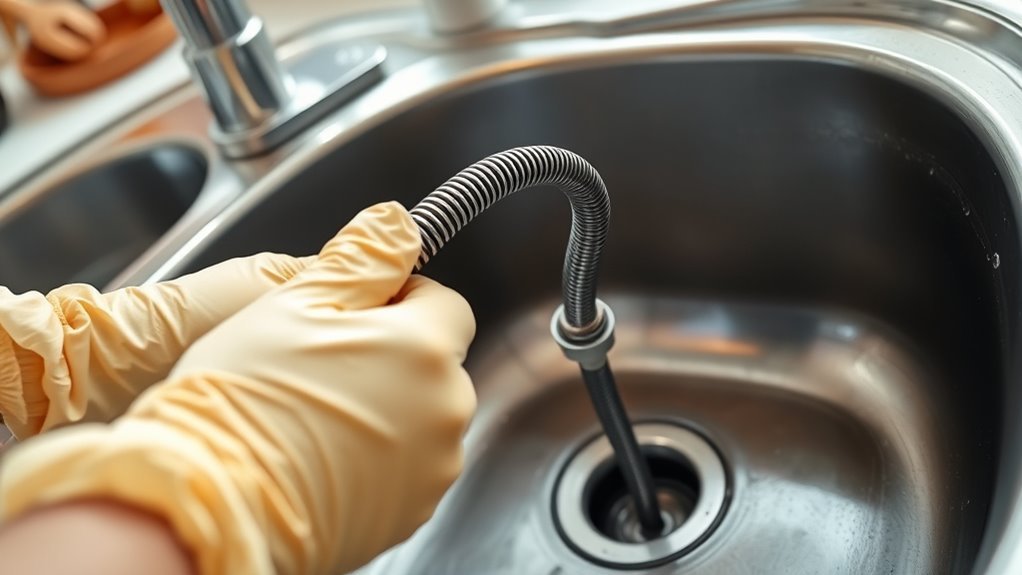
Gently insert the snake cable into the pipe and turn the handle clockwise to feed it deeper. When you hit resistance, that’s usually the clog.
Keep turning the snake to break up or hook onto the blockage, then carefully pull it out.
Once you’ve removed the snake, flush the drain with hot water to clear out any leftover debris.
What To Do When Snaking Doesn’t Clear Tough Clogs
If snaking your drain doesn’t do the trick, don’t worry — there are other options to try before calling in the pros. Sometimes, a different drain cleaning method can do the job, like using a chemical drain cleaner or a hydro-jetting tool. Just be sure to follow the instructions carefully and use these methods sparingly to avoid damaging your pipes.
If those still don’t work, it might be time to bring in a professional plumber. They have specialized equipment and expertise to tackle really stubborn clogs safely and effectively. Plus, they can identify any underlying issues that might be causing recurring blockages.
And of course, taking some preventive steps can help keep those tough clogs from coming back in the future. Regularly pouring hot water down your drains, avoiding putting grease or hair down the drain, and using drain covers can all make a big difference. Staying proactive can save you a lot of hassle down the line.
Alternative Drain Cleaning Methods
When snaking your kitchen sink doesn’t clear a stubborn clog, you’ll need to try other methods to get things flowing again. One effective approach is using enzymatic cleaners, which break down organic material safely without harsh chemicals. These biodegradable options are eco-friendly and gentle on your pipes, making them a smart choice for routine maintenance or persistent clogs.
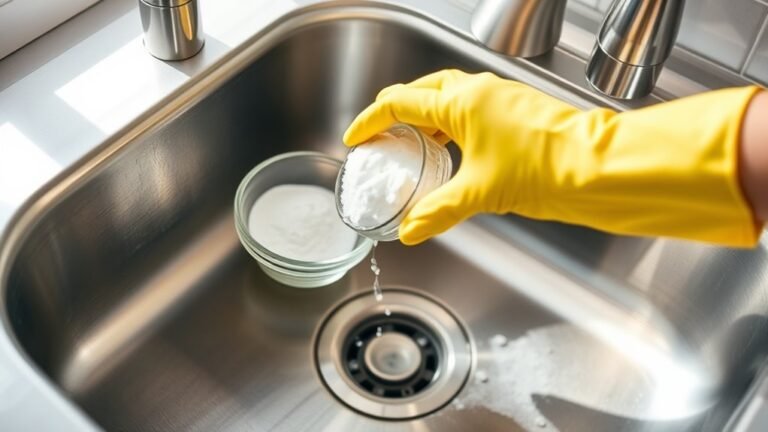
Pour the cleaner into the drain and let it sit for several hours or overnight to maximize results. You can also try a mixture of baking soda and vinegar, followed by hot water to loosen minor blockages. Avoid using chemical drain cleaners frequently, as they can damage your plumbing.
These alternative methods often clear tough clogs when snaking alone isn’t enough.
When to Call Professionals
How do you know it’s time to call in a professional plumber? If snaking your kitchen sink doesn’t clear the clog, it’s important to recognize signs that need expert help.
Don’t hesitate to reach out when you notice water backing up repeatedly, even after snaking. Strange noises coming from your pipes or foul odors that won’t go away are also warning signs.
Slow drainage that gets worse over time or visible damage and leaks under the sink indicate a deeper issue. These problems can’t usually be fixed with DIY snaking.
Professionals have the right tools and skills to diagnose and fix complex blockages safely and efficiently. Calling a plumber at the right time can save you from costly repairs and prolonged inconvenience.
Preventing Future Tough Clogs
Although snaking often clears most clogs, some stubborn blockages need extra steps to prevent future buildup. If snaking doesn’t fully clear the clog, try using a natural enzyme cleaner to break down remaining debris without harming your pipes.
Regular drain maintenance tips include flushing your sink with hot water weekly and avoiding pouring grease, coffee grounds, or fibrous scraps down the drain. Changing your kitchen habits can make a big difference.
Scrape plates into the trash before washing and use a drain strainer to catch food particles. If clogs keep happening despite your efforts, it might be time to call a plumber for a thorough inspection.
Staying proactive with these steps helps keep your kitchen sink draining smoothly and prevents tough clogs from coming back.
How To Avoid Damaging Pipes While Snaking Your Sink
To protect your pipes while snaking your kitchen sink, work carefully and use the right tools. Knowing your pipe materials is key since PVC, copper, and galvanized pipes handle pressure differently. Using the wrong techniques can cause scratches, cracks, or loosen joints.
Follow these tips to avoid damage:
Use a flexible, appropriately-sized snake for your pipe material. Insert the snake gently, avoiding forceful pushing or twisting. Rotate the snake clockwise to break up clogs without stressing the pipes.
Avoid using metal snakes on fragile or old pipes; instead, choose plastic-coated ones. Check your progress often to prevent over-insertion and put unnecessary strain on your pipes.
How To Clean And Maintain Your Drain Snake After Use
After every use, you should thoroughly clean your drain snake to keep it in good working condition and prevent buildup. Start by wiping off any debris or gunk from the cable with a rag.
Then, run hot water over the snake to loosen and wash away remaining residue. Avoid using harsh chemicals, as they can damage the tool.
Apply a light coating of lubricant or oil to the cable to prevent rust and guarantee smooth operation during future use.
For effective drain snake maintenance, store the snake coiled neatly in a dry place to avoid kinks or corrosion.
Incorporate these cleaning techniques regularly to extend your tool’s lifespan and keep it ready for the next clog.
Proper care not only improves performance but also protects your plumbing by ensuring the snake glides easily through pipes without causing damage.
When To Call A Plumber Instead Of Snaking Yourself
If your kitchen sink is really backed up and it seems like the clog is pretty stubborn, it’s probably a good idea to call a plumber rather than trying to snake it yourself. Some problems are just tricky and need that professional touch to get everything flowing smoothly again.
Trying to tackle complicated clogs on your own can sometimes make things worse or even damage your pipes. So, when in doubt, it’s smarter to let the pros handle it!
Signs of Severe Blockages
Although snaking your kitchen sink can fix many clogs, some blockages are just too severe and need a professional’s help. Spotting these signs early can save you from costly damage and keep your drain working properly.
Watch out for symptoms like water backing up in multiple fixtures, persistent bad odors even after cleaning, or gurgling sounds coming from the drain. These are often signs that something’s seriously wrong.
If you notice slow drainage that gets worse over time or water pooling under the sink, it’s time to call a plumber. Deep pipe issues or buildup can’t usually be fixed with snaking alone.
Trying to handle severe blockages yourself might make things worse. Keeping an eye on these signs helps protect your plumbing and keeps your kitchen sink flowing smoothly.
Plumbing Expertise Needed
When you encounter stubborn clogs that resist snaking or notice signs like water pooling beneath your sink, it’s time to call a plumber. While knowing plumbing basics helps you handle minor blockages and routine drain maintenance, some problems need professional help.
If a clog is deep within your pipes or involves complex fittings, a plumber has the right tools and experience to fix it efficiently. Trying advanced repairs without proper knowledge can make things worse or cause leaks.
Also, if your sink keeps clogging despite regular snaking, that’s a sign of an underlying problem that needs an expert’s assessment. Don’t hesitate to reach out for professional help.
Protect your plumbing system and avoid costly damage by knowing when to let a plumber take over.
Risk of Pipe Damage
Because snaking a kitchen sink involves maneuvering tools inside narrow pipes, you risk damaging your plumbing if you’re not careful. Knowing when to call a plumber can save you from costly repairs.
You should consider professional help if you encounter:
- Frequent clogs despite your clog prevention efforts
- Pipes made of fragile or old materials
- Visible signs of pipe corrosion or leaks
- Difficulty maneuvering the snake during pipe inspection
- Persistent blockages that resist DIY snaking
A plumber can perform a thorough pipe inspection to ensure no hidden damage worsens. They also use specialized tools to clear clogs safely, preserving your plumbing’s integrity. When in doubt, it’s better to trust an expert than risk costly pipe damage by snaking yourself.
How To Prevent Future Kitchen Sink Clogs Effectively
To keep your kitchen sink draining smoothly, you’ll need to adopt a few simple habits that prevent clogs before they form. Start by following effective drain maintenance tips like regularly flushing your drain with hot water to dissolve grease buildup.
Adopt simple habits like flushing drains with hot water to prevent clogs and keep your kitchen sink flowing smoothly.
Avoid pouring cooking oils or coffee grounds down the sink, as they tend to accumulate and cause blockages. Incorporate sink hygiene practices such as cleaning the sink strainer after each use to catch food particles and prevent debris from entering the pipes.
You should also use a natural enzyme cleaner monthly to break down organic waste inside the drain. Be cautious about what you let go down the drain—avoid fibrous foods, eggshells, and large food scraps.
Finally, routinely inspect under-sink pipes for leaks or slow drainage to catch issues early. By staying consistent with these habits, you’ll minimize the need to snake your kitchen sink and keep your plumbing in top shape.
Frequently Asked Questions
Can Chemical Drain Cleaners Damage My Kitchen Sink Pipes?
Yes, chemical drain cleaners can damage your kitchen sink pipes. Their chemical makeup often includes harsh acids or bases meant to break down clogs, but these can corrode metal pipes or weaken plastic ones over time.
While they might seem like a quick fix, using them repeatedly increases the risk of damage. It’s usually better to try mechanical methods or safer alternatives to protect your plumbing and avoid costly repairs.
How Often Should I Snake My Kitchen Sink to Prevent Clogs?
An ounce of prevention is worth a pound of cure, so you should snake your kitchen sink every 3 to 6 months as part of preventive maintenance. Combining this with regular inspections helps catch buildup early before it turns into a full-blown clog.
If your household uses the sink heavily or you notice slow drainage, don’t hesitate to snake it more often. Staying proactive keeps your pipes flowing smoothly and saves you from costly repairs.
Are There Eco-Friendly Alternatives to Snaking for Clearing Clogs?
Yes, you can use eco-friendly alternatives like biodegradable solutions and natural remedies to clear clogs.
Try pouring a mix of baking soda and vinegar down your drain, then follow with hot water after it foams. This natural remedy breaks down buildup without harsh chemicals.
You can also use enzyme-based cleaners that are biodegradable and safe for your pipes and the environment. These options help keep your sink clear while being gentle on nature.
What Types of Kitchen Sink Pipes Are Most Prone to Clogs?
You’ll find that PVC and older metal pipes like galvanized steel are most prone to clogs. These materials tend to build up grease, food particles, and soap scum more easily, which can lead to blockages.
To prevent clogs, try not to pour grease down the drain and use strainers to catch debris. Flushing your pipes regularly with hot water also helps keep them clear and reduces buildup inside these pipes.
Can Snaking a Sink Remove Grease Buildup Completely?
Snaking a sink can help remove some grease buildup, but it won’t always clear it completely. Grease tends to stick stubbornly inside the pipes, so snaking might only break up or push some of it through.
For better sink maintenance, you’ll want to combine snaking with regular hot water flushes and enzyme-based cleaners to dissolve grease over time. This approach helps keep your pipes clearer and prevents future clogs.
Conclusion
Don’t worry if you’ve never snaked a sink before. It’s easier than you might think and can save you the cost of calling a plumber.
Imagine the relief of water flowing freely again after just a few simple steps. Take your time, follow the guide, and handle your tools carefully to avoid damaging your pipes.
With a little practice, you’ll be able to snake your kitchen sink confidently. This simple trick keeps your kitchen running smoothly without the hassle or expense of professional help.