How Much Does a Small Kitchen Remodel Cost? The Complete Answer
Thinking about giving your small kitchen a fresh new look? You’re not alone—many homeowners struggle with figuring out how much a remodel will cost and how to stick to their budget.
You can expect to spend between $5,000 and $25,000 on a small kitchen remodel, depending on your choices. Sticking to existing layouts and standard colors saves money, while premium materials, custom cabinets, and complex designs raise costs.
Labor typically accounts for 20-35% of your budget, so getting multiple quotes helps you negotiate better rates.
Planning for unexpected expenses with a 10-15% contingency fund is smart.
Keep going to uncover how to budget effectively and avoid hidden fees.
Key Takeaways
- Small kitchen remodel costs usually fall between $5,000 and $25,000, depending on what you want and the materials you pick.
- Labor costs make up about 20% to 35% of the total budget, depending on skilled trades and local rates.
- Sticking with your existing layout and standard fixtures can save money by avoiding plumbing, electrical, or structural changes.
- Choosing high-quality materials like solid wood cabinets and quartz countertops will cost more upfront but boost durability and home value.
- It’s a good idea to set aside a contingency fund of 10-15% to cover unexpected expenses and keep your project on track.
How Much Does a Small Kitchen Remodel Cost?
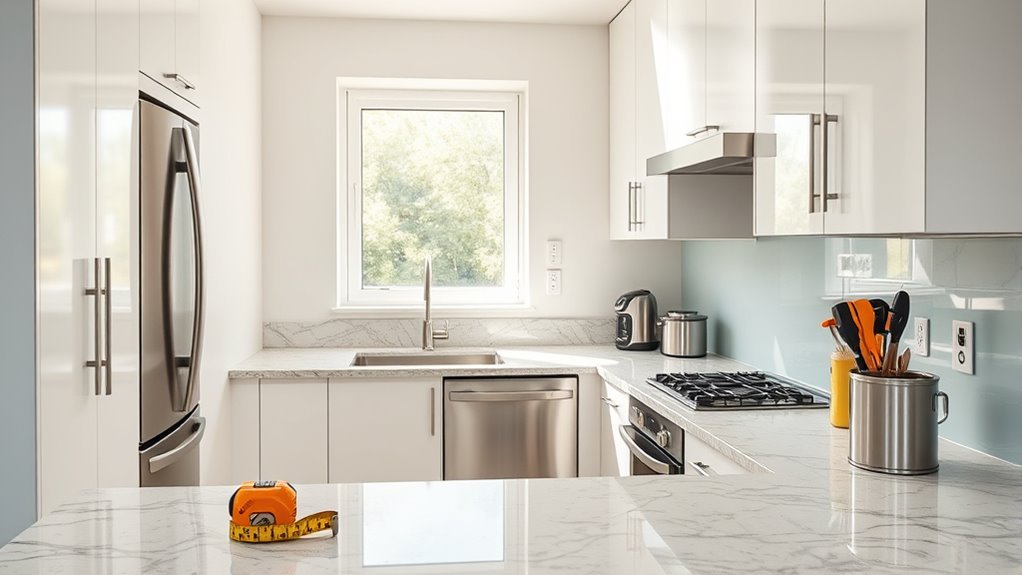
How much does a small kitchen remodel cost? While prices vary, you can typically expect to spend anywhere from $5,000 to $25,000 depending on your choices. Your kitchen layout plays a big role. If you keep the existing layout, you’ll save money by avoiding plumbing or electrical changes. But if you want to rearrange cabinets or appliances, costs will go up.
Color schemes also impact your budget. Choosing standard paint or affordable tiles keeps expenses down, while custom cabinetry or high-end finishes can push costs higher. Remember, small kitchens often need creative use of space, so investing in smart storage solutions might increase costs but adds value.
You can control your budget by focusing on updates that improve function and look without major structural changes. In short, a small kitchen remodel’s cost depends on your design choices, especially layout and color schemes. Staying practical helps keep your project affordable.
Key Factors That Influence Small Kitchen Remodel Costs
When you’re planning a small kitchen remodel, the kind of materials you pick can really impact your overall costs. For example, opting for high-end countertops or cabinets will naturally cost more than more budget-friendly options. It’s worth thinking about what kind of materials fit your style and your wallet.
Don’t forget about labor and installation fees, either. These can vary a lot depending on how complicated your design is. If you’re doing something straightforward, it might be cheaper, but if your remodel involves custom work or tricky layouts, expect to pay a bit more. Knowing these things ahead of time can help you set a realistic budget and make smarter decisions along the way.
Material Quality Choices
Choosing the right materials can really impact your small kitchen remodel budget. When you go for high-quality materials, you’re investing in durability that helps your kitchen handle daily use and last longer.
While premium materials often cost more upfront, they save you money on repairs later. Balancing durability with looks means picking surfaces and finishes that are both attractive and long-lasting.
For example, solid wood cabinets are strong and timeless, while quartz countertops are durable and sleek. By making thoughtful choices, you can create a kitchen that’s both stylish and functional without overspending or sacrificing quality.
Labor and Installation
Investing in quality materials sets a strong foundation, but the costs of labor and installation also impact your small kitchen remodel budget.
Different types of labor, like electricians, plumbers, and carpenters, charge different rates that influence overall costs. You’ll want skilled professionals to do the job right the first time, which might mean higher upfront costs but fewer issues later.
Installation timelines matter too. The longer your remodel takes, the more you might spend on labor and potential delays. Efficient scheduling helps keep costs down, so coordinating trades and ordering materials on time is key.
Balancing different types of labor and keeping the project on schedule will help you manage costs effectively during your small kitchen remodel.
Design Complexity Levels
Although small kitchen remodels might seem straightforward, the design complexity really influences your overall costs.
Choosing a simple layout with standard cabinets and fixtures helps keep expenses lower.
But if your plan involves custom cabinets, detailed tile work, or unique lighting, the complexity increases and so does your budget.
You’ll also want to consider how much structural work, like moving walls or plumbing, adds to the cost.
To manage your budget well, focus on features that offer the most value and functionality.
Basic Small Kitchen Remodel Cost Estimates
A basic small kitchen remodel usually costs between $5,000 and $15,000, depending on the materials and labor you choose. This budget covers essentials like fresh paint, new countertops, and replacing cabinet fronts or hardware.
When planning, focus on improving the layout to boost efficiency without making major structural changes. Small adjustments can really improve workflow and usability.
Adding smart storage solutions is another key part of this budget. Think about organizers, pull-out shelves, or extra cabinets that make the most of your space. These updates help keep your small kitchen functional and clutter-free.
Small Kitchen Upgrades That Increase Remodel Costs
Several popular upgrades can quickly raise the cost of your small kitchen remodel. Adding smart storage solutions like pull-out pantry shelves, custom drawer organizers, or built-in spice racks not only maximizes space but also increases labor and material expenses. These features need precise carpentry and often higher-quality hardware, which can push your budget up.
Lighting upgrades also add to your remodel costs. Installing under-cabinet LED strips, recessed ceiling lights, or pendant fixtures improves both functionality and ambiance but requires extra wiring and fixtures. If you want dimmers or smart lighting controls, expect the price to go even higher.
While these upgrades boost your kitchen’s usability and style, they come with a price. To keep costs in check, focus on the smart storage and lighting features that will give you the most value for your space. Remember, even small improvements can significantly impact your remodel budget, so plan carefully to balance your wants with your financial limits.
How Your Appliance Choices Affect Remodel Costs
Your choice of appliances can greatly impact the overall cost of your small kitchen remodel. When selecting appliances, you’ll want to balance upfront costs with long-term savings.
Energy-efficient models might cost more initially but can reduce your utility bills over time. Appliances from well-known brands often come with higher price tags but offer better reliability and warranties, which can save you money on repairs.
Consider these factors when choosing appliances:
- Energy efficiency: Look for ENERGY STAR-rated products to lower energy use and costs.
- Brand reputation: Trusted brands often provide better performance and durability.
- Size and features: Larger or high-tech appliances increase costs. Choose only what you need.
- Installation complexity: Built-in or custom-fit appliances may require professional installation, raising expenses.
Materials That Make the Biggest Difference in Remodel Prices
Because materials make up a large portion of your remodel budget, choosing wisely can greatly affect your total costs. When selecting materials, consider sustainable options—they reduce environmental impact and often save you money over time thanks to durability and energy efficiency. Recycled wood or low-VOC paints can upgrade your kitchen without breaking the bank.
High-end finishes like quartz countertops or custom cabinetry can really boost your kitchen’s look and value but come with a higher price tag. If you want luxury without overspending, try mixing high-end finishes with more affordable choices like laminate backsplashes or standard fixtures.
Balancing quality and cost is key. Focus on materials that are both durable and stylish to make sure your small kitchen remodel looks great and lasts longer. Prioritizing sustainable materials and being strategic about where to splurge on high-end finishes will help you control costs and achieve a stunning result.
How Labor and Contractor Fees Affect Small Kitchen Remodels
When you’re looking at a small kitchen remodel, it’s really helpful to get a sense of how labor costs are broken down and what things can influence what contractors charge. Knowing this stuff upfront can help you spot areas where you might be able to negotiate a better deal or tweak your plans a bit to save some money. Let’s take a closer look at how these fees can impact your project and what you should keep in mind.
Labor Cost Breakdown
Labor costs often make up about 20% to 35% of a small kitchen remodel budget, which can really impact the total expense. Knowing how these costs break down helps you plan better and avoid surprises down the line.
Labor market trends can also play a role. For example, a shortage of skilled trades like electricians and plumbers can drive up hourly rates. So, it’s smart to keep an eye on these trends when budgeting.
You’ll want to consider these key labor components:
- Demolition and site preparation
- Electrical and plumbing work by skilled trades
- Installation of cabinetry, countertops, and fixtures
- Finishing touches like painting and trim work
Contractor Pricing Factors
When planning your small kitchen remodel, understanding how contractor fees influence your overall costs can help you make smarter budgeting decisions. Contractor reputation plays a big role. Highly reputable contractors often charge more because they bring experience and reliability to your project.
You’ll pay for quality, but it usually means fewer delays and issues. The project timeline also affects pricing. A shorter timeline might increase labor costs since contractors may need to assign more workers or work overtime. Conversely, a flexible timeline could lower fees by allowing work to proceed at a standard pace.
Keep in mind that labor fees are intertwined with contractor charges. Balancing these factors helps you control expenses while ensuring your remodel meets expectations.
Negotiating Contractor Rates
Understanding how contractor fees and labor costs influence your kitchen remodel helps set the stage for good negotiations. When talking about rates, clear communication with your contractor is key. Don’t be afraid to ask for detailed quotes and breakdowns of labor versus material costs. This transparency lets you spot areas where you might negotiate better rates or adjust the project scope.
To get better at negotiating your rate, try these tips:
- Compare bids from multiple contractors to get a sense of market rates.
- Ask if they offer discounts for bundled services or scheduling during off-peak times.
- Clarify payment terms and any extra charges before starting.
- Be flexible with timelines, which might help lower labor fees.
Setting a Realistic Budget for Your Small Kitchen Remodel
Although remodeling a small kitchen might seem simple, setting a realistic budget is key to avoiding surprises and delays.
Start by researching average costs for materials, labor, and permits in your area. Break down your expenses into categories like cabinets, appliances, countertops, and labor to keep track of spending.
Research local costs and categorize expenses to effectively manage your kitchen remodeling budget.
Don’t forget to add a contingency fund, usually 10-15%, for unexpected expenses. To save money, consider choosing mid-range materials, reusing fixtures, or shopping during sales.
Prioritize must-haves over nice-to-haves so you can allocate funds more effectively. Getting multiple quotes from suppliers and contractors helps you compare prices and negotiate better deals.
When to DIY and When to Hire Pros for Your Remodel
How do you decide which tasks to tackle yourself and which ones require professional help during your small kitchen remodel? Balancing DIY with hiring pros is really about weighing the benefits of each.
If you have the skills and time, taking on simple tasks like painting or installing cabinet handles can save you some money. But complex jobs involving plumbing, electrical work, or structural changes are best left to the pros to avoid costly mistakes.
Think about your experience level and how comfortable you are with tools. The complexity and safety risks of the task are also important factors. Plus, consider your time availability and any project deadlines you might have.
Don’t forget to think about warranty and code compliance requirements. Hiring professionals ensures quality, efficiency, and peace of mind for critical systems. DIY projects can cut labor costs and give you a sense of accomplishment.
Just weigh these factors carefully to keep your remodel on budget and on track without sacrificing safety or quality.
Avoiding Hidden Costs and Getting the Best Value in Your Remodel
To avoid any surprises, it’s a good idea to watch out for those hidden fees that can pop up along the way. Plus, it’s smart to set aside a little extra money just in case something unexpected comes up. When you’re comparing contractor quotes, take your time and look closely to make sure you’re getting the best deal. Being detailed and cautious now can really help keep your remodel on budget and make the whole process much less stressful.
Identifying Common Hidden Fees
When planning your small kitchen remodel, you might expect the costs to be straightforward, but hidden fees can quickly add up and catch you off guard. Being aware of common hidden expenses helps you avoid surprises and keeps your budget intact. Unexpected fees often come from necessary adjustments or overlooked details during planning.
Watch out for these typical hidden fees:
- Permit costs required by local regulations
- Upgrades to outdated electrical or plumbing systems
- Disposal fees for old materials and debris
- Charges for last-minute design changes or material substitutions
Budgeting For Unexpected Expenses
Although you might plan carefully, unexpected expenses can still pop up during your small kitchen remodel. To keep stress at bay, set aside emergency funds specifically for surprises.
Contingency planning is key. Aim to allocate about 10-15% of your total budget for unforeseen costs like structural repairs or changes in material prices. This extra cushion helps you handle issues without sacrificing quality or design.
Keep track of all your expenses so you can spot potential overruns early and make adjustments as needed. Being prepared for surprises prevents hidden costs from derailing your project.
With a well-planned budget that includes emergency funds and contingency planning, you’ll have peace of mind throughout your kitchen transformation.
Comparing Contractor Quotes Carefully
How do you guarantee you’re getting the best value without hidden costs when comparing contractor quotes for your small kitchen remodel? Focus on contractor reliability and quote transparency. Don’t just pick the lowest bid—make sure every detail is clear and included.
Here’s how to compare effectively:
Verify contractor reliability through reviews and past work.
Request detailed quotes that break down labor, materials, and permits.
Ask about potential extra charges to avoid surprises.
Confirm the timeline and payment schedule upfront.
Frequently Asked Questions
How Long Does a Small Kitchen Remodel Typically Take?
A small kitchen remodel usually takes around 3 to 6 weeks. The actual timeline depends on things like how complex your design is, whether materials are available, and if any unexpected issues pop up.
Your budget also matters because spending more can often speed things up with better resources and skilled labor. It’s a good idea to plan for potential delays and work closely with your contractors to stay on track.
Balancing cost and timing is key, so keep communication open to make sure everything goes smoothly.
What Are the Best Design Trends for Small Kitchens?
You’ll love using open shelving to make your small kitchen feel airy and accessible. It shows off your favorite dishes and keeps things within reach.
For color schemes, stick to light tones like soft whites, pastels, or muted grays. This brightens the space and makes it look bigger.
Don’t be afraid to add a pop of color with accessories or backsplashes. It keeps the design lively and personal.
How Can I Maximize Storage in a Small Kitchen?
Think of maximizing storage like stacking books on a shelf—every inch counts. You can use vertical cabinets to take advantage of your kitchen’s height, giving you more space without crowding the floor.
Installing pull-out shelves inside those cabinets helps you reach items easily and keeps everything organized.
Are There Eco-Friendly Options for Small Kitchen Remodels?
Yes, you can definitely choose eco-friendly options for your small kitchen remodel. Focus on sustainable materials like bamboo or reclaimed wood for cabinets and countertops.
You’ll also want to upgrade to energy-efficient appliances and LED lighting to reduce power consumption. These choices not only help the environment but can lower your utility bills.
How Do I Choose the Right Lighting for a Small Kitchen?
You’ll want to focus on task lighting to brighten work areas like countertops and the stove, making food prep safer and easier. Accent lighting adds style by highlighting features like the backsplash or open shelves, giving your small kitchen some depth.
Try combining under-cabinet task lights with subtle accent lights to create a layered effect. Don’t forget adjustable fixtures so you can control the brightness depending on your needs.
This balance keeps your kitchen both functional and inviting.
Conclusion
As you plan your small kitchen remodel, you’ll find that budget and choices often collide in surprising ways—like picking appliances that fit just right or deciding when to call in pros.
By understanding key costs and where to splurge or save, you’ll turn what seems like a simple update into a smart, stylish space you love.
So, dive into a clear plan. You might just find your dream kitchen is closer and more affordable than you thought.
Remember, knowing the costs involved in a small kitchen remodel helps you make better decisions and stay on track.