What Is a Convection Microwave? The Complete Answer
Many people struggle with finding the right appliance that can do it all in their kitchen. You want something versatile that saves space, time, and energy, but often end up with gadgets that only do one thing well.
A convection microwave combines microwave speed with a convection oven’s even heat and fan circulation, letting you cook food faster and more evenly. You can reheat, bake, roast, and even crisp meals, something regular microwaves can’t do well.
It’s versatile, energy-efficient, and perfect for saving kitchen space by replacing multiple appliances.
If you want to master its cooking modes, avoid common mistakes, and choose the best one for your needs, there’s more valuable info ahead.
Key Takeaways
- A convection microwave combines microwave heating with a convection fan and heating elements to cook food faster and more evenly, giving it a nice browning.
- It’s versatile, allowing you to bake, roast, grill, or reheat, which goes beyond what a standard microwave can do.
- The appliance uses electromagnetic waves along with hot air circulation to cook your food evenly and help you get crispy textures.
- Convection microwaves save energy by cutting down on cooking times and combining multiple cooking methods all in one device.
- To use it properly, choose the right mode, avoid metal cookware, and tweak cooking times when using convection settings.
What Is a Convection Microwave and How Does It Work?
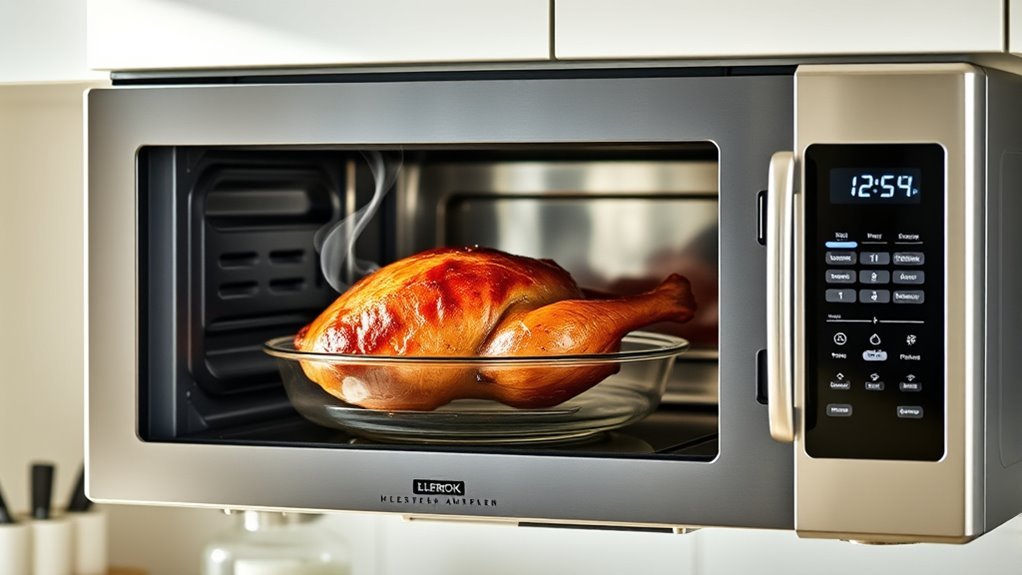
A convection microwave combines the features of a traditional microwave with a convection oven, so you can cook food faster and more evenly. It’s like getting two appliances in one!
You’ll see improved microwave efficiency because it uses microwaves to heat food quickly while a fan circulates hot air, giving you benefits like browning and crisping. It’s a real time-saver.
This dual-action means you don’t have to choose between speed and quality. When you use a convection microwave, the microwaves penetrate the food to heat it inside, while the convection fan ensures even cooking on the surface.
This combination cuts down on cooking times and improves texture, giving you better results than a standard microwave. It handles everything from reheating leftovers to baking and roasting.
How Is a Convection Microwave Different From a Regular Microwave?
You’ll see that a convection microwave has a fan and a heating element, which work together to circulate hot air around your food. In contrast, a regular microwave mainly uses microwaves to heat things up.
This means that with a convection microwave, your food cooks more evenly and can even get that nice browning or crispy texture. Regular microwaves are great for quick heating, but they don’t usually give you that crispy finish.
Knowing these differences can help you pick the right appliance based on what kind of cooking you do most.
Cooking Technology Comparison
Microwave ovens use electromagnetic waves to heat food quickly by agitating water molecules. Convection microwaves combine this with a built-in fan and heating element that circulate hot air for even cooking and browning.
When you compare the cooking technology, you’ll find that convection microwaves often include smart technology. This allows you to select cooking modes and automatically adjust settings for better results.
This makes convection microwaves more versatile than regular ones, which focus mainly on quick heating. They tend to be more energy-efficient because they cook food evenly and can cut down cooking time.
Heat Distribution Differences
Although both regular and convection microwaves heat food using electromagnetic waves, their methods of distributing heat set them apart markedly. A regular microwave relies on microwaves to excite water molecules, which can sometimes cause uneven heating because the energy targets specific spots.
In contrast, a convection microwave combines this with a fan that promotes heat circulation, ensuring hot air moves evenly around your dish. This added heat circulation improves cooking efficiency, often making your food cook faster and more evenly.
You’ll notice better browning and crisping with convection microwaves, which regular ones simply can’t achieve. So when even heat distribution matters—like for baked goods or roasted meals—a convection microwave gives you more control and consistent results, making cooking smoother and more reliable.
Cooking Functions of a Convection Microwave
When you combine convection and microwave technology, you get versatile cooking functions that let you bake, roast, grill, and reheat with ease. This combo improves your microwave recipes by cooking foods more evenly and quickly while using energy efficiently.
You can switch between modes or even use them at the same time, giving you flexibility that traditional microwaves don’t offer.
Here’s a quick look at common cooking functions you’ll find:
| Function | Purpose |
|---|---|
| Bake | Cooks cakes, bread, and more with dry heat |
| Roast | Perfect for meats and vegetables, crisping them nicely |
| Grill | Adds browning and char to your food |
| Reheat | Quickly warms leftovers without overcooking |
Using these functions lets you prepare a wide range of dishes with less energy waste, making your cooking faster and more efficient.
Main Benefits of Using a Convection Microwave
Combining convection and microwave functions gives you more than just versatile cooking options. It also brings several key benefits that can improve your kitchen experience.
One major advantage is cooking versatility. You can quickly reheat leftovers or cook full meals using one appliance, saving space and time. This flexibility means you’re not limited to just microwaving—you can also crisp, brown, and evenly cook food with the convection feature.
Another important benefit is energy efficiency. Since a convection microwave cooks food faster and more evenly, it uses less energy compared to traditional ovens. You won’t have to wait long for your meal, and you’ll reduce your kitchen’s overall power consumption.
Convection microwaves save energy by cooking faster and more evenly than traditional ovens, cutting down your kitchen’s power use.
Plus, its multifunctionality means you won’t need multiple devices cluttering your counters, which helps streamline your cooking process.
In short, a convection microwave offers efficient, adaptable cooking, making it a smart choice for any modern kitchen.
Using a Convection Microwave for Baking and Roasting
If you want to bake or roast without heating up your whole kitchen, a convection microwave can be your best friend. It combines microwave speed with convection heat, giving you great results in less time.
To get the most out of your convection microwave, try these baking techniques and roasting tips:
- Preheat the microwave before adding your dish to ensure even cooking.
- Use oven-safe cookware that lets hot air circulate for better browning and crispiness.
- Rotate your food halfway through cooking to help it roast or bake evenly.
- Keep in mind that convection microwaves often cook faster than traditional ovens, so adjust your times and temperatures accordingly.
Is a Convection Microwave Worth It for Your Cooking Needs?
How do you know if a convection microwave suits your cooking style? If you want the benefits of convection like even baking and roasting along with quick reheating, it could be a great choice. A convection microwave speeds up cooking by combining microwave power with hot air circulation, helping you prepare meals faster without losing quality.
Think about your usual cooking habits before making a purchase. If you mainly reheat leftovers or cook simple meals, a standard microwave might do the job. But if you often bake, roast, or want more versatility, a convection model could be worth the investment.
| Cooking Habit | Benefit from Convection Microwave | Why It Matters |
|---|---|---|
| Quick reheating | Moderate | Saves time for everyday use |
| Baking & roasting | High | Ensures even cooking and better results |
| Versatile cooking | High | Combines multiple functions for flexibility |
If efficiency and versatility are important to you, a convection microwave might be a great fit.
Top Features to Look For in a Convection Microwave
When shopping for a convection microwave, focus on key features that boost performance and convenience. Prioritizing these will help you get the best efficiency and versatility for your kitchen.
- Power Settings and Wattage – Look for at least 1000 watts. Higher wattage means faster cooking and better microwave efficiency.
- Convection Cooking Modes – Choose a microwave with multiple modes like baking, grilling, and roasting. This gives you more cooking options.
- Pre-programmed Recipes – These make meal prep easier by automatically adjusting time and temperature, helping you use your microwave efficiently.
- Size and Capacity – Pick a size that fits your kitchen but also allows you to cook larger dishes. This way, you won’t limit your cooking options.
Focusing on these features ensures your convection microwave makes cooking quicker, easier, and more versatile.
Choosing the Best Convection Microwave for Your Kitchen and Budget
Choosing the best convection microwave for your kitchen and budget means balancing size, features, and price to match your cooking needs. Start by evaluating your available kitchen space and daily cooking habits.
Consider size options carefully. Compact models save space but may limit cooking capacity, while larger units handle bigger meals but need more counter room. Next, think about your budget. Higher-priced models often have advanced features like sensor cooking or multi-stage presets, but you can find reliable mid-range options that cover basic convection functions well.
Prioritize features you’ll use often to avoid overspending. Also, check energy efficiency and warranty terms to ensure long-term value. Finally, read user reviews to gauge real-life performance and durability.
Common Mistakes When Using a Convection Microwave
After choosing the perfect convection microwave for your kitchen and budget, it’s important to know how to use it properly for the best results. Many people fall for common microwave myths that can lead to undercooked or burnt meals.
Here are four mistakes to watch out for:
First, ignoring convection mode and only using microwave settings can ruin the texture and flavor of your dishes. Don’t forget to switch to convection when needed.
Second, setting the wrong cooking temperatures is a common mistake. Convection microwaves need different temperatures than standard ovens, so be sure to adjust accordingly.
Third, using metal cookware is a big no-no. It can cause sparks and damage your appliance, so stick to microwave-safe containers.
Finally, overcrowding the microwave prevents even heat circulation. This leads to uneven cooking, so give your food space to cook properly.
How to Clean and Maintain Your Convection Microwave
Keeping your convection microwave clean and well-maintained guarantees it works efficiently and lasts longer. For effective microwave maintenance, start by unplugging the unit before cleaning. Use a soft cloth dampened with mild soap and water to wipe the interior and exterior surfaces. Avoid harsh chemicals that can damage the microwave’s finish or components.
To tackle stubborn stains, try a natural cleaning technique: heat a bowl of water with lemon slices inside the microwave for 3-5 minutes. The steam loosens grime, making it easier to wipe away. Don’t forget to clean the turntable and any removable parts regularly; wash them with warm, soapy water and dry thoroughly.
Keep the ventilation areas clear to prevent overheating. Regularly inspect the door seal for damage to guarantee proper sealing. By following these cleaning techniques and microwave maintenance tips, you’ll keep your convection microwave in top shape, assuring reliable performance every time you use it.
Frequently Asked Questions
Can a Convection Microwave Be Used for Defrosting Meat Safely?
Yes, you can use a convection microwave for defrosting meat safely. Just make sure to use the defrost setting or low power to thaw the meat evenly without starting to cook it.
Keep an eye on the process to prevent the edges from partially cooking. Once the meat is thawed, cook it right away to keep it safe and stop bacteria from growing.
This method allows you to thaw meat quickly while still ensuring it’s safe to eat.
What Is the Average Energy Consumption of a Convection Microwave?
Think of a convection microwave as a smart conductor, orchestrating energy with precision. You’ll find its average energy consumption usually ranges between 800 to 1500 watts, depending on the cooking modes you choose.
Because it combines microwave and convection heating, it’s more energy-efficient than using separate appliances.
Are There Any Health Concerns With Using a Convection Microwave?
You don’t need to worry about health concerns when using a convection microwave. These appliances are designed with radiation safety in mind, making sure microwaves stay contained within the unit.
Plus, their cooking efficiency means food heats evenly, which helps reduce the risk of harmful bacteria. Just follow the manufacturer’s instructions, and you’ll enjoy safe, quick meals without exposure to harmful radiation or uneven cooking that could affect your health.
Can I Use Metal Cookware in a Convection Microwave?
Wondering if metal cookware safety matters in your convection microwave? You shouldn’t use regular metal cookware in microwave mode because it can spark and damage the oven.
However, in convection mode, metal pans are usually safe since the microwave function isn’t active. Just follow convection microwave tips like avoiding metal with microwave-only settings and checking your manual.
This way, you’ll cook efficiently without risking any damage or safety issues.
How Long Is the Typical Warranty for a Convection Microwave?
You’ll typically find the warranty duration for a convection microwave ranges from one to two years. This coverage usually includes repairs or replacements for defects in materials or workmanship. Some brands might offer longer warranties, so it’s a good idea to check the specific terms before you buy.
Keep in mind that warranty coverage often excludes damage caused by misuse. So, handle your microwave carefully to keep it protected.
Conclusion
Now that you know what a convection microwave can do, you’re ready to take your cooking game up a notch. It’s a versatile kitchen helper that combines speed and even cooking, making it easier to bake, roast, and reheat.
Just remember, every tool has its quirks, so don’t put all your eggs in one basket. Experiment and find what works best for you.
With a little practice, you’ll master your convection microwave in no time. It’s a game-changer for quick, delicious meals!