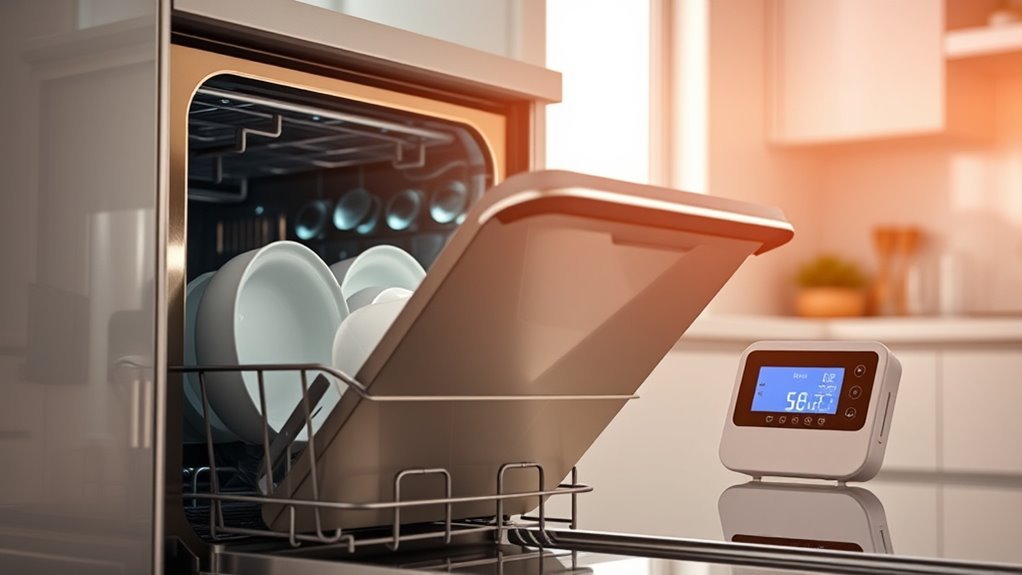
How Much Electricity Does a Dishwasher Use? The Complete Answer
Many people struggle with understanding how much electricity their appliances actually use, especially when trying to cut costs or be more eco-friendly.
One common question is, “How much electricity does a dishwasher use?” You’re not alone in wondering about this, and the good news is, it’s simpler than you might think.
You’ll use about 1.5 to 2 kWh of electricity each time you run your dishwasher, but this varies based on your model, cycle, and load size.
Running full loads, choosing eco or shorter cycles, and skipping pre-rinsing can save energy.
Water temperature and maintenance also play big roles—you’ll use more power if your dishwasher isn’t clean or water is hard.
Keep these tips in mind, and you’ll find even more ways to boost efficiency and cut costs.
Key Takeaways
- Dishwashers usually use about 1.5 to 2 kWh of electricity per cycle, depending on the model and settings.
- How much energy you use also depends on the cycle you choose, water temperature, and whether the dishwasher is fully loaded.
- Opting for eco-friendly or shorter cycles can lower electricity use without sacrificing cleaning quality.
- Hard water and poor maintenance can make your dishwasher work harder, increasing energy consumption due to mineral buildup.
- Upgrading to a modern, efficient dishwasher if yours is over 10 years old can save you a good amount on electricity costs.
How Much Electricity Does a Dishwasher Use Per Cycle?
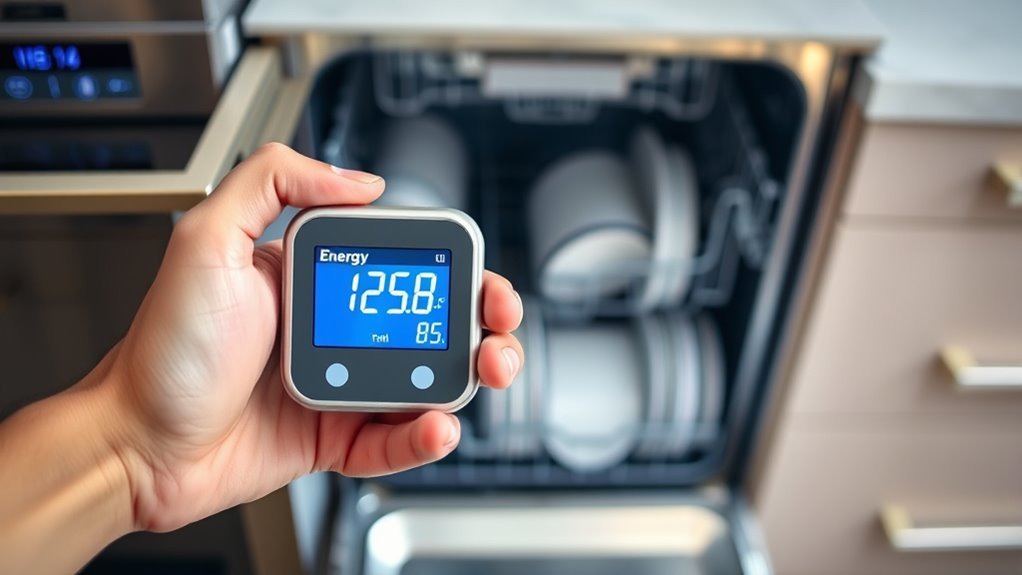
How much electricity does a dishwasher use per cycle? On average, a typical dishwasher consumes about 1.5 to 2 kWh per load. But keep in mind, this can vary depending on the model and the settings you pick.
To save on energy bills, try running full loads and opt for eco-friendly cycles whenever possible. Regular maintenance is also key to keeping your dishwasher efficient. Cleaning the filter and spray arms helps it run smoothly and uses less electricity.
Check for leaks or clogs because they can make your dishwasher work harder than necessary. Staying on top of maintenance ensures it performs well without wasting power.
And don’t forget small habits like scraping off excess food instead of rinsing dishes. This reduces water and energy use, making your dishwasher more eco-friendly and cost-effective.
How Water Temperature, Load Size, and Cycle Type Affect Dishwasher Energy Use
Because your dishwasher’s energy use depends largely on water temperature, load size, and cycle type, understanding these factors can help you save electricity. Adjusting the temperature settings to a moderate level reduces the energy needed to heat water, which is a major electricity consumer. Running full loads also ensures you use energy effectively without wasting it.
Here are some key points to help you manage your dishwasher’s energy use:
- Use eco or light cycles for less dirty dishes—they consume less energy.
- Avoid half-load cycles unless necessary; full loads maximize efficiency.
- Set your water heater temperature to about 120°F to balance cleaning power and energy use.
- Skip pre-rinsing to save hot water and energy.
- Choose shorter cycles whenever possible to cut down on electricity consumption.
How Hard Water and Cleaning Your Dishwasher Impact Energy Efficiency
Beyond water temperature, load size, and cycle choice, the quality of your water and how clean your dishwasher is really impact energy use. Hard water deposits minerals inside your dishwasher, causing buildup on heating elements and spray arms. This buildup makes your dishwasher work harder and longer to heat water and clean dishes, which uses more electricity.
You can cut down on this by tackling hard water issues, like using a water softener or special dishwasher detergents made for hard water. Regular dishwasher maintenance also helps boost energy efficiency. Cleaning filters, spray arms, and seals ensures water flows properly and your dishwasher works effectively.
Ignoring maintenance can lead to clogs and less efficient cycles that waste energy. Running a monthly cleaning cycle with dishwasher cleaner removes grease and mineral buildup. Managing hard water effects and keeping your dishwasher clean helps it run smoothly, saving electricity and extending its lifespan.
How Does Dishwasher Size Affect Electricity Use?
Although larger dishwashers can handle more dishes per cycle, they usually use more electricity than smaller models. The size of the dishwasher directly affects how much water and energy are needed to complete a wash.
When thinking about capacity, bigger machines need more power to heat water and often run longer or more intensive cycles. But if you tend to run full loads, a larger dishwasher might actually be more energy-efficient overall compared to doing multiple smaller loads.
Here’s what to keep in mind about dishwasher size and electricity use:
- Larger dishwashers consume more water and energy per cycle.
- With more capacity, you can wash more dishes at once and may save energy per item.
- Smaller dishwashers use less electricity but might need to be run more often.
- Energy efficiency ratings vary, so always check the labels.
- Pick a size that matches your typical load to save energy and reduce waste.
How Different Wash Cycles Change Dishwasher Electricity Use
You’ll see that the amount of electricity your dishwasher uses can vary pretty a lot depending on the cycle you choose. Some cycles, especially those that heat the water more or run for a longer time, tend to use more energy.
Getting to know how each cycle affects your electricity bill can actually help you make smarter, more efficient choices. So, next time you load up the dishwasher, think about which cycle you really need — it might save you some energy and money in the long run.
Energy Use By Cycle
Different dishwasher cycles use varying amounts of electricity, so the cycle you choose directly affects your energy use. Understanding these trends helps you make smarter choices and save on your electric bill.
When you compare cycles, you’ll see how each impacts power use based on duration, water temperature, and intensity. Here’s a quick look at typical energy use:
- Normal cycle: Balances cleaning and energy efficiency.
- Heavy-duty: Uses more electricity for tough stains.
- Eco mode: Optimizes for lower energy consumption.
- Quick wash: Shorter time, less power, but may use more heat.
- Rinse only: Minimal energy, just a quick water spray.
Hot vs. Cold Water
How does the temperature of water affect your dishwasher’s electricity use? When you choose hot water, it depends a lot on water heating, which uses more electricity.
If your dishwasher heats water inside, it increases energy use compared to cycles using cold water. But if your home supplies hot water from an efficient source like a gas heater, the dishwasher’s electricity use drops.
The energy source for heating water really matters for your overall electricity bill. Cold water cycles cut down on internal water heating, saving electricity but might not clean as well.
Cycle Duration Impact
Although longer wash cycles tend to use more electricity, you can manage your dishwasher’s energy use by choosing the right cycle duration for your needs. Knowing how different cycles impact power helps you become more energy-aware and save on electricity.
Short cycles use less energy but might not clean heavily soiled dishes well. Longer cycles, on the other hand, increase electricity use because they involve more water heating and longer motor operation.
When choosing your cycle duration, consider these factors:
- Shorter cycles use less electricity overall.
- Heavily soiled dishes need longer, more energy-intensive cycles.
- Hotter water increases energy use during longer cycles.
- Running fuller loads makes your energy use more efficient per dish.
- Running the dishwasher more often adds up to higher total energy consumption.
Standard vs. Energy-Efficient Dishwashers: Which Uses Less Electricity?
Wondering which type of dishwasher saves you more on electricity bills? When comparing standard vs. energy-efficient dishwashers, energy ratings are a helpful guide.
Energy-efficient models usually have higher ratings, meaning they use less electricity per cycle while still cleaning well. They often feature advanced technology like soil sensors and better water jets to cut down power use over time.
Energy-efficient dishwashers use less electricity per cycle with smart features like soil sensors and improved water jets.
Standard dishwashers tend to run longer cycles and use more water and energy. Although energy-efficient models might cost more upfront, they save money in the long run by reducing electricity consumption.
Your actual savings depend on how often and in what mode you run the dishwasher. Generally, energy-efficient options are better for lowering electricity use, especially if you wash frequently or run full loads.
Checking energy ratings and comparing typical usage patterns can help you pick the best dishwasher for cutting your energy bills.
How to Calculate Your Dishwasher’s Monthly Electricity Cost
If you want to see how much your dishwasher is adding to your electricity bill, you’ll need to estimate its monthly energy cost. This depends on how much power it uses and how often you run it each month.
Start by finding the dishwasher’s wattage rating, usually on the label or in the manual. Then, estimate how long each cycle takes in hours.
Next, multiply the wattage by the cycle time to find out how much energy is used per wash, measured in watt-hours.
To get your monthly usage, multiply that number by the number of cycles you run each month.
Finally, convert watt-hours to kilowatt-hours by dividing by 1,000, and multiply by your local electricity rate to find out your monthly cost.
What Are the Best Tips to Run Your Dishwasher More Efficiently?
Want to run your dishwasher more efficiently? Start by loading it properly—make sure to maximize the space without overcrowding, so everything gets cleaned well. When possible, choose energy-saving settings; they help cut down on electricity use but still do a great job cleaning. Following these simple tips can save you money on energy bills and keep your dishwasher running smoothly.
Optimal Load Practices
Running your dishwasher efficiently starts with how you load it. Proper loading helps you make the most of space and use less energy. When you arrange dishes carefully, you can cut down on the number of cycles needed, saving both electricity and water.
Here are some tips for ideal load practices:
- Place larger items like pots and pans on the bottom rack so they don’t block water spray.
- Load plates and bowls facing the center for better cleaning.
- Don’t overcrowd the dishwasher; leave enough space so water and detergent can circulate freely.
- Position glasses and cups on the top rack, angled downwards to drain properly.
- Keep plastic items away from the heating elements to prevent melting.
Energy-Saving Settings
Mastering how you load your dishwasher sets the foundation for efficient use. But choosing the right energy-saving settings takes it to the next level.
Look for features like eco-friendly modes, which cut water and electricity without sacrificing cleaning power. Using eco mode can lower the wash temperature and stretch out cycle times, saving a lot of energy.
Also, skip the heated dry option and let your dishes air dry to save electricity. Running your dishwasher only when it’s full maximizes efficiency.
For lightly soiled dishes, opt for shorter cycles. By combining these tips with smart habits, you’ll reduce your environmental impact and lower your electricity bills.
Why Using Eco Mode Can Save You Electricity
Although dishwashers can use a lot of power, choosing eco mode helps you cut down on electricity without sacrificing cleaning quality. Eco mode adjusts water temperature and cycle length to save energy.
Choosing eco mode on your dishwasher reduces electricity use without compromising cleaning results.
This option offers big eco benefits and can save you money over time. It’s a smart choice for anyone wanting to lower their utility bills while being environmentally friendly.
Here’s why eco mode works well:
- It uses lower water temperature, saving heating energy
- It extends the washing time to clean effectively without extra power
- It minimizes water use, reducing the energy needed to heat it
- It lowers overall electricity demand per cycle
- It keeps cleaning performance on par with standard cycles
When Should You Replace Your Old Dishwasher to Save Energy?
Choosing eco mode is a great way to cut down your dishwasher’s energy use. But sometimes, it’s not enough to make a big difference.
If your dishwasher is close to the end of its typical lifespan—around 10 years—it might be time to think about replacing it. Older models tend to use more electricity and water.
This means you might not see much savings even if you use eco settings. Upgrading could save you more energy and money in the long run.
Frequently Asked Questions
Can Dishwashers Damage Delicate Dishes or Glassware?
Yes, dishwashers can damage delicate dishes or glassware if you’re not careful.
To keep everything safe, use the right cycle made for fragile items and avoid overcrowding.
When washing glassware, place glasses securely and opt for a gentle detergent.
Always check the manufacturer’s guidelines, since some delicate items aren’t dishwasher-safe.
Are Dishwasher Detergents Environmentally Friendly?
You might be surprised to learn that over 60% of conventional dishwasher detergents contain ingredients harmful to aquatic life.
Luckily, you can choose eco-friendly options with biodegradable detergent ingredients that reduce environmental impact.
These detergents avoid phosphates and harsh chemicals, making them safer for your home and the planet.
When you pick greener detergents, you help protect water quality and support sustainable practices without sacrificing cleaning power.
How Noisy Are Modern Dishwashers Compared to Older Models?
Modern dishwashers are much quieter than older models because manufacturers focus on reducing noise levels. You’ll notice improved sound insulation, which helps keep the motor and water spray sounds from disturbing your home’s peace.
Thanks to better materials and design, these dishwashers operate at noise levels often below 50 decibels, making them barely noticeable. So, when you run your dishwasher, you won’t have to worry about loud, distracting sounds anymore.
Can I Use a Dishwasher Without Heating the Water?
Yes, you can use a dishwasher without heating the water, but it depends on your model. Some dishwashers rely on your home’s hot water supply, while others have built-in heaters to raise water temperature.
Using cold water can lower the water temperature, which might affect how well your dishes get cleaned and how much energy you use. If you’re trying to save energy, skipping the heater can help reduce power use.
But keep in mind, you might need longer cycles or stronger detergents to get your dishes spotless without the extra heat.
What Common Dishwasher Maintenance Tasks Extend Its Lifespan?
You can extend your dishwasher’s lifespan by up to 30% with regular maintenance. Focus on cleaning it by running a monthly cycle with a dishwasher cleaner to remove buildup.
Don’t forget to clean the filter weekly to prevent clogs and keep water flowing smoothly. Also, check the spray arms for debris and wipe down the door seals.
These simple tasks help keep your dishwasher running efficiently and can save you from costly repairs later on.
Conclusion
Think of your dishwasher as a small engine powering your kitchen. Its electricity use varies depending on load, cycle, and size.
By choosing eco modes, running full loads, and keeping it clean, you can cut energy costs like a sharp knife through butter.
Remember, replacing an old model can be the spark that lights up your savings.
So, take control and watch your dishwasher work smarter, not harder, saving both energy and money with efficient use.