How to Clean a Kitchen Sink: A Step-by-Step Guide
Are you tired of looking at a dull, grimy kitchen sink every time you cook or wash up? You’re not alone—many people struggle with keeping their sinks spotless and shiny.
Luckily, cleaning your kitchen sink doesn’t have to be a chore.
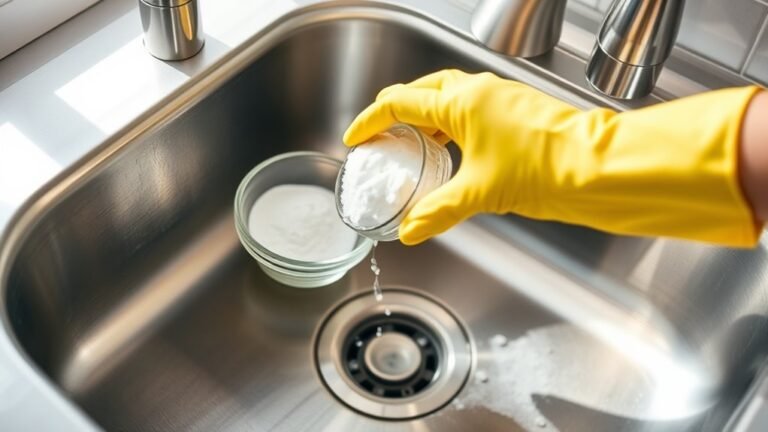
To clean your kitchen sink, start by removing food debris with a strainer or sponge. Sprinkle baking soda on stains, then pour vinegar to fizz away grime; scrub and rinse well.
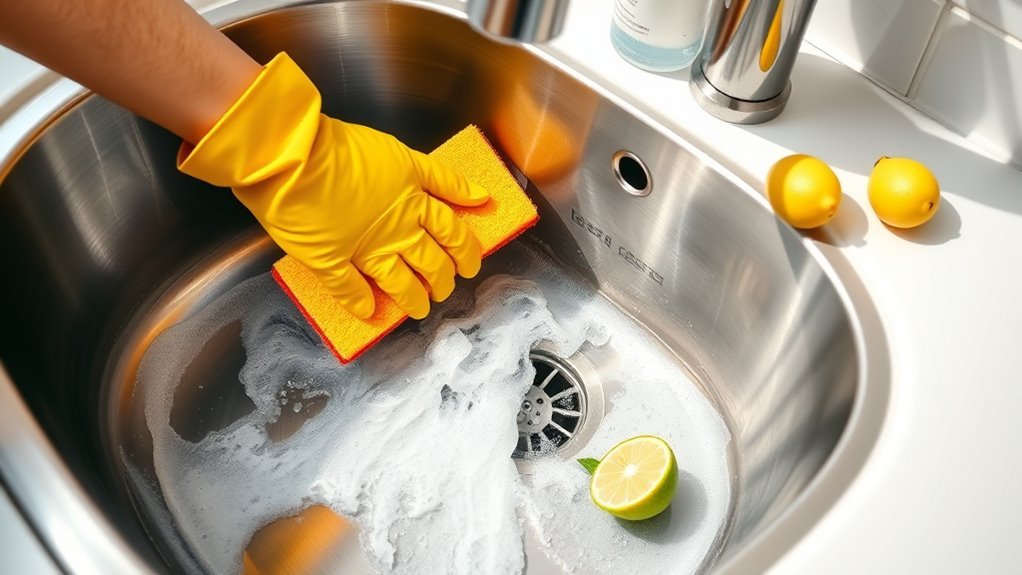
For grease and soap scum, use a lemon juice mix or baking soda and vinegar.
Maintain drains by flushing with boiling water and avoid pouring grease down them. Use gentle cleaners suited to your sink material, and wipe daily to keep it fresh and shiny.
Keep going for detailed tips and maintenance tricks.
Key Takeaways
- Gather your cleaning supplies: sponge, scrub brush, gloves, dish soap, baking soda, vinegar, and a microfiber cloth.
- Start by removing any debris with a strainer basket, then rinse the sink with warm water to clear out loose dirt.
- Sprinkle baking soda all over the sink, then spray vinegar over it. Let it fizz for about 10-15 minutes. After that, scrub away stains and grease, then rinse thoroughly.
- To keep your drain fresh and deodorized, use baking soda and vinegar, followed by boiling water. Toss in some citrus peels for an extra burst of freshness.
- Every day, wipe down your sink and faucet with a mild cleaner or vinegar solution. This keeps it hygienic and shiny.
Why You Should Keep Your Kitchen Sink Clean
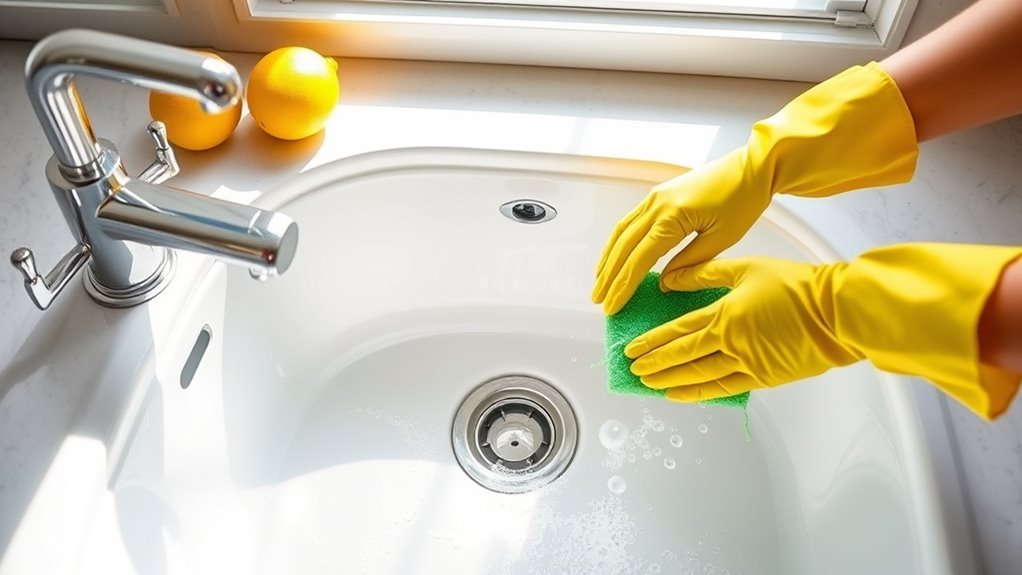
Although it might seem like a small task, keeping your kitchen sink clean helps prevent bacteria buildup and bad odors. Your sink is a hotspot for germs because it’s constantly exposed to food particles and moisture.
Making hygiene a priority by cleaning your sink regularly keeps your kitchen healthier. When you control bacteria in this area, you lower the chance of cross-contamination that could affect your food and family.
A clean sink also keeps your kitchen smelling fresh and looking inviting. Ignoring this step can lead to clogged drains and stubborn stains, making your sink harder to clean later on.
Gather Your Cleaning Supplies for the Kitchen Sink
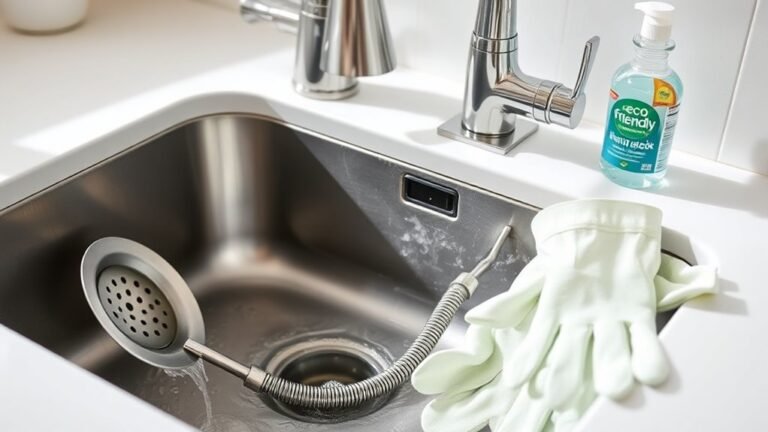
Before you dive into cleaning, it’s a good idea to gather all your supplies first. You’ll want things like a sponge, a scrub brush, and maybe some gloves to protect your hands. Having these handy will make the whole process smoother and less stressful.
Along with those, grab your cleaning products—dish soap is a must, and a mild disinfectant can really help keep things sanitized. Once everything’s within reach, you’ll be able to clean quickly and effectively without having to stop and search for supplies.
Essential Cleaning Tools
To clean your kitchen sink effectively, you’ll need a few essential tools ready at hand. These tools make your cleaning techniques more efficient, helping you tackle grime and bacteria with ease. Having the right items guarantees you won’t waste time searching mid-clean.
Here’s a quick reference to the essential tools you’ll want:
| Tool | Purpose |
|---|---|
| Scrub Brush | Removes stuck-on food and stains |
| Microfiber Cloth | Polishes and dries without scratching |
| Sponge | General cleaning and wiping |
With these essential tools, you can confidently approach your sink cleaning routine. Each tool plays a specific role, making your cleaning more effective and your kitchen sparkle.
Recommended Cleaning Products
Three key cleaning products will make your kitchen sink shine and stay hygienic. First, grab a gentle but effective cleaner—choose eco-friendly options to avoid harsh chemicals that can damage your sink and the environment.
Second, a mild abrasive like baking soda helps scrub away stains without scratching surfaces. Finally, white vinegar acts as a natural disinfectant and deodorizer, perfect for removing mineral deposits and odors.
Homemade cleaners combining these ingredients are simple and budget-friendly. For example, sprinkle baking soda on the sink, spray vinegar, then scrub gently.
These natural solutions clean thoroughly without toxic residues. By using eco-friendly products and homemade cleaners, you protect your health and the planet while keeping your kitchen sink spotless.
How to Remove Food Debris From Your Kitchen Sink
Removing food debris from your kitchen sink starts with clearing out any visible scraps trapped in the drain or strainer. Begin by removing the sink stopper or strainer basket and disposing of any solid bits in the trash. Avoid pushing large pieces down the drain, as they can clog your pipes or damage your food disposal.
Next, run hot water to flush away smaller particles that may be lingering inside the drain. If you have a food disposal, turn it on while running cold water to help break down leftover debris and keep it moving smoothly.
Run hot water to flush particles, and use cold water with your disposal to clear debris effectively.
This step is essential for maintaining good sink hygiene and preventing odors. Finally, wipe the sink basin and around the drain with a sponge or cloth to remove any remaining residue.
Regularly removing food debris keeps your sink clean, extends the lifespan of your food disposal, and promotes a hygienic kitchen environment.
Eliminate Kitchen Sink Stains With Baking Soda and Vinegar
Got stubborn stains in your kitchen sink? No worries! You can actually use baking soda and vinegar — they’re like the perfect cleaning team. Baking soda’s gentle abrasiveness helps scrub away grime, while vinegar’s natural acidity lifts stains and brightens up the surface.
Here’s how you do it: sprinkle some baking soda all over the sink, focusing on those tricky stained areas. Then, pour a little vinegar over it. You’ll see it fizz—that’s the reaction helping to loosen up the dirt. Let it sit for a few minutes, then give it a good scrub with a sponge or brush. Rinse everything off, and your sink should look much cleaner and shinier. It’s a simple, natural way to keep your kitchen sparkling without any harsh chemicals!
Baking Soda Benefits
A simple mixture of baking soda and vinegar easily tackles stubborn kitchen sink stains. Baking soda’s uses go beyond cleaning — it’s also a natural deodorizer that keeps your sink smelling fresh while removing grime.
Here’s why you should rely on baking soda for your kitchen sink:
- It gently scrubs without scratching delicate surfaces.
- It neutralizes odors, leaving your sink smelling great.
- It breaks down tough stains and residue effortlessly.
- It’s safe and eco-friendly, avoiding harsh chemicals.
Vinegar’s Cleaning Power
Harness vinegar’s natural acidity to cut through grime and mineral deposits in your kitchen sink. Vinegar benefits go beyond just stain removal— it also acts as a powerful natural disinfectant, helping to eliminate bacteria and odors without harsh chemicals.
When combined with baking soda, vinegar creates a fizzing reaction that loosens stubborn stains and clears clogged drains effectively. This eco-friendly solution is safe for most sink materials, including stainless steel and porcelain.
Using vinegar means you’re embracing a non-toxic, affordable cleaning method that’s gentle on your plumbing and the environment. By understanding vinegar’s cleaning power, you can keep your sink sparkling and hygienic while reducing reliance on commercial products loaded with synthetic ingredients.
Step-by-Step Application
Start by sprinkling a generous amount of baking soda directly onto the stained areas of your kitchen sink. This abrasive powder helps lift grime without scratching.
Next, pour white vinegar over the baking soda. It will fizz and help break down stains. Let the mixture sit for 10-15 minutes to get the best stain removal.
Then, gently scrub with a soft sponge or brush to avoid damaging the sink’s surface. Rinse thoroughly with warm water to wash away any residue.
How to Tackle Tough Grease and Soap Scum in Your Kitchen Sink
Tackling tough grease and soap scum in your kitchen sink requires the right approach and a few effective ingredients. Start by applying a grease fighting technique: sprinkle baking soda over greasy spots, then spray white vinegar. Let it fizz for 10 minutes to break down stubborn grease. Scrub gently with a non-abrasive sponge to avoid scratching your sink’s surface.
For soap scum, mix equal parts lemon juice and water in a spray bottle. Spray the affected areas and let it sit for 5 minutes. The natural acidity will dissolve soap scum buildup. Use a soft cloth or sponge to scrub away residue, then rinse thoroughly with warm water.
If grease or soap scum persists, repeat these steps or try a commercial degreaser designed for kitchen sinks. Combining these techniques will help restore your sink’s shine and keep it hygienic with minimal effort.
How to Remove Lingering Odors From Your Kitchen Sink
Why does your kitchen sink sometimes hold onto unpleasant odors even after cleaning? Food particles and bacteria can hide in tiny spots, causing those stubborn smells.
To get rid of these odors, try using odor neutralizers and natural deodorizers. Here’s a simple way to do it:
Pour a mixture of baking soda and vinegar down the drain. The fizzing action breaks down residue and helps neutralize smells.
Next, rinse with boiling water to flush away any loosened debris and freshen up your sink.
Rub citrus peels like lemon or orange around the sink basin and disposal opening. Their natural oils act as deodorizers and leave a fresh scent.
Finally, place a small bowl of activated charcoal near the sink. It absorbs lingering odors naturally without masking them.
Cleaning and Maintaining Your Kitchen Sink Drain and Disposal
Keeping your kitchen sink drain and disposal clean is key to preventing clogs and bad smells. Avoid pouring grease or coffee grounds down the drain, as they tend to build up and cause blockages. Instead, flush the drain regularly with hot water to clear away debris. You can also use a mix of baking soda and vinegar to naturally break down minor buildup.
When caring for your disposal, run cold water before, during, and after use. This helps solidify grease and flush out food particles. Avoid putting fibrous, starchy, or hard items like celery, potato peels, or bones into the disposal because they can damage the blades or cause jams. To keep things smelling fresh, grind citrus peels from time to time.
Finally, check your disposal regularly for leaks or loose parts. Doing so helps catch problems early. With consistent maintenance, your kitchen sink will stay smooth and odor-free.
Safe Cleaning Methods for Stainless Steel, Porcelain, and Granite Sinks
Although each type of sink material needs different care, you can safely clean stainless steel, porcelain, and granite sinks using gentle, non-abrasive methods. Always choose safe scrubbers and eco-friendly solutions to protect your sink’s finish. Here’s how:
- Stainless Steel: Use a soft sponge or microfiber cloth with mild dish soap and water. Avoid steel wool or harsh chemicals to prevent scratches.
- Porcelain: Clean with a paste made from baking soda and water. Gently scrub with a soft-bristle brush to remove stains without damaging the surface.
- Granite: Use a pH-neutral cleaner or a mix of warm water and mild dish soap. Wipe with a soft cloth and dry immediately to avoid water spots.
For all sinks, rinse thoroughly and dry with a towel. This helps prevent mineral deposits and keeps your sink shiny.
These simple methods keep your sink clean while preserving its material and using eco-friendly solutions that are safe for your home and the environment.
Easy Routines to Keep Your Kitchen Sink Clean Every Day
Establish simple daily habits to keep your kitchen sink spotless without much effort. Rinse your sink after each use to wash away food particles and stop buildup. Wiping down the surfaces with a soft cloth or sponge helps keep grime at bay. Doing this daily prevents stubborn stains and cuts down on deep cleaning.
Make it a habit to clean the faucet and handles since they collect bacteria and fingerprints. Use a mild cleaner or a vinegar solution to keep them shiny and germ-free. Also, check and clear the drain regularly to avoid clogs and bad odors. These daily routines keep your sink hygienic and help it last longer.
Quick Tips to Keep Your Sink Sparkling Between Deep Cleans
Want to keep your sink looking shiny and new? Just give it a quick wipe with a soft cloth every day—that way, you stop grime from building up. It’s a simple step that makes deep cleaning much easier later on.
And don’t forget, if you spill something, clean it up right away. Acting fast prevents stains from setting in and keeps your sink looking spotless. These little habits make all the difference and help your sink stay fresh and clean with minimal effort.
Daily Wiping Routine
A simple daily wiping routine can keep your kitchen sink looking fresh and prevent grime buildup between deep cleans. Practicing daily maintenance not only boosts sink hygiene but also saves you time later.
Here’s a quick routine to follow: Rinse the sink with warm water to remove loose debris. Apply a mild dish soap or an all-purpose cleaner. Use a soft sponge or cloth to wipe all surfaces, including the faucet and drain area.
Rinse thoroughly and dry with a microfiber cloth to prevent water spots. Keeping up with this small routine makes a big difference in your sink’s cleanliness and appearance.
Preventing Stains Early
Although regular deep cleaning is essential, preventing stains before they set in keeps your kitchen sink sparkling with less effort. Start by rinsing your sink thoroughly after each use to remove food particles and residue.
Use a gentle daily cleaner or a mixture of baking soda and water to wipe down the surface, which helps boost stain resistance. Avoid letting acidic or oily substances sit in the sink, as they can cause discoloration.
Installing a sink mat or grid offers extra protection against scratches and stains. These preventive steps help keep your sink shiny and cut down on harsh scrubbing.
Frequently Asked Questions
Can I Use Bleach to Clean My Kitchen Sink?
Yes, you can use bleach to clean your kitchen sink for effective sanitization, but make sure to dilute it properly and avoid mixing it with other cleaners.
If you prefer safer options, try using alternatives like vinegar, baking soda, or hydrogen peroxide. These still do a good job of sanitizing without harsh fumes or risking damage to your sink’s surface.
Always rinse thoroughly after cleaning to keep your sink safe and fresh.
How Often Should I Replace My Kitchen Sink Drain Stopper?
Think of your drain stopper as the gatekeeper of your sink’s flow. You should replace it every 1 to 2 years to keep your kitchen sink working smoothly.
Different drain stopper types wear out at different rates. Rubber ones might crack sooner, while metal or silicone stoppers tend to last longer.
Keep an eye out for leaks, rust, or difficulty sealing. When you notice any of these issues, it’s time to swap out your stopper.
Replacing it helps prevent clogs and odors from building up. Staying on top of this simple task keeps your sink in great shape.
Are Natural Cleaning Products Safe for Septic Systems?
Yes, natural cleaning products are generally safe for septic systems because they have a low environmental impact and break down more easily than harsh chemicals.
When you choose biodegradable ingredients like vinegar or baking soda, you help protect your septic routine by preventing harmful buildup.
Just be sure to avoid products with synthetic fragrances or antibacterial agents, as they can disrupt septic bacteria and reduce your system’s efficiency over time.
What Causes Rust Spots in Kitchen Sinks?
Rust spots in your kitchen sink pop up like uninvited guests because metal particles from pots, pans, or even water react with oxygen and moisture. If you ignore rust prevention and skip regular sink maintenance, those annoying spots multiply fast, making your sink look ancient!
To keep your sink shiny, wipe it dry, avoid leaving metal objects wet, and use rust-preventive products. Trust me, consistent care keeps rust away and your sink sparkling!
How Do I Prevent Water Spots on Stainless Steel Sinks?
To prevent water spots on stainless steel sinks, focus on preventive maintenance by wiping your sink dry after each use. Use a soft cloth or microfiber towel to quickly remove water droplets.
Incorporate polishing techniques, like applying a stainless steel cleaner or a mixture of vinegar and water. This helps restore shine and creates a protective layer.
Regularly polishing your sink keeps it looking spotless and helps repel water, which reduces the chances of spots forming over time.
Conclusion
Now that you’ve mastered these cleaning hacks, your kitchen sink will shine so brightly it might just blind your guests! No more stubborn stains or mysterious smells—just a sparkling, fresh oasis right in your kitchen.
With these simple steps, cleaning feels less like a chore and more like a superpower. Keep up with your routine, and your sink will stay so spotless, even your dishes will thank you!