How Long Does a Kitchen Remodel Take? The Complete Answer
Feeling overwhelmed by the idea of a kitchen remodel? You’re not alone. Many people struggle with figuring out how long the process will take and what to expect along the way.
A kitchen remodel typically takes anywhere from a few weeks to several months, depending on your project’s size, design complexity, and contractor availability. You’ll move through phases like planning, demolition, construction, and finishing touches.
Delays can happen due to permits, material shortages, or unforeseen issues, but staying organized and communicating clearly helps keep things on track.
Want to find out how to navigate each stage smoothly and avoid common setbacks?
Key Takeaways
- Kitchen remodels usually take a few weeks to several months, depending on how big and complex the project is.
- Making early decisions about the design and style can help speed things up and avoid delays.
- Getting permits, passing inspections, and contractor availability can really affect how long the remodel takes.
- Custom features and material availability often add extra time because of longer lead times.
- Staying in regular contact and ordering materials in advance can help keep everything on track.
How Long Does a Typical Kitchen Remodel Take?
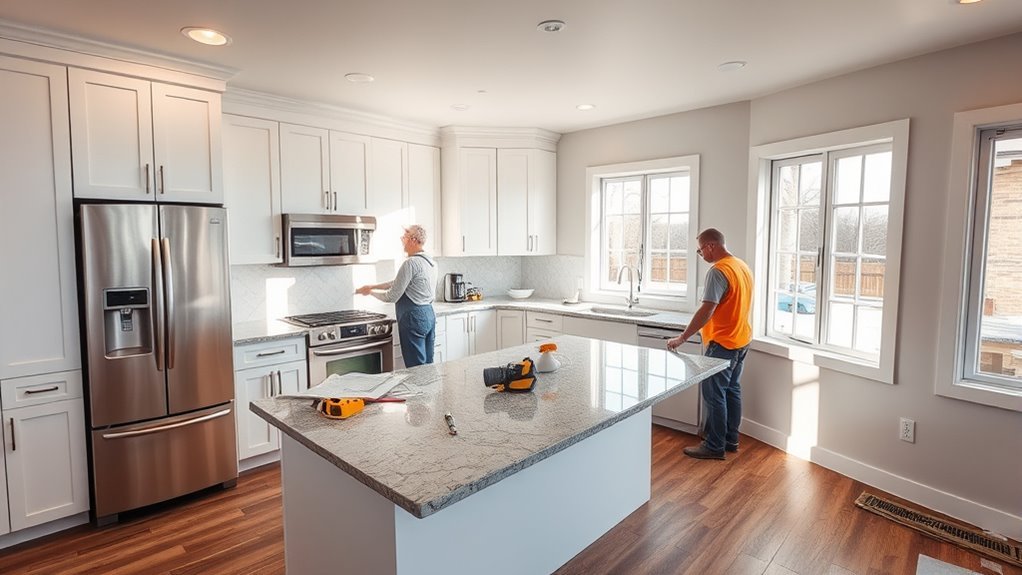
How long does a typical kitchen remodel take? Generally, you can expect anywhere from a few weeks to a few months, depending on your kitchen layout and renovation priorities.
If you lean toward popular design trends and functional upgrades, your timeline might extend, especially when adding custom elements or complex color schemes.
Solid budget planning and choosing the right contractor play vital roles in keeping your project on track.
If you decide to tackle parts of the remodel yourself, DIY aspects will also affect the duration.
Understanding your style preferences early helps streamline decisions and reduces delays.
Setting clear timeline expectations upfront makes it easier to stay realistic about progress.
Remember, simple updates in an open kitchen layout might wrap up quickly, while full-scale remodels with plumbing or electrical work naturally take longer.
Stay organized, communicate clearly with your team, and prioritize tasks to make the process smoother and meet your ideal completion date.
Kitchen Remodel Phases: What to Expect Step-by-Step
Once you understand the overall timeline, it’s helpful to break down your kitchen remodel into clear phases. This keeps your project organized and manageable, helping you stay on budget.
- Planning & Design: Focus on the layout, style choices, and overall design. Decide on color schemes, lighting, and storage options that match your vision.
- Contractor Selection & Prep: Choose a reliable contractor and finalize your budget. Prepare the space for demolition and ensure materials are ready for delivery.
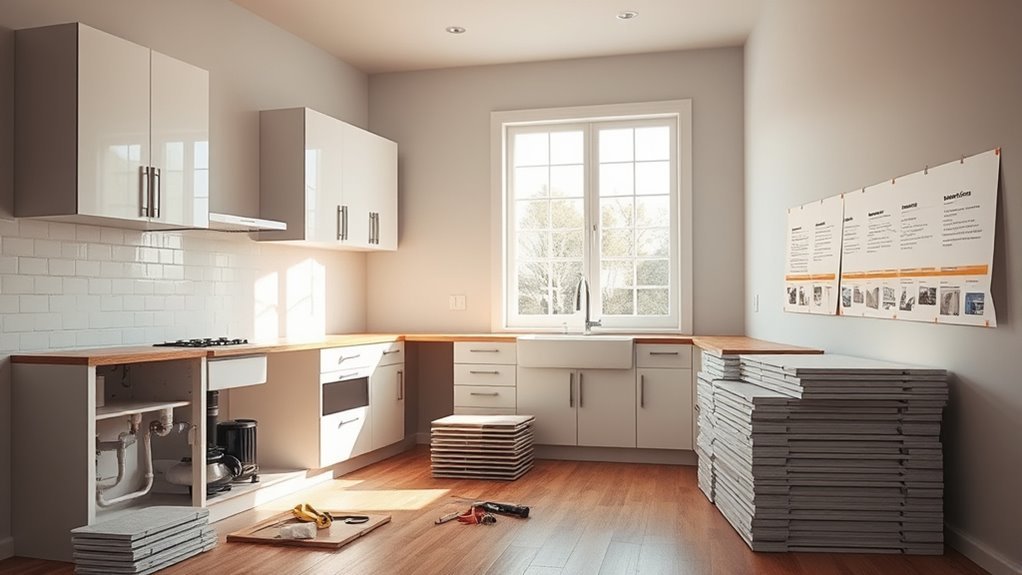
- Demolition & Construction: Watch your old kitchen come down as new appliances and cabinets go in. Contractors handle plumbing, electrical, and structural work to improve workflow.
- Finishing Touches: Install lighting, paint walls, and add hardware. Set up appliances and make sure everything matches your design goals.
How Scope, Design, and Materials Affect Remodel Duration
The time it takes to remodel your kitchen really depends on what you’re planning to do. If you’re going for a simple update, it might not take as long, but if you’re designing something more complex with custom features, expect it to take a bit more time.
Also, keep in mind that the materials you choose can impact the schedule. Sometimes, certain materials might be on backorder or have longer lead times, which can cause delays.
Getting a good handle on these factors can help you set a realistic timeline and avoid surprises down the road.
Project Scope Impact
Because the scope of your kitchen remodel sets the foundation for the entire project, it directly influences how long the work will take. When you define the project complexity clearly, you make timeline estimation more accurate, helping you avoid surprises.
Larger scopes with more tasks naturally extend the duration, while smaller updates tend to finish quicker. Here’s how your project scope impacts the timeline:
- More demolition means more time and debris management.
- Extensive plumbing or electrical changes require skilled labor and inspections.
- Custom materials or unique features add to production and installation time.
- Additional rooms or open-concept layouts increase coordination and overall duration.
Understanding these factors helps you set realistic expectations and keeps your remodel on track.
Design Complexity Factors
Although your project scope lays the groundwork, design complexity is key in how long your kitchen remodel will take. Choosing intricate design features like custom cabinetry or unique tile patterns will likely extend the timeline. These details need skilled craftsmanship and more time to do right.
If your design includes multiple zones or unconventional layouts, the work naturally takes longer. Budgeting also influences your choices. High-end finishes and custom elements often mean longer lead times and extra coordination, which can stretch out the schedule.
On the other hand, simpler, classic designs tend to speed things up. Trendy or complex styles require patience and planning. Balancing your desired look with your budget helps manage the schedule and avoid unexpected delays.
Material Availability Influence
When you choose materials for your kitchen remodel, their availability can really impact your timeline. Supply chain disruptions often cause delays in sourcing, which can unexpectedly extend your project.
The scope of your design also plays a role. Custom or rare items usually take longer to arrive than standard options. To stay on track, consider these tips:
- Pick readily available materials to avoid waiting weeks for shipments.
- Check lead times with suppliers early on to plan better.
- Keep in mind that demand spikes or shipping delays can cause supply issues.
- Stay flexible and have backup options ready to prevent costly delays.
How Permits and Inspections Affect Your Remodel Timeline
Securing permits and scheduling inspections are key parts of your kitchen remodel timeline. Different permit types, like electrical, plumbing, or structural, need specific paperwork and approval before you start work.
Knowing these documentation requirements early helps you avoid delays. Inspections happen at various points to ensure everything meets local codes, so you can’t skip them without risking fines or having to redo work.
To stay on track, plan ahead by considering permit application times and inspection windows. It’s important to coordinate with your contractor early—they usually know the local rules and can handle submissions and scheduling efficiently.
If your contractor’s schedule isn’t aligned with permit approvals, your project could get stalled. By actively managing these steps, you’ll keep your kitchen remodel moving smoothly from start to finish.
How Contractor Availability Influences Your Kitchen Remodel
You should think about your contractor’s availability early on because scheduling conflicts can really throw off your remodel timeline. If your contractor is booked up for months, it might mean your project gets delayed even before the work starts.
Staying flexible and keeping the lines of communication open can make a big difference in handling these setbacks. Being proactive and discussing scheduling early can help ensure everything runs as smoothly as possible.
Scheduling Challenges and Delays
Although your kitchen remodel timeline depends heavily on design and materials, contractor availability often plays an even bigger role in how quickly the project moves forward. Scheduling conflicts can quickly derail your plans if you’re not prepared.
Poor contractor communication might leave you in the dark, causing frustration and uncertainty. To help you navigate these challenges, keep an eye on confirming your contractor’s schedule well in advance to avoid surprises.
Maintain clear, regular communication to stay updated on progress. Be flexible with your timeline to accommodate unexpected delays.
Finally, plan for backup contractors if your first choice isn’t available. This way, you’ll be better prepared for any setbacks that come your way.
Impact on Project Timeline
Contractor availability directly influences how long your kitchen remodel will take. When your contractor’s schedule is busy, you might see timeline adjustments that delay key parts of the project.
Many tasks depend on others being finished first, which is called project dependencies. So, if one part gets delayed, it can affect the whole remodel. For example, if your plumber isn’t available when needed, your electrician can’t finish their work, causing a stall.
To keep things moving smoothly, it’s important to work closely with your contractor and stay flexible about your timeline. Knowing their availability upfront helps you set realistic expectations and avoid surprises.
The more your schedule aligns with your contractor’s, the faster your remodel will stay on track.
How to Prepare Your Home to Speed Up Your Kitchen Remodel
Before the first hammer strikes, setting up your home strategically can shave days off your kitchen remodel. A little prep goes a long way in keeping things on track and lowering your stress.
Start by clearing out your kitchen—pack away non-essentials and organize what’s left using smart kitchen organization tips. This keeps contractors efficient and prevents damage to your belongings.
Clear out non-essentials and organize the rest to keep contractors efficient and protect your belongings during renovation.
Next, plan your meals with simple, no-cook or minimal-cook options so you don’t have to rely on your kitchen during the process. Batch cooking before demolition can save both time and money.
Here’s how to prepare:
- Create a temporary kitchen space with essentials somewhere else.
- Label and store your kitchen items systematically.
- Stock up on easy-to-make meals.
- Communicate clearly with your contractor about your schedule and needs.
Common Unexpected Delays That Can Extend Your Kitchen Renovation
Sometimes, getting the permit approved can take longer than expected, which can slow down your whole project even before it kicks off. It’s pretty common to run into delays here.
And then there are material shortages. When certain supplies are out of stock or delayed, it can push your timeline back without warning.
Plus, you might uncover unexpected structural problems once you start tearing things apart. Fixing those issues often means extra work and more time, which can really extend your renovation schedule.
Permit Approval Delays
Although permit approval might seem like a simple step, it can often slow down your kitchen remodel unexpectedly. Managing permit processing and inspection timelines can be frustrating, especially when delays push back your project’s progress.
Here’s why permit approval delays happen and how they affect your remodel:
- Backlogged permit offices mean longer wait times.
- Incomplete or incorrect applications cause resubmissions.
- Scheduling inspections can take weeks, delaying work.
- Unexpected code compliance issues require revisions.
These hurdles can leave you feeling stuck and anxious as your timeline stretches. To minimize delays, stay proactive by double-checking paperwork and keeping communication open with your contractor and local authorities.
Understanding these common pitfalls helps you prepare for permit approval setbacks and keeps your kitchen remodel on track.
Material Supply Shortages
When your kitchen remodel depends on specific materials, supply shortages can quickly throw off your schedule. Ongoing issues with supply chains, labor shortages, and shipping delays often lead to unexpected waits, pushing your project back.
Plus, fluctuating material costs might make you rethink your budget or choices, adding even more time to your plans.
Here’s a quick look at common supply challenges:
| Issue | Impact on Remodel |
|---|---|
| Supply Chain | Delays in getting the materials you need |
| Labor Shortages | Slower production and delivery |
| Shipping Delays | Longer wait times for shipments |
Knowing about these factors can help you plan better and communicate clearly with your contractor to avoid surprises.
Unforeseen Structural Issues
If hidden structural problems come up during your kitchen remodel, they can quickly throw off your timeline. You might think you’ve planned everything, but surprises often happen when walls come down or floors are opened.
Skipping thorough structural assessments can lead to costly delays and stress. Here are some common issues that can stretch out your project:
- Rotting joists or beams that need replacing
- Outdated or damaged wiring that requires rewiring
- Plumbing leaks or corroded pipes that are uncovered
- Foundation cracks that need repair
Each of these surprises takes extra time and money, pushing back your completion date. To stay on track, insist on detailed structural assessments early in the process. This way, you’ll be better prepared for whatever surprises your remodel might bring.
How to Keep Your Kitchen Remodel on Schedule
Keeping your kitchen remodel on schedule means clear communication and proactive planning. It’s important to set a realistic timeline that works with your kitchen workflow and budget.
Staying organized and tackling issues right away will help prevent delays and keep your contractors accountable.
Follow this simple plan to stay on track:
| Task | Tips |
|---|---|
| Plan & Design | Finalize designs early |
| Materials & Delivery | Order materials in advance |
| Construction & Inspections | Schedule regular check-ins |
When Can You Expect to Enjoy Your New Kitchen?
How soon can you start enjoying your new kitchen after the remodel? The answer depends on your remodeling mindset and how smoothly the project goes. Typically, once the final touches are complete, you can jump right into full kitchen enjoyment.
Imagine these moments: unpacking your favorite cookware in shiny new cabinets, hosting family dinners in a space that feels warm and welcoming, cooking effortlessly on brand-new appliances that spark your creativity, and relaxing in a space that reflects your style and meets your needs.
Envision unpacking cherished cookware, hosting cozy dinners, cooking creatively on new appliances, and relaxing in your personalized kitchen space.
Your excitement will grow as you see your vision come together, but remember, patience is key. Minor delays can happen, and that’s okay. They don’t mean the end of your kitchen fun.
Once everything is finished, you’ll finally be able to enjoy the comfort and functionality you’ve been waiting for. So stay focused on the finish line — the delicious moments ahead are totally worth it!
Tips for a Smooth and Timely Kitchen Remodel Completion
While a kitchen remodel can be exciting, staying organized and proactive helps keep your project on track. Start by clearly defining your renovation goals so every decision matches your vision.
Keep budget considerations front and center because unexpected costs can cause delays if you’re caught off guard. Stay updated on design trends, but focus on timeless choices to avoid having to redo things later.
Maintain open communication with your contractor. Building a strong relationship helps resolve issues quickly and keeps work moving smoothly.
Take an active role in the process. Your involvement ensures decisions are made promptly, preventing hold-ups.
Use timeline management tools to monitor progress and adjust plans as needed.
Frequently Asked Questions
What Is the Average Cost of a Kitchen Remodel?
The average cost of a kitchen remodel usually falls between $15,000 and $50,000, depending on what you choose. When planning your renovation budget, focus on essential upgrades and high-quality materials.
Don’t forget tips for selecting appliances: go for energy-efficient models that fit your space and style. Planning carefully helps you avoid overspending and makes sure your remodel meets your needs.
In the end, you’ll have a beautiful, functional kitchen without going overboard on costs.
How Do I Choose the Right Kitchen Remodel Contractor?
Did you know 75% of homeowners regret not checking their contractor’s credentials? It’s really important to verify their licenses and insurance before moving forward.
Don’t forget to ask for references and take a look at their past projects. Seeing previous work can give you a good idea of their style and quality.
Make sure they provide a clear project timeline so you know what to expect. This helps prevent delays and keeps your remodel on track, giving you peace of mind every step of the way.
What Are the Best Materials for a Durable Kitchen?
For durable kitchen flooring options, you’ll want to choose materials like porcelain tile or hardwood because they handle wear and moisture well.
In terms of countertop durability, quartz and granite are excellent choices because they resist stains, scratches, and heat.
You can also consider butcher block for a warm look, but it needs regular maintenance.
Picking these materials guarantees your kitchen stays functional and beautiful for years.
Can I Live in My Home During a Kitchen Remodel?
Yes, you can live in your home during a kitchen remodel by setting up a temporary kitchen somewhere else, like the laundry room or dining area.
Keep remodeling tips in mind: plan meals that don’t need cooking or use small appliances like a microwave and toaster oven.
Staying organized and communicating with your contractor can help reduce stress and keep your daily routine running smoothly during the renovation.
How Do I Design a Kitchen for Better Functionality?
To design a kitchen for better functionality, focus on optimizing your workflow by arranging zones for cooking, prepping, and cleaning efficiently.
Incorporate smart storage solutions like pull-out shelves, vertical dividers, and drawer organizers to keep everything accessible and clutter-free.
Prioritize countertop space near key appliances and ensure good lighting. These steps will make your kitchen more practical and enjoyable to use every day.
Conclusion
Your kitchen remodel is like a marathon, not a sprint. Each phase builds toward that finish line where your dream kitchen awaits.
By understanding the timeline, managing surprises, and staying on track, you’ll turn chaos into culinary bliss.
Keep your eyes on the prize and your plans flexible. Soon enough, you’ll be slicing, dicing, and savoring in a space that’s truly yours.
The wait for a kitchen remodel might seem long, but it’s totally worth every nail and brushstroke.