How to Clean a Front Load Washer: A Step-by-Step Guide
Many people struggle with keeping their front load washer clean and odor-free. It’s a common frustration, especially with all the nooks and folds where mold and residue can hide. Don’t worry—you’re not alone, and with a little effort, your washer can stay fresh and working efficiently.
To clean your front load washer, start by emptying the drum and unplugging it for safety. Wipe the door seal with a mild detergent, paying attention to folds where mold hides.
Remove and soak the detergent drawer, scrubbing away residue. Run a hot cycle with vinegar or a cleaner monthly to break down buildup.
Don’t forget to clean the filter and leave the door open after use to prevent odors. Keep up with these steps, and you’ll soon discover deeper tips for lasting washer care.
Key Takeaways
- Run a hot water cycle once a month with vinegar or a washing machine cleaner to get rid of buildup and odors in the drum.
- Wipe down the rubber door gasket thoroughly, especially in the folds, using a mild detergent solution to prevent mold from growing.
- Remove the detergent dispenser and soak it in warm, soapy water. Scrub, rinse, and then put it back in place.
- After each use, leave the washer door open to let air circulate and stop moisture from building up.
- Regularly clean the washer filter and drain pump to keep drainage smooth and prevent clogs.
Why Cleaning Your Front Load Washer Prevents Odors and Damage
Although front load washers are designed to be efficient, they can develop unpleasant odors and damage if you don’t clean them regularly. You might not realize it, but moisture and detergent residue build up inside, creating the perfect environment for mold and mildew.
Focusing on odor prevention is essential to keep your washer smelling fresh and your clothes clean. By following simple maintenance tips like leaving the door open after use to allow air circulation, you can prevent mold growth and avoid costly repairs.
Regular cleaning not only stops bad smells but also extends your appliance’s longevity. Neglecting this can lead to clogged drains, worn seals, and even mechanical failures.
Taking a few minutes to maintain your washer helps it run smoothly and saves you money in the long run. So, committing to routine cleaning isn’t just about hygiene; it’s about protecting your investment and ensuring your laundry routine stays hassle-free.
What Tools and Supplies You’ll Need to Clean Your Washer
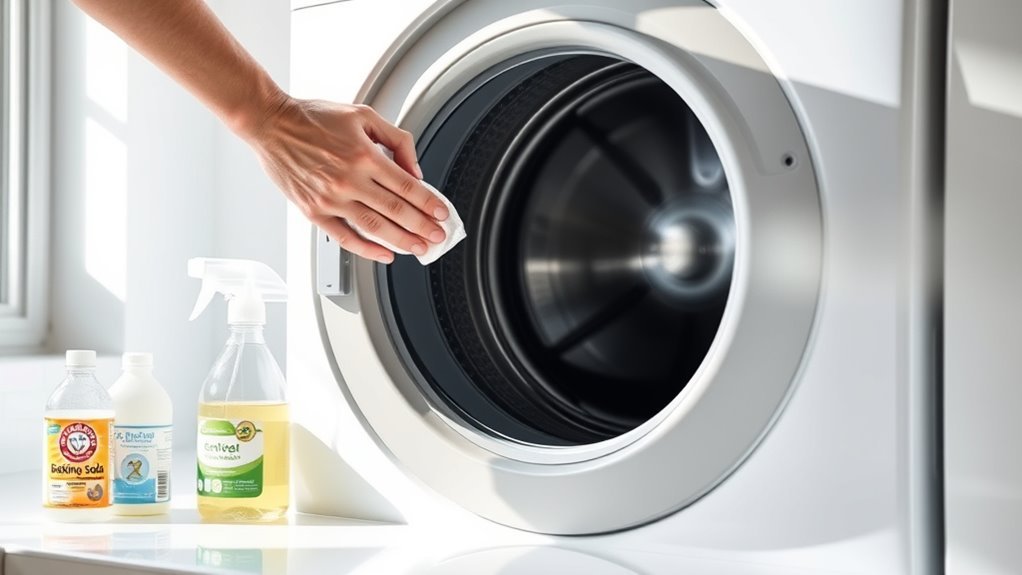
To effectively clean your front load washer, you’ll need a handful of basic tools and supplies that are often already in your home. Start by gathering essential items like white vinegar and baking soda, which help break down buildup and eliminate odors. You’ll also need a microfiber cloth or sponge for wiping surfaces.
In terms of cleaning tools, a soft-bristled toothbrush is great for scrubbing tight spots like the rubber gasket and detergent dispenser. A small bucket or bowl will help you mix cleaning solutions, and rubber gloves protect your hands during the process. Moreover, having a spray bottle makes it easier to apply vinegar or other cleaners evenly.
With these cleaning tools and supplies ready, you’ll be well-prepared to tackle the buildup and grime inside your washer, keeping it fresh and working efficiently.
How to Prepare Your Washer: Empty, Unplug, and Access Components
Before you begin cleaning, just make sure your washer is totally empty. It’s always better to start with an empty drum to avoid any damage or mishaps. Then, go ahead and unplug it from the power source—that way, you can work safely without worrying about electricity.
Once that’s done, open up the detergent dispenser. This will give you better access to all the components inside so you can clean everything properly and thoroughly.
Empty Washer Drum
Anyone can start cleaning a front load washer by making sure the drum is completely empty. This step is essential for effective drum maintenance and improving washer efficiency. Before you begin, double-check that no clothes or objects remain inside the drum.
Here’s what you should do: remove any clothing or items left inside, inspect the drum for small objects like coins or buttons, and check the rubber gasket for trapped debris. Wipe down any visible moisture or residue and leave the door open to air out the drum briefly.
Emptying the drum thoroughly guarantees your cleaning efforts reach all surfaces and prevents damage during the process. Taking this simple step helps maintain your washer’s performance and extends its lifespan.
Unplug Power Source
Unplug the washer from its power source to stay safe while cleaning and accessing internal parts. Taking proper safety steps helps prevent electrical shocks or short circuits.
Always unplug by pulling the plug itself, not the cord. Make sure your hands are dry before doing this. If the outlet is hard to reach, use a flashlight or ask for help to avoid accidents.
Access Detergent Dispenser
Once you’ve unplugged your washer, the next step is to access the detergent dispenser. This area often collects detergent buildup, which can affect your washer’s performance. Regular dispenser maintenance keeps your machine running smoothly and prevents odors or clogs.
To access and clean the detergent dispenser:
- Open the dispenser drawer fully.
- Press the release tab or lever to remove the drawer.
- Soak the drawer in warm, soapy water.
- Use a soft brush to scrub away detergent buildup.
- Rinse and dry the drawer before reinserting it.
Taking these steps guarantees you remove residue that can cause blockages. Proper dispenser maintenance helps your front load washer stay fresh and efficient.
How to Clean Your Front Load Washer Drum and Door Seal
Although your front load washer cleans your clothes thoroughly, its drum and door seal can trap dirt, detergent residue, and moisture. This can lead to unpleasant odors and mold growth.
For effective drum maintenance, run a hot water cycle once a month with washing machine cleaner or white vinegar to break down buildup.
To care for the seal, wipe the rubber door gasket with a cloth soaked in a mixture of water and mild detergent. Pay close attention to folds where mold can hide.
| Area | Cleaning Tips |
|---|---|
| Drum | Run a monthly hot water cycle with cleaner |
| Door Seal | Wipe folds with detergent solution weekly |
| Ventilation | Leave the door open after use to dry interior |
Following these simple steps helps keep your washer fresh and odor-free. It also improves its efficiency and extends its lifespan.
Cleaning Your Front Load Washer Detergent Dispenser
Your washer’s detergent dispenser can quickly get soap scum, fabric softener residue, and mildew. This buildup can clog the compartments and affect how well your washer cleans.
Regular cleaning helps prevent this buildup and keeps your washer running smoothly. To clean the dispenser, carefully remove the drawer.
Soak it in warm, soapy water for 15-20 minutes. Use a soft brush or cloth to scrub away any residue and buildup.
Rinse the dispenser thoroughly and dry it before putting it back in. Don’t forget to wipe the inside of the dispenser cavity with a damp cloth.
Running a Cleaning Cycle With Vinegar or Bleach
Before you start a cleaning cycle, decide whether to use vinegar or bleach, as each has unique benefits for removing odors and mold.
Vinegar is great because it naturally deodorizes and breaks down residue without harsh chemicals. Just pour two cups of white vinegar into the detergent dispenser and run the washer on the hottest, longest cycle.
This helps eliminate buildup and leaves your machine fresh. If you prefer bleach, make sure to follow safety precautions carefully.
Use only about half a cup of bleach in the bleach dispenser—never mix it directly with vinegar or other cleaners to avoid toxic fumes. Run the washer on a hot cycle to kill mold and bacteria effectively.
After the cycle, leave the door open to let the washer dry completely and prevent new mold growth. Choosing between vinegar and bleach depends on if you want natural cleaning or stronger disinfecting power.
How to Clean the Washer Filter and Drain Pump
A clean washer filter and drain pump are essential for keeping your front load washer running smoothly and avoiding clogs. Regular maintenance ensures your machine drains properly and prevents odors or leaks.
Keeping your washer filter and drain pump clean prevents clogs, odors, and ensures smooth operation.
Here’s how to clean your washer filter and drain pump:
- Unplug the washer and find the filter access panel, usually at the front bottom.
- Place a towel and shallow dish under the filter to catch any water.
- Twist off the filter cap slowly to release water and remove debris.
- Inspect and thoroughly clean the filter, removing lint, coins, and hair.
- Check the drain pump area for blockages and clean as needed.
Doing this every few months helps keep your washer efficient and extends its lifespan. Be sure to keep an eye on the drain pump during cleaning, as it’s key to proper water drainage and avoiding costly repairs.
How to Prevent Mold and Mildew in Your Front Load Washer
Keeping the washer filter and drain pump clean helps water flow freely, which reduces the chance of mold and mildew buildup.
To improve mold prevention, always leave the washer door slightly open after each use. This allows air to circulate inside the drum, drying out moisture that mold and mildew thrive on.
Wipe down the door seal regularly to remove any trapped water, detergent residue, or dirt that can encourage mildew growth.
Use a mildew control spray or a mixture of vinegar and water to clean the gasket and other damp areas weekly.
Avoid overusing detergent or fabric softener, as excess buildup creates a breeding ground for mold.
Also, run a monthly cleaning cycle with hot water and a washing machine cleaner or bleach to kill any hidden mold spores.
How Often to Clean Your Front Load Washer for Best Results
Regular cleaning is key to keeping your front load washer working well and lasting longer. To prevent odors and ensure smooth operation, it’s a good idea to set a regular cleaning routine. Most experts suggest cleaning your washer once a month, but your usage and environment might mean you need to do it more or less often.
Here are some tips to help you figure out the best cleaning schedule for your machine:
- If you use your washer often, clean the detergent dispenser and door gasket every 2-3 weeks.
- Run a cleaning cycle with a washer cleaner or vinegar once a month.
- Leave the door open after each wash to reduce moisture buildup.
- Wipe down the seals and drum regularly to prevent mold and mildew.
- Check and clean the drain pump filter every few months to avoid clogs.
How to Troubleshoot Common Front Load Washer Cleaning Issues
When your front load washer isn’t cleaning well, it’s usually due to common issues you can fix yourself. Start by checking for error codes on the panel; these quickly point to problems like drainage or door lock issues. Use your manual to interpret the codes and target the problem accurately.
Next, look at the detergent drawer and door gasket for mold or residue buildup. This grime can really affect cleaning performance. Also, inspect the drain pump filter since clogs here often cause poor drainage and cleaning.
A good tip is to run a cleaning cycle with vinegar or a washer cleaner once a month. This helps prevent odors and residue. If you notice persistent smells or grime, double-check the door seal for trapped debris.
Frequently Asked Questions
Can I Use Commercial Washer Cleaning Tablets Instead of Vinegar or Bleach?
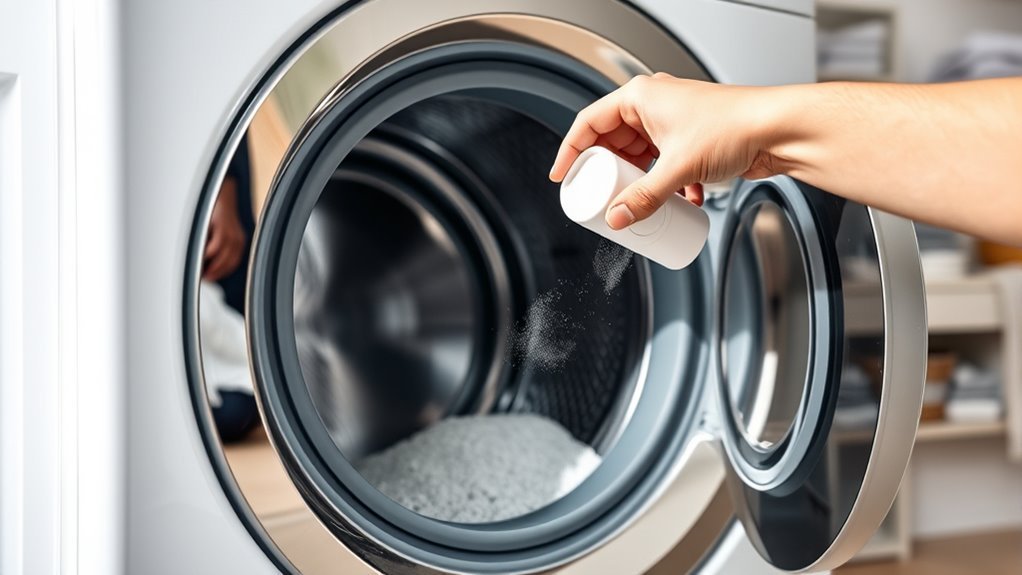
Yes, you can use commercial washer cleaning tablets instead of vinegar or bleach. These tablets are often more effective because they’re made specifically to break down residue, mold, and odors in your machine.
Unlike vinegar, which is acidic, or bleach, which can be harsh, tablets are usually balanced for front load washers. Just follow the instructions on the package to get the best results without damaging your washer.
Is It Safe to Clean the Washer During a Wash Cycle?
Ever wondered if it’s safe to clean your washer mid-cycle? It’s generally not recommended because stopping the cycle can cause mechanical issues or leave parts uncleaned.
You should always wait until the cycle is finished before adding cleaning agents or wiping down parts. Interrupting the wash might mess with the machine’s sensors or water flow.
It’s best to let the cycle finish to keep everything running smoothly and ensure the cleaning is effective. Safety and proper maintenance go hand in hand.
How Do I Clean the Exterior of My Front Load Washer?
To clean the exterior of your front load washer, grab some soft cleaning tools like microfiber cloths and a mild detergent. Avoid abrasive cleaners that can damage the surface.
Wipe down the control panel, door, and sides, paying attention to any spills or fingerprints. It’s a good idea to clean the exterior regularly to keep it looking new and prevent grime buildup.
Don’t forget to dry the surfaces afterward to avoid streaks or water spots. Regular cleaning helps keep your washer looking great and functioning well.
Can Front Load Washers Be Cleaned With High-Efficiency (HE) Detergent?
Of course, you can clean your front load washer with HE detergent—because who wouldn’t want to use a product designed to save water and energy? HE detergent benefits include less sudsing and better efficiency, which your washer loves.
But don’t get too cozy; HE detergent drawbacks involve potential buildup if used excessively, so don’t overdo it. Use it wisely, and your washer will thank you with cleaner clothes and fewer maintenance headaches.
What Should I Do if My Washer Still Smells After Cleaning?
If your washer still smells after cleaning, try running an extra cleaning cycle with white vinegar or baking soda. This can help eliminate lingering odors more effectively.
Make sure to regularly check and clean the door seal, detergent dispenser, and drain pump filter. Keeping these parts clean prevents buildup that causes bad smells.
For ongoing freshness, leave the door open after each use to let it dry out. This simple step helps prevent mold and mildew from forming over time.
Following these tips will help you keep your washer smelling fresh and clean for longer.
Conclusion
Keeping your front load washer clean not only prevents odors but also extends its lifespan. Did you know that about 30% of front load washers develop mold if not cleaned regularly?
By following these simple steps, you’ll avoid that unpleasant smell and costly repairs. Make cleaning a regular habit so your washer stays fresh and works better.
Remember, a clean washer means fresher clothes every time. Regular cleaning helps keep mold and mildew at bay, ensuring your laundry stays clean and healthy.