Should Kitchen Cabinets Go to the Ceiling? The Complete Answer
Are you tired of running out of storage space in your kitchen? Many homeowners struggle with clutter and limited cabinet options, wishing for a smarter solution.
If you’re considering ways to maximize storage without sacrificing style, ceiling-height kitchen cabinets might be just what you need.
You should consider going with ceiling-height kitchen cabinets if you want to maximize storage and create a sleek, spacious look. These cabinets eliminate dust-collecting gaps and make your ceilings appear taller, adding sophistication to your kitchen.
However, they cost more and need careful installation, and the highest shelves may require a stool for access.
If you want to balance style and function perfectly, exploring the full range of benefits and drawbacks will help you decide.
Key Takeaways
- Ceiling-height cabinets create a seamless, spacious look by eliminating gaps and visually extending kitchen ceilings.
- They maximize vertical storage, helping reduce clutter and organize rarely used kitchen items more efficiently.
- Installation tends to be more complex and costs about 10-20% more than standard cabinets.
- Tall cabinets add a touch of sophistication and can make the space feel taller, but they might also make the kitchen seem more enclosed or heavy.
- Regular maintenance and smart organization can improve cabinet functionality and longevity, especially for those high shelves.
Ceiling-Height Kitchen Cabinets Defined
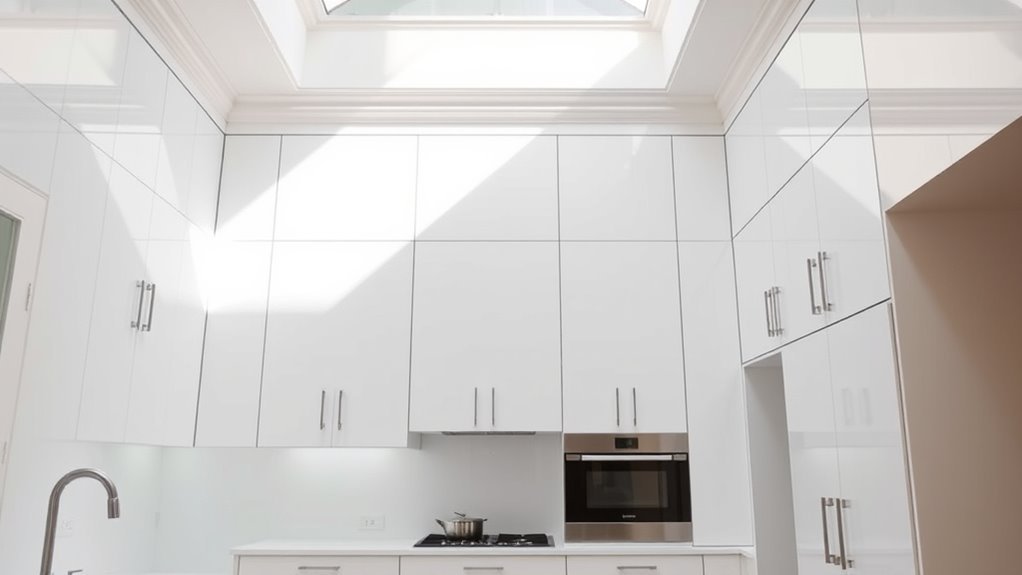
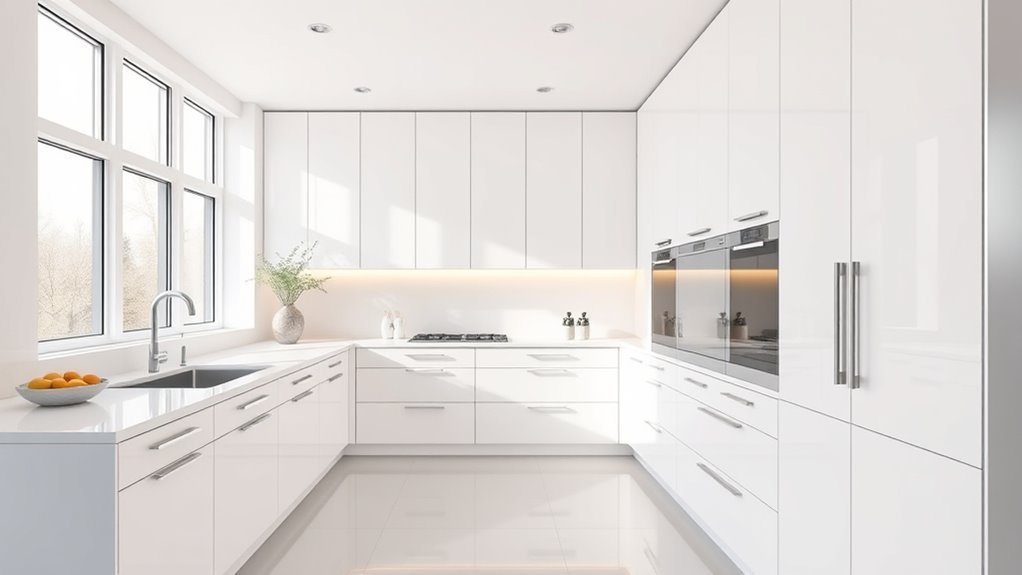
Although kitchen cabinets come in various sizes, ceiling-height kitchen cabinets stand out by extending all the way up to the ceiling without any gaps. When you choose these cabinets, you’re going for a look that maximizes vertical space and creates a seamless, built-in appearance.
This style is especially popular if you prefer a clean, modern look or traditional designs that emphasize symmetry and detail. They work well with many architectural styles, from contemporary to classic.
Ceiling-height cabinets can make your room feel larger by improving proportions and making ceilings seem taller. Plus, they help reduce dust buildup on top, making cleaning easier.
Choosing Ceiling vs. Standard Height Cabinets
When you’re trying to decide between ceiling and standard height cabinets, think about how much space you really need and the look you’re going for in your kitchen. Ceiling cabinets give you extra storage and can make the room feel taller and more open, but they might cost a bit more and take longer to install.
On the other hand, standard height cabinets are easier to reach and usually cheaper to put in. So, it really comes down to what’s more important for your space—more storage and a grander look, or easier access and a lower price.
Space Utilization Benefits
When you choose kitchen cabinets that reach the ceiling, you make the most of every inch of vertical space. This gives you more room to store items without cluttering your countertops. It’s a smart way to turn unused wall areas into practical storage solutions.
You’ll find it easier to organize your kitchen essentials and seasonal items efficiently. Plus, it helps keep everything neat and accessible.
Here are some key benefits of maximizing space:
- It boosts your overall storage capacity significantly
- You won’t need extra furniture or shelves
- Rarely used items stay out of your way but are still easy to reach
- It promotes better organization by creating defined storage zones
- Dust doesn’t settle on the top of cabinets as much
Choosing ceiling-height cabinets is a great way to fully utilize your kitchen’s vertical space. It keeps your space tidy and makes your kitchen more functional.
Visual Impact Differences
How does choosing ceiling-height cabinets change the look of your kitchen compared to standard ones? Ceiling-height cabinets create a sleek, uninterrupted line that visually lifts the room, making your kitchen feel taller and more spacious.
This choice improves design aesthetics by eliminating gaps that can gather dust and disrupt the flow. In contrast, standard height cabinets leave a visible gap above, which can sometimes make the ceiling feel lower and the space less cohesive.
If you want a streamlined, modern look with a strong visual impact, ceiling-height cabinets are a smart choice. However, if you prefer a traditional vibe or want to showcase decorative molding or lighting above, standard cabinets might better suit your design goals.
Your choice shapes the room’s overall feel and style.
Installation And Cost Considerations
Although ceiling-height cabinets offer a sleek look, they often require more precise installation and can increase your overall costs. When choosing between ceiling and standard height cabinets, it’s important to consider both installation techniques and costs carefully.
Ceiling cabinets need extra support and careful alignment, which can take longer and require skilled labor. Plus, the materials for taller cabinets tend to cost more, impacting your budget.
Keep in mind that more complex installation methods usually mean higher labor costs. Additional materials also add to the upfront price of your cabinets. Sometimes, custom solutions are needed, which can increase expenses further.
On the flip side, standard cabinets are quicker to install and often cheaper overall. Ceiling cabinets do maximize storage space but might require ladder access for installation and daily use.
Benefits of Ceiling-Height Kitchen Cabinets
Since ceiling-height kitchen cabinets maximize vertical space, they offer several practical benefits that can transform your kitchen’s functionality and appearance. First, they improve design aesthetics by creating a seamless, built-in look that draws the eye upward, making your kitchen feel larger and more polished. This sleek, continuous surface eliminates awkward gaps, giving your space a modern, cohesive vibe.
Beyond looks, these cabinets boost storage capacity, helping you store rarely used items up high without cluttering countertops or lower cabinets. This smart use of space strikes a great balance, keeping everyday essentials within easy reach while maximizing vertical storage.
Additionally, ceiling-height cabinets reduce dust buildup on top, making cleaning easier. They also provide a perfect spot to add integrated lighting or crown molding, which can elevate your kitchen’s style and usefulness. Overall, these cabinets blend form and function to make the most of your kitchen.
Drawbacks of Ceiling-Height Kitchen Cabinets
While ceiling-height cabinets give you extra storage space, they can be a bit tricky to access. Reaching those top shelves usually means grabbing a step stool, which isn’t always convenient. Plus, because they require more materials and labor to install, they often come with a higher price tag. It’s a good idea to think about these factors and see if they fit your needs before going for the taller cabinets.
Difficult Accessibility Issues
Reaching the top shelves of ceiling-height kitchen cabinets can quickly become a challenge, especially if you’re shorter or have limited mobility. Difficult access to these upper cabinets often leads to ergonomic issues, like awkward stretching or needing a step stool, which can be unsafe or inconvenient.
You might find yourself avoiding these spaces altogether, wasting valuable storage. Here are some common issues you may face:
- Straining to reach items, risking muscle strain
- Frequent use of stools or ladders, increasing fall risk
- Difficulty organizing or rotating stock on high shelves
- Limited visibility, causing you to forget stored items
- Trouble cleaning or maintaining those hard-to-reach spots
Considering these accessibility drawbacks is essential when deciding if ceiling-height cabinets fit your lifestyle.
Increased Installation Costs
Accessibility challenges aren’t the only factor to consider when choosing ceiling-height kitchen cabinets; installation costs can also add up quickly. You’ll face installation challenges because of the extra height, which means you’ll need skilled labor and specialized equipment. This usually makes the overall cost higher than standard cabinets.
Here’s a quick cost comparison to help you understand the financial impact:
| Aspect | Ceiling-Height Cabinets |
|---|---|
| Labor | Higher due to complexity |
| Materials | More trim and fillers needed |
| Time | Longer installation process |
Because of these factors, your budget should include extra labor hours and material costs. If you’re trying to keep costs down, be sure to weigh these installation challenges before choosing ceiling-height cabinets.
Installation and Cost of Ceiling-Height Cabinets
Installing ceiling-height kitchen cabinets requires careful measurement and planning to guarantee a secure fit, especially since you’ll be working closer to the ceiling than with standard cabinets. Proper installation techniques are essential to support the extra height and weight, ensuring stability and durability. You’ll likely need professional help, which impacts the cost breakdown.
Here’s what you should consider:
- Accurate measurements to align cabinets with ceiling height
- Reinforced wall studs or additional framing for support
- Specialized hardware for secure mounting
- Potential need for a ladder or scaffolding during installation
- Extra labor time due to increased difficulty and precision required
Regarding cost, ceiling-height cabinets generally cost 10-20% more than standard ones. This increase comes from taller cabinet materials, extra installation time, and possible structural adjustments. Knowing this cost breakdown helps you budget effectively without surprises.
How Ceiling Cabinets Affect Kitchen Style and Feel
While ceiling cabinets can maximize storage, they also have a big impact on your kitchen’s overall style and vibe.
Ceiling cabinets not only boost storage but also significantly influence your kitchen’s style and atmosphere.
When you install cabinets that reach the ceiling, you create a more cohesive look that can boost your kitchen’s modern appeal. The vertical lines draw your eyes upward, making the space feel taller and more polished.
This design choice often adds a touch of sophistication and a finished look to the room. But if you prefer an open, airy feel, tall cabinets might make the space seem a bit enclosed or heavy.
In contrast, shorter cabinets with open shelves or space above can keep things light and relaxed. So, while ceiling cabinets suit sleek, contemporary designs, they might not work if you want a more open, casual atmosphere.
Ultimately, your choice will shape your kitchen’s mood—whether you want a bold, modern statement or a bright, spacious feel.
Storage and Accessibility With Tall Kitchen Cabinets
Tall kitchen cabinets are great because they help you make the most of the vertical space in your kitchen. They give you extra room to store all your essentials without taking up too much floor space.
But, here’s the thing—those high shelves can be tricky to reach. You’ll want to think about how to access everything safely and comfortably. Maybe consider adding a step stool or a pull-down shelf to make things easier.
And don’t forget about organizing your items thoughtfully. When you put things in the right spots, every inch of your kitchen becomes more functional and easier to use. It’s all about making your space work better for you!
Maximizing Vertical Storage
If you want to make the most of your kitchen’s vertical space, cabinets that reach the ceiling offer unmatched storage capacity. These tall cabinets turn unused wall height into practical storage and boost your kitchen’s efficiency. With smart vertical organization, you can store more without cluttering your counters.
Here are some storage solutions to maximize vertical space:
- Use adjustable shelves to customize storage for different items.
- Store rarely used items in the highest cabinets.
- Incorporate pull-down racks for easy access to top shelves.
- Add hooks or racks inside doors for small utensils.
- Group similar items vertically to keep things organized.
Reaching High Shelves
Reaching high shelves in kitchen cabinets that go all the way to the ceiling can be a challenge. Tall shelves give you extra storage space, but grabbing items from them isn’t always easy.
To make it simpler, try using pull-down racks or sliding shelves that bring things down to you. A sturdy step stool or small ladder nearby can also help you reach safely and quickly.
If you want a more permanent solution, consider installing cabinet doors with lift-up mechanisms. These make accessing high shelves much easier without the need for extra tools.
With the right storage ideas, you can make the most of your vertical space. Keep your kitchen organized and safe without the hassle of stretching or risking a fall.
Organizing Kitchen Essentials
Maximizing vertical storage is only part of the equation; organizing your kitchen essentials effectively guarantees you can access what you need without frustration. With tall kitchen cabinets, you gain essential storage solutions that keep your space neat and functional.
To make the most of this, consider these kitchen organization tips. Use clear containers to identify contents quickly, so you don’t have to guess what’s inside. Group similar items together for faster retrieval and easier shopping.
Store frequently used items at eye level so they’re within easy reach. Install pull-out shelves or lazy Susans for deep cabinets, making it simple to access everything at the back. Label shelves or bins to help maintain order and keep things tidy.
Alternatives to Ceiling-Height Kitchen Cabinets
While ceiling-height cabinets offer lots of storage, you don’t have to go all the way up to keep your kitchen stylish and functional. Open shelving is a great option to make the space feel airy and inviting. Plus, it’s perfect for showing off your favorite dishes or decorative pieces, giving your kitchen personality without feeling crowded.
Another idea is to install standard-height cabinets and add decorative touches like crown molding or a stylish backsplash on top. This gives you good storage while adding a polished look. You might also try combining wall cabinets with open shelves for both practicality and visual interest.
Maintaining and Using Ceiling-Height Kitchen Cabinets
Because ceiling-height cabinets extend all the way up, you’ll need to plan for regular maintenance to keep them looking their best. Proper cabinet care ensures these tall units stay functional and attractive over time. Since reaching the highest shelves can be tricky, adopting effective cleaning strategies is essential.
Here are some tips to maintain and use your ceiling-height kitchen cabinets efficiently:
Use a sturdy step stool or ladder for safe access to upper shelves. Dust and wipe cabinets regularly to prevent buildup, focusing on top edges. Clean with gentle, non-abrasive cleaners to protect cabinet finishes.
Check hinges and handles periodically, tightening or lubricating as needed. Organize items to avoid overloading shelves, reducing wear and tear.
How to Make the Most of Tall Kitchen Cabinets
Keeping your ceiling-height cabinets in good shape makes it easier to take full advantage of their extra storage space. To maximize height, start by using a sturdy step stool for safe access to upper shelves.
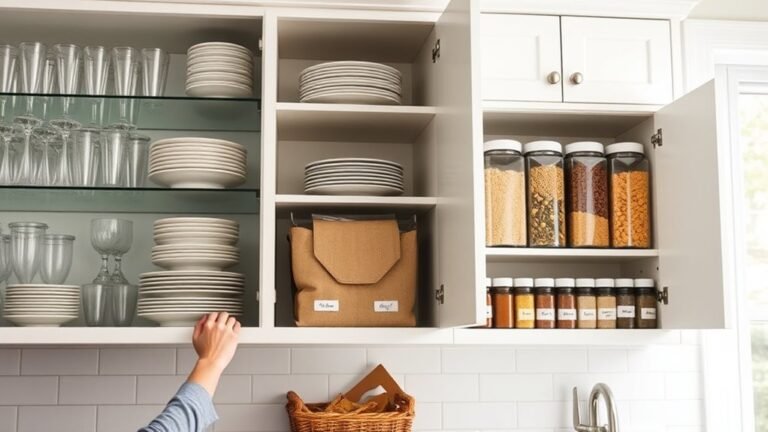
Organize items by how often you use them—store everyday essentials within easy reach and put seasonal or rarely used items on the highest shelves. Incorporate clear bins or labeled baskets to keep everything tidy so you won’t waste time searching.
Adjustable shelving helps you customize the space to fit different items and avoid wasting vertical gaps. Consider installing pull-down racks or lazy Susans to improve accessibility and make the most of deep or tall storage areas.
Adding lighting inside these cabinets can also help you find things quickly. By focusing on organization and smart storage solutions, you’ll turn those hard-to-reach spaces into practical storage that keeps your kitchen neat and efficient.
Frequently Asked Questions
How Do Ceiling-Height Cabinets Impact Kitchen Resale Value?
Ceiling-height cabinets can boost your kitchen resale value by enhancing the look and providing better storage. They give the kitchen a sleek, modern vibe and create more space for those rarely-used items.
Buyers often love the extra storage and the clean, organized feel it brings. Plus, maximizing vertical space makes the kitchen seem bigger and more functional.
Just make sure the cabinets are easy to reach or include step stools. That way, potential buyers can see how practical and accessible they really are.
Are Ceiling-Height Cabinets Suitable for Small Kitchens?
Think of ceiling-height cabinets as a ladder to maximize your kitchen’s vertical space. Yes, they’re great for small kitchens because they boost storage by giving you extra room where you’d otherwise lose space.
Plus, they improve the look of your kitchen by creating a sleek, continuous line that draws the eye upward. This makes your kitchen feel taller and less cramped.
Just make sure you can reach the top shelves or add a step stool!
What Lighting Options Work Best With Tall Kitchen Cabinets?
You’ll find LED strip lighting works great along the tops or inside tall kitchen cabinets, providing subtle accent illumination. Under-cabinet lighting brightens your workspace without shadows, which is essential if your cabinets reach the ceiling.
Pendant fixtures add stylish task lighting over islands or counters and complement tall cabinets nicely. Combining these options keeps your kitchen well-lit, functional, and visually appealing, even with towering cabinetry.
Can Ceiling-Height Cabinets Increase Kitchen Energy Efficiency?
Yes, ceiling-height cabinets can boost your kitchen’s energy efficiency. You might think cabinets alone don’t impact energy savings, but they actually add insulation benefits by reducing heat loss through walls.
When cabinets reach the ceiling, they minimize drafts and block air leaks, helping your kitchen stay warmer in winter and cooler in summer. This means less strain on your heating and cooling systems, lowering your energy bills over time.
How Do Ceiling-Height Cabinets Affect Kitchen Ventilation?
Ceiling-height cabinets can reduce ventilation efficiency because they limit air circulation near the ceiling where heat and smoke tend to rise.
When cabinets reach the ceiling, they can block airflow from vents or range hoods, making it harder for your kitchen to stay fresh and free of cooking fumes.
To keep good air circulation, you’ll need powerful ventilation systems or well-placed vents that make up for the reduced space above the cabinets.
Conclusion
So, should your kitchen cabinets reach the ceiling? It’s more than just about style — it’s about how you live and use your space. Imagine revealing hidden storage and a sleek, modern look.
But don’t forget the challenges you might face with taller cabinets. Consider your budget, maintenance, and whether you’re okay with climbing or reaching for those top shelves.
Ultimately, the decision balances beauty, function, and your budget. The right choice isn’t the same for everyone, but your perfect kitchen is just beyond this decision.
Are you ready to make it yours with the right kitchen cabinets?