What Is Temp of a Freezer? The Complete Answer
Many people struggle to keep their food fresh and safe in the freezer, especially when they’re not sure what temperature it should be. You’re not alone—maintaining the right freezer temperature can be confusing and frustrating.
Luckily, a simple adjustment can make a huge difference in preserving your food’s quality.
You should set your freezer to 0°F (-18°C) to keep food safe, fresh, and nutrient-rich. This temperature stops bacteria growth, prevents spoilage, avoids freezer burn, and saves energy.
Make sure your freezer isn’t too warm or too cold, and keep it well-stocked but not overcrowded for best airflow.
Regularly check the temperature with a thermometer and maintain your freezer properly.
Keep going to uncover why this matters and how to troubleshoot common temperature issues.
Key Takeaways
- The ideal freezer temperature is 0°F (-18°C) to keep food fresh and stop bacteria from growing.
- Keeping it at 0°F slows down enzyme activity, helps retain nutrients, and preserves the flavor and texture of your food.
- If the temperature is warmer than 0°F, your food can spoil. Going colder can cause freezer burn and frost buildup.
- Use a digital thermometer to check the temperature regularly and make adjustments as needed for accuracy.
- Keep the freezer full but not overcrowded so air can circulate evenly, which helps with cooling and saves energy.
What Is the Ideal Freezer Temperature?
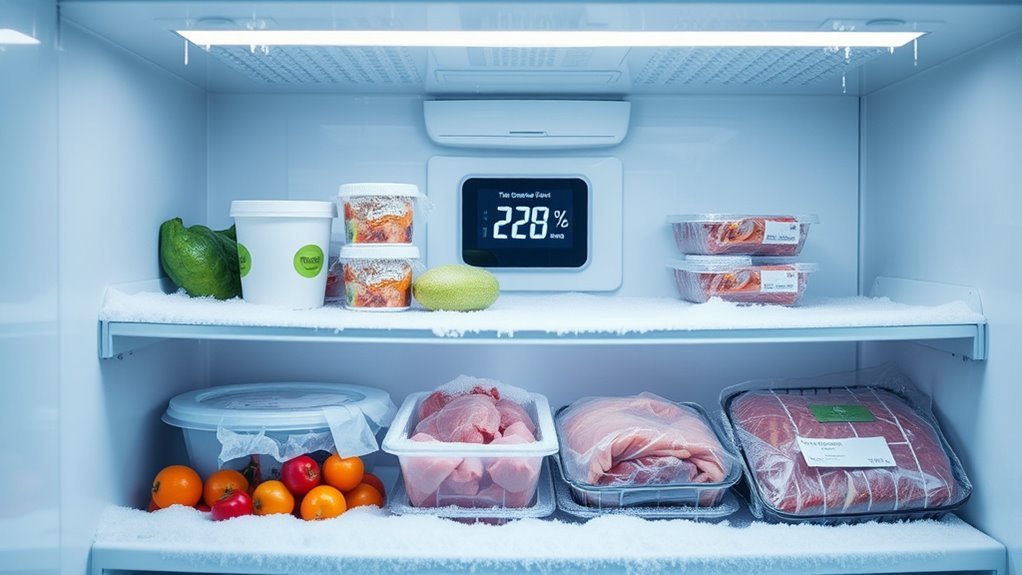
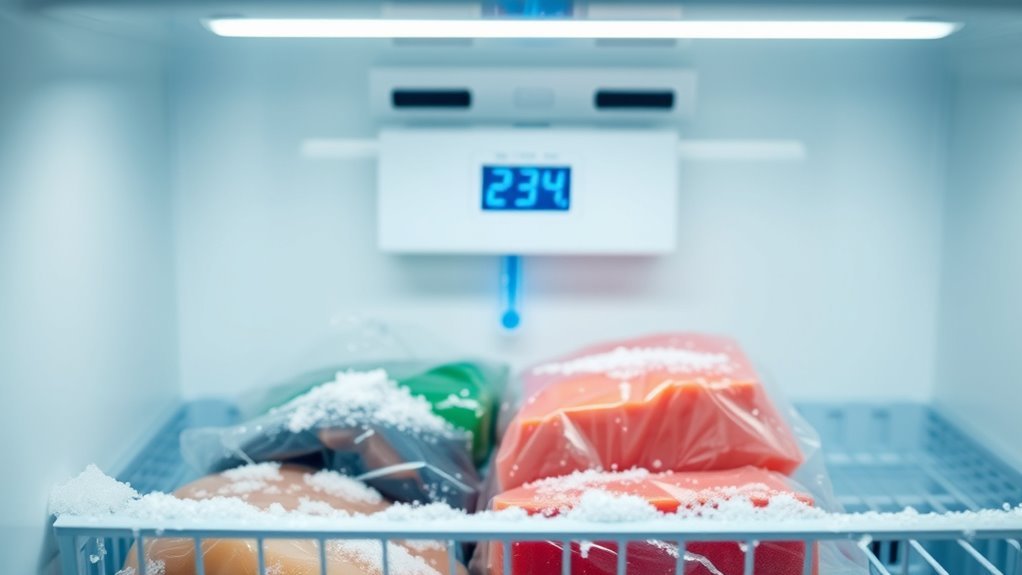
Although it might seem straightforward, knowing the ideal freezer temperature is key to keeping your food safe and fresh. You should set your freezer at 0°F (-18°C) to keep it running efficiently and ensure your food stays in top shape.
At this temperature, bacteria and mold growth are effectively stopped, helping preserve the quality and nutritional value of your food for longer. Keeping your freezer too cold wastes energy and can cause freezer burn, while temperatures above 0°F risk food spoilage.
By maintaining the right temperature, you avoid these issues and get the best performance from your freezer. Regularly using a freezer thermometer helps you monitor and adjust the temperature precisely, preventing fluctuations that reduce efficiency.
Why Your Freezer’s Temperature Matters for Food Safety
Setting your freezer to the right temperature does more than just save energy. It directly impacts how safe your food stays over time. Keeping it at the proper temperature is essential for preserving food and meeting safety standards that protect you and your family from foodborne illnesses.
Proper freezer temperature is key to preserving food safety and protecting your family from illness.
If your freezer is too warm, harmful bacteria can multiply, risking contamination. On the other hand, keeping it too cold wastes energy without providing extra safety benefits.
Here’s why your freezer’s temperature matters for food safety:
- It slows bacterial growth, helping prevent spoilage
- It preserves nutrients and reduces toxin formation
- It ensures compliance with safety standards for frozen foods
- It extends the safe storage time for perishable items
- It helps you avoid costly food waste due to spoilage
Impact of Freezer Temperature on Food Quality and Taste
When you keep your freezer at the right temperature, you help maintain your food’s original flavor and texture. Freezing food properly slows down enzyme activity and microbial growth, which keeps the flavor intact and prevents spoilage.
If the temperature stays steady and is cold enough, your food’s texture stays firm instead of becoming mushy or icy.
Getting the freezer temperature right is key to locking in the freshness you want when you thaw food. When food freezes quickly and stays cold, tiny ice crystals form, protecting cell walls and keeping the texture intact.
This means fruits, vegetables, and meats taste closer to fresh when you cook or eat them.
What Happens If Your Freezer Is Too Warm or Too Cold
Maintaining the right freezer temperature keeps your food fresh. If it gets too warm, bacteria can grow faster, leading to spoilage.
But if it’s too cold, you might end up with freezer burn, which damages the texture and taste of your food.
Here’s what can happen when temperatures go out of range:
- Warm freezer: Ice melts and makes food soggy and unsafe to eat.
- Cold freezer: Food can become dry and tough from freezer burn.
- Fluctuating temps: This increases the risk of spoilage and quality loss.
- Too cold: Frost buildup can reduce the freezer’s efficiency.
- Warm spots: These encourage bacteria growth, which can affect your health.
Keeping your freezer at the right temperature helps prevent these issues. It’s key to making sure your food stays safe, tasty, and fresh.
How to Check and Adjust Your Freezer’s Temperature
Want to make sure your freezer’s temperature is just right? First, find the thermostat inside your freezer—it’s usually on the wall or near the door. Grab a digital thermometer and place it inside for a few hours to get an accurate reading. Once you see the temperature, if it’s not at the ideal level, just turn the thermostat dial to adjust it. Keep checking until it hits that perfect spot!
Locate Freezer Thermostat
Inside your freezer, the thermostat controls the temperature by cycling the cooling system on and off. To find the thermostat location and perform a temperature adjustment, start by looking for these common spots:
- Near the top inside wall
- Behind a removable panel
- On the ceiling of the freezer compartment
- Along the back wall inside the freezer
- Next to or integrated with the temperature control dial
Once you locate the thermostat, you can adjust it to reach your desired temperature. Turn the dial or slide the control slightly towards colder or warmer settings. Then wait several hours to let the temperature stabilize. Knowing the thermostat location is key to managing your freezer’s temperature and keeping your food perfectly frozen.
Use Digital Thermometer
One simple way to check your freezer’s temperature accurately is by using a digital thermometer. Unlike traditional thermometers, digital ones give quick, precise readings to help keep your freezer at the right temperature.
The benefits of a digital thermometer include easy readability and reliable accuracy, which are important for food safety. To use it, place the thermometer inside the freezer, away from the walls and door, and wait a few minutes until the reading stabilizes.
This method provides accurate temperature readings, so you can monitor any fluctuations. Regularly checking with a digital thermometer helps you keep track of your freezer’s performance and prevent food spoilage without relying only on the built-in thermostat.
Adjust Temperature Settings
After checking your freezer’s temperature with a digital thermometer, you’ll want to make sure the settings are correct to keep everything properly cold. Proper calibration ensures your food stays fresh and helps save energy.
Here’s how to check and adjust your freezer’s temperature settings:
- Find the temperature control dial or digital panel inside or outside the freezer.
- Look at your freezer’s manual for recommended temperature ranges, usually around 0°F (-18°C).
- Turn the dial or press the control buttons to set the right temperature.
- Wait 24 hours after making changes, then recheck with your thermometer to see if it’s accurate.
- Make adjustments again if needed to fine-tune the temperature and improve energy efficiency.
Best Freezer Temperature Settings for Different Foods
Anyone who wants to keep food fresh and safe in the freezer needs to understand the best temperature settings for different types of items. Keeping the right temperature ensures your food stays safe and tastes great. Different foods need slightly different ranges to stay at their best.
Here’s a quick guide to help you set your freezer correctly:
| Food Type | Ideal Temperature (°F) | Notes |
|---|---|---|
| Meat & Poultry | 0 to -10 | Keeps texture and safety intact |
| Vegetables | 0 to 5 | Retains nutrients and flavor |
| Prepared Meals | 0 | Prevents bacteria growth |
How Freezer Temperature Causes Freezer Burn
You’ve got to keep your freezer at the right temperature, which is usually around 0°F (-18°C). If it’s too warm or if the temperature keeps changing, ice crystals can form on your food. That’s what causes freezer burn, and it can really mess up the texture and flavor of your frozen favorites.
When the temperature isn’t steady, those ice crystals can grow and damage the food’s surface. Over time, this leads to freezer burn, making your food look dry and leathery. So, keeping the freezer consistently at the right temperature helps prevent that from happening. It’s a simple step that can save you from wasting food and keeps everything tasting fresh!
Ideal Freezer Temperature
How cold should your freezer be to keep food fresh without damaging it? The ideal freezer temperature balances performance and proper chilling to preserve your food best. Set your freezer at 0°F (-18°C) to stop bacteria growth and keep food quality high. Freezing at this temperature also helps minimize freezer burn, which happens when moisture escapes from food.
To get the best results, keep these tips in mind:
- Maintain 0°F for optimal chilling.
- Avoid setting temperatures lower than necessary.
- Keep your freezer full but not overcrowded.
- Use airtight packaging to reduce moisture loss.
- Regularly check the temperature with an accurate thermometer.
Effects Of Temperature Fluctuations
Maintaining a steady freezer temperature at 0°F (-18°C) helps preserve food quality, but fluctuations can cause problems like freezer burn. When the temperature isn’t stable, ice crystals inside your food melt and refreeze, damaging texture and flavor.
Fluctuations often happen because of frequent door openings, faulty seals, or inconsistent freezer cycles. These shifts expose food to air and moisture loss, leading to dry spots and discoloration known as freezer burn.
To prevent this, try to keep the door closed as much as possible and make sure your freezer is in good working order. Consistent temperature stability not only protects food from freezer burn but also extends its shelf life, saving you money and reducing waste.
Tips to Maintain Consistent Freezer Temperature
Although freezers are designed to keep a steady temperature, frequent door openings and improper placement can cause fluctuations. To keep the temperature consistent, focus on a few key areas.
Regularly monitoring the temperature helps you catch any unexpected changes early. Proper insulation tips, like avoiding placing your freezer near heat sources, improve energy efficiency.
Make sure the door seals are tight to prevent cold air from escaping. This keeps your freezer running smoothly. Also, place your freezer in a cool, well-ventilated spot to avoid overworking the compressor.
Routine maintenance is important too. Cleaning coils and checking gaskets support ideal operation.
Here are some quick tips to keep your freezer steady:
- Monitor the temperature regularly with a reliable thermometer
- Avoid placing the freezer near ovens or direct sunlight
- Check and replace door seals if they’re worn or damaged
- Keep the freezer full but not overcrowded for stable cooling
- Clean coils and inspect the appliance every few months
Signs Your Freezer Temperature Is Out of Range
Wondering if your freezer isn’t keeping things as cold as it should? Watch for clear signs that the temperature is out of range. One of the first indicators is food spoilage or unusual frost buildup—both suggest temperature fluctuations.
You might also notice that frozen items thaw faster than usual. Keep an eye on your freezer’s built-in temperature indicators; these digital or dial displays give you a real-time status.
If your model includes freezer alarms, don’t ignore them. They alert you promptly when temperatures rise above safe levels. Odd noises or excessive condensation inside the freezer can also signal trouble.
Regularly checking these signs helps you catch problems early, preventing food loss and costly repairs. By staying alert to temperature indicators and responding quickly to freezer alarms, you guarantee your freezer operates efficiently and your food stays safe.
Troubleshooting Common Freezer Temperature Problems
If your freezer isn’t staying cold enough or is freezing items unevenly, you’ll want to figure out the cause quickly. Common problems often involve freezer airflow or frost buildup, which can mess with proper cooling.
Start by checking for frost buildup that blocks vents and stops airflow. Also, make sure the door seals tightly—if the gasket is damaged, warm air can get in. Don’t overpack your freezer, as that can block airflow and cause uneven temperatures.
Next, check the temperature setting. Sometimes it gets accidentally turned up too high. Finally, make sure the condenser coils are clean, since dirty coils make your freezer work harder and reduce cooling efficiency.
Here’s a quick checklist to troubleshoot your freezer’s temperature issues:
- Remove frost buildup blocking vents
- Inspect and replace faulty door seals
- Avoid overfilling the freezer
- Verify and adjust temperature settings
- Clean condenser coils regularly
Following these steps will help keep your freezer at the right temperature and running smoothly.
Frequently Asked Questions
How Long Does It Take for a Freezer to Reach the Ideal Temperature?
It usually takes your freezer about 4 to 24 hours to reach the ideal temperature, depending on factors like insulation and how often you open the door.
Better insulation helps keep a steady cold environment, which reduces temperature fluctuations and speeds up cooling.
To get your freezer to the right temperature faster and keep it there, avoid opening the door too often. Also, don’t overload it or place it near heat sources.
Can Freezer Temperature Affect Energy Consumption?
Absolutely, freezer temperature can really impact your energy use.
Setting it too low makes your freezer work harder, wasting watts and lowering energy efficiency.
On the flip side, keeping it at the right temperature helps keep your energy bills in check.
You’ll save money and reduce your carbon footprint by avoiding unnecessary overcooling.
Are There Differences in Temperature Settings for Chest vs. Upright Freezers?
Yes, there are differences in temperature settings between chest freezers and upright freezers. Chest freezers usually keep a more consistent, colder temperature because of their design, so you can set them a bit warmer without risking food quality.
Upright freezers, on the other hand, are opened more often, so they often need to be set colder to keep food properly frozen. Adjusting each type to their ideal temperatures helps you save energy and keep your food fresh longer.
How Do Freezer Temperature Controls Differ Between Brands?
You’ll find freezer controls aren’t one-size-fits-all; brand variability plays a big role. Some brands offer simple dials, while others have digital touchpads or smart controls.
These control mechanisms can affect how precisely you set and maintain temperatures. So, depending on the brand, you might enjoy more convenience or customization.
Knowing this helps you pick a freezer that fits your style and keeps your food perfectly frosty without any fuss.
Does Freezer Temperature Impact Ice Cream Texture?
Yes, freezer temperature definitely impacts your ice cream’s texture. If your freezer is too warm, ice crystals grow bigger, ruining that smooth, creamy feel you’re after.
Keeping it colder helps with texture by forming smaller ice crystals. That way, your ice cream stays soft and silky.
Conclusion
You’ve learned that keeping your freezer at the ideal temperature, around 0°F (-18°C), is key to food safety and quality.
If it’s too warm, your food can spoil faster. Too cold, and you risk freezer burn that damages the texture and taste.
Think of your freezer as a delicate balance, like a tightrope walker—too much tilt and it falls.
By regularly checking and adjusting the temperature, you’ll keep your food fresh and tasty.
This way, your freezer works just right every time, ensuring your food stays safe and delicious.