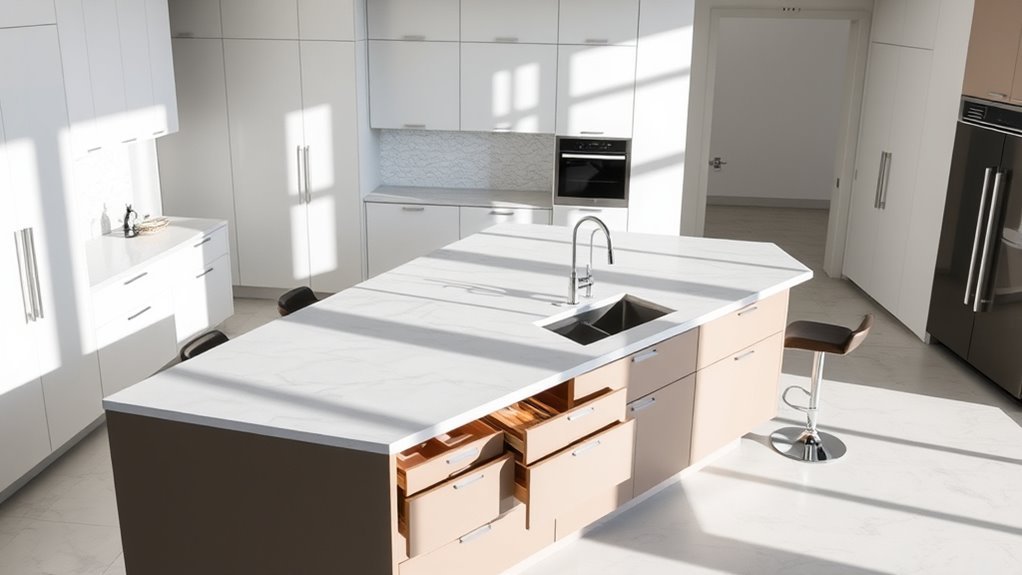
How Much Is a Kitchen Island? The Complete Answer
Many homeowners feel overwhelmed when trying to figure out how much a kitchen island will cost. You’re not alone—navigating options and budgets can be tricky.
Whether you’re dreaming of a stylish centerpiece or a practical workspace, understanding the costs helps you plan better.
You’ll typically spend between $1,000 and $10,000 or more on a kitchen island, depending on size, materials, and features you choose. Bigger islands with premium countertops or built-in appliances cost more, while simple, prefabricated models with basic materials stay budget-friendly.
Adding seating or electrical work also increases expenses.
Whether you want custom craftsmanship or DIY options, careful planning helps you balance style and function without overspending.
Keep exploring to find the best fit for your kitchen.
Key Takeaways
- Kitchen island costs usually range from $1,000 for basic models to over $10,000 for custom, high-end designs made with premium materials.
- The size and materials, like granite or solid wood, play a big role in both the price and how long the island lasts.
- Adding appliances or electrical features can boost costs by $300 to $1,200, depending on how complicated the install is.
- Prefabricated islands generally cost between $300 and $2,000 and are often DIY-friendly, while custom islands usually need professional installation.
- Budget-friendly options include portable carts, reclaimed wood, and multifunctional designs that help balance cost and usability.
Key Factors Influencing Kitchen Island Cost
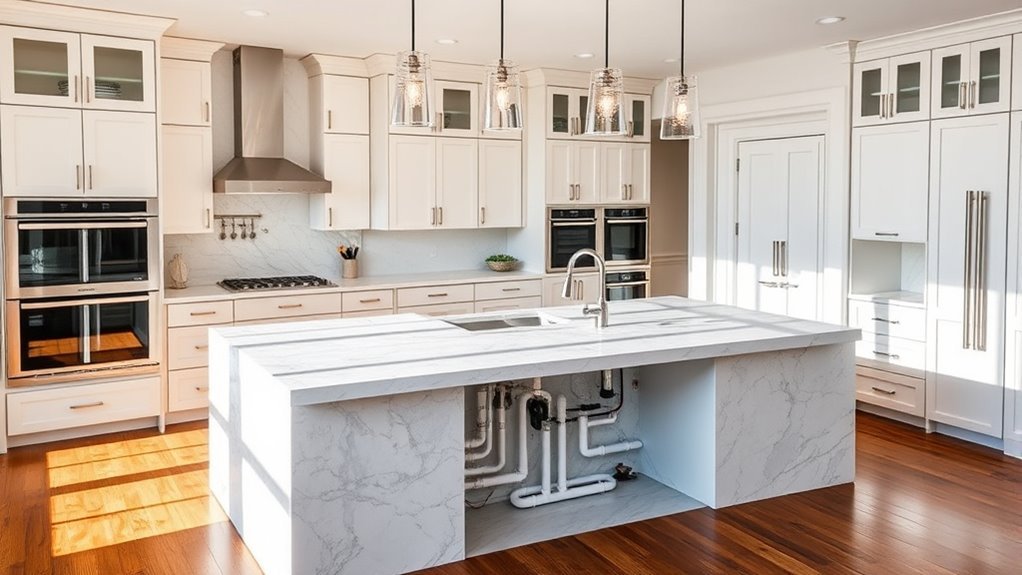
When planning your kitchen island, several key factors will influence its overall cost. One of the most important is the kitchen island dimensions. Larger islands require more materials and labor, which naturally drives up the price. You’ll want to carefully measure the space to balance functionality with budget.
Another critical factor is countertop thickness. Thicker countertops, like those over 1.5 inches, tend to be more expensive because they need more material and stronger support structures. The countertop material itself also plays a role, but thickness impacts both looks and cost.
Besides size and countertop, the type of cabinetry, extra features like built-in appliances or sinks, and how complicated the installation is all matter. Focusing on these key factors—especially island size and countertop thickness—can help you estimate your costs better and avoid surprises.
Basic Kitchen Island Cost Overview
Although kitchen island costs can vary widely, you can generally expect to spend between $1,000 and $5,000 for a basic setup. This range covers simple islands with standard materials and minimal features, perfect if you’re aiming to improve your kitchen layout without a hefty investment.
Your choice of design styles—whether modern, farmhouse, or transitional—also impacts pricing but typically stays within this budget for basic models.
Design styles like modern, farmhouse, or transitional influence cost but usually fit within a basic island budget.
When planning, keep in mind how the island fits your kitchen layout. A well-placed island enhances workflow and maximizes space, boosting both functionality and style without pushing costs too high.
Basic islands often include a countertop, storage cabinets, and possibly seating. Skip complex additions like plumbing or high-end finishes to stay within budget.
Sticking to straightforward materials and designs helps you control expenses and create a kitchen island that complements your space efficiently and affordably.
How Kitchen Island Size Affects Pricing
The size of your kitchen island directly influences its cost, with larger islands requiring more materials and labor. When planning, think about how your kitchen layout can accommodate the island without disrupting traffic flow. A bigger island might offer more storage and seating, but it also demands a bigger budget.
If space optimization is your goal, a well-sized island can improve functionality without overwhelming the room. You don’t want an island that’s too small to be useful or too large to fit comfortably. Measure your kitchen carefully and consider how much countertop and storage space you need.
How Materials Change Kitchen Island Prices
Choosing the right materials can really affect your kitchen island’s overall cost. When picking materials, try to balance durability with style to fit your budget and look.
Solid wood is durable and has a warm look, but it’s usually more expensive than laminate, which is more budget-friendly but less tough. Granite and quartz countertops boost your island’s appearance and durability, but they come with higher prices.
Stainless steel offers a modern vibe and resists damage, but it can also be costly. Keep in mind that natural stone or custom materials tend to raise the price compared to standard options.
Think about how the materials will age over time. Durable choices might save you money later by reducing repair or replacement costs. Your selection impacts both the initial cost and how long your island will last and look great.
Cost Impact of Adding Seating and Storage
When you decide to add seating to your kitchen island, keep in mind that prices can really vary depending on the style and materials you pick. Some options might be more budget-friendly, while others can get pretty fancy and increase the cost.
As for storage, it all depends on what you want—shelves, cabinets, or drawers—all of these options can impact your budget differently. Usually, combining both seating and storage will bump up the overall cost, so it’s a good idea to plan ahead and figure out what works best for your space and your wallet.
Seating Options Price Differences
Although adding seating to your kitchen island can make it more functional, it also significantly raises the overall cost. The price mainly depends on the seating styles you pick and current design trends.
For example, built-in benches or upholstered stools tend to be more expensive than simple bar stools. You’ll also spend more if you want custom features or durable materials.
Here’s a quick look at different seating options and how they impact your budget:
- Basic bar stools: affordable and easy to replace
- Upholstered chairs: more comfortable and stylish, but cost more
- Built-in bench seating: custom and space-saving, pricier
- Swivel stools: trendy but add mechanical complexity
- Adjustable height chairs: versatile but tend to cost more
Choosing seating that fits both your budget and style helps you strike the perfect balance between cost and design.
Storage Types Cost Variation
Adding storage to your kitchen island can really boost its functionality but will also impact your budget. Different storage options come with different costs, so it’s important to choose wisely.
Standard cabinets tend to be more affordable, while custom drawers, pull-out pantry shelves, or built-in wine racks can increase expenses. Think about organization tips that maximize space without needing pricey features, like adjustable shelving or modular inserts.
These options can make your island more usable and keep it clutter-free without breaking the bank. Keep in mind that the materials and hardware quality also influence the price.
If you want efficient storage that fits your budget, focus on your must-haves and look for cost-effective solutions. That way, your kitchen island remains practical and financially smart.
Combined Seating Storage Expenses
Combining seating and storage in your kitchen island can significantly impact your overall cost. When you add seating arrangements alongside storage solutions, you’re basically doubling the island’s functionality—and the expenses.
The more complex the design, the higher the price tag. Think about factors like the type of seating, whether it’s bar stools, built-in benches, or chairs.
Also, consider the quality and style of storage, such as drawers, cabinets, or open shelves. Additional structural support might be needed for seating areas, which can add to costs.
The level of customization for both seating and storage features also plays a role. And don’t forget labor costs for integrating these multi-functional elements into your island.
Kitchen Island Installation Costs to Expect
When you decide to install a kitchen island, the costs can vary widely depending on factors like size, materials, and additional features. Your island layout plays a big role in the installation expenses. Complex designs with multiple levels or irregular shapes usually need more labor and time, which drives up the costs. Simple rectangular islands tend to be quicker and cheaper to install.
The installation timeline also impacts your budget. A straightforward setup might take just a day or two, while more intricate projects could stretch over several days. Keep in mind that longer timelines often mean higher labor costs.
You should also consider prep work, such as flooring adjustments or moving plumbing if needed, which can add to the total cost. On average, installation costs range from $300 to $1,200 depending on these variables. Planning your layout carefully and understanding the timeline can help you manage your installation costs better.
Costs of Adding Appliances and Electrical Features
Because kitchen islands often serve as multifunctional hubs, incorporating appliances and electrical features can greatly boost both convenience and cost. When planning, you’ll want to carefully consider appliance selection and the electrical requirements they demand. Adding these features means factoring in wiring, outlets, and sometimes upgraded circuits, which increases your budget.
Here are common appliances and electrical elements to think about:
- Built-in microwaves or ovens
- Under-counter refrigerators or wine coolers
- Cooktops or induction burners
- Power outlets and USB charging ports
- Task lighting and pendant lights
Each addition affects installation complexity and price. For example, a cooktop may require dedicated 240V wiring, while outlets need standard 120V circuits. The more appliances and electrical features you add, the higher your costs will climb, so balance your needs with your budget. Planning ahead guarantees your island is both functional and safe.
Custom vs. Prefabricated Kitchen Island Prices
When you’re trying to decide between a custom or prefabricated kitchen island, it’s a good idea to look at the costs carefully. Custom islands give you more freedom to design exactly how you want, but they tend to be more expensive. On the other hand, prefabricated options are usually easier on the budget, though they might not offer as many style choices.
Cost Comparison Breakdown
Although both custom and prefabricated kitchen islands serve the same purpose, their costs can vary quite a bit depending on your choices.
When deciding between the two, think about how styles and space-saving features affect the price. Custom islands tend to cost more but give you tailored options, while prefabricated ones are more budget-friendly and quicker to set up.
Here’s a quick cost comparison to help you decide:
- Custom islands cost between $2,000 and $10,000+ depending on materials and size.
- Prefabricated islands range from $300 to $2,000, making them a good choice if you’re on a tighter budget.
- Materials: Custom options allow for premium finishes, whereas prefab uses standard materials.
- Installation: Custom islands may need professional help, while prefabs can often be a DIY project.
- Space optimization: Custom designs are great for maximizing your kitchen layout.
Consider these factors to find the best fit for your space and budget.
Design Flexibility Differences
Choosing between custom and prefabricated kitchen islands depends on how much design flexibility matters to you. Custom islands let you tailor every detail, matching your style, size, and functional needs perfectly. Prefabricated options offer limited layout choices and color schemes but come faster and are often more affordable.
| Aspect | Custom Kitchen Island |
|---|---|
| Style Preferences | Fully customizable |
| Layout Options | Unlimited |
| Color Schemes | Any color or finish possible |
| Size Variations | Precisely tailored to your space |
| Functional Designs | Built specifically for your needs |
Custom islands excel in looks and adaptability, while prefabricated ones are great for simpler, budget-friendly projects with fewer design demands.
Budget-Friendly Kitchen Island Ideas to Save Money
If you want to add a kitchen island without overspending, there are several budget-friendly options that can fit your space and style. You don’t have to sacrifice functionality or design when you explore DIY islands or multifunctional setups that make the most of every inch.
Consider these budget-friendly ideas to save money:
- Build a simple DIY kitchen island using reclaimed wood or pallets.
- Choose a portable cart with storage and a countertop for flexibility.
- Opt for multifunctional designs that combine seating, storage, and prep space.
- Use affordable materials like laminate or butcher block for the countertop.
- Repurpose furniture such as an old dresser or table as a unique island base.
These options let you customize your kitchen island affordably while adding charm and utility. By focusing on creativity and practicality, you can improve your kitchen without breaking the bank.
How to Plan Your Kitchen Island Budget
When you’re figuring out your budget for a kitchen island, the first thing to do is look at the materials you’re interested in. Think about what kind of countertops, cabinets, and finishes you want—these can really impact the overall cost.
Don’t forget to include installation costs too, because those can add up pretty fast. It’s easy to focus on the materials and forget about the labor, but both are important when you’re trying to stay within your budget.
Assess Material Costs
Although planning your kitchen island budget might seem straightforward, taking a close look at material costs requires attention to detail. You want to find a good balance between quality and style to get the best value.
Here’s what to consider when evaluating costs:
- Countertop options: granite, quartz, marble, or laminate can vary a lot in price.
- Cabinet materials: solid wood, plywood, or MDF impact both durability and cost.
- Finish choices: paint, stain, or veneer all affect how it looks and how much maintenance it needs.
- Hardware selections: knobs, pulls, and hinges can add up quickly.
- Additional features: built-in shelves, seating areas, or electrical outlets can influence your overall expenses.
Consider Installation Expenses
After choosing your materials, you’ll need to consider installation expenses to get a clear idea of your kitchen island budget. Installation materials like screws, brackets, and electrical wiring can add up quickly, so don’t forget to include those costs.
Beyond materials, labor costs often make up a big part of your total expense. Hiring skilled professionals ensures your island is installed safely and correctly, but it will come at a price. Labor costs vary depending on your location and how complex the job is, so it’s smart to get multiple quotes to compare.
Keep in mind, if your island needs plumbing or electrical work, those labor costs will go up. Planning for installation expenses early helps you avoid surprises and keeps your project on budget.
Frequently Asked Questions
How Do Kitchen Island Trends Vary by Region?
Kitchen island trends vary by region because local tastes and cultural influences shape styles.
In the South, you’ll often see larger islands with warm wood finishes that reflect traditional charm. Coastal areas tend to favor light, airy designs with nautical touches.
Urban regions usually showcase sleek, modern islands with minimalist features.
Understanding these differences helps you pick a kitchen island that fits your home’s vibe and your lifestyle perfectly.
What Are the Best Lighting Options for Kitchen Islands?
You want lighting that’s both functional and stylish for your kitchen island. Start with pendant lights to add character and focused task lighting where you prep.
Then, consider recessed lighting to brighten the whole space without distraction. Finally, don’t forget decorative fixtures—they bring personality and warmth, tying the room together.
Combining these options guarantees your island shines perfectly for cooking, dining, and socializing.
How Do Kitchen Islands Impact Home Resale Value?
Kitchen islands can boost your home’s resale potential by enhancing the kitchen’s design with added functionality and style. Buyers love islands because they create extra prep space and a social hub, making your kitchen more appealing.
A well-designed island can modernize your kitchen and increase its desirability. Investing in an island that matches your space can help your home stand out.
This can potentially lead to a higher resale price. Overall, a good kitchen island is a smart upgrade for your home’s value.
Can Kitchen Islands Be Eco-Friendly or Sustainable?
Yes, you can create kitchen islands that are eco-friendly and sustainable by choosing recycled materials, embracing energy-efficient designs, and using non-toxic finishes.
You can build with reclaimed wood, repurpose metal, or choose bamboo surfaces. These options help reduce waste and make your island more environmentally friendly.
Installing LED lighting or smart outlets can also cut down on energy use. By making these choices, you not only improve your kitchen’s style but also support a healthier planet and a greener lifestyle.
What Maintenance Is Required for Different Kitchen Island Materials?
You’ll need to tailor maintenance to your kitchen island’s material. For wood care, regularly oil or wax to prevent drying and scratches.
Stone sealing is essential to protect granite or marble from stains, so reseal every 6-12 months. Metal upkeep involves wiping down to avoid rust and polishing to keep it shiny.
Composite cleaning is easy—just use mild soap and water to avoid damaging the surface. Staying consistent keeps your island looking great.
Conclusion
Just like building your own castle, crafting the perfect kitchen island requires thoughtful planning and wise choices. By considering size, materials, and added features, you’ll shape a centerpiece that fits your budget and lifestyle.
Whether you opt for custom elegance or a budget-friendly prefab, your kitchen island can become the heart of your home, where function meets style in perfect harmony.
Ready to create your culinary throne? Understanding how much a kitchen island costs is the first step toward making it happen.