What Is a Regulation Pool Table? Complete Guide to Sizes and Standards
A regulation pool table measures 9 feet long with a 50-inch by 100-inch playing surface, following the Billiard Congress of America’s official standards. This size ensures consistency in professional and tournament play and sets the benchmark for serious billiard enthusiasts. Understanding what is a regulation pool table helps you choose the right table that matches official dimensions and improves your game experience.
Players, home game room buyers, and enthusiasts benefit by learning how regulation sizes compare and what space is needed. This article covers essential details about sizes, space requirements, construction features, and how to verify a table’s true regulation status.
Key Takeaways
- A standard regulation pool table measures 9 feet in length by 4.5 feet in width, featuring a playing surface that is 50 inches by 100 inches.
- Home players often prefer 8-foot tables for space and versatility, while 7-foot tables fit smaller rooms or bar settings.
- You must add 58 inches of cue clearance on all sides when measuring a room for a regulation table.
- The 2-to-1 length-to-width ratio defines a regulation pool table’s playing surface shape.
- Check cushion quality, slate thickness, and solid frame construction to ensure a regulation-grade table.
- Measure room dimensions precisely and subtract cue stick length clearance before buying a table.
What Defines a Regulation Pool Table?
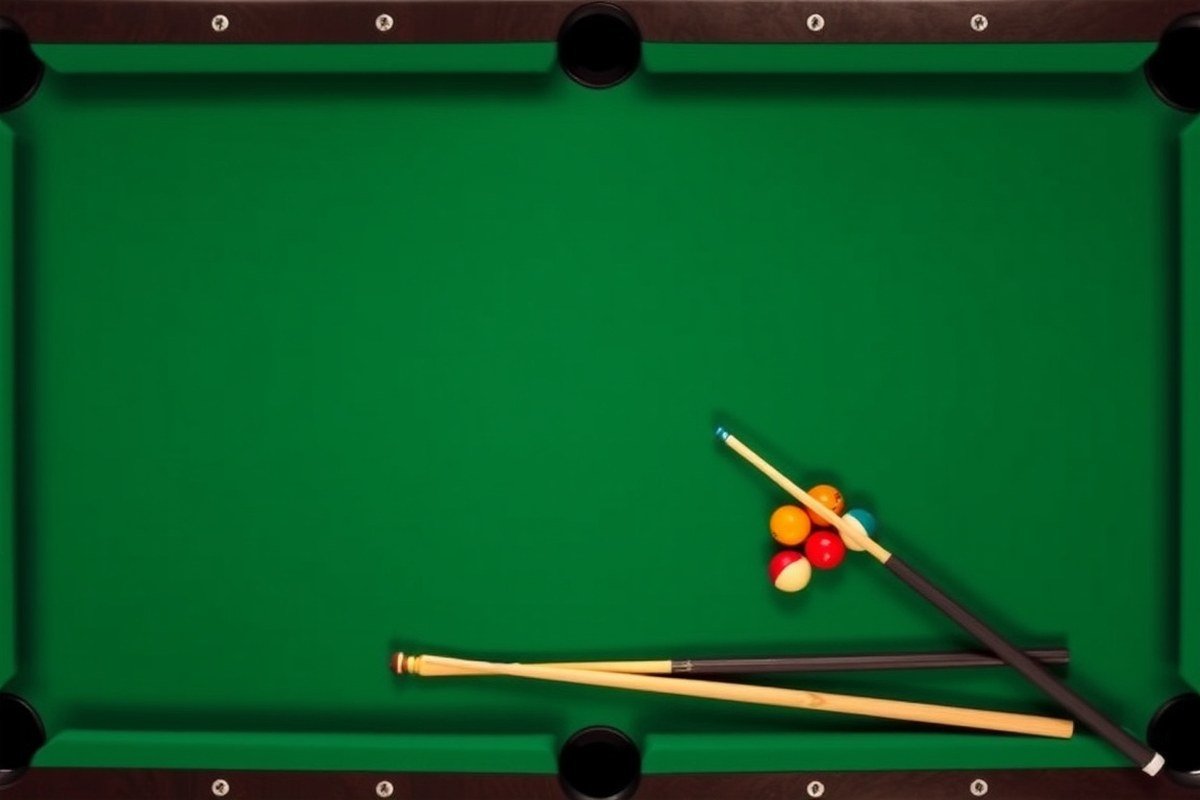
A regulation pool table is defined primarily by its precise playing surface dimensions and the ratio of its length to width. The key feature is a 2-to-1 length-to-width ratio, meaning the playing surface’s length is exactly twice its width. For example, a full regulation pool table used in professional competitions has a playing surface measuring 100 inches long and 50 inches wide, or about 9 feet by 4.5 feet. This ratio ensures the table’s proportions provide consistent gameplay across different sizes.
The Billiard Congress of America (BCA) sets the official standards for regulation pool tables in the United States. According to the BCA, tournament-standard pool tables measure 9 feet by 4.5 feet. However, smaller pool tables of 7-foot and 8-foot lengths can also be considered regulation as long as they maintain the 2-to-1 ratio. For instance, a 7-foot regulation table features a playing surface approximately 78 inches long by 39 inches wide, while an 8-foot table measures about 88 inches by 44 inches. This consistency makes it easier for players to transition between different sized tables without altering the feel of the game.
Ensuring the table’s playing surface matches these standards matters because it affects gameplay accuracy, angles, ball speed, and positioning all depend on the table’s true proportions. To verify if a pool table is regulation size, measure the playing surface from cushion to cushion. Confirm that the length is double the width within a small margin of error. The playing surface should also be perfectly flat, achieved by a solid, one-inch thick slate bed supporting the felt cloth. This slate thickness helps maintain a stable surface over time, avoiding warping or unevenness that can impact shots during play.
The height of the table bed from the floor typically ranges from about 29 1/4 inches to 31 inches, aligning with BCA standards to ensure comfortable cueing positions for players. Choosing a regulation table size depends on room availability and skill focus. Serious players and professional venues prefer the 9-foot size for tournament conditions, while home game rooms may opt for 7 or 8 feet tables that still conform to regulation ratios but suit smaller spaces.
Overall, a regulation pool table combines strict dimension standards with craftsmanship, including the 2-to-1 playing surface ratio and quality materials like thick slate. Following these guidelines ensures the table supports official rules and consistent play, whether for practice, casual games, or competition.
How Regulation Pool Table Sizes Compare: 7 Ft, 8 Ft, and 9 Ft

Pool tables come mainly in three regulation sizes: 7 feet, 8 feet, and 9 feet. Each size differs by playing surface dimensions, where the 7-foot table is commonly found in bars and small spaces, the 8-foot table fits most home game rooms, and the 9-foot table is used in professional tournaments. The exact playing surface is important because it affects the shot difficulty and space requirements.
The 7-foot table measures about 38 inches by 76 inches on the playing surface. This size is regulation for bar leagues and coin-operated tables but is generally considered smaller than official tournament standards. This size suits recreational players and small spaces, offering manageable play without demanding large room clearance.
The 8-foot table, the most popular size for home use, has a playing surface roughly 44 inches by 88 inches. It provides a full game experience closer to the 9-foot professional table but requires less room. An 8-foot table fits well in dedicated home game rooms and suits both casual and intermediate players who want a challenge but don’t have the space for a full-size table.
The 9-foot table measures approximately 50 inches by 100 inches on the playing surface, meeting the standard for professional tournaments. It demands the most room and space for cue movement. This size is ideal for serious players and those preparing for league or tournament play where the table conditions and dimensions closely match official standards.
| Table Size | Playing Surface (inches) | Recommended Cue Length (inches) | Minimum Room Length | Minimum Room Width | Typical Use |
|---|---|---|---|---|---|
| 7 ft | 38 × 76 | 58 (Standard) | 13 ft 0 in | 16 ft 0 in | Bar leagues, small spaces, casual play |
| 8 ft | 44 × 88 | 58 (Standard) | 13 ft 0 in | 17 ft 0 in | Home use, intermediate players |
| 9 ft | 50 × 100 | 58 (Standard) | 14 ft 0 in (approx.) | 18 ft 0 in (approx.) | Professional, tournament play |
The 7-foot table can be regulation for some bar league games but might not suit players who want full-sized table experience. The 8-foot table balances play quality and space use, making it the best general home choice. The 9-foot table requires a large room, typically at least 14 feet long and 18 feet wide, to accommodate both the table and player movements comfortably with standard 58-inch cues.
Before buying, measure your room carefully to ensure you have room for the table plus at least 58 inches of clearance on all sides for cue sticks; otherwise, consider shorter cues or a smaller table size.
How Much Space Is Needed Around a Regulation Pool Table?
To determine the minimum room size for a regulation pool table, measure the table’s length and width, then add twice the cue length to each dimension. This accounts for the space needed to move the cue around the table comfortably during play. Different cue lengths and table sizes will affect the total space required, which is important to consider before placing a pool table, especially in smaller rooms or basements.
Calculating Cue Clearance
A regulation pool table’s footprint alone does not guarantee enough room for proper gameplay. You have to add clearance for the pool cues on all sides. The typical cue length ranges from 48 to 58 inches, with 58 inches considered a standard cue for full-sized play.
To calculate the minimum space needed for your pool table, increase both its length and width by twice the cue length. This extra room lets you use the cue stick fully without bumping into walls or furniture. Add another 6 inches on all sides to have enough space for comfortable cue strokes without tightness. The room size calculation looks like this:
Room length = Table length + (2 × cue length) + 6 inches Room width = Table width + (2 × cue length) + 6 inches
Accounting for obstacles like doors, columns, and lighting is also necessary since they reduce usable space.
Example Calculation for a 9-Foot Table
A 9-foot regulation pool table typically measures 100 inches long and 50 inches wide. Using a standard 58-inch cue:
- Start with the table length: 100 inches
- Add twice the cue length: 2 × 58 = 116 inches
- Add 6 inches extra clearance: 6 inches
- Calculate total room length: 100 + 116 + 6 = 222 inches (approximately 18 feet 6 inches)
- Repeat for width: 50 + 116 + 6 = 172 inches (approximately 14 feet 4 inches)
This example means a room at least 18.5 feet by 14.5 feet is needed for comfortable cue clearance around a 9-foot table with standard cues. Any smaller room will force awkward shots or the use of shorter cues, which impacts gameplay quality.
Options for Smaller Rooms
Smaller rooms or basements often cannot accommodate the space needed for 8-foot or 9-foot tables with standard cues. A 7-foot table, which is about 78 inches long by 44 inches wide, is usually a better fit in those cases because it requires significantly less cue clearance area.
Using the same process with a 7-foot table and a 52-inch cue, the minimum room size needed is approximately 13 feet by 12 feet. Selecting shorter cues between 48 and 52 inches can also help reduce space requirements but should be a last resort after considering table size and room layout.
Visualizing the space by taping the table dimensions on the floor before purchasing can avoid surprises. Also, factor in openings for doors and the position of fixed furniture or columns that restrict movement options. Downsizing the table is often preferable to forcing a larger table into a tight space and compromising play quality.
Key Construction Features That Make a Pool Table Regulation
A regulation pool table requires a playing surface built from slate at least 1 inch (2.54 cm) thick. Slate provides the ideal combination of durability and a perfectly flat base, which is essential for consistent ball roll during play. This thickness prevents warping and ensures the surface remains level over time. The slate is typically sourced from regions known for high-quality stone, such as Italy, Brazil, or China, and it is finely ground and polished before being covered with high-performance cloth like baize. The cloth not only dictates ball speed but also affects control and spin, so it must be tightly stretched and properly installed to avoid wrinkles or sagging.
The table’s cushions present another critical standard. Regulation cushions use rubber profiles designed to deliver a precise rebound angle. For pool tables, a common design is the Pro-Speed cushion made from high-grade rubber that maintains elasticity and consistent bounce under various conditions. Cushions must be securely attached to the rails and calibrated to the exact angles specified by governing bodies to ensure predictable shots. This precision supports shot accuracy, especially in tournaments where even minor deviations can alter outcomes. Some competition tables also borrow from carom designs like the K-55 profile, which features a slightly sharper angle for specific shot styles, although this is more common in carom than pool tables.
Table height is standardized to maximize player comfort and control. The top of the playing surface should measure between 29 1/4 inches to 31 inches (74.3 to 78.7 cm) from finished floor to the slate’s surface. Maintaining this height is essential because it affects the angle at which players strike the cue ball and the consistency of their stance and stroke. Proper height also helps avoid strain during prolonged gaming sessions. Builders ensure this by mounting the slate on a sturdy, well-engineered frame that supports both the slate and cushions without flexing or settling over time.
Flatness tolerances for a regulation table are very tight. The playing surface must stay within ±0.020 inches (±0.5 mm) along its length and ±0.010 inches (±0.25 mm) across its width. Meeting these standards prevents the ball from curving or stopping unexpectedly and guarantees predictable gameplay. Achieving this involves careful slate installation with precision shims and leveling techniques before the cloth is applied. Builders also check flatness regularly using straight edges or laser levels during assembly and adjustment. Frames constructed from solid wood or metal provide the rigidity needed to maintain these tolerances despite environmental changes like humidity or temperature shifts.
The choice and quality of the frame and rails complement the slate and cushions in creating a truly regulation table. A strong frame resists warping and supports the table’s exact dimensions, while properly engineered rails align the pockets and cushions to meet official measurements. Investing in a table with these exacting construction features results in a playing experience that meets tournament standards and holds up under frequent use. Tables lacking these precise materials, construction techniques, or tolerances often suffer from poor ball roll, inconsistent cushion rebounds, and uneven playing surfaces that frustrate players and degrade skill development over time.
Choosing the Right Regulation Pool Table for Your Space and Skill Level
Choosing between a 7 ft, 8 ft, or 9 ft regulation pool table depends mainly on your available space, skill level, and budget. For most home game rooms, an 8-foot table offers the best balance, providing a professional feel while fitting in rooms about 13 feet by 16 feet with proper cue clearance. Your room size and skill level matter; a 7-foot table is a better fit for smaller spaces or beginners, needing about 11 feet around it.5 feet by 15 feet, and is easier to handle for casual play. A 9-foot table suits dedicated billiards rooms with more space, roughly 12.5 to 14 feet by 17 to 18 feet, ideal if you want tournament-level accuracy and have skilled players using cues that range from 48 to 57 inches long.
Your skill level should guide your choice as well. Beginners or casual players usually gain more enjoyment from smaller tables that allow for quicker learning and less demanding shot precision. Intermediate to advanced players often benefit from larger tables as these improve shot control and strategic gameplay. A good rule of thumb is to match the table size to your comfort and experience: if you still learn basic positioning and strokes, the 7-foot table suits you; if you frequently practice or compete, stepping up to the 8 or 9-foot models can challenge and improve your skills.
Budget considerations affect your pool table choice too. Smaller tables generally cost less, with 7-foot tables starting around $1,000 for basic models but easily reaching $3,000 for higher-end builds. 8-foot regulation tables run from $2,000 to upwards of $5,000, factoring in materials and brand. A 9-foot table, often slate-based and built for competition, can cost between $4,000 and $10,000 or more, plus delivery and setup fees which are higher due to weight and size. Keep in mind that a larger table might require purchasing longer cues and additional accessories, slightly raising the overall budget.
Here is a simple decision rule: start by measuring your room including space for comfortable cueing (usually at least 5 feet from the table’s edges). When your room allows for a 9-foot table and your skill matches, go with it for the true regulation experience. Otherwise, filter down to an 8-foot table that fits without crowding and matches moderate to advanced play levels. Limited space or budget? A 7-foot table offers fewer constraints while giving you a smaller regulation format. Always check that your room also allows free movement around the table without furniture or obstacles interfering.
Measure both your room and clearance from the table carefully: insufficient space can cramp gameplay and require awkward cue angles that ruin the experience regardless of table size.
Common Mistakes When Buying a Regulation Pool Table—and How to Avoid Them
Many buyers confuse regulation pool tables with larger or non-standard models, leading to frustration and wasted space. A typical regulation pool table is 9 feet long and 4.5 feet wide, maintaining a 2:1 length-to-width ratio for official play. Smaller tables labeled “regulation” may follow the ratio but lack the full size required for tournament standards. Verifying dimensions means measuring the playing surface, specifically the slate slate beneath the felt, which should be exactly 100 inches by 50 inches for a true regulation table.
Quality is another common stumbling block. Some buyers assume any table sold as regulation meets strict construction requirements, but material and build quality vary widely. Check for a sturdy slate bed, strong frame, and professional-quality cushions. Cheaper tables may compromise on thickness or material, affecting the bounce and playing experience significantly.
Space planning also often gets overlooked. To play comfortably, expect at least 5 feet of clearance on all sides of the table. This means a 9-foot regulation table requires a room roughly 17 feet by 14 feet or larger to accommodate standard 58-inch pool cues. Insufficient space leads to limited shot options and discomfort during play, ruining the user experience despite owning a regulation table.
- Confirm the playing surface dimensions (e.g., 100″ x 50″) rather than relying on overall table measurements.
- Check construction specs: minimum 1″ thick slate, solid frame materials, and professional cushions.
- Measure your room and add at least 5 feet clearance on every side for cue stick maneuvering.
- Avoid tables marketed as “regulation” unless they specify official slate size and materials.
- Verify return policies and inspection options to check true regulation compliance before purchase.
Understanding these factors reduces the chance of ending up with a table that looks regulation but feels off during play. Confirming the size, inspecting quality features carefully, and planning your room layout precisely ensures you invest in a table that meets official standards and fits your space.
How to Verify If a Pool Table Is Truly Regulation Size
Start by measuring the playing surface dimensions accurately, confirm the height and levelness of the table bed, and then verify the cushion profiles to ensure they meet regulation standards. Accurate verification guarantees the table performs as expected in official and recreational play.
Measuring Playing Surface Dimensions
The playing surface is the flat area inside the cushions where the balls move. It must match regulation sizes depending on the table model: 7-foot tables are typically 78″ x 39″, 8-foot tables about 88″ x 44″, and 9-foot tables 100″ x 50″. Accuracy within half an inch is generally acceptable to maintain official standards. Follow these steps to measure the playing surface:
- Clear the table of any balls, sticks, or accessories.
- Use a steel tape measure for the most exact results.
- Measure the length from the inside edge of the head cushion to the inside edge of the foot cushion.
- Measure the width between the inside edges of the two side cushions.
- Record both measurements to the nearest quarter inch.
- Compare your numbers with the expected size for your table type.
- Note any discrepancies greater than 0.5 inch as potential issues requiring professional adjustment.
Checking Bed Height and Levelness
Regulation tables generally have a bed height ranging from 29 1/4 inches to 31 inches from the floor to the playing surface. The bed must be perfectly level to ensure consistent ball roll. To check bed height and levelness:
- Use a carpenter’s level placed directly on the playing surface at multiple points, including center and corners.
- Measure the height from the floor to the playing surface with a yardstick or tape measure.
- Verify the height is within the 29 1/4″ to 31″ range.
- Adjust the table legs if needed, using built-in levelers or shims.
- Repeat level checks after adjustments to confirm evenness across the bed.
Verifying Cushion Specifications
Cushions must have specific rubber profiles to provide proper bounce angles, typically 14 degrees, and a rebound elasticity consistent with tournament play. Incorrect cushion angles or material can affect ball behavior. Steps to verify cushion specifications:
- Inspect cushion rails visually for uniform shape and height matching the rails’ playing surface.
- Use a protractor to measure the cushion angle against the bed; it should be close to 14 degrees.
- Drop a ball from a consistent height onto the cushion and observe rebound height and direction compared to a known regulation table.
- Consult the table’s manufacturer specifications to confirm the rubber type and cushion design.
- If cushions appear worn or inconsistent, consider professional re-cushioning to meet regulations.
Understanding Costs and Where to Buy Regulation Pool Tables
Regulation pool tables typically cost between $1,500 and $10,000, depending on size, materials, and craftsmanship. The price varies significantly based on the table’s quality, slate thickness, and brand reputation. Knowing where to buy from trusted dealers helps ensure you get a genuine regulation size table that fits your needs and budget.
Price Ranges by Table Size and Quality
Smaller regulation tables, like 7-foot bar-size models, usually start around $1,500 to $3,000. These are suitable for casual play and smaller game rooms. Eight-foot tables, which provide a balance between skill challenge and space, generally range from $2,500 to $5,000. Full 9-foot pro-size tables, commonly used in tournaments, can cost $4,000 to over $10,000. Higher prices often reflect thicker slate surfaces, premium wood construction, and precise craftsmanship that offer better durability and play quality.
Slate thickness influences price notably. A 1-inch thick slate is common in lower-cost tables, while tournament-grade models feature 1-inch or 1.25-inch slate for a more consistent and level playing surface. Also, tables built with solid hardwood frames and professional-grade cushions will raise the cost but improve longevity and performance.
Major Brands and Retailers
Trusted brands like Classic Home Billiards, Brunswick, and Olhausen are known for producing regulation sized tables with reliable construction and standardized dimensions. For example, Classic Home Billiards offers a wide range of 7, 8, and 9-foot regulation size pool tables designed for home game rooms and commercial spaces.
Purchasing from established retailers, either in-store or online, ensures the table meets regulation standards and comes with proper warranties. Visiting a showroom like Classic Home Billiards in Charlotte allows you to see and test different models before buying. Local dealers may also offer delivery and professional installation, which improves setup accuracy and overall satisfaction.
Additional Costs to Consider
Beyond the initial purchase price, factor in the cost of delivery, installation, and accessories. Shipping and professional installation for a regulation pool table often add $200 to $800, depending on location and table weight. Installation requires precise leveling and assembling, which is critical for proper play.
Consider also the cost of cues, balls, racks, and table covers, which may run $100 to $300 extra. Room preparation costs like flooring protection or lighting fixtures should be included in your budget if you want optimal play conditions. Keep in mind that improper installation or low-quality accessories can reduce the enjoyment and lifespan of your regulation pool table.
A pool table that’s not perfectly level will affect gameplay, so always budget for professional installation or learn to level it carefully yourself before use.
Step-by-Step Action Plan for Setting Up Your Regulation Pool Table
Follow these steps to choose, verify, and properly place your regulation pool table for optimal play.
- Before you buy: Measure your game room and ensure you have at least 5 feet of clearance on all sides for cueing. Confirm the table size fits comfortably with space to move.
- Within one week of purchase: Verify the pool table size by measuring the playing surface diagonals to check for true regulation dimensions. The diagonals on a 9-foot table, for example, should be about 102 inches.
- Upon delivery: Check the slate bed thickness. Regulation tables use at least 1-inch thick slate for a flat, consistent playing surface.
- Installation phase: Level the table precisely using a carpenter’s level, adjusting the legs or shims. Test by rolling balls to confirm consistent roll without veering.
- After initial setup: Arrange your lighting at about 32-36 inches above the playing surface to avoid shadows and glare on the pockets and rails.
- After first week of play: Assess your skill level and maintain the pool table by regularly brushing the felt and checking for loose rails to keep the table regulation-compliant.
Frequently Asked Questions
How Much Does a Regulation Pool Table Cost?
A regulation pool table typically costs between $1,000 and $6,000 depending on size, materials, and brand. Higher-end tables with premium slate and craftsmanship tend to be pricier.
What Are the Two Types of Pool Tables?
The two main types of pool tables are American-style with pockets and English-style snooker tables. Regulation tables usually refer to the American-style for games like 8-ball or 9-ball.
Is a 7ft Pool Table Regulation?
A 7-foot table can be regulation if it maintains the 2-to-1 length-to-width ratio but is considered a smaller, bar-size table rather than a tournament standard. The official regulation size is 9 feet.
How Big of a Room Do I Need for a Regulation Pool Table?
You need at least a 13.5 by 16-foot room to comfortably fit a regulation 9-foot table with enough space for cue strokes. Room size varies with table size and cue length.
What Is the Typical Playing Surface Size of a Regulation Pool Table?
The standard playing surface for a regulation pool table is 50 inches by 100 inches. This size is used in professional tournaments to ensure consistent gameplay.
Do Regulation Pool Tables Always Have Slate Beds?
Most regulation tables use slate beds for a smooth, level playing surface, which is essential for accuracy and durability in competitive play. Cheaper tables might use alternatives.
Wrapping Up
Understanding what defines a regulation pool table helps you select the right size and features for your space and game. Measuring carefully and confirming specifications ensure you get a true regulation table. Start by measuring your room today to plan for your ideal setup.