How to Kill Ants in Kitchen: A Step-by-Step Guide
Dealing with ants in your kitchen can be incredibly frustrating, especially when they seem to appear out of nowhere. Many people struggle with keeping their space pest-free, and you’re not alone in this battle.
Luckily, there are effective ways to tackle these tiny invaders and restore peace to your home.
To kill ants in your kitchen, start by identifying their trails and sealing all entry points like cracks around doors and windows.
Clean surfaces with a vinegar-water mix to erase scent trails. Use natural remedies like vinegar spray or borax bait to disrupt and eliminate the colony.
Keep countertops crumb-free and manage food storage tightly. If ants persist, targeted baits and traps can help.
Keep going to uncover more effective methods and prevention tips.
Key Takeaways
- Observe trails and inspect cracks around doors and windows to identify ant species, their food preferences, and entry points. This helps you target your efforts effectively.
- Regularly clean countertops and floors with a vinegar-water solution to clear away scent trails and leftover food residues that attract ants.
- Use vinegar spray or essential oil mixtures to naturally disrupt ant trails and keep them away from your kitchen.
- Place borax bait or diatomaceous earth near entry points to poison the ants and eliminate the colony from the source.
- Seal cracks and fix moisture issues around the kitchen to prevent future ant invasions and keep them out for good.
How To Tell What Kind Of Ants Are In Your Kitchen
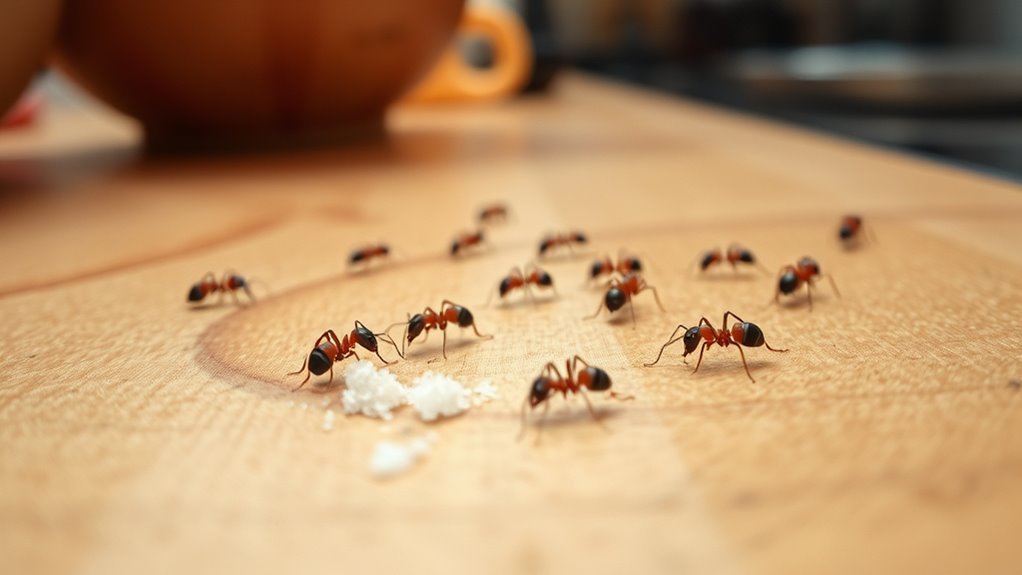
How can you identify the type of ants invading your kitchen? Start by looking at their size, color, and how they move. Different species range from tiny black ants to bigger reddish or brown ones. Recognizing these traits is key to figuring out what kind they are.
Next, observe their behavior patterns. Are they following trails along your counters, or do they seem scattered around? Some ants prefer sugary foods, while others go for grease or proteins. Noticing what attracts them can help you narrow down the species.
Also, pay attention to where they enter your kitchen and where they nest. Some ants like damp areas, while others prefer dry wood. Combining these clues—appearance, food choices, and movement—will help you identify the ant species.
Knowing what kind of ants you’re dealing with is important because it guides how you should control them. So keep a close eye and take notes. Identifying the ants is the first step to solving your problem.
Quick Ways To Kill Ants In Your Kitchen
Although ants can be persistent, you can quickly get rid of them with a few simple methods. Knowing how ants behave helps you target their trails and nests more effectively.
For example, ants avoid natural predators and certain scents, which you can use to your advantage.
Here’s a quick guide to kill ants in your kitchen:
| Method | How It Works |
|---|---|
| Vinegar Spray | Disrupts ant scent trails |
| Borax Bait | Poison ants and eliminate the colony |
| Diatomaceous Earth | Cuts through ants’ exoskeletons |
| Essential Oils | Repels ants and mimics natural predators |
| Boiling Water | Destroys nests on contact |
Apply these methods directly where you see ant activity. Combining strategies based on ant behavior can speed up the process.
Avoid using harsh chemicals near food. Instead, opt for natural scents like peppermint or citrus oils to keep ants away safely.
Simple Cleaning Hacks To Remove Ant Trails
You can easily get rid of ant trails using some simple household stuff. Just grab some vinegar or lemon juice and wipe down the surfaces—these help break up their scent trails and make it harder for ants to follow the same path again.
If you prefer, a quick mix of soap and water does the trick too. It not only cleans the area but also helps keep those ants away. Easy, right?
Effective Vinegar Solutions
Anyone dealing with ants in the kitchen knows that removing their scent trails is key to stopping them from coming back. Vinegar’s effectiveness as a natural cleaner makes it one of the best DIY solutions for this problem.
You can mix equal parts of white vinegar and water in a spray bottle. Spray the solution directly on ant trails, entry points, and other affected areas. The strong smell disrupts the ants’ pheromone trails, confusing them and preventing more ants from following the path.
Plus, vinegar is safe, inexpensive, and easy to find. After spraying, wipe the surfaces with a clean cloth to remove any residue. Using vinegar regularly not only removes trails but also keeps your kitchen fresh and less attractive to ants.
Lemon Juice Benefits
Two tablespoons of lemon juice can make a big difference when it comes to disrupting ant trails in your kitchen. Lemon juice acts as a natural insecticide by breaking down the scent trails ants leave behind to communicate and find their way.
Wiping down countertops and floors with lemon juice erases these chemical markers, making it harder for ants to return. Plus, the acidity helps clean surfaces naturally without harsh chemicals.
To use it effectively, mix lemon juice with water in a spray bottle and spray directly on ant trails or entry points. Regular use not only removes trails but also discourages ants from coming back.
This simple, natural method keeps your kitchen clean and ant-free without relying on toxic products.
Soap and Water
Mixing soap and water creates a simple yet powerful solution to erase ant trails and keep your kitchen pest-free. When ants leave their scent trails, they guide others to food sources. Using this DIY ant solution disrupts their navigation.
Just mix a few drops of dish soap with warm water in a spray bottle. Spray the mixture directly on ant trails and wipe the surface clean with a cloth. The soap works by breaking down the scent molecules ants rely on, making your kitchen less attractive to them.
Plus, it’s safe, affordable, and easy to use regularly. Incorporate this method into your cleaning routine to quickly reduce ant activity without harsh chemicals.
Safe Natural Remedies To Kill Kitchen Ants
When you want to keep your kitchen ant-free without harsh chemicals, natural remedies offer effective and safe solutions. You can use natural deterrents that disrupt ants’ scent trails and repel them without harming your family or pets. Essential oils are especially powerful for this purpose.
Try these simple methods: Mix water with a few drops of peppermint or tea tree essential oil in a spray bottle and apply it to ant entry points. Sprinkle cinnamon or cayenne pepper along baseboards and countertops to create a natural barrier ants avoid.
Use vinegar diluted with water to wipe down surfaces. Its strong scent masks trails ants follow. Place small bowls of lemon juice near ant hotspots. The acidity naturally repels ants.
Using Ant Baits And Traps For Lasting Control
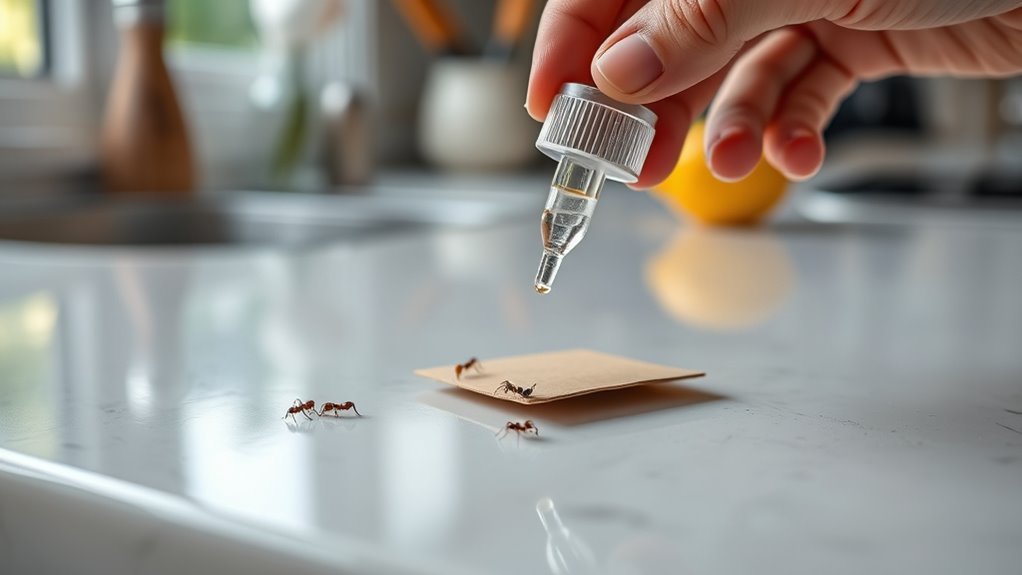
If you really want to keep those kitchen ants under control for good, it’s a good idea to pick ant baits that actually attract the specific kind of ants invading your space. You’ll want to place the traps in spots where you notice ant activity—like along their trails or near the entry points—so they find the bait quickly. Doing this helps target the whole colony, not just the ants you see wandering around.
Choosing Effective Ant Baits
Although ant baits may seem simple, choosing the right one is key for effective and lasting control. You need to understand different bait types and how placement affects their success. Picking a bait that attracts the specific ant species in your kitchen ensures they carry poison back to the colony.
Consider these factors when selecting ant baits:
- Choose between gel, liquid, or solid bait types based on your infestation.
- Look for baits containing boric acid or hydramethylnon for proven results.
- Make sure the bait is palatable to ants so they feed and share it.
- Avoid placing baits near food prep areas but where ants travel frequently to maximize bait pickup.
Placing Traps Strategically
Since proper placement can make or break your ant control efforts, you’ll want to position traps where ants travel most frequently. Effective bait placement guarantees ants find and carry poison back to their colony, providing lasting control.
Focus on these trap locations:
| Location | Why It Works | Tips |
|---|---|---|
| Near entry points | Ants enter here often | Check door frames, windows |
| Along baseboards | Common ant pathways | Keep traps close to walls |
| Under sinks | Moisture attracts ants | Place traps away from water |
| Behind appliances | Warmth draws ants | Clear debris for access |
Applying Commercial Ant Sprays Safely
When you use commercial ant sprays, make sure to follow the instructions carefully to keep yourself and your home safe. Proper spray application is key—not just for killing ants but also for protecting your health and environment.
Before you start, take safety precautions seriously. Wear gloves and a mask to avoid skin contact and inhalation. Keep children and pets out of the area during and after spraying.
Apply the spray directly to ant trails, nests, and entry points. Just be careful to avoid food surfaces to stay safe. After spraying, ventilate the kitchen well to help reduce any chemical buildup.
How Ants Get In: Entry Points To Seal
If you want to keep ants out of your kitchen, start by finding and sealing their entry points. Do a thorough inspection for cracks around windows, doors, and baseboards. Sealing these cracks is key to blocking their access.
Set up outdoor barriers by trimming plants and adjusting landscaping to reduce moisture near your home’s foundation. Moisture control inside your kitchen is just as important because ants are attracted to damp areas.
Keep your indoor space clean by promptly cleaning up food waste. This makes your home less inviting to ants. Seasonal prevention is helpful too—seal gaps before warmer months when ants are most active.
| Entry Point | Prevention Method | Benefit |
|---|---|---|
| Cracks & Gaps | Sealing cracks | Blocks ant access |
| Near Foundation | Landscaping adjustments | Reduces moisture |
| Doors & Windows | Outdoor barriers | Limits entry points |
| Damp Areas Inside | Moisture control | Discourages ants |
Keep Ants Away By Managing Your Food Storage
If you want to keep ants at bay, the key is managing how you store your food. Make sure to seal containers tightly—that way, ants can’t get inside. Also, try not to leave food on the floor; it’s just an open invitation for them. And don’t forget to clean up any spills right away. That little bit of mess can attract ants more than you might think!
Seal Containers Properly
Properly sealing just a few key containers can drastically reduce the chances of ants invading your kitchen. Use ant-proof containers with airtight seals to keep food odors and crumbs contained. This simple step cuts off their food source and discourages them from coming back.
Make sure to choose containers with tight, durable lids and check seals regularly for cracks or damage. Transfer opened snacks and pantry items immediately to prevent attracting ants. Also, store pet food in sealed containers as well.
Store Food Off Floors
When you store food off the floors, you block easy access points that ants use to get into your kitchen. Keeping your food in cabinets or on raised shelves makes it harder for ants to find crumbs or spills.
Make sure all your food containers have tight-fitting lids to prevent scents from attracting pests. Even sealed packages can leak odors, so storing them off the ground adds an extra layer of protection.
Raise pet food bowls and clean under them regularly to avoid inviting ants. Avoid stacking food directly on the floor or near baseboards, where ants often travel.
By managing your food storage this way, you make it tougher for ants to find food. This cuts off their motivation to invade your kitchen.
Taking this simple step is key to keeping ants at bay and maintaining a pest-free space.
Clean Spills Immediately
Wipe up spills as soon as they happen to prevent ants from being attracted to your kitchen. Quick cleanup is a key part of effective cleaning routines and spill prevention.
Leaving sticky or sugary residues gives ants an easy food source, inviting infestations. To keep your kitchen ant-free, make spill management a priority by:
- Using paper towels or cloths to wipe spills immediately.
- Cleaning countertops and floors regularly to remove hidden crumbs.
- Storing food in airtight containers to avoid accidental spills.
- Incorporating spill prevention habits into your daily cleaning routines.
When To Call A Professional Pest Control Service?
You should call a professional pest control service if ants keep coming back despite your efforts to eliminate them. Persistent ant problems often point to a deeper issue with their behavior or a larger infestation you might have missed.
Professionals can spot subtle signs of infestation like hidden nests or trails that are easy to overlook. They understand ant behavior thoroughly, so they can target the colony’s source instead of just dealing with the visible ants.
If you notice large numbers of ants, especially different species, or if DIY methods keep failing, it’s time to get expert help. Also, if the infestation spreads beyond the kitchen or causes damage, professionals can provide effective, safe treatments tailored to your situation.
Calling in experts ensures you address the problem thoroughly, saving you time and frustration. It also helps prevent future outbreaks. Don’t hesitate to seek professional help when ant control becomes overwhelming or ineffective.
Prevent Ants From Returning: Expert Tips For Good
Although getting rid of ants can feel like a victory, preventing them from coming back requires ongoing effort. Understanding their behavior is key—they’re drawn to food and water sources, so keeping your kitchen clean is essential.
Keep your kitchen spotless to cut off their food supply and avoid inviting them back. Here are some expert tips to keep ants out for good:
- Store food in airtight containers so they can’t access it.
- Clean up crumbs and spills right away to remove attractants.
- Seal cracks and entry points where ants might sneak in.
- Fix leaks and remove standing water to eliminate moisture sources.
Frequently Asked Questions
Are Ants Harmful to Humans or Pets?
Most ant species aren’t directly harmful to you or your pets, but some can pose health risks. You might experience allergic reactions or minor skin irritation from bites or stings, especially with fire ants or carpenter ants.
Ants can also contaminate food, spreading bacteria that could cause illness. While they’re usually not dangerous, it’s best not to ignore their presence in your kitchen to keep your household safe and healthy.
Can Ants Develop Resistance to Treatments?
Yes, ants can develop resistance to treatments if you keep using the same methods over and over. Their behavior helps them adapt and avoid certain baits or sprays, which makes treatments less effective over time.
To stay ahead, try rotating products and combining strategies. For example, keep your kitchen clean and seal entry points to disrupt their habits and keep control.
How Long Does It Take for Ant Baits to Work?
Bait effectiveness begins by bringing beneficial breakthroughs. You’ll notice changes within 24 to 72 hours as ants carry the poison back to their colony.
The treatment timeline depends on colony size and bait type, but you should see fewer ants quickly. Don’t expect instant results; persistence pays off.
Keep the bait fresh and undisturbed to maximize impact, ensuring you wipe out the entire colony over several days.
Do Different Ant Species Require Different Treatments?
Yes, different ant species do require different treatments because their behavior varies.
Some ants prefer sugary baits, while others go for protein-based ones. Knowing what they like helps you pick the right bait to attract and eliminate their colony.
If you don’t customize your approach, the treatment might not work, and the ants will keep coming back. So, take a moment to observe the ants first and choose the best solution.
Can Ants Contaminate Stored Food?
Ants are like tiny invaders sneaking through your castle, threatening your kingdom’s food safety. Yes, they can contaminate stored food by carrying bacteria and pathogens, turning your pantry into a battlefield.
To protect your home, you need to prioritize pest prevention by sealing food containers tightly and cleaning crumbs promptly. By staying vigilant, you keep your kitchen fortress strong, ensuring your food remains safe and uncontaminated.
Conclusion
You can spot ants, kill ants, and clean up their trails. Using natural remedies, setting baits, and sealing entry points are effective strategies.
Storing food properly, keeping your kitchen spotless, and calling a pro when needed will help control the problem.
By taking these steps, you’re not just getting rid of ants—you’re preventing their return. Stay vigilant, stay proactive, and keep your kitchen ant-free for good.
Focusing on these methods ensures you’ll maintain a clean and ant-free kitchen in the long run.