Electric Stove Top vs. Induction: Which Is Better?
Many people struggle with choosing the right cooktop for their kitchen, especially when balancing speed, safety, and budget. If you’re overwhelmed by options, you’re not alone. The decision between an electric stove top and induction can seem confusing, but understanding their differences can help you find the perfect fit.
If you want faster cooking and precise temperature control, an induction cooktop is better because it heats cookware directly and adjusts instantly. It also saves energy and keeps surfaces cooler for safety.
However, electric stove tops are simpler, work with all cookware, and cost less upfront.
Each has pros depending on your needs, so if you’re curious about installation, maintenance, or which suits your cooking style, there’s more to investigate ahead.
Key Takeaways
- Induction cooktops heat up faster and are more energy-efficient than electric stove tops because they heat cookware directly with magnetic energy.
- Electric stove tops work with almost any type of cookware, while induction needs magnetic or compatible pots and pans.
- Induction gives you precise temperature control with quick adjustments, making it great for delicate cooking. Electric coils respond more slowly.
- Induction cooktops stay cooler and have safety features that lower burn risks compared to the hot surfaces of electric stoves.
- Electric stove tops are usually more affordable and easier to install, but induction units require special high-voltage circuits and compatible countertops.
How Electric and Induction Cooktops Work
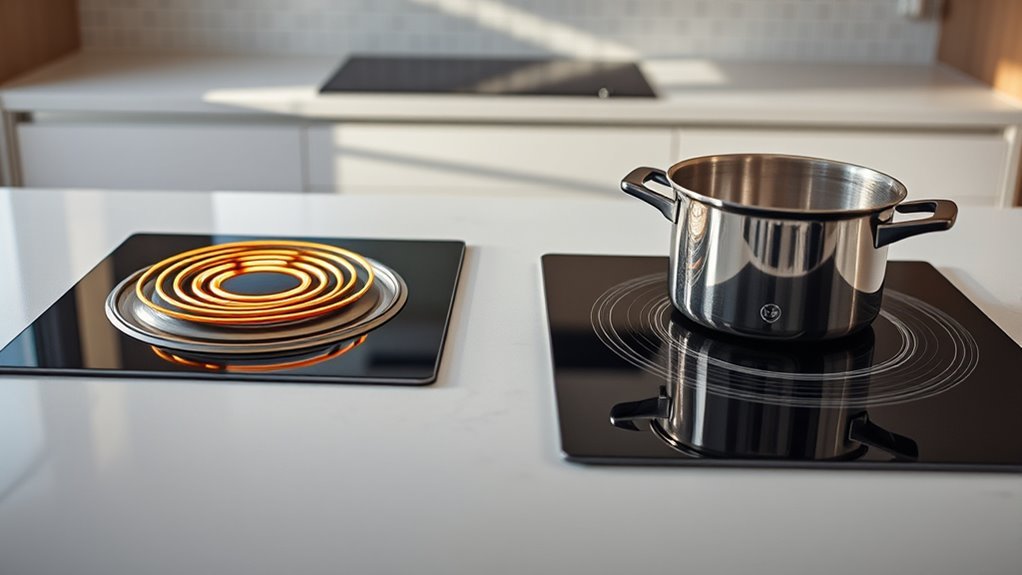
Although both electric and induction cooktops use electricity to generate heat, they work in different ways. When you use an electric cooktop, the electric current heats a coil or a flat surface, and that heat transfers to your cookware through conduction. This means the cooktop itself gets hot, and then your pot or pan absorbs that heat to cook your food. You can actually feel the warmth radiating from the surface.
Induction cooktops, on the other hand, create magnetic fields that directly heat the cookware. When you place a compatible pot on the induction surface, those magnetic fields induce electric currents inside the metal of the cookware, causing it to heat up. This method relies on electromagnetic induction, so the cooktop surface stays relatively cool since it’s not generating heat directly. You get efficient heat transfer straight to your pan, making it a unique and precise way to cook.
Which Cooktop Heats Faster and Saves Energy?
Understanding how electric and induction cooktops generate heat helps explain why one heats faster and uses energy more efficiently. When you use an induction cooktop, it creates a magnetic field that directly heats the cookware, so it gets hot in seconds. This means less waiting for your food to cook.
In contrast, electric cooktops heat the coil or element first, which then warms the cookware more slowly. Because induction transfers energy directly to the pan, it reduces energy use compared to electric cooktops, which lose heat to the air.
If saving energy matters to you, induction is the smarter choice. Its efficient heating also means less wasted electricity and quicker meal prep. This can help lower your utility bills. So, if you want faster cooking and lower energy consumption, induction cooktops are the way to go.
Temperature Control and Cooking Precision in Cooktops
When you cook, precise temperature control can make all the difference between a perfect meal and a disappointing one. Induction cooktops excel here, offering rapid adjustments and exceptional temperature stability. You can change settings instantly, allowing you to keep a steady heat throughout cooking. This helps your dishes cook evenly and consistently.
Electric stovetops rely on heating elements that take longer to adjust. This delay can cause temperature fluctuations, making it harder to maintain a steady heat level. As a result, you might experience uneven cooking or hot spots.
If control and precision are your priorities, induction cooktops have a clear edge. They respond quickly to your input, helping you nail delicate recipes that need exact temperatures. On the other hand, electric stoves are less good at maintaining consistent heat, which could affect your overall results.
Safety Features of Electric vs. Induction Cooktops
Because safety is a top concern in any kitchen, knowing how electric and induction cooktops protect you is essential. Both types meet strict safety standards, but induction cooktops offer advanced features that might give you extra peace of mind.
For example, induction cooktops only heat the cookware, so their surfaces stay cooler. This reduces burn risks thanks to the surface cool down function. Electric cooktops, on the other hand, heat the entire surface, which can stay hot longer after use.
When it comes to childproof features, both cooktops often include lock settings to prevent accidental activation. Overheating protection is another safety aspect; induction cooktops detect when pots boil dry or overheat and automatically shut off.
Electric models rely on thermostats to regulate temperature. If you want a safer cooking experience with quicker responses to hazards, induction cooktops usually offer better safety features to help protect you and your family.
Cleaning Electric and Induction Cooktop Surfaces
Cleaning your electric or induction cooktop surface doesn’t have to be a chore if you know the right techniques. Both cooktops usually have smooth glass-ceramic surfaces that need gentle care to prevent scratches.
For daily cleaning, use a soft cloth or sponge with warm, soapy water to wipe away spills and stains. Avoid abrasive pads or harsh chemicals that could damage the surface.
When stubborn residue appears, try a cooktop cleaner made for glass-ceramic surfaces. Use a non-abrasive scrubber and gently buff the area.
If you have electric coil cooktops, remove the coils and drip pans to clean them separately. Their surfaces are different and require different care.
Does Your Cookware Work With Electric or Induction?
How do you know if your cookware will work with electric or induction cooktops? For electric cooktops, most cookware types are compatible since they heat through direct contact.
However, induction cooktops need specific cookware because they use magnetic fields to generate heat. To check if your pots and pans work with induction, see if they’re made of ferrous metals like cast iron or magnetic stainless steel.
You can test this by holding a magnet to the bottom of your cookware. If it sticks, your cookware will work with induction. Non-magnetic materials like aluminum, copper, or glass won’t heat on induction unless they have a magnetic base layer.
On the other hand, electric cooktops don’t depend on magnetic materials, so you have more options. Understanding what your cookware is made of helps you get the most efficient heat and avoid frustration.
Before switching cooktops, take a moment to check your current pots and pans for material suitability. This way, you can match your cookware to your new stove’s requirements for the best cooking experience.
Upfront and Long-Term Cooktop Costs Explained
When you’re looking at cooktops, it’s a good idea to think about both what you’ll pay upfront and how much you might save on energy in the long run. Those initial costs can vary quite a bit depending on the type of cooktop you choose.
And don’t forget about maintenance and repair costs — they can add up over time and affect your overall expenses. Let’s take a closer look at what you can expect with each type of cooktop so you can make an informed decision.
Initial Purchase Price
Although the initial purchase price might be the first factor you consider, it’s important to weigh both upfront costs and long-term expenses when choosing between an electric stove top and an induction cooktop.
Electric stove tops usually come with a lower upfront price, making them attractive if you’re working within tight budget considerations. Induction cooktops tend to cost more initially because of their advanced technology and safety features.
When comparing brands, you’ll find a wide price range for both types. Doing some research on brand comparisons can help you find a model that fits your budget without sacrificing quality.
Ultimately, balancing your immediate spending with the cooktop’s durability and features guarantees you make a smart, cost-effective choice.
Energy Efficiency Savings
Since energy costs can add up over time, understanding how electric stove tops and induction cooktops differ in efficiency helps you save money in the long run.
Induction cooktops use electromagnetic energy to heat pots directly, reducing wasted heat and lowering energy consumption significantly compared to electric stove tops, which rely on heating coils.
When you do a cost analysis, induction models often show better savings despite a higher upfront price because they use less electricity during cooking.
Over months and years, these efficiency gains lead to noticeably lower utility bills.
Maintenance And Repair Costs
While induction cooktops generally cost more upfront, their maintenance and repair expenses tend to be lower over time compared to electric stove tops. You’ll find the repair frequency for induction models is usually less because they have fewer mechanical parts and use advanced technology.
To keep either cooktop running smoothly, follow maintenance tips like cleaning regularly and avoiding abrasive materials. Electric stove tops may require more frequent repairs due to coil wear or burner issues.
Consider these points when weighing long-term costs:
- Induction cooktops have sealed surfaces, reducing spills and damage
- Electric stove coils can wear out faster, increasing repair frequency
- Regular cleaning prevents buildup that can cause malfunctions
- Induction models often need less professional servicing
- Proper use and maintenance extend both cooktops’ lifespan and reduce costs
Installation and Kitchen Setup Considerations
When choosing between an electric stove top and an induction cooktop, think about how each fits into your kitchen’s layout and electrical system. Your kitchen design might influence the size and placement of your cooktop, so measure carefully to ensure a perfect fit.
Induction units usually need higher electrical requirements, often a dedicated 240-volt circuit. Check if your current wiring can handle this or if you’ll need upgrades. Electric stove tops tend to have simpler electrical needs but still require proper circuit capacity.
Ventilation needs are similar for both options, but since induction cooktops produce less ambient heat, your ventilation system might work more efficiently. Also, consider your countertop material; induction works best with heat-resistant surfaces like granite or quartz, while electric stove tops are more flexible.
Planning these installation and setup details early can help you avoid costly adjustments later on.
Best Cooktop for Different Cooking Styles and Recipes
Choosing the right cooktop isn’t just about installation—your cooking habits and favorite recipes matter a lot. Different techniques need different heat control and response times, which can influence how well a cooktop works for you.
Your cooking style and recipe needs are key when selecting the perfect cooktop for your kitchen.
If you often simmer sauces or slow-cook dishes, an electric stove top provides steady, even heat. It’s great for gentle cooking and maintaining consistent temperatures.
For rapid temperature changes, induction cooktops are fantastic. They’re perfect for searing meats or stir-frying, giving you quick control over heat levels.
Think about these cooking styles when choosing your cooktop:
- Slow simmering and braising
- Quick sautéing and stir-frying
- Melting chocolate or delicate sauces
- Boiling water quickly for pasta or vegetables
- Keeping food warm without burning
Real User Experiences: Pros and Cons of Each Cooktop
Although both electric stove tops and induction cooktops have their merits, real users often highlight distinct advantages and drawbacks based on daily use. User reviews and testimonials reveal that induction cooktops excel in cooking speed and precise heat distribution, allowing you to cook meals faster and more evenly. Many appreciate the quick response time and energy efficiency, which boosts user satisfaction. However, some users mention the need for compatible cookware as a downside.
On the other hand, electric stove tops get praise in user testimonials for their affordability and compatibility with all cookware types. Their slower heat changes can frustrate some, affecting cooking speed and control. Personal preferences play a big role here. If you value quick heating, induction might suit you better. But if you want simplicity and lower upfront costs, electric could be ideal. Brand comparisons also matter—some brands offer better durability and features, influencing overall satisfaction in both categories.
Frequently Asked Questions
Can Induction Cooktops Interfere With Pacemakers?
Induction cooktops generally won’t interfere with your pacemaker if you follow safety guidelines. The magnetic fields they use are localized and usually too weak to affect your device.
However, it’s a good idea to keep a safe distance—about 12 inches—to be cautious. Induction offers fast, precise heating without risking your health.
Always check with your doctor for personalized advice before using one.
Are There Any Health Risks Associated With Electric or Induction Cooktops?
They say, “Better safe than sorry,” and when it comes to cooking safety, it’s good to be aware of any risks.
Both electric and induction cooktops are generally safe to use. Induction cooktops produce electromagnetic fields, but these are low and usually don’t pose health risks for most people.
Just follow the manufacturer’s guidelines. If you have a pacemaker, it’s a good idea to check with your doctor to be extra cautious.
How Do Electric and Induction Cooktops Impact Home Insurance Policies?
You’ll find that insurance coverage for both electric and induction cooktops generally depends on fire safety standards.
Induction cooktops tend to reduce fire risks because they heat only the cookware, which insurers like. Electric stove tops pose a slightly higher fire risk, so some policies might include specific clauses or higher premiums.
Always check your home insurance policy to make sure your cooktop type is covered and meets fire safety requirements. This way, you can avoid surprises down the line.
Can I Use Induction Cooktops During a Power Outage?
You can’t use induction cooktops during a power outage because they rely entirely on electricity to generate heat. When the power’s out, the induction coils won’t work, so you’re left without a way to cook on that stove.
It’s a good idea to have some backup options like a gas stove, a portable camping burner, or even a charcoal grill. These alternatives will help you keep cooking smoothly when the power decides to take a break.
What Are the Environmental Impacts of Manufacturing Electric vs. Induction Cooktops?
You’ll find sustainability concerns in both electric and induction cooktop manufacturing. Electric stoves often use more common materials, but they still require resource extraction that impacts the environment.
Induction cooktops need rare earth metals for their magnets, which means more intensive resource extraction and environmental strain. So, while induction is energy-efficient in use, its production can raise more sustainability concerns compared to traditional electric models.
You’ll want to weigh both factors.
Conclusion
Choosing between an electric stove top and induction depends on your cooking style and what matters most to you.
Induction heats up faster and gives you more precise control, making it a great choice for quick and accurate cooking. Electric cooktops are usually more affordable upfront and still do a good job.
Both options are safe and easy to clean, so it really comes down to your kitchen setup and budget. Ultimately, you want a cooktop that makes cooking enjoyable and efficient.
When it comes to choosing between electric stove top and induction, think about what features will make your time in the kitchen better.