What Is the Temperature Inside the Freezer? The Complete Answer
Many people struggle with keeping their freezer at the right temperature, which can lead to food spoilage or freezer burn. If you’re tired of guessing whether your frozen goods are safe and fresh, you’re not alone.
Finding the perfect temperature inside your freezer is key to preserving food quality and preventing waste. You should keep your freezer temperature steady around 0°F (-18°C) to slow bacterial growth and preserve food quality.
Using a good freezer thermometer, check the middle temp regularly and adjust settings if needed, letting it stabilize for 24 hours. Avoid frequent door openings and watch for frost buildup to maintain efficiency.
Different foods respond distinctly to freezing, so knowing these details helps with storage. Keep an eye on these factors to guarantee your freezer works perfectly.
Key Takeaways
- The ideal freezer temperature is between 0°F (-18°C) and 5°F (-15°C) for keeping food fresh and safe.
- Keeping it steady at 0°F slows bacteria growth and helps food last longer.
- Use a good thermometer inside your freezer to keep an eye on the temperature and make adjustments as needed.
- Temperature swings can happen because of faulty sensors, blocked airflow, or damaged door seals.
- Regular maintenance, proper organization, and not overloading the freezer help it run efficiently and stay at the right temperature.
What Is the Ideal Freezer Temperature Range?
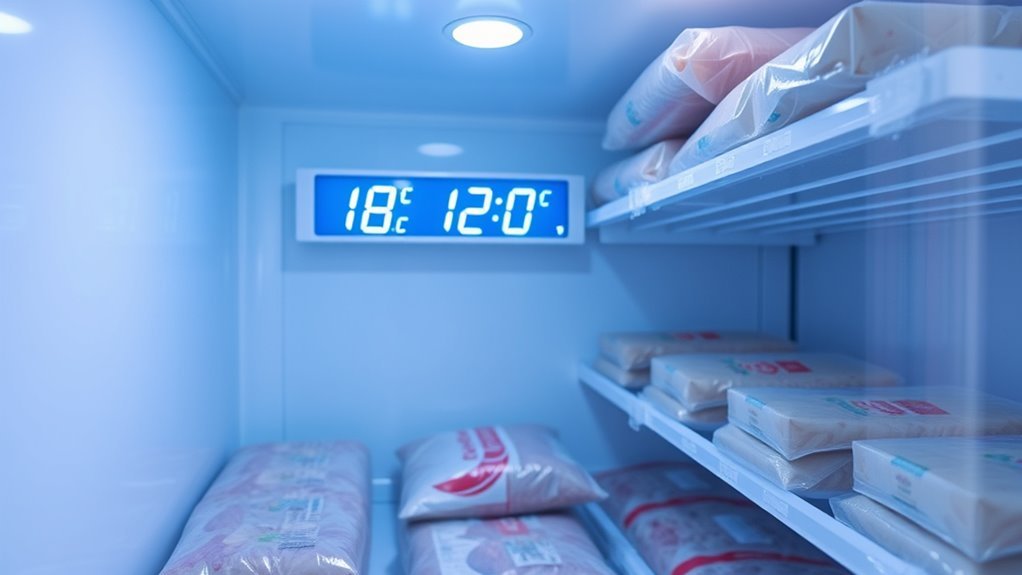
Although you might not think about it often, setting your freezer to the ideal temperature is essential for keeping your food safe and fresh. The recommended range is usually between 0°F (-18°C) and 5°F (-15°C).
Staying within this range ensures your freezer insulation works effectively, maintaining a consistent environment that prevents spoilage and freezer burn. Regularly checking and adjusting the temperature helps keep things just right.
To do this, it’s a good idea to use an accurate freezer thermometer. Over time, the thermostat settings can drift, causing the temperature to fluctuate outside the ideal range. Monitoring it allows you to make precise adjustments.
Good freezer insulation also plays a big role in keeping the temperature stable. It reduces energy use and helps keep your food in top condition.
Why Does Freezer Temperature Matter for Food Safety?
Because freezer temperature directly affects how well food stays safe, keeping the right cold environment helps prevent harmful bacteria from growing. When your freezer is set at the ideal temperature, usually around 0°F (-18°C), it slows down bacteria growth a lot. This helps you keep food longer without risking spoilage or foodborne illnesses.
If the freezer gets warmer than this, bacteria can start multiplying, increasing the chance of contamination. Proper food preservation depends on maintaining a steady, low temperature. Fluctuations or warmer settings don’t just ruin taste and texture—they also put safety at risk.
Freezing food at the right temperature stops bacteria from thriving, giving you peace of mind and cutting down on waste. So controlling your freezer’s temperature isn’t just about keeping food fresh. It’s a crucial step in protecting your health and making sure leftovers or frozen items are safe to eat.
How Do You Accurately Check Your Freezer’s Temperature?
To get an accurate reading of your freezer’s temperature, grab a good freezer thermometer and place it right in the middle of the freezer. It’s best to keep the temp somewhere between 0°F and 5°F (-18°C to -15°C) to make sure your food stays safe and fresh. Checking it regularly helps you catch any issues early and keeps everything running smoothly.
Using a Freezer Thermometer
When you want to guarantee your freezer maintains the right temperature, using a freezer thermometer is the most reliable method. First, choose a quality thermometer designed for freezers to verify accurate readings.
Proper thermometer placement is key. Avoid door shelves or near the freezer walls, as these spots can give false readings. Instead, place the thermometer in the middle of the freezer, preferably between food items, so it reflects the true temperature.
After positioning, allow several hours for the thermometer to stabilize before checking. Don’t forget to perform regular freezer calibration by comparing your thermometer’s reading with the freezer’s built-in display, if available. This helps you catch any discrepancies and keep your freezing conditions consistent.
Ideal Temperature Range
Maintaining your freezer within the ideal temperature range ensures your food stays safe and fresh longer. Aim for a steady temperature of 0°F (-18°C) for optimal efficiency.
Use a reliable freezer thermometer placed in the center of the compartment to check the temperature accurately. Don’t rely only on the built-in gauge, as it might not show the true conditions.
Regular monitoring helps catch any temperature fluctuations that could affect food quality or cause freezer burn. If you see significant changes, adjust the settings or check the door seal and ventilation.
Keeping the temperature steady preserves your food and reduces energy use, making your freezer run more efficiently and last longer.
How Often Should You Monitor Your Freezer’s Temperature?
Although freezers are built to keep a steady temperature, it’s important to check the internal temperature regularly. This helps ensure your food stays safe and fresh. Temperature fluctuations can happen unexpectedly, so keeping track often helps you catch issues early.
Ideally, you should check your freezer’s temperature at least once a week. Doing so allows you to spot any deviations from the ideal range quickly. If your freezer door isn’t sealing well or if you see frost buildup, check it more often. Using a dependable freezer thermometer makes this easier and gives accurate readings.
Regular monitoring also helps you notice patterns that might mean maintenance or repairs are needed. Staying on top of the temperature guarantees your freezer works efficiently, keeping your food safe from spoilage and maintaining its quality over time.
What Causes Freezer Temperature to Fluctuate?
Because freezers work hard to keep your food frozen, several factors can cause their internal temperature to fluctuate. One common cause is faulty temperature sensors that misread conditions, prompting the compressor to cycle improperly.
Airflow issues, often due to frost buildup or blocked vents, also disrupt consistent cooling. Power fluctuations can temporarily interrupt the freezer’s operation, leading to brief temperature changes.
You should also check door seals regularly; damaged or loose seals let warm air inside, causing the temperature to rise. Frequent openings increase warm air entry, forcing the freezer to work harder to restore the cold.
Ambient temperature plays a role too. If the surrounding room gets too hot or cold, it impacts freezer efficiency. Finally, regular appliance maintenance helps prevent many of these problems, keeping your freezer running smoothly and your food safely frozen.
What Happens If Your Freezer Is Too Warm or Too Cold?
If your freezer is too warm, your food can spoil faster and lose its quality, which increases the risk of harmful bacteria growth. This happens because malfunctions or temperature extremes prevent your freezer from maintaining the ideal cold environment.
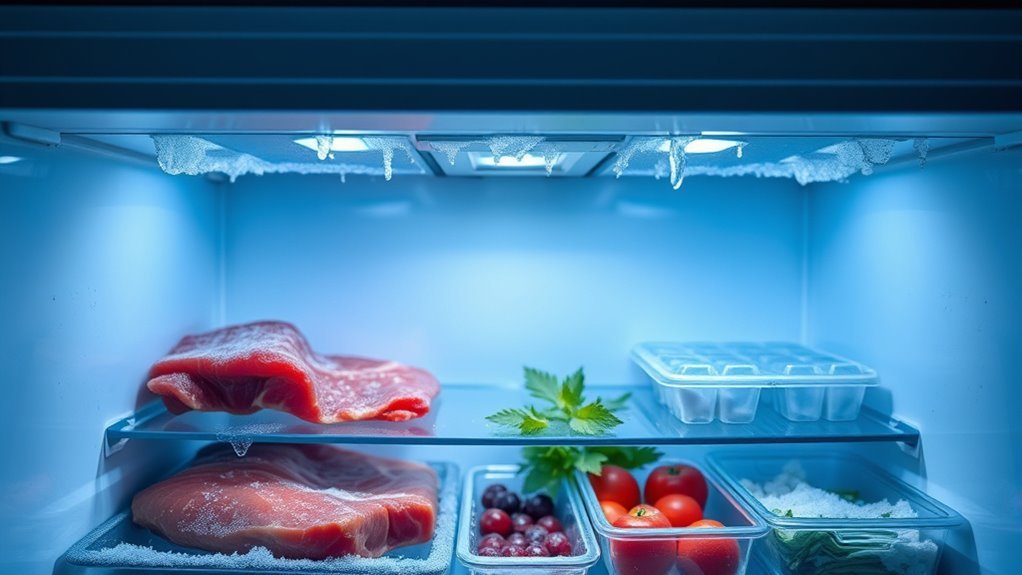
On the other hand, if your freezer is too cold, ice crystals can form on your food, leading to freezer burn that dries out texture and flavor.
If your freezer is too cold, ice crystals form, causing freezer burn that ruins texture and flavor.
Both temperature extremes affect your food’s safety and taste. Warm conditions encourage bacterial activity, while overly cold conditions damage food quality.
Plus, freezer malfunctions can increase energy use and strain your appliance, which might lead to higher electricity bills and potential breakdowns.
You should check your freezer’s temperature regularly to avoid these issues. Understanding what happens when it’s too warm or too cold helps protect your food and extend your freezer’s life.
Addressing temperature problems early can prevent costly repairs and keep your stored food safe and fresh.
How Can You Adjust Your Freezer Temperature Settings?
When your freezer’s temperature isn’t quite right, you can usually adjust the settings yourself to keep your food safe and fresh. First, find the control panel or dial inside your freezer, which often lets you change the temperature calibration.
Most freezers recommend a setting around 0°F (-18°C) for the best preservation. If your freezer has digital controls, just use the buttons to increase or decrease the temperature following the manufacturer’s instructions.
For manual dials, turn the knob toward a colder setting to lower the temperature or toward a warmer setting to raise it. After making adjustments, give your freezer 24 hours to stabilize before checking the temperature again with a reliable thermometer.
Regular calibration of your freezer’s temperature helps ensure your settings are accurate and prevents food spoilage. If the temperature still seems off after adjustments, it’s a good idea to check the user manual or call a professional to recalibrate the thermostat.
How Does Freezer Temperature Affect Different Types of Food?
Although most freezers keep a standard temperature, different foods react differently to these conditions. For example, delicate items like berries can lose their texture if frozen too hard, becoming mushy once thawed.
In contrast, meats benefit from lower temperatures, which help preserve nutrients and prevent bacterial growth. Vegetables freeze well at typical freezer temps, but fluctuations can cause ice crystals to form, damaging cell walls and affecting both texture and nutrients.
Dairy products, such as cheese, can become crumbly if frozen too cold for too long. By understanding how freezer temperature impacts various foods, you can better manage storage to keep them fresh and nutritious.
Keeping your freezer at a steady, ideal temperature helps protect food quality, ensuring your frozen goods taste good and retain their nutrients when you’re ready to use them.
What Are the Best Tips to Keep Your Freezer Efficient?
To keep your freezer running efficiently, you’ll want to maintain a consistent temperature and avoid overloading it. Overstuffing restricts air circulation, making your freezer work harder and use more energy.
Focus on proper freezer organization by grouping similar items together and labeling them clearly. This helps you find things quickly and reduces the time the door stays open, which saves energy.
Organize and label freezer items to find them quickly and keep the door open less, saving energy.
Make sure the door seals are tight and clean to prevent cold air leaks. Regularly defrost your freezer if it’s not frost-free, as ice buildup decreases efficiency.
Keep the freezer away from heat sources like ovens or direct sunlight. This prevents it from working harder to maintain the right temperature.
Finally, avoid putting hot food directly inside. Let it cool first to keep temperature stability and save energy. Following these tips will help extend your freezer’s life, cut down on energy costs, and keep your food fresh longer.
When Should You Call a Professional for Freezer Problems?
How do you know if your freezer needs professional help? If you notice persistent cooling issues, it’s time to evaluate freezer repair.
When your freezer isn’t maintaining the right temperature or ice buildup becomes excessive despite your efforts, these signs point to a deeper problem. You should also call a professional if the freezer makes unusual noises, the door seal is damaged, or there’s water pooling inside.
Attempting DIY fixes for these problems might make things worse or void your warranty. A trained technician can accurately diagnose mechanical or electrical faults affecting your freezer’s performance.
Don’t wait until your food spoils; addressing cooling issues quickly can save you money and stress. If your freezer is over 10 years old and keeps malfunctioning, a professional can help decide whether to repair or replace it.
Trust experts to keep your freezer running smoothly and ensure your food stays safe.
Frequently Asked Questions
Can Freezer Temperature Affect Ice Cream Texture?
Yes, freezer temperature can definitely affect ice cream consistency. If your freezer isn’t cold enough or isn’t working well, ice cream can turn out too soft or develop ice crystals, which messes up its smooth texture.
Keeping your freezer at the right temperature ensures your ice cream stays creamy and has the perfect consistency. It’s a good idea to keep an eye on your freezer’s temperature and make sure it’s working efficiently.
That way, you can enjoy the best ice cream texture every time!
Does Freezer Temperature Impact Energy Bills?
Yes, freezer temperature directly impacts your energy bills. When you set the temperature too low, your freezer works harder, which reduces energy efficiency and increases electricity costs.
How Long Does Food Stay Safe During a Power Outage?
You can keep food safe in your freezer for about 24-48 hours during a power outage if you keep the door closed. This helps prevent the food from thawing too quickly.
The length of the power outage directly affects food safety. The longer the power’s out, the higher the risk of thawing and spoilage.
If the outage lasts over two days, check your food carefully. Ice crystals or a cold touch usually mean it’s still safe to eat.
When in doubt, don’t risk eating questionable food. It’s better to be safe and avoid illness.
Are Chest Freezers Colder Than Upright Freezers?
Yes, chest freezers are usually colder than upright freezers because their design keeps cold air trapped inside better. You’ll appreciate chest freezer advantages like less temperature fluctuation and more efficient cooling.
Upright freezer design offers easier access and organization but tends to let cold air escape when opened. If you want consistent, colder storage, chest freezers often outperform uprights thanks to their superior insulation and airtight seal.
Can Freezer Temperature Affect the Lifespan of the Appliance?
Yes, freezer temperature can affect your appliance’s lifespan. If you don’t keep it at the right temperature, the compressor has to work harder, which causes more wear and tear.
Good freezer maintenance, like setting the right temperature, helps reduce stress on its parts and prevents frost buildup. This keeps your freezer running smoothly and efficiently.
Conclusion
Think of your freezer as a delicate orchestra where every degree plays an essential note. Keeping the temperature steady between 0°F and 5°F guarantees your food stays fresh, like instruments perfectly tuned.
Just as a conductor listens closely, you should regularly check and adjust the settings to avoid any sour notes caused by fluctuations. This way, your freezer remains in harmony and your food stays safe.
When in doubt, don’t hesitate to call a professional. Maintaining the right temperature inside the freezer is key to preserving safety and flavor alike.