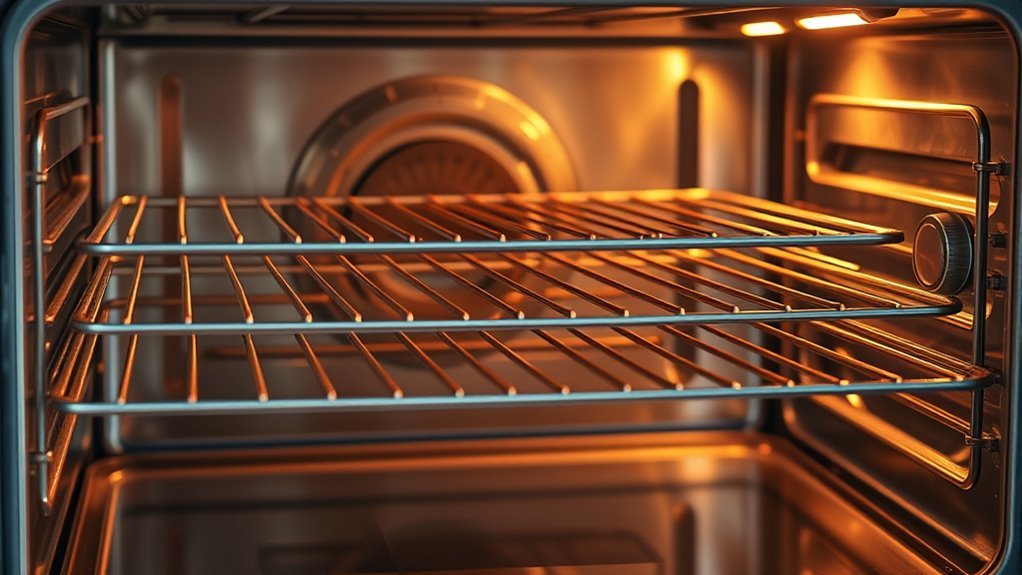
Parts of an Oven: A Simple Guide
Are you tired of unevenly cooked meals or struggling to get your oven just right? You’re not alone—many people find it tricky to master their oven’s quirks and get perfect results every time. Understanding your oven’s parts can make all the difference.
Parts of an Oven: A Simple Guide
You rely on your oven’s heating elements, thermostat, racks, and control panel to cook meals perfectly every time. The heating elements provide the needed heat, while the thermostat keeps the temperature steady.
Oven racks help position your dishes for even cooking, and the control panel lets you choose baking, broiling, or cleaning functions. Plus, the oven light and convection fan improve visibility and heat circulation.
Keep exploring to understand how these parts work together for flawless results.
Key Takeaways
- Heating elements generate heat, with bottom elements for baking and top elements for broiling.
- The thermostat keeps the oven at the right temperature for accurate cooking.
- Oven racks hold dishes at different heights, which can change how your food cooks and how heat is distributed.
- The door and seal trap heat inside, making the oven more energy-efficient and helping your food cook better.
- The convection fan circulates hot air around, ensuring even cooking and faster results.
Key Oven Parts You Should Know
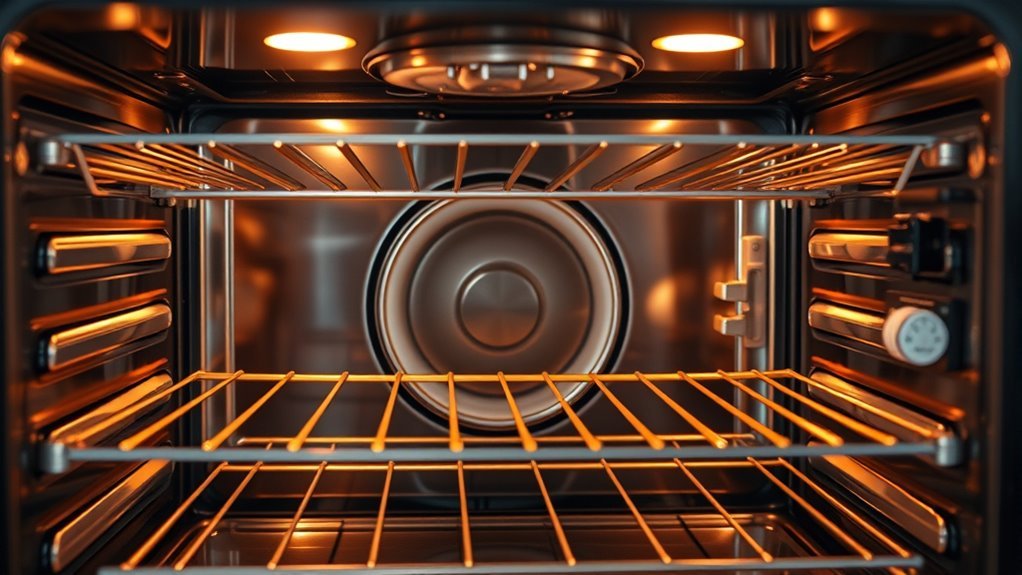
Before you start cooking, it helps to know the key parts of your oven. Understanding these components can save you time and frustration. The main parts include the heating elements, thermostat, oven racks, door, and control panel.
The heating elements provide the heat, while the thermostat regulates the temperature to keep your food cooking evenly. Oven racks hold your dishes, and the door seals in heat. The control panel lets you set temperatures and timers.
Heating elements generate heat, thermostats control temperature, racks hold dishes, doors trap heat, and control panels set timers.
Knowing these parts also helps with oven maintenance tips. For example, if your oven isn’t heating properly, the problem might lie with the heating elements or thermostat. Common oven problems like uneven cooking or failure to heat often stem from these parts.
Keeping them clean and checking for damage regularly will improve oven performance and extend its life. So, getting familiar with these key oven parts is a smart first step before you plunge into cooking.
How an Oven Works: Basic Principles
Sure! Here’s a more conversational version of your text:
Heat Generation Methods
Although ovens come in various designs, they all generate heat through specific methods that allow you to cook your food evenly and efficiently. You’ll often find radiant heat, where elements like electric coils or gas burners emit warmth directly to your food.
Convection heat adds to this by circulating hot air with fans, which improves heat transfer and cooking consistency. Some ovens use induction cooking, heating cookware directly via magnetic fields for precise control and great energy efficiency.
Microwave integration combines electromagnetic waves to excite water molecules, cooking food quickly from the inside out. Heat retention relies on thermal mass—materials that store and slowly release heat—to keep temperatures stable.
Understanding these methods helps you choose an oven that fits your cooking style and energy needs perfectly.
Temperature Regulation Mechanisms
When an oven heats up, it relies on temperature regulation mechanisms to keep the cooking conditions steady. Temperature sensors are constantly monitoring the heat to prevent fluctuations that could throw off your cooking.
You can usually see the current temperature on digital displays, which makes manual adjustments pretty simple. Calibration techniques ensure these sensors stay accurate over time, and you can find instructions in user guides or troubleshoot with some handy tips.
Safety features like automatic shut-offs keep you protected while the oven is in use. These systems not only improve cooking accuracy but also save energy by avoiding unnecessary heating cycles.
Understanding how these parts work together helps you get the best results from your oven while keeping it safe and efficient for daily use.
Heat Distribution Techniques
Since even heat is essential for perfect cooking, ovens use different techniques to make sure your food cooks evenly. They rely on radiant heat, which warms your food directly, and convection currents that circulate hot air to speed up cooking.
Thermal mass, like thick oven walls, helps keep the heat steady so your baked goods turn out just right. Insulation materials prevent heat from escaping, keeping your oven efficient and your energy bills lower.
These features also help control moisture, so your dishes don’t dry out during cooking. By combining all these elements, your oven distributes heat evenly, ensuring every meal comes out perfectly cooked.
Whether you’re baking, roasting, or broiling, understanding these techniques helps you get the most from your oven’s capabilities.
Heating Elements: What They Do and Why They Matter
Heating elements are the main parts that generate heat inside your oven, helping it cook food efficiently. You’ll find different types, usually coil or tubular, designed for specific cooking needs. Proper placement inside the oven ensures even heat distribution, which is important for consistent results.
Typically, ovens have a bake element at the bottom and a broil element at the top. These elements turn electrical energy into heat to cook your food. Bottom elements are mainly used for baking and roasting, while top elements are for broiling and searing.
Some ovens also have convection heating elements with fans that help circulate hot air. The placement of these elements affects how quickly food cooks and how evenly the heat is distributed. Understanding how heating elements work can help you get better results and know what to do if they need maintenance or replacing.
The Oven Thermostat: How It Controls Temperature
Although you might not notice it, the oven thermostat is key to keeping your oven at the right temperature. It acts as the control center, sensing the internal heat and turning the heating elements on or off to maintain your set temperature.
When you turn the temperature dial, you’re actually setting the thermostat’s target. It then works to keep that temperature steady.
Temperature accuracy really depends on proper calibration. If the thermostat isn’t calibrated correctly, your oven might run hotter or cooler than what you set, causing uneven cooking or burnt food.
Accurate oven temperatures rely on proper thermostat calibration to prevent uneven cooking or burning.
To check if your thermostat works well, you can test it with an oven thermometer. Adjust the calibration if needed, following your oven’s manual.
Oven Racks: Positioning for Even Cooking
Getting the temperature right with your oven thermostat sets the stage for successful cooking, but how you position your oven racks also plays a big role in achieving even results. Proper rack placement guarantees ideal heat conduction around your food, improving cooking efficiency and outcome. Different rack materials can affect heat distribution slightly, so consider that when adjusting racks.
Here are some cooking tips for effective rack usage:
- Place racks in the middle for even baking and roasting.
- Use the lower rack for slow cooking or crisping.
- Position the top rack for broiling or browning.
- Avoid overcrowding; allow air circulation for consistent heat.
- Make rack adjustments based on your specific baking techniques.
The Oven Door and Seal: Keeping Heat Inside
While you focus on setting the right temperature and positioning your racks, don’t overlook the oven door and its seal, which are crucial for keeping heat inside. Proper door insulation and a well-maintained seal help ensure excellent heat retention and boost your oven’s energy efficiency.
Never underestimate the oven door and seal—they’re key to keeping heat in and energy use down.
Check the door glass regularly for cracks and keep it clean using recommended cleaning tips. This helps maintain visibility and safety features, making sure everything stays in top shape.
The latch mechanism and hinge durability are vital because they keep the door securely closed, preventing heat from escaping. If you notice any damage or wear, consider replacing these parts promptly to avoid energy loss or safety risks.
Regular seal maintenance is important too. Inspect for gaps or brittleness and fix any issues to keep an airtight environment inside your oven. Taking care of these components helps optimize performance, save energy, and promote safer cooking every time.
Control Panel: Navigating Your Oven Settings
The control panel is where you’ll set your oven’s temperature and timer, making it pretty straightforward to get started. Once you get the hang of what each button does, customizing your cooking becomes much easier.
Let’s take a closer look at how to navigate these settings confidently so you can cook with ease and precision.
Understanding Button Functions
The control panel is your oven’s command center, where every button plays an essential role in customizing your cooking experience. Understanding button functions helps you navigate your oven with confidence.
Each button label guides you through programming options, letting you tailor settings to your dish. Common buttons you’ll find include:
- Bake: Start standard cooking mode
- Broil: Activate intense top heat
- Timer: Set cooking duration
- Self-Clean: Initiate oven cleaning cycle
- Start/Stop: Begin or cancel operations
Temperature and Timer Settings
Although setting the right temperature and timer might seem straightforward, mastering these controls can make a big difference in your cooking results. You should first check your oven’s temperature calibration to verify it heats accurately. If the oven runs hotter or cooler than the set temperature, your dishes may undercook or burn. Adjusting the calibration, if possible, helps maintain consistent heat.
Next, focus on timer accuracy. Setting the timer precisely lets you monitor cooking times without guesswork, preventing overcooking or undercooking. Many ovens feature digital timers that are easy to set and read, but mechanical timers can also work well if calibrated correctly.
The Oven Light: How It Helps You Cook Safely
When you’re cooking, having a clear view inside your oven helps prevent overcooking or burning your food. The oven light is a simple but essential feature that lets you keep an eye on your dish without opening the door, which keeps the temperature steady and makes cooking safer.
A clear oven light lets you monitor your food without opening the door, ensuring even cooking and safety.
Here’s how the oven light helps you cook safely:
- It allows you to check your food’s progress without losing heat.
- It prevents burns from opening the hot oven too often.
- It helps you spot spills or smoke early.
- It saves energy by reducing how often you open the door.
- It gives you more precision when baking or roasting.
To keep your oven light working well, regularly check the light bulb and replace it when needed. A bright, functioning light means less guessing and safer, easier cooking, so you can focus on making your meals perfect without interruptions or hazards.
The Convection Fan: How It Circulates Heat
The convection fan is your oven’s little helper that keeps things moving. It blows hot air all around your food, making sure everything gets cooked evenly.
Thanks to this circulating air, your dishes tend to cook faster and more uniformly than in a regular oven. Once you get the hang of how that fan works, you can really improve your cooking results and maybe even cut down on your baking time!
Fan Function Explained
Because the convection fan constantly circulates hot air inside the oven, it helps cook your food more evenly and quickly. This relies heavily on how efficient the fan is and where it’s placed inside the oven cavity.
If the fan works well and is positioned correctly, it pushes heat all around your dishes without leaving cold spots. You’ll notice how it:
- Blows hot air evenly over food surfaces
- Speeds up heat transfer to your meals
- Keeps a steady temperature throughout
- Circulates air to prevent steam buildup
- Reduces cooking times with constant airflow
Understanding the fan’s role helps you see why ovens with convection fans often outperform traditional ones. When manufacturers optimize fan efficiency and placement, you get reliable, even cooking every time.
Benefits Of Heat Circulation
Although many ovens rely on radiant heat alone, convection fans actively circulate hot air to boost cooking performance. When you use a convection fan, you improve heat efficiency by distributing heat evenly throughout the oven.
This means your food cooks more consistently and avoids hot spots that can cause uneven results. You’ll also notice better moisture retention, keeping your dishes juicy instead of drying out.
The enhanced air circulation encourages better browning and flavor, making your meals tastier and more visually appealing. Plus, because your oven reaches the right temperature faster and stays steady, you save energy.
Oven Sensors and Safety Features You Should Know
When you use an oven, its sensors and safety features work behind the scenes to keep cooking efficient and prevent accidents. These elements ensure oven safety by monitoring various conditions and responding accordingly. Different sensor types track temperature, smoke, and flame presence to maintain proper operation and alert you if something’s wrong.
Features like temperature alerts notify you if the oven gets too hot, while overheating protection automatically shuts down the unit to avoid hazards. Child lock functions prevent unintended use, which is especially important in homes with kids. Some ovens even include self-cleaning features paired with cool-down mode, making cleaning safer and more energy-efficient.
Here are key oven sensors and safety features you should know:
- Temperature alerts for precise heat control
- Smoke detection to prevent fire risks
- Overheating protection to shut off heat
- Child lock to keep little ones safe
- Flame supervision to guarantee a stable flame
These features let you cook confidently while minimizing risks.
Frequently Asked Questions
How Do I Clean the Oven Without Damaging Its Parts?
You can clean your oven without damaging its parts by using safe cleaning solutions like baking soda and vinegar or mild commercial oven cleaners.
Avoid harsh chemicals and abrasive scrubbing pads that can scratch surfaces.
Start by removing racks and soaking them separately.
Apply your chosen oven cleaning method, then let it sit to loosen grime before wiping gently with a soft cloth.
Always follow the manufacturer’s instructions to protect heating elements and seals during oven cleaning.
Can I Replace a Broken Oven Rack Myself?
Yes, you can replace a broken oven rack yourself, find replacement options, and install the new rack with ease.
First, identify the exact size and model of your oven rack. Then, check online stores or the manufacturer’s website for compatible replacements.
When your new rack arrives, simply slide out the broken one and insert the replacement. It’s quick, safe, and saves you a service call.
Just make sure you handle the rack carefully!
What Should I Do if My Oven Door Won’T Close Properly?
If your oven door won’t close properly, start by checking the oven door alignment. Misaligned hinges can prevent a tight shut, so adjust or tighten them if needed.
Next, perform an oven seal inspection to see if the gasket is damaged or dirty. A worn-out seal can stop the door from sealing correctly. If you find any issues, replace the seal to fix the problem.
These simple steps should help you get your oven door closing properly again.
How Often Should Oven Sensors Be Calibrated or Replaced?
You might think oven sensors need constant fuss, but in reality, sensor maintenance is pretty low-key.
You should have your oven sensors calibrated every 12 to 18 months to keep them accurate.
If you notice inconsistent cooking or error codes, it’s time to replace the sensor. Neglecting calibration can lead to uneven baking, so staying on top of this guarantees your oven performs perfectly without any guesswork.
Are There Energy-Saving Tips for Using My Oven Effectively?
You can save energy by only preheating your oven when it’s really needed and sticking to the right temperature for your recipe.
Using techniques like batch cooking or roasting multiple items at once helps you make the most of the heat.
Also, try not to open the oven door too often because it causes temperature drops and longer cooking times.
If your oven has a convection setting, use it—it’s faster and cooks more evenly, which can save energy.
Conclusion
Now that you know the key components of your oven, you can confidently control cooking and create culinary masterpieces. From heating elements to the helpful convection fan, each part plays a crucial role in perfecting your dishes.
By understanding oven operations and safety sensors, you’ll stay savvy and secure while sizzling and simmering. So, step up your skills, savor success, and let your oven’s outstanding features open doors to outstanding outcomes.