How to Dispose of Old Kitchen Knives: A Step-by-Step Guide
Many of us have old kitchen knives lying around that we’re unsure how to get rid of safely. It’s a common problem—no one wants to risk injury or contribute to waste in the wrong way.
Knowing the right steps can make disposing of these knives much easier and safer.
To dispose of old kitchen knives safely, start by cleaning each blade thoroughly and wrapping them securely in thick paper, cardboard, or bubble wrap to prevent injury.
Label the package “Sharp Objects” and check your local guidelines for disposal or recycling options.
Consider donating knives that are still in good condition to local charities.
Avoid tossing them loosely in trash or recycling bins.
Follow these simple steps, and you’ll also find ways to handle damaged knives and investigate recycling or repurposing options ahead.
Key Takeaways
- Clean your knives thoroughly and check if they can be sharpened, repaired, or donated safely before you get rid of them.
- Wrap the blades securely with thick paper, cardboard, or bubble wrap, and label the packages as “Sharp Objects.”
- Check your local rules for disposing of sharp tools, including hazardous waste or recycling programs.
- If the knives are still good and undamaged, consider donating them to local charities or donation centers, making sure they’re safely packaged.
- For knives that can’t be used anymore, take them to authorized scrap metal recyclers or hazardous waste facilities for eco-friendly disposal.
Why It’s Important to Dispose of Kitchen Knives Safely
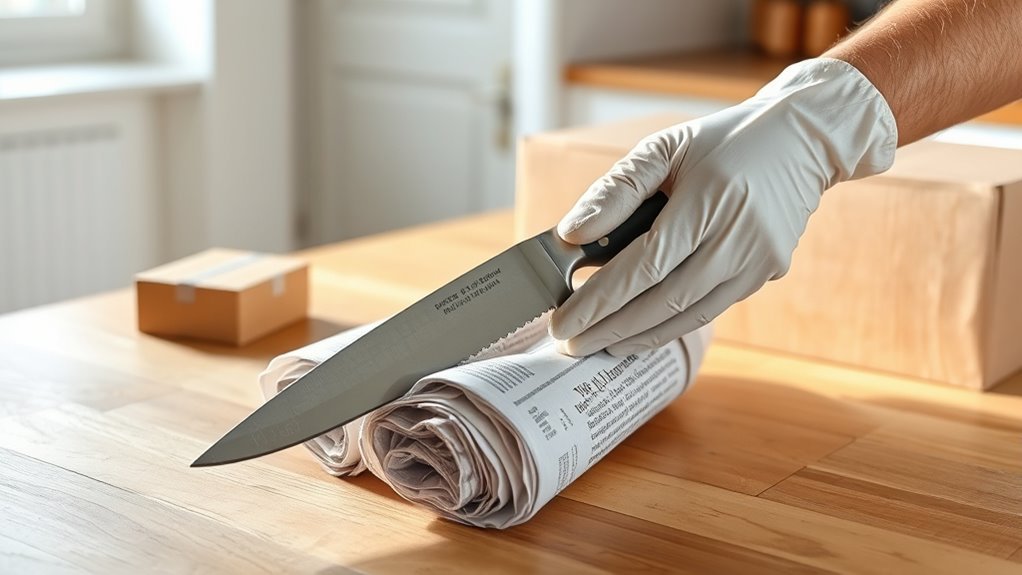
Although kitchen knives may seem harmless once they’re old or damaged, you need to dispose of them safely to prevent injuries. Knife safety isn’t just about handling knives while cooking; it extends to how you get rid of them.
Old blades can cause serious cuts to sanitation workers or others who might handle your trash if you don’t dispose of them properly. Ignoring disposal regulations can also lead to fines or legal trouble, as many local authorities have specific rules about sharp objects.
By following knife safety practices when discarding knives, you protect yourself and others from accidental harm. Proper disposal also guarantees knives don’t end up contaminating recycling streams or landfill sites, where they can pose risks for a long time.
Taking the time to understand and comply with disposal regulations not only keeps everyone safe but shows respect for community health standards. So, never toss old knives carelessly—you’ve got to be responsible.
How to Prepare Kitchen Knives for Disposal
Before you dispose of your old kitchen knives, you need to prepare them properly to ensure safety and follow local rules. Start by thoroughly cleaning each knife to remove food residue and prevent contamination. Use warm, soapy water and dry them completely.
Properly clean and dry kitchen knives before disposal to ensure safety and comply with local regulations.
If your knives still have decent blade sharpness, consider whether sharpening or other maintenance might extend their life before disposal. If you decide disposal is best, secure the blades to avoid injury during handling.
Wrap each knife in several layers of thick paper or cardboard, or use blade guards if available. Label the package clearly as “Sharp Objects” so waste handlers know what’s inside.
Remove any detachable handles if local rules require it, as some parts might need separate recycling. Finally, check your municipality’s guidelines for disposing of sharp kitchen tools to make sure you’re following the right method.
Proper preparation helps protect sanitation workers and supports safe, responsible waste management.
How to Handle Damaged or Broken Kitchen Knives
If your kitchen knife is damaged or broken, the first thing you want to do is take a good look at how serious the damage is. Is it just a small chip, or is the blade cracked or broken? This will help you figure out the best way to get rid of it.
Be extra careful when handling it, especially if you notice any chips or cracks. Those can be sharp and could easily cause a cut. To keep everyone safe, make sure to wrap the knife securely—using thick cloth or bubble wrap—before you dispose of it. That way, nobody gets hurt during the process.
Assess Knife Damage
Knives suffer from wear and tear over time, so it’s important to carefully assess their condition before disposal. Start by inspecting the blade for chips, cracks, or severe rust.
If the damage is minor, you might salvage the knife through proper knife maintenance, like sharpening or cleaning. However, deep cracks or broken blades often mean the knife is beyond repair.
Check the handle too; a loose or broken handle can make the knife unsafe to use. If the blade is dull but intact, consider blade replacement if possible, especially with high-quality knives.
Otherwise, damaged or broken knives that can’t be fixed should be prepared for safe disposal, ensuring they won’t pose a hazard. This assessment helps you decide whether to repair or discard your knife responsibly.
Safe Disposal Methods
When disposing of damaged or broken kitchen knives, prioritize safety to prevent injuries. First, wrap the blade securely in several layers of thick paper or cardboard, then tape it firmly to avoid accidental cuts. This step is essential for safe handling and transport.
Next, check your local recycling guidelines to minimize environmental impact. Some facilities accept metal knives if properly prepared, while others require special disposal. If recycling isn’t an option, place the wrapped knife in a rigid container marked “sharp” before discarding it in the trash.
How to Donate Old Kitchen Knives Safely
Thinking about donating your old kitchen knives? First, take a good look at them to make sure they’re still safe to use. If they’re chipped or damaged, it might be best to skip donating and consider recycling instead.
Once you’re confident they’re in decent shape, wrap them up securely—using something like old cloth or bubble wrap—so no one gets hurt during the trip. After that, just find a local donation center or charity that accepts kitchen tools. Giving your knives a second life can help someone else out, and it’s a great way to declutter!
Knife Condition Assessment
Although donating old kitchen knives can be a great way to extend their life, you’ll need to carefully assess their condition to confirm safety for both the recipient and yourself.
First, identify the knife types you plan to donate, as some, like serrated or paring knives, may need different scrutiny. Check each blade for rust, chips, or dullness.
Understanding the usage history helps; knives heavily used for cutting hard materials might be more worn or damaged. Also, examine handles for cracks or looseness since these can cause accidents.
If a knife shows significant wear or damage, it’s best to retire it from donation. By thoroughly inspecting your knives, you ensure you’re passing along tools that remain safe and functional for their next user.
Safe Packaging Tips
Since kitchen knives can be sharp and potentially dangerous, you’ll want to package them carefully to protect both the handlers and the recipients. Following knife safety tips guarantees your donation arrives safely and ready for use.
Start by selecting sturdy packaging materials that can withstand handling and prevent accidents. Wrap each knife individually using thick cardboard, bubble wrap, or knife guards to cover the blades securely.
Then, place the wrapped knives in a rigid box with enough padding to avoid shifting during transport. Finally, clearly label the package as “Sharp Objects” to alert anyone handling it.
These simple steps will help you donate your old kitchen knives safely and responsibly, minimizing risks for everyone involved.
Finding Local Donation Centers
Anyone looking to donate old kitchen knives should start by finding local donation centers that accept sharp tools safely. Check community centers, thrift stores, or charity organizations in your area, as many have specific guidelines for handling knives.
Use local resources like city websites or social media groups to identify where donations are welcome. Before dropping off your knives, contact the center to confirm they accept kitchen knives and ask about any special packaging requirements.
Properly wrapped knives protect staff and volunteers during handling. Donating through reputable charity organizations guarantees your knives are reused or recycled responsibly.
How to Recycle Kitchen Knives in Your Area
Wondering how to recycle kitchen knives in your area? Start by checking out knife recycling programs designed specifically for metal kitchen tools. These programs ensure your old knives are properly processed and reused without harming the environment.
Next, review your local recycling guidelines since rules vary between municipalities. Some places accept metal knives in scrap metal recycling, while others require special drop-off points.
To get started, visit your city’s waste management website for details on knife recycling programs. Locate authorized scrap metal recyclers or hazardous waste facilities nearby.
Finally, contact local recycling centers to confirm if they accept kitchen knives and ask about any preparation needs.
How to Package Kitchen Knives to Prevent Injuries
When you’re packing up your kitchen knives, it’s best to use safe wrapping materials like bubble wrap or thick cloth. Just make sure to cover the blades securely so they don’t poke out or get exposed.
It’s really important to wrap each knife blade tightly and keep it in place, so it doesn’t move around during transport. That way, you and anyone handling the package will stay safe from accidental cuts.
Safe Wrapping Materials
When packaging kitchen knives for disposal, choosing the right wrapping materials is essential to prevent injuries. Proper knife storage techniques can help you pick materials that offer reliable blade protection. You want something sturdy enough to stop the blade from cutting through and flexible enough to wrap securely.
Consider these safe wrapping materials for your old knives:
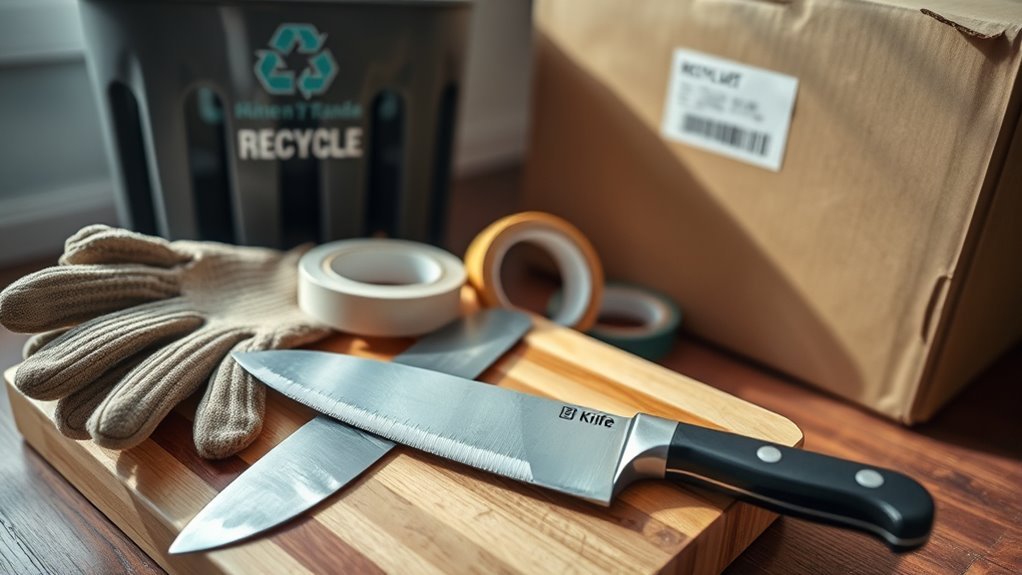
- Thick cardboard: Cut a piece to cover the blade, providing a firm barrier.
- Duct tape: Wrap over the blade and cardboard to keep everything in place.
- Bubble wrap: Offers cushioning, reducing the risk of accidental cuts during handling.
Securing Knife Blades
After choosing safe wrapping materials like cardboard and bubble wrap, the next step is securing the knife blades to prevent any accidents. You want to focus on knife safety by ensuring the blades are fully covered and immobilized.
Start by sliding a piece of thick cardboard or a blade guard over each blade for blade protection. Then, wrap the knife tightly with bubble wrap or thick paper to keep it from shifting.
Use strong tape to seal the wrapping securely, making sure no sharp edges are exposed. This careful packaging not only protects anyone handling the knives but also prevents damage to other items during disposal.
Taking these steps shows you’re committed to knife safety and responsible disposal.
How to Dispose of Kitchen Knives via Waste Collection
Properly disposing of kitchen knives through waste collection requires careful preparation to ensure safety for everyone handling the trash. It’s important to handle the blades responsibly before throwing them away.
Start by securely wrapping the blade to prevent any accidental cuts. Use sturdy materials like thick cardboard or bubble wrap and tape them tightly around the knife.
Next, place the wrapped knife inside a rigid container, such as a plastic bottle or a metal tin, to keep it secure. Label the container clearly as “sharp objects” to alert waste collectors about the contents.
Finally, check your local waste collection guidelines. Some areas allow knives in regular trash, while others require special disposal methods. Always follow the specific rules in your community.
How to Use Scrap Metal Services to Dispose of Kitchen Knives
Although kitchen knives are small, they contain valuable metals that scrap metal services gladly accept. Using these services is an eco-friendly way to dispose of your old knives while enjoying the benefits of recycling.
First, clean your knives and check your local scrap metal center’s guidelines. Then, drop off the knives at the designated location or schedule a pickup if available.
This method guarantees that the metal gets recycled properly, reducing waste and conserving resources.
Here’s why you should consider scrap metal services:
| Emotion | Reason |
|---|---|
| Satisfaction | Knowing you’re helping the planet |
| Responsibility | Proper disposal of hazardous items |
| Pride | Supporting recycling efforts |
| Relief | Avoiding landfill pollution |
| Empowerment | Contributing to a sustainable world |
Using scrap metal services turns your old kitchen knives into valuable resources, maximizing recycling benefits for a greener future.
Creative Ways to Repurpose Old Kitchen Knives
Recycling your old kitchen knives through scrap metal services is a responsible choice, but if you’re looking to get more creative, there are plenty of ways to give those blades a new purpose. Instead of tossing them out, you can transform your old knives into unique projects that add character to your space or help around the garden.
Here are some ideas to inspire you:
- Knife art: Use the blades to craft sculptures or wall hangings, turning sharp edges into striking designs.
- Garden tools: Repurpose sturdy knives into small digging tools or plant markers for your garden.
- Custom handles: Replace worn handles and turn knives into specialized tools for crafts or cooking.
What Not to Do When Disposing of Kitchen Knives
When disposing of kitchen knives, you shouldn’t just toss them in the trash without taking precautions. One common mistake is believing knife disposal myths, like thinking wrapping the blade in paper is enough to prevent injury. This can lead to accidents for waste workers or anyone handling your garbage.
Another thing to avoid is throwing knives loosely into recycling bins. Knives can damage equipment and pose safety risks. Don’t forget to use safe handling techniques—always wrap the blade securely in strong materials like cardboard or bubble wrap, and label the package clearly as “sharp objects.”
Avoid dropping knives in donation bins unless you confirm they accept blades. This could harm others. Finally, don’t ignore local disposal regulations. Some areas require knives to be taken to hazardous waste facilities. Following these guidelines guarantees you dispose of your old kitchen knives responsibly and safely.
Frequently Asked Questions
Can Kitchen Knives Be Disposed of in Regular Household Trash?
You shouldn’t toss kitchen knives in regular household trash because it can cause injuries to sanitation workers and anyone handling the waste.
To stay safe, wrap the blades securely in thick cardboard or use a blade guard before throwing them away.
You can also check your local disposal options—some areas have special programs or recycling centers that accept knives.
Taking these steps helps you get rid of your old knives safely and responsibly.
How Long Does It Take for Kitchen Knives to Decompose?
Imagine a knife buried deep in the earth, taking hundreds of years to fade away. Kitchen knives can take over 100 years to decompose because of their metal content.
Since composting won’t work for these, it’s better to look into recycling options. Many scrap metal facilities accept old knives, helping you avoid the long wait and environmental harm.
Are There Any Legal Restrictions on Disposing of Kitchen Knives?
Yes, knife disposal laws vary depending on where you live, so it’s a good idea to check your local regulations before throwing out old kitchen knives.
Many places require you to wrap the blades securely to prevent injuries during collection. This also emphasizes the importance of safe knife handling.
Some areas even have specific drop-off points or recycling programs for sharp objects.
Can Dull Knives Be Sharpened Instead of Disposed Of?
You know what they say: “A dull knife is more dangerous than a sharp one.” Instead of tossing dull knives, you can definitely sharpen them.
Good knife maintenance includes learning proper sharpening techniques, like using a whetstone or honing rod, to restore the blade’s edge. This not only saves money but also keeps your kitchen safer.
What Are the Environmental Impacts of Throwing Away Kitchen Knives?
Throwing away kitchen knives can harm the environment by adding metal waste to landfills, where they don’t break down easily.
Instead, you should investigate recycling options that let you repurpose the steel.
Choosing eco-friendly alternatives, like donating knives or turning them into art, reduces waste and conserves resources.
Conclusion
Disposing of old kitchen knives safely isn’t just about clearing out clutter. It’s about protecting yourself and others from hidden dangers.
By preparing, donating, recycling, or repurposing your knives thoughtfully, you’re turning potential hazards into something useful. Like transforming sharp blades into tools of care.
Remember, tossing them carelessly is like leaving shards of glass in a playground—dangerous and completely avoidable.
Handle your knives with the care they deserve, and keep safety sharp. Proper disposal of old kitchen knives is essential for a safer home for everyone.