How to Use a Mandoline Slicer Safely and Effectively
Using a mandoline slicer allows you to cut fruits and vegetables into even, precise slices quickly, which elevates your dishes and speeds up prep. To use one effectively, start by securely mounting the mandoline on a stable surface, adjust the blade thickness according to your recipe, and always use the food holder or guard to protect your fingers while slicing. A smooth back-and-forth motion ensures uniform cuts without applying excessive force.
Getting even slices not only improves presentation but also promotes consistent cooking by controlling thickness. However, mandoline slicers have razor-sharp blades that can cause injury if used carelessly. Being mindful of hand placement and using safety accessories provided with the tool are key to preventing accidents in the kitchen.
This guide covers the essential steps to safely use a mandoline slicer, including setup, blade adjustment, slicing techniques, cleaning tips, and maintenance. It’ll also compare different types of mandolines and explain how to choose the right one for your kitchen needs.
Setting Up Your Mandoline Slicer for Efficient Use
Stabilizing the Mandoline on Your Workspace
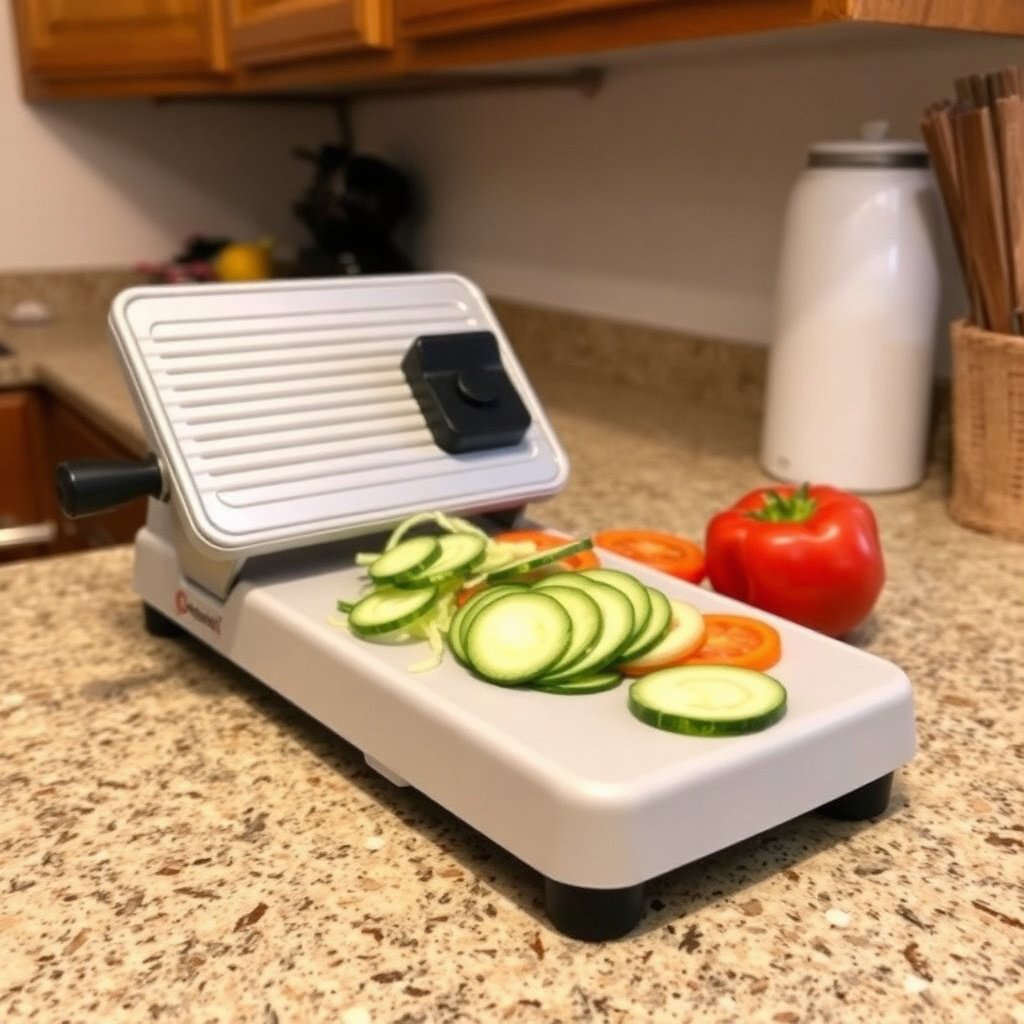
Place the mandoline slicer on a flat, sturdy countertop or cutting board to ensure it won’t slip during use. Many models come with non-slip feet or rubber grips that you should make sure are clean and intact. For models without these features, consider placing a damp cloth or silicone mat underneath for extra grip.
A stable setup prevents accidents by reducing unwanted movement. Avoid slicing over sinks or uneven surfaces, which can cause the mandoline or food to slip unexpectedly.
- Use a flat surface free from clutter
- Check non-slip feet before use
- Add a rubber mat for extra stability
Adjusting the Blade Thickness and Slice Type
Most mandoline slicers have adjustable blades or interchangeable inserts to control slice thickness and style, such as julienne or waffle cuts. Before slicing, choose the desired thickness by sliding the adjustment lever or swapping blades, testing on a small piece first.
Different foods require different thickness levels—for example, thin slices for chips or thicker cuts for gratins. Familiarizing yourself with your mandoline’s settings allows you to prepare your ingredients exactly as needed.
- Start with medium thickness settings
- Test slices before full batch
- Switch blades for different cut styles
Mastering Safe Mandoline Slicer Techniques
Using the Food Holder or Safety Guard
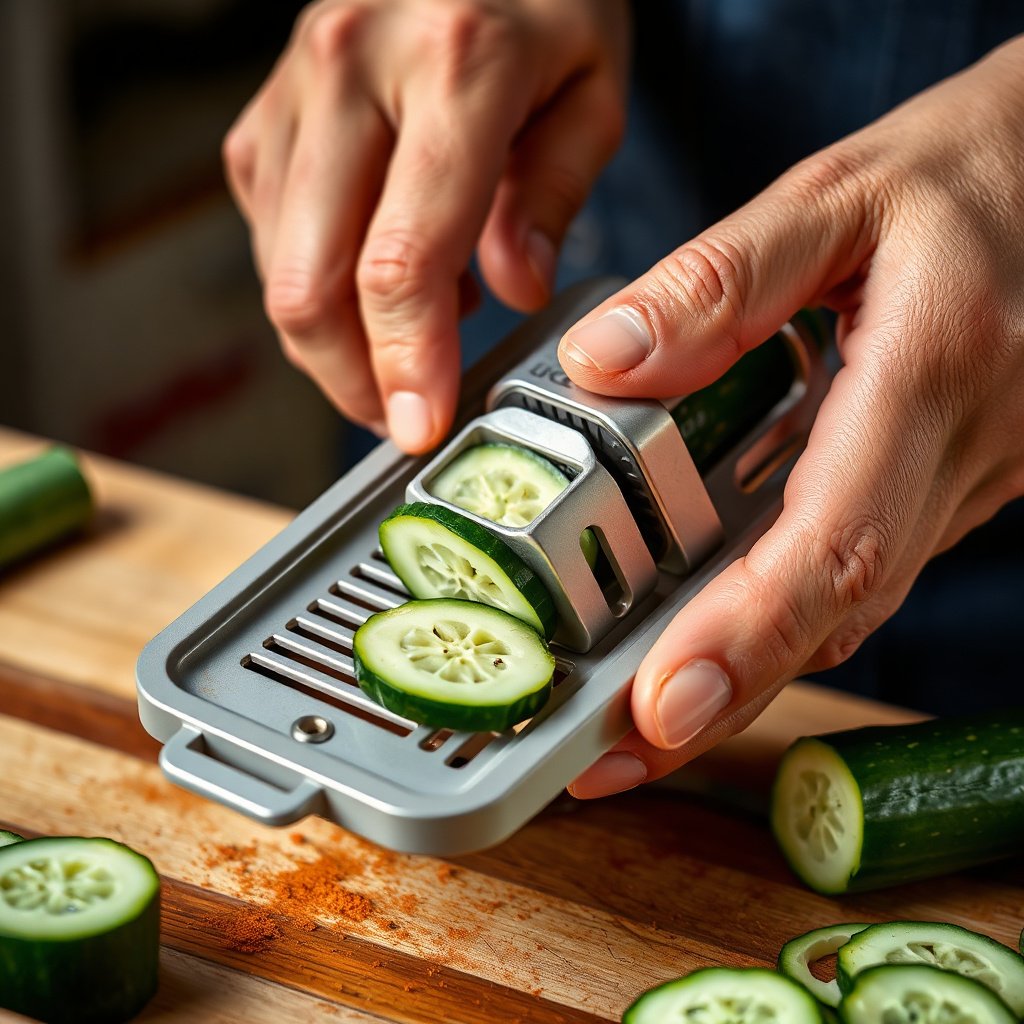
Always use the food holder included with your mandoline. It clamps down on your vegetable or fruit and keeps your fingers a safe distance from the blade during slicing. If yours lacks a guard, consider purchasing an aftermarket holder or thick gloves designed for slicing protection.
Never attempt slicing without a guard, even if you’re experienced. The blades are extremely sharp, and slips can cause serious cuts.
- Attach food holder firmly before slicing
- Hold guard securely to control food movement
- Avoid direct hand contact with blades
Techniques for Consistent, Even Slicing
Apply steady, gentle pressure as you slide the food across the blade in a smooth, back-and-forth motion. Avoid rushing or forcing the food through, which can cause uneven cuts or loss of control. Maintain the same slicing rhythm throughout for uniform pieces.
If slicing delicate items like tomatoes, slow your pace and consider partially freezing them beforehand to firm them up slightly, making cleaner cuts possible.
- Use smooth, controlled strokes
- Maintain even pressure during slicing
- Slow down on delicate produce
Cleaning and Maintaining Your Mandoline Slicer
Safe Cleaning Practices
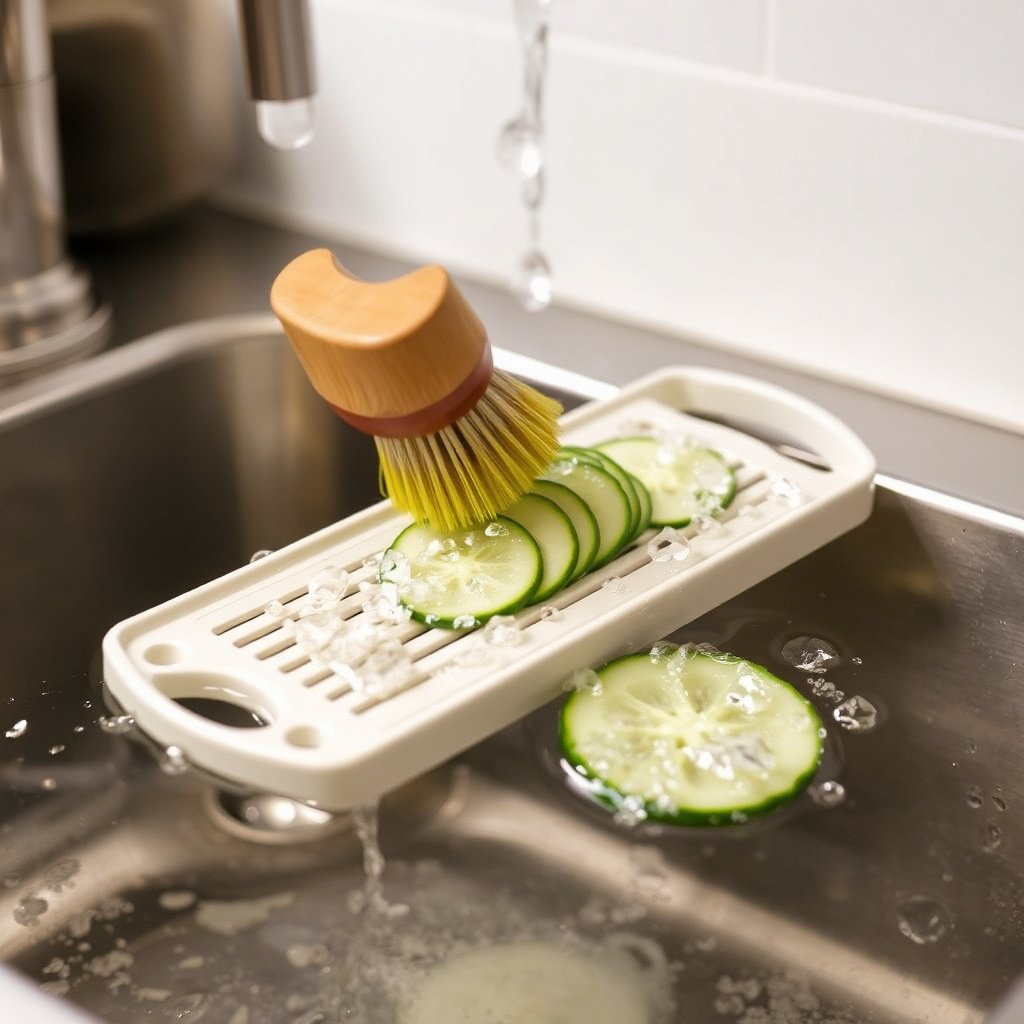
Remove the blade assembly carefully, avoiding direct contact with edges. Use a soft brush or sponge and warm, soapy water to clean all parts. Avoid soaking wooden handles or parts that could rust. Some mandolines are dishwasher-safe, but confirm with your model’s instructions to prevent damage.
Clean the mandoline immediately after use to prevent food residue from drying on the blade or body, which can increase cleaning difficulty.
- Disassemble blade before washing
- Use brush for blade cleaning
- Dry completely before reassembly
Maintaining Blade Sharpness and Overall Durability
Keep blades sharp by avoiding cutting foods with bones or very hard pits, which can dull edges. If your blade becomes dull, check if replacements are available for your model, as most professional-quality mandolines have replaceable blades.
Store your mandoline with blade covers if included, and keep it in a dry place to prevent corrosion and damage.
- Avoid slicing bones or hard seeds
- Replace blades when dull
- Store with blade guard on
Comparing Different Mandoline Slicer Types and Features
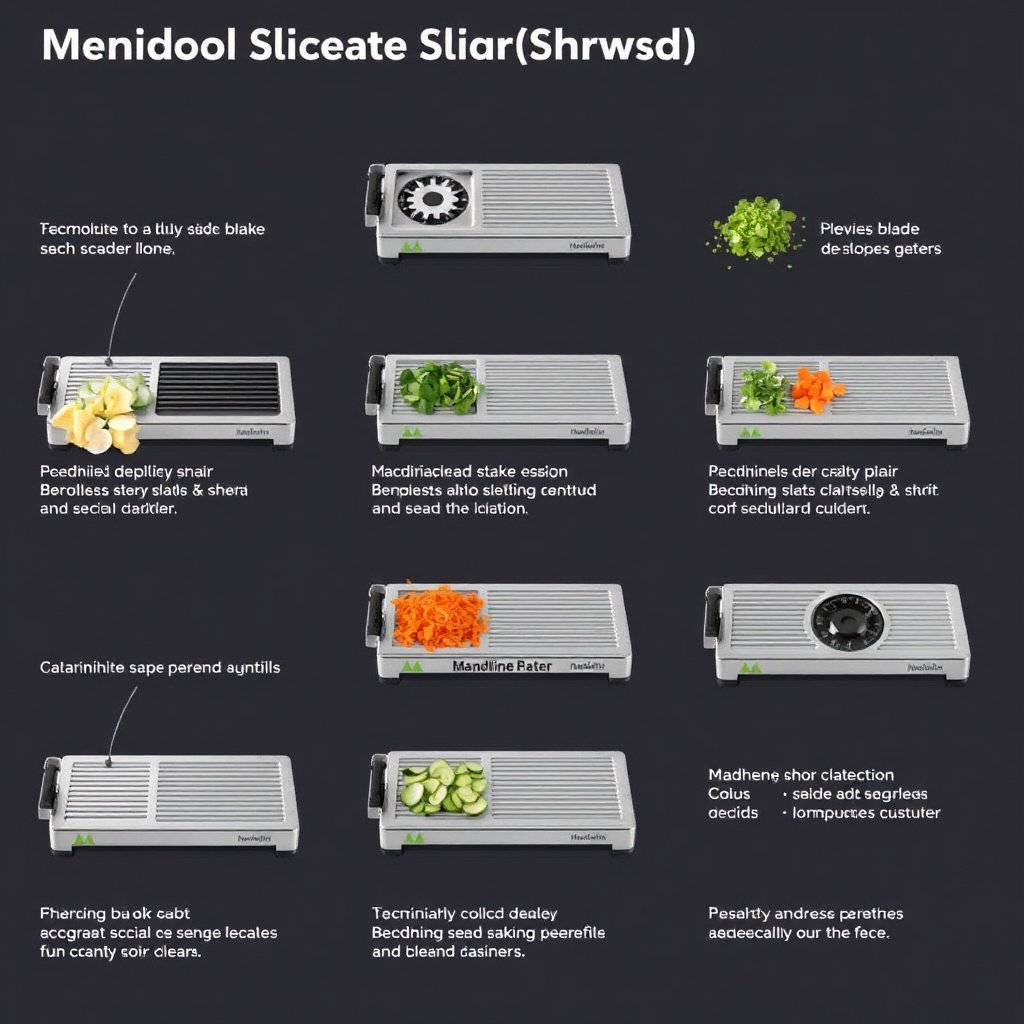
Flat Mandoline vs. V-shaped Blade Models
Flat mandoline slicers have a straight blade edge and are often easier to clean, suited for general slicing tasks. V-shaped blades offer cleaner, more precise cuts and are better at handling tougher vegetables but can be more sensitive to blade dullness.
Your choice depends on how often you’ll use the slicer and the texture of foods you prepare most frequently.
- Flat style: easy to maintain and use
- V-shaped: sharper, more aggressive slicing
- Consider food types when choosing blade style
Manual vs. Electric Mandoline Slicers
Manual mandolines require physical effort but are lightweight, affordable, and easy to store. Electric versions automate slicing with motorized blades and offer adjustable settings for speed and thickness, ideal for high-volume preparation.
While electric models increase efficiency, they occupy more space and require more cleaning care, so manual slicers remain popular for home cooks.
- Manual: portable and budget-friendly
- Electric: faster and less labor-intensive
- Balance convenience against kitchen space
Advanced Tips for Using a Mandoline Slicer Like a Pro
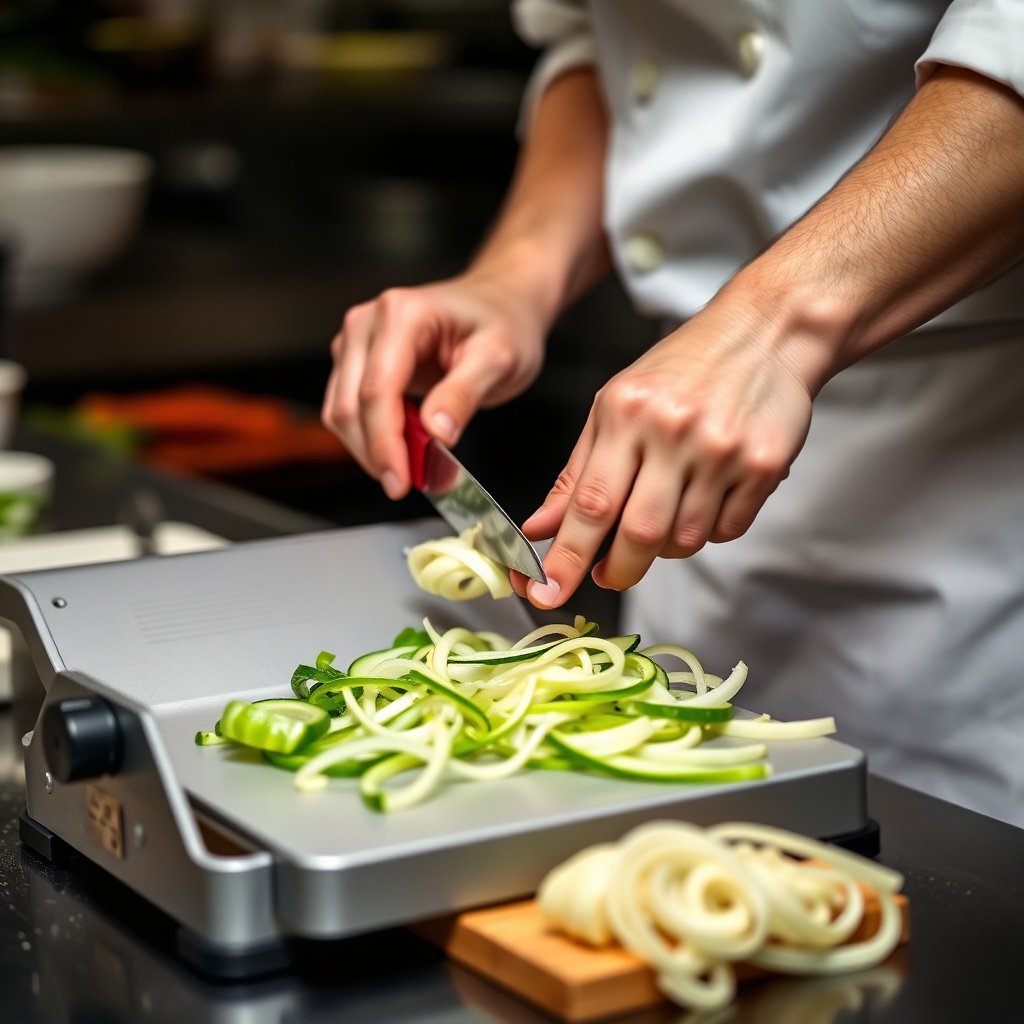
Perfecting Julienne and Crinkle Cuts
To create consistent julienne cuts, use the fine julienne blade setting and feed the vegetable evenly through the slicer. Practice with firmer produce like carrots to develop smooth, straight cuts. Crinkle cuts require a wavy blade attachment, perfect for decorative fries or garnishes.
Mastering these cuts enhances the visual appeal of your dishes without extra effort.
- Use firm produce for julienne practice
- Apply steady feed for clean crinkle cuts
- Select correct blade attachments
For detailed safety practices when using kitchen equipment such as mandoline slicers, refer to these mandoline slicer safety guidelines. mandoline slicer safety guidelines.
Using a Mandoline for Specialized Recipes
Certain recipes benefit from ultra-thin slicing, such as potato chips, carpaccio, or gratins. Adjust your mandoline to its thinnest setting and slice with caution. For layered salads or pickles, consistent slice thickness ensures balanced texture and flavor distribution.
Experimenting with different blades and thicknesses helps customize results for diverse culinary needs.
- Set blade to thinnest setting for delicate slices
- Keep slices uniform for recipe consistency
- Test small batches before full prep
Mandoline Slicer Types and Features Comparison
This table compares popular mandoline slicer categories based on blade style, ease of use, cleaning, and price range for informed decision-making.
| Type | Blade Style | Ease of Use | Cleaning Effort | Price Range |
|---|---|---|---|---|
| Flat Manual | Straight | Easy | Easy | $20-$50 |
| V-shaped Manual | V-shaped | Moderate | Moderate | $30-$70 |
| Electric | Various, motorized | Very Easy | Challenging | $100-$250 |
| Compact Travel | Straight | Easy | Easy | $15-$30 |
| Professional Chef-Grade | V-shaped, replaceable blades | Moderate | Moderate | $80-$150 |
Frequently Asked Questions
Can I slice soft fruits like tomatoes with a mandoline?
Yes, but use a sharp blade and a slow, steady motion. Partial chilling of the fruit can help achieve cleaner slices and reduce squishing during slicing.
Is it safe to use a mandoline without the food guard?
No. Operating a mandoline without a food guard greatly increases risk of severe cuts and injuries. Always use the safety holder or protective gloves.
How do I maintain blade sharpness on a mandoline slicer?
Avoid cutting hard or frozen items, clean blades gently without abrasive materials, and replace blades if they become dull. Storing with blade covers also helps maintain sharpness.
Are electric mandoline slicers worth the extra cost?
Electric mandolines save time and reduce hand fatigue, making them valuable for large cooking tasks but can be bulky and require more maintenance compared to manual ones.
What types of vegetables are best suited for mandoline slicing?
Firm vegetables like potatoes, carrots, cucumbers, and onions work best. Softer produce requires care to avoid crushing, but is manageable with proper technique.
Key Takeaways
- Always use the food holder to protect your fingers while slicing.
- Adjust blade thickness according to the recipe for consistent results.
- Clean and maintain blades carefully to prolong slicer life.
- Choose a mandoline type that fits your usage frequency and kitchen space.
Conclusion
Using a mandoline slicer effectively combines speed, precision, and safety when preparing fruits and vegetables. By stabilizing the tool and adjusting blade thickness prior to use, you control slice consistency and reduce injury risk. Proper hand placement behind safety guards and steady slicing motions improve outcomes and protect you from blade hazards.
Selecting the right mandoline involves considering blade style and power source. Flat manual models suffice for occasional tasks and ease of cleaning, while V-shaped and professional-grade versions provide sharper cuts for frequent users. Electric mandolines excel in commercial or extensive home use, though they demand more storage and maintenance effort.
Practice with firm foods like carrots or potatoes when starting out and incorporate mandoline slicers gradually into your kitchen routine. Prioritize safety accessories and cleaning after every use. This approach transforms your prep process, making precise slicing effortless and enhancing your cooking experience.