How Much Are Kitchen Cabinets? The Complete Answer
Feeling overwhelmed trying to figure out how much kitchen cabinets will cost? You’re not alone—many people struggle with budgeting for a kitchen remodel. The good news is, understanding the factors that influence prices can help you make smarter choices.
Kitchen cabinets typically cost between $3,000 and $7,000 for a standard kitchen, but your final price depends on materials, style, and customization. Stock cabinets start affordable, while semi-custom and custom options increase with design complexity.
Installation labor and hardware also add to the total. Choosing durable materials and quality craftsmanship boosts longevity and value.
If you want to understand how size, layout, and finishes influence costs—and uncover smart budgeting tips—you’ll find plenty to reflect on ahead.
Key Takeaways
- Kitchen cabinet costs typically range from $3,000 to $7,000, depending on the type—whether stock, semi-custom, or custom cabinets.
- The materials you choose, like solid wood, MDF, plywood, or reclaimed wood, can greatly impact both the price and how long the cabinets last.
- Simpler styles tend to be more affordable, while intricate designs and luxury finishes will drive up the cost.
- Installation labor usually costs between $50 and $200 per hour, depending on how complex the job is and where you’re located.
- Be sure to budget for hardware and accessories too, and think about quality to avoid unexpected costs and ensure your cabinets last.
How Much Do Kitchen Cabinets Cost on Average?
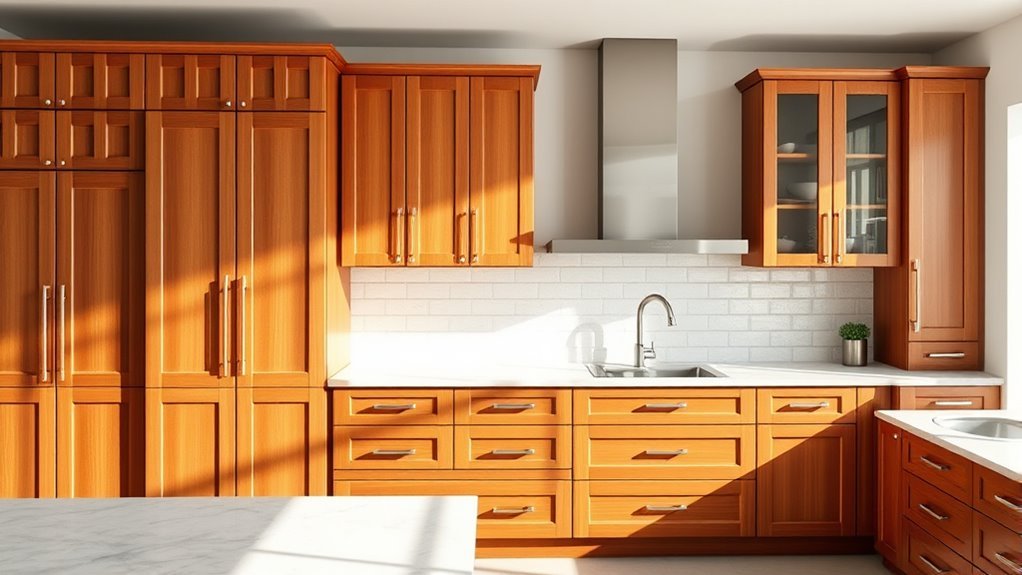
Wondering how much kitchen cabinets typically cost? Pricing varies widely depending on style, size, and quality.
On average, you can expect to spend between $3,000 and $7,000 for a standard kitchen. If you’re on a tight budget, options like stock cabinets or ready-to-assemble units can save you money, often ranging from $60 to $200 per linear foot.
These choices offer decent durability and style without breaking the bank. Mid-range cabinets, such as semi-custom models, usually cost between $150 and $300 per linear foot, balancing quality and affordability.
Custom cabinets are stunning and tailored but tend to start at $500 per linear foot and go up from there. Knowing these tiers helps you plan your kitchen remodel better, so you can pick cabinets that match both your style and your wallet.
Materials That Affect Kitchen Cabinet Prices
When choosing kitchen cabinets, the material you pick really impacts the total cost. You want to find a good balance between durability and eco-friendliness to fit your budget and lifestyle.
Some materials last a long time but can be pricier, while others focus on being environmentally friendly without sacrificing quality.
Here’s a quick look at how different materials affect prices and performance:
| Material | Price Range |
|---|---|
| Solid Wood | $$$ – High |
| MDF | $ – Budget-Friendly |
| Plywood | $$ – Mid-Range |
| Reclaimed Wood | $$ – Sustainable |
Solid wood cabinets are tough and durable but tend to cost more. MDF is more affordable but less durable. Plywood offers a good middle ground between price and strength. Reclaimed wood appeals to eco-conscious buyers but can vary in price.
Knowing your options helps you make a smarter choice for your kitchen cabinets.
How Kitchen Cabinet Styles Affect Prices
When you’re picking out kitchen cabinet styles, you’ll quickly realize that the material makes a big difference in the price. For example, cabinets made from high-end woods or specialty materials tend to cost more.
And it’s not just the material—design complexity also matters. Cabinets with lots of intricate details or decorative elements usually come with a higher price tag, while simpler, more streamlined styles tend to be more budget-friendly. Plus, the kind of finish you choose and how much detailing there is can really add to the overall cost. So, it’s worth considering these factors as you plan your kitchen makeover!
Material Impact On Cost
Although cabinet styles often catch your eye first, the materials used play an essential role in determining their price. When choosing kitchen cabinets, consider material durability, since stronger materials like hardwood cost more but last longer.
Maintenance requirements also affect cost—materials needing frequent upkeep can add expense over time. The aesthetic appeal depends on color options and texture variety, which influence your kitchen’s overall look.
Environmental impact and material sourcing matter too. Sustainably sourced materials might come at a premium but support eco-friendly choices. Weight considerations affect installation costs because heavier materials can require more labor.
Balancing these factors helps you pick cabinets that fit your budget and style, ensuring you get value without sacrificing quality or design.
Design Complexity Variations
Material choices set the foundation for your kitchen cabinets, but the style you choose also greatly impacts the final cost.
Design trends and cabinet layouts influence how complex—and expensive—your cabinets become. Here’s how style affects pricing:
- Simple Shaker or Flat-Panel Styles. These popular designs offer clean lines and straightforward layouts, which helps keep costs lower because they’re simpler to build.
- Raised Panel or Decorative Molding. Adding dimension with raised panels or moldings means more labor and materials, which pushes the price up.
- Custom and Intricate Designs. Unique layouts with glass inserts, carvings, or unusual shapes require more craftsmanship, making them much more expensive.
Finish And Detailing
Three key finish options—paint, stain, and glaze—can dramatically change the look and price of your kitchen cabinets. Painted cabinets offer a smooth, versatile finish and tend to be more affordable. Stained wood highlights natural grain but usually costs more.
Glazing adds depth and a vintage touch but increases the labor involved. Beyond finishes, detailing techniques like beadboard panels, raised molding, or intricate carvings add character but also raise costs due to extra craftsmanship.
Simple slab doors keep prices low, whereas ornate detailing demands skilled labor and time, driving prices up. When choosing your cabinets, consider how finish options and detailing techniques align with your budget and style. These choices directly impact both the aesthetic and final price of your kitchen cabinets.
Stock, Semi-Custom & Custom Cabinet Costs Compared
When choosing kitchen cabinets, understanding the cost differences between stock, semi-custom, and custom options can help you make the best decision for your budget and style.
Stock Cabinets come pre-made in standard sizes and finishes, often including eco-friendly options. They’re the most affordable, but you’ll have limited choices for luxury finishes or unique designs.
Semi-Custom Cabinets offer a balance — you can tweak sizes, styles, and finishes. You can often choose luxury finishes here, giving you more customization while keeping costs moderate.
Custom Cabinets are designed exactly to your specifications. They provide the highest level of personalization and access to premium materials and finishes. They’re ideal if you want unique designs or eco-friendly options but come with a higher price tag.
Knowing these differences helps you pick cabinets that fit your kitchen’s look without breaking your budget.
How Cabinet Size and Layout Affect Costs
Choosing between stock, semi-custom, and custom cabinets is just part of the cost equation. The size of your cabinets also plays a big role. Larger cabinets need more materials and labor, which increases the price. If you go for oversized or oddly shaped cabinets, expect costs to go up even more.
Layout optimization also impacts how much you’ll pay. A well-planned layout reduces wasted space and materials, helping to keep costs down. On the flip side, complex layouts with lots of corners, islands, or built-ins require more detailed craftsmanship and extra cabinet pieces, raising expenses.
When planning your kitchen, try to balance cabinet size with smart layout choices. This way, you get the storage you need without overspending. Using space efficiently can save you money on both materials and labor, making your remodel more budget-friendly overall.
Kitchen Cabinet Installation Costs
Installing kitchen cabinets involves more than just placing them on the walls. It requires skill and precision to make sure they fit perfectly and work well.
Installing kitchen cabinets demands skill and precision for a perfect fit and functionality.
When considering kitchen cabinet installation costs, you’ll want to factor in labor costs and the complexity of the techniques used.
Here are three key points to keep in mind:
- Labor Costs Vary: Depending on your location and the installer’s experience, labor costs can range from $50 to $200 per hour. More experienced professionals may charge more but can ensure better accuracy.
- Installation Techniques Impact Price: Custom installations, like those with intricate molding or uneven walls, need advanced techniques and often increase labor costs.
- Time and Preparation Matter: Proper wall preparation and cabinet alignment take time, which influences the overall installation expenses.
Budgeting for Hardware and Accessories
When you’re budgeting for your cabinets, don’t forget to think about the hardware, like knobs and pulls. These little details can really make a difference in the look and feel of your space, so it’s good to plan for them early on.
And then there are accessories—things like organizers and lighting—that can really enhance your cabinets but can also add to the overall cost. It’s a smart idea to include these in your budget from the start.
Planning ahead like this helps you avoid any surprises along the way and keeps your project on track financially.
Types of Cabinet Hardware
Several types of cabinet hardware can dramatically change the look and function of your kitchen cabinets. When choosing, think about how cabinet knob styles and drawer pull options affect both aesthetics and usability. You’ll want hardware that matches your style but also offers durable materials and ergonomic designs for everyday comfort.
- Cabinet Knobs and Drawer Pulls: Explore finish choices and current trends to match your kitchen’s vibe, all while ensuring easy grip and functionality.
- Hinge Types: Select hinges that provide smooth operation and durability, which are essential for frequent use and long-lasting performance.
- Material and Finish: From brushed nickel to matte black, the material affects maintenance and wear, while the finish helps set the overall tone of your kitchen’s design.
Accessory Cost Considerations
Choosing the right hardware sets the tone for your kitchen’s look and feel, but it also impacts your budget more than you might expect. When you’re budgeting for kitchen cabinets, don’t forget to factor in accessory costs like knobs, pulls, hinges, and organizers.
Accessory trends can influence prices. Sleek matte finishes or vintage brass may come at a premium compared to standard options. Keep an eye on these trends to find a style you love without overspending.
Effective budget planning means balancing quality and style while considering how many pieces you’ll need. Remember, hardware isn’t just decorative; it affects functionality, so invest wisely.
Budgeting Tips for Extras
Budgeting for hardware and accessories can make or break your kitchen cabinet project. You need to prioritize your budgeting priorities carefully to avoid unexpected expenses that can inflate costs. Here are three tips to keep your extras in check:
- Set a clear budget for knobs, pulls, hinges, and organizers upfront. Knowing your limits helps you avoid overspending.
- Choose versatile hardware that works with multiple cabinet styles, so you don’t need to splurge on custom pieces.
- Plan for installation costs and small accessories like shelf liners or lighting. These often get overlooked but can add up quickly.
When It’s Worth Spending More on Kitchen Cabinets
Although it’s tempting to cut costs, investing more in kitchen cabinets can pay off in durability, style, and functionality. When deciding between quality versus price, keep in mind that higher-quality cabinets often use better materials and construction techniques.
This makes them more resistant to wear and damage. So, you won’t need to replace or repair them as often, saving you money and hassle over time.
Think of your cabinets as a long-term investment—they support your kitchen’s overall look and usability. Spending more upfront can boost your home’s value, especially if you plan to sell.
Cabinets are a long-term investment that enhance your kitchen’s style and increase your home’s resale value.
You’ll also enjoy smoother operation and better storage solutions that cheaper cabinets might lack. So, if you want cabinets that stand the test of time and boost your kitchen’s appeal, it’s worth prioritizing quality over initial price.
This way, you’ll get lasting satisfaction from your investment.
Saving Money Without Sacrificing Style or Function
If you want to save money without giving up style or function, there are smart ways to get the kitchen cabinets you desire. You don’t have to settle for less when budget-friendly options and practical solutions exist.
Here’s how to achieve chic cabinetry with trendy styles and functional designs without breaking the bank:
- Choose cost-effective materials like plywood or MDF, which are durable and have finishes that mimic pricier wood grains.
- Investigate stylish alternatives such as open shelving or partial cabinetry to cut costs while keeping a modern look.
- Opt for simple door styles with sleek hardware. Minimalist designs often look great and are more affordable.
Hire a Pro or DIY Your Kitchen Cabinets?
Finding cost-effective materials and designs is just one piece of the puzzle when updating your kitchen cabinets. You also have to decide whether to hire a pro or tackle the project yourself.
Professional installation guarantees precise measurements, expert fitting, and a polished finish. It can save you time and help avoid costly mistakes, but it does come with higher upfront costs.
On the other hand, DIY has its perks. You can save money on labor and enjoy the satisfaction of completing the project yourself.
If you have basic carpentry skills and the right tools, DIY can be a rewarding way to customize your kitchen on a budget. But keep in mind, mistakes can lead to expensive fixes or replacements.
Ultimately, consider your comfort level, time availability, and budget. If you want a hassle-free experience and perfect results, hiring a professional is your best bet.
If you enjoy hands-on projects and want to cut costs, DIY might be the way to go.
Frequently Asked Questions
How Do I Maintain and Clean Kitchen Cabinets Properly?
To keep your kitchen cabinets looking great, wipe them regularly with a soft cloth and mild soap. This helps prevent buildup and keeps them clean.
When it comes to cleaning, steer clear of harsh chemicals that could damage the finish. Instead, use a mixture of warm water and vinegar for a natural shine.
For maintenance, check hinges and handles to make sure they’re tight. Also, wipe up spills right away to avoid stains and damage.
Doing these simple steps will help your cabinets stay fresh and last longer.
What Are the Best Finishes for Kitchen Cabinets?
The best finishes for kitchen cabinets really depend on your style and how durable you need them to be.
You might want to consider paint options like semi-gloss or satin because they give you a smooth, easy-to-clean surface.
If you prefer a natural look, stains are a great choice—they highlight the wood grain while also offering protection.
Both finishes can stand up to moisture and wear, especially if you apply them properly.
Think about your kitchen’s lighting and overall design to choose the finish that suits you best.
How Long Do Kitchen Cabinets Typically Last?
Kitchen cabinets typically last 20 to 50 years, depending on factors like materials and maintenance.
If you choose solid wood or high-quality plywood, your cabinets will hold up better over time.
Particleboard or MDF might wear out faster, so keep that in mind.
Daily use, humidity, and cleaning habits also play a role in their longevity.
With proper care, your cabinets can serve you well for decades.
Can Kitchen Cabinets Be Refinished Instead of Replaced?
Absolutely, you can choose cabinet refinishing instead of replacement! Refinishing techniques like sanding, staining, or painting can give your kitchen a whole new look.
This smart move saves you a lot of money compared to tearing out and replacing all your cabinets. When you compare costs, refinishing usually costs just a fraction of what new cabinets would.
Are Eco-Friendly Kitchen Cabinets More Expensive?
Yes, eco-friendly kitchen cabinets usually cost more upfront because they use sustainable materials like bamboo or reclaimed wood, which can be pricier.
However, when you compare costs, you’ll see that their durability and lower environmental impact often make them a smarter long-term investment.
Plus, choosing sustainable options helps reduce your carbon footprint, so you’re not just paying more—you’re contributing to a healthier planet.
Conclusion
In terms of kitchen cabinets, you hold the key to balancing style, function, and budget. Whether you choose stock, semi-custom, or custom options, every decision shapes your kitchen’s heart.
Remember, spending wisely now can save you headaches later, but don’t be afraid to get creative and save where you can. Your dream kitchen is within reach—just like a chef perfecting a recipe, mix the right ingredients for a space that truly feels like home.
When it comes to kitchen cabinets, understanding the costs helps you make smarter choices. Whether you want affordable stock cabinets or high-end custom ones, knowing your options makes all the difference.
So, take your time, explore your options, and find the perfect balance between style, function, and budget. The right kitchen cabinets can turn your space into the heart of your home.