What Size Is a Standard Washer and Dryer? The Complete Answer
Finding the right size washer and dryer for your home can be a real headache. Many people struggle with figuring out what will fit without cramping their space or feeling too bulky.
You’re not alone—navigating these dimensions can be tricky, especially with so many options out there.
A standard washer and dryer typically measure about 27 inches wide, with washers standing 38 to 43 inches tall and dryers matching those dimensions to fit side-by-side or stacked.
Compact models come in around 24 inches wide and are great for smaller spaces.
Depth usually ranges between 30 to 34 inches, so make sure to measure your area carefully.
Your choice depends on space and laundry needs, and there’s more to consider when finding the perfect fit for your home.
Key Takeaways
- Standard washers and dryers are usually 27 inches wide, with heights ranging from 38 to 43 inches, and depths of about 30 to 34 inches.
- Front-load washers tend to be taller but still fit within these standard dimensions, making it easy to stack or place them side by side.
- Compact washer and dryer units are around 24 inches wide, making them a good choice for smaller spaces and lighter laundry loads.
- Full-size dryers typically have a capacity of 5.0 cubic feet or more, which helps with drying larger loads efficiently.
- When installing, leave 1 to 3 inches of space around the units for proper ventilation, hookups, and easy maintenance.
What Are Standard Washer and Dryer Dimensions?
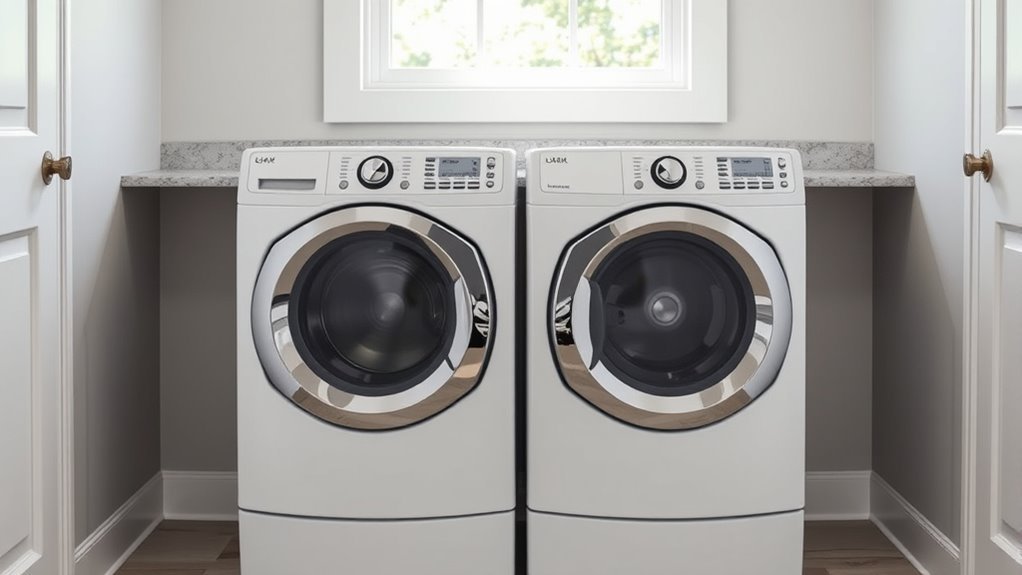
A standard washer and dryer usually measure about 27 inches wide, 38 to 43 inches tall, and 30 to 34 inches deep. Knowing these dimensions helps you plan your laundry space effectively.
Washer types like top-load or front-load generally fit within these size ranges. Front-load models tend to be a bit taller, but they still stay within standard dimensions.
Dryers also have slight variations due to features like steam cycles or larger capacities. Most dryers keep a width around 27 inches to match washers for stacking or side-by-side setups.
Depth can vary depending on venting options and control panel design. Keeping these standard sizes in mind makes sure your laundry area is functional and free of installation issues.
How Do Compact and Full-Size Washers and Dryers Differ?
You’ll see that compact washers and dryers are smaller and take up less space than their full-size counterparts. They’re perfect if you’re working with a tight spot or want something more flexible to fit into your home easily.
On the other hand, full-size washers and dryers have larger capacities, so they can handle bigger loads and are generally more suitable for households with more laundry. Knowing these differences can help you pick the right one for your space and your laundry needs.
Dimensions and Capacity
Though compact washers and dryers save space, they differ significantly from full-size models in both dimensions and capacity. Compact washer dimensions are usually around 24 inches wide, while full-size units are typically 27 inches. This smaller size makes them perfect for tight spots but limits how much laundry you can wash at once.
Similarly, compact dryers usually have a capacity of about 3.5 to 4.0 cubic feet. In contrast, full-size dryers offer 5.0 cubic feet or more, which allows you to dry larger loads more efficiently. When choosing between them, think about how much laundry you do regularly.
If you tend to wash small loads often, compact models might be enough. But for bigger families or heavy laundry days, full-size units will better meet your needs.
Installation and Space Needs
When installing washers and dryers, space requirements can vary a lot between compact and full-size models. Compact units are great for tighter spots, making them perfect for small apartments or unusual laundry areas.
They often stack vertically to save floor space and make appliances easier to access in cramped spaces. Full-size washers and dryers need more room, not just for the units but also for door clearance and ventilation.
Be sure your laundry area can comfortably fit these dimensions to avoid cramped or awkward setups. Planning for easy access helps with loading, unloading, and maintenance.
Whether you go for compact or full-size, measuring your space carefully and thinking about your laundry routine will help you pick a model that fits your home and lifestyle.
What Size Options Are Available for Stackable Washer and Dryer Units?
Stackable washer and dryer units come in a variety of sizes designed to fit different spaces and laundry needs. You’ll find compact models typically around 24 inches wide, perfect if space efficiency is your priority. These smaller units offer the stackable benefits of saving floor space while still handling everyday laundry loads.
Mid-size options, usually about 27 inches wide, provide a balance between capacity and space efficiency. They’re a popular choice for many homes. Some larger units, closer to 29 inches wide, give you more washing and drying power but may require a bit more room.
Mid-size stackable washers and dryers, around 27 inches wide, balance capacity and space efficiency for many homes.
When choosing, consider the unit’s height and depth as well. These dimensions impact how well the stack fits in your laundry area. Ultimately, stackable washer and dryer sizes vary to accommodate different setups.
This way, you can enjoy the stackable benefits without sacrificing functionality or space efficiency.
Which Washer and Dryer Sizes Work Best for Small Laundry Rooms?
Choosing the right washer and dryer size can make a big difference in a small laundry room. When space is limited, going for compact units can boost laundry efficiency without sacrificing performance. Here’s what works best for you:
- Compact Front-Load Washers and Dryers. These units save floor space and often stack, freeing up room for other needs. They handle typical loads efficiently, making them perfect for smaller households.
- Stackable Washer and Dryer Sets. By placing the dryer above the washer, you maximize vertical space. This helps your laundry area feel less cramped and more organized.
- Slim Profile Models. Narrow washers and dryers, usually around 24 inches wide, fit into tight spaces. They still provide solid cleaning power, making them a great choice for small rooms.
Choosing these sizes guarantees you maintain laundry efficiency while fitting your appliances comfortably. Compact units let you make the most of your small laundry room without sacrificing functionality or convenience.
How to Measure Your Laundry Area for a New Washer and Dryer
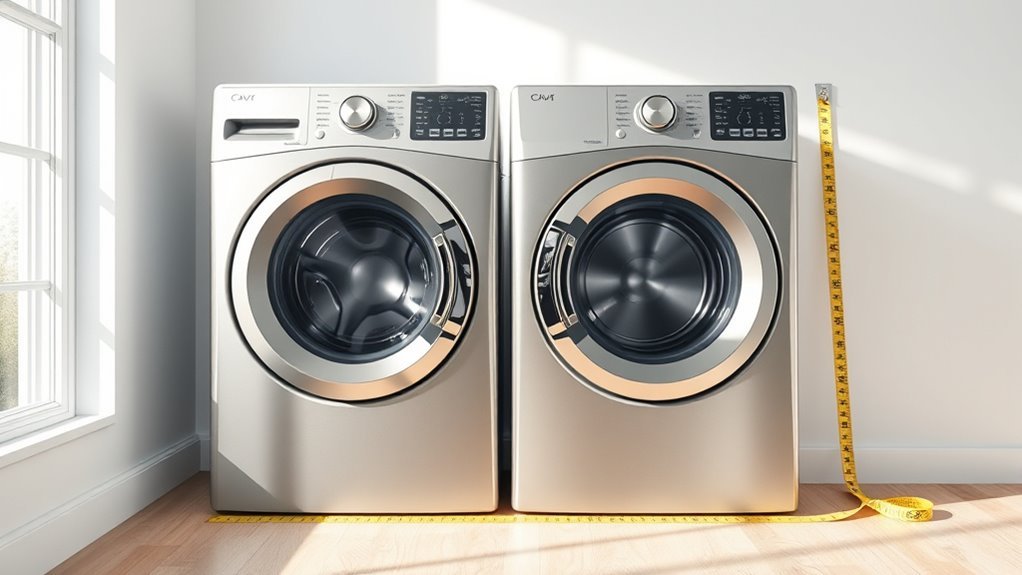
Measuring your laundry area accurately is the first step to finding a washer and dryer that fit perfectly. Start by noting the width, depth, and height of the space. Don’t forget to include extra space for ventilation, hookups, and easy access.
Use a tape measure and carefully write down each measurement. It’s helpful to stay organized with your data.
Here’s a simple way to keep track of your measurements:
| Measurement Type | Typical Range (inches) | Notes |
|---|---|---|
| Width | 24 – 30 | Measure between walls or cabinets |
| Depth | 24 – 34 | Consider door swing and hoses |
| Height | 36 – 43 | Check for overhead cabinets |
| Appliance Clearance | 1 – 3 | Leave space for ventilation and hookups |
| Total Space Required | Sum of above | Make sure there’s enough room to move freely |
How Much Space Do You Need for Doors and Vents?
You’ll need at least 2 to 3 inches of extra space around your washer and dryer doors to make sure they open fully without hitting anything. Having enough door clearance is key to avoiding damage and making loading and unloading easier.
Besides door space, vent placement is also important. Make sure vents aren’t blocked and leave enough room behind the dryer for vent hoses and airflow.
Finally, give yourself at least 6 inches behind appliances for vent connections and easy maintenance access.
How Washer and Dryer Capacity Affects Size and Performance
Allowing enough space for doors and vents helps you choose the right washer and dryer capacity. The capacity impacts the size of your appliances—larger models take up more room but let you wash or dry bigger loads at once, saving time.
Performance factors like cycle length, water use, and energy efficiency are often linked to capacity. If you go for a smaller capacity, you’ll probably run more cycles, which could use more water and electricity.
On the other hand, larger capacity washers and dryers handle bulky items better and help prevent fabric wear by avoiding overcrowding. Keep in mind that capacity also affects the physical size of the units.
Balancing space and performance needs is key. Knowing how capacity influences size and performance helps you pick appliances that fit your laundry routine without sacrificing efficiency or convenience.
How to Choose the Right Washer and Dryer Size for Your Household
How do you figure out the best washer and dryer size for your household? It all starts by looking at your family size and laundry routines to find a set that fits your needs without wasting space or energy.
Think about these three main points:
- Assess Family Size: Bigger families usually need washers and dryers with larger capacities so they can handle more and bigger loads easily. Smaller households can go for compact models to save space.
- Evaluate Laundry Habits: If you wash bulky items like bedding often or prefer doing laundry less frequently, go for larger machines. For lighter loads done more often, smaller units are usually enough.
- Balance Space and Capacity: Make sure the appliances fit comfortably in your laundry area. Oversized units in tight spaces can be tricky to install and use.
What Installation Challenges Affect Washer and Dryer Size?
When you’re picking out a washer and dryer, it’s important to think about the space you have available. You want to make sure they fit comfortably without feeling cramped.
Ventilation can also be a bit tricky, especially if you’re working with a smaller or enclosed area. Some models need better airflow, which can limit your choices.
And don’t forget about access! Easy access to plumbing and electrical connections is a big deal. If those connections are hard to reach, it can really affect what size appliances you can install.
Space Constraints
Space constraints can limit your options for washer and dryer sizes pretty quickly. When your laundry area is small, you need to plan your layout carefully to make the most of the space without making it feel cramped.
Here are three common space issues that can influence your choices:
- Narrow doorways or hallways. Make sure to measure entry points so appliances can be delivered easily.
- Closet or alcove dimensions. Check the width, depth, and height to avoid buying units that won’t fit or block doors.
- Limited floor space. If room is tight, consider stackable or compact models to maximize what you have.
Ventilation Requirements
Proper ventilation plays an essential role in determining the size and placement of your washer and dryer. Different ventilation types, such as vented and ventless dryers, affect your installation options and space needs. Vented dryers require an exhaust duct, so you need enough clearance to install the vent system properly.
On the other hand, ventless models offer more flexibility since they don’t need external ducts but may be bulkier. When planning your laundry area, consider installation tips like measuring for adequate airflow and making sure vents aren’t blocked.
Keep in mind that improper ventilation can cause moisture buildup and reduce appliance efficiency. Paying attention to these ventilation requirements will help you choose the right size and avoid future issues.
Plumbing and Electrical Access
Although ventilation is important, plumbing and electrical access are just as crucial when deciding on the size and placement of your washer and dryer.
When planning your laundry space, consider these installation challenges:
- Pipe installation – Make sure your water supply and drainage pipes can handle the washer’s size and location without needing major modifications.
- Electrical requirements – Ensure your outlets support the voltage and amperage your dryer needs, especially if you’re using an electric model.
- Space for connections – Leave enough room behind the units for secure hookups, so maintenance or future replacements aren’t a hassle.
Planning Future Upgrades When Choosing Washer and Dryer Size
When you’re choosing the size of your washer and dryer, thinking about future upgrades can save you time and money. You want to consider options like switching to larger capacity machines or more energy-efficient models down the line.
Picking a size that offers future flexibility means you won’t have to redo plumbing or electrical work if you decide to upgrade later. Also, make sure your laundry space can handle bigger units if needed, including door clearance and ventilation.
By planning ahead, you avoid costly modifications and enjoy a smoother change when you replace your appliances. Remember, your needs may change—growing family size or lifestyle shifts can demand different washer and dryer capacities.
Frequently Asked Questions
What Are the Energy Efficiency Ratings for Standard Washers and Dryers?
Energy efficiency ratings for standard washers and dryers show how much energy they use during operation. You’ll often see machines with ENERGY STAR labels, indicating they’re more eco-friendly options compared to non-certified models.
These ratings help you save on utility bills and reduce your environmental impact. When shopping, look for high-efficiency washers and dryers that use less water and electricity.
This way, you get cleaner clothes and a greener home at the same time.
How Do Washer and Dryer Cycle Options Vary by Size?
You might think all washers and dryers have the same cycle options, but size really makes a difference. Larger machines tend to have more cycle types because they can handle different fabric loads and bigger items easily.
Smaller units usually come with basic cycles to save space and energy. When you’re choosing your appliance, keep in mind how size affects the variety of cycles available.
This way, you’ll get the flexibility you need for all your laundry needs.
What Maintenance Tips Prolong the Life of Washers and Dryers?
You can prolong your washer and dryer’s life by sticking to preventive care and regular cleaning routines.
Make sure to clean the lint filter after every dryer use and wipe down the washer drum monthly to prevent mold.
Check hoses for leaks or cracks, and replace them every few years.
Also, avoid overloading your machines, and leave the washer door open after cycles to let it dry.
These steps help keep your appliances running smoothly longer.
Are There Smart Technology Features in Modern Washers and Dryers?
Imagine your washer gently humming, sending alerts to your phone while you relax. Yes, modern washers and dryers come with smart features that make life easier.
You can start cycles remotely, get notifications when laundry’s done, and even customize settings through apps. These smart features save you time and energy.
They make laundry less of a chore and more of a seamless part of your busy day. It’s all about convenience at your fingertips.
What Are Common Warranty Terms for Standard Washers and Dryers?
You’ll typically find warranty coverage for standard washers and dryers lasts about one year, covering common issues like motor failures or electronic malfunctions.
Some brands offer extended warranties for parts or labor, sometimes up to five years.
It’s smart to read the fine print since coverage can vary. If you want peace of mind, consider buying an extended warranty to protect against unexpected repairs beyond the standard coverage period.
Conclusion
Choosing the right washer and dryer size makes a big difference in your laundry routine. Did you know that the average full-size washer holds about 4.5 cubic feet, which is enough for roughly 12 pounds of laundry? That means you can get through your laundry faster without multiple loads.
By measuring your space carefully and considering your household’s needs, you’ll find the perfect fit. Whether you have a small apartment or a large family, picking the right size is key.
With the right size washer and dryer, you’ll enjoy efficient, hassle-free laundry days every time. Getting the right size ensures you’re not wasting space or energy, making laundry less of a chore.