Top 15 Best Bell Peppers to Grow That Will Wow Your Garden
Seedlings that end up weak or peppers that turn out small and bland often trace back to choosing the wrong variety. The best bell peppers to grow are those that fit your climate and soil because not all types thrive everywhere.
Growing a variety ill-suited for your garden can mean wasted effort and disappointing harvests.
Good bell pepper varieties typically have a short to medium maturation period, around 60 to 75 days, which helps avoid issues with early frost or overly hot summers. Plant size matters too, since compact plants are easier to manage in small spaces and reduce pest problems. Disease resistance and consistent fruit quality are big factors; peppers that split easily or get spots are usually from weaker strains or improper growing conditions.
Need a Quick Check?
| Image | Product | Price |
|---|---|---|
Our Top Picks 1  | Premium Rare Pepper Seeds | Check Price |
Our Top Picks 2  | RDR California Wonder Seeds | Check Price |
Our Top Picks 3  | Back to Roots Keystone Seeds | Check Price |
Our Selected Top 15 Bell Peppers to Grow Picks for Every Need
This list features a variety of bell pepper varieties chosen for different growing conditions and tastes. Each review covers how well the pepper performs, who it’s best suited for, and highlights its strengths and drawbacks to help you choose the right one for your garden.
1. Premium Rare Bell Pepper Seeds
Growing fresh bell peppers at home can sometimes be tricky, especially when you want a reliable and tasty crop. Premium Rare Bell Pepper Seeds suit gardeners looking for easy-to-grow seeds that produce sweet, crisp peppers.
Their biggest strength lies in the high germination rate, making sure you get plenty of sprouts from the pack of 150 seeds.
Planting these seeds is straightforward, and they flourish in full sun, whether placed in a garden bed, container, or even on a balcony. Daily care involves regular watering and monitoring for sunlight exposure, but the seeds are forgiving enough for beginners to handle. Their suitability for various settings means you don’t need special equipment or experience to get a good harvest.
Performance-wise, the seeds produce vibrant, crunchy bell peppers that stand out in salads and cooking. Seed quality is consistently good, leading to healthy plants as long as the seeds get enough sun.
The toughest challenge mentioned is the need for full sunlight, which isn’t always easy in shadier spots. The seeds do well in producing a good yield of flavorful peppers.
The seeds consistently lead to high germination and healthy plants, making it easy to grow flavorful, vibrant peppers. Most common complaint is the strict need for full sun, which limits where the seeds can be planted successfully.
Gardeners with a sunny spot and some patience will enjoy growing these peppers. Those with limited sunlight or shady gardens might want to consider alternative varieties better suited for low-light conditions.
Pros
- High germination ensures lots of peppers
- Sweet, crisp, and colorful peppers
- Easy to grow for beginners and pros
- Works in various planting settings
Cons
- Requires full sun to thrive
- Not ideal for shaded or low-light areas
| Specification | Details |
|---|---|
| Seed Count | 150 Premium Bell Pepper Seeds |
| Sunlight Exposure | Full Sun |
| Plant Suitability | Garden beds, containers, greenhouses, balcony pots |
| Seed Quality | High Germination Rate |
2. RDR Seeds California Wonder Bell Pepper Seeds
California Wonder Bell Pepper Seeds are perfect for gardeners seeking sweet, grocery-store quality peppers. Their standout feature is the color change from green to red, indicating peak sweetness.
Ideal for outdoor growing in full sun, these seeds suit those in USDA hardiness zone 3 or warmer regions who want a reliable, tasty pepper variety.
Starting these seeds indoors with a heating mat helps in cooler weather. The waterproof packaging keeps seeds fresh until planting, and included instructions guide even inexperienced growers.
Daily care involves placing plants in a sunny spot and providing moderate watering. Attracting pollinators also comes naturally, supporting healthy fruit production throughout the growing season.
These seeds consistently grow into vibrant peppers that mature sweeter as they turn red. The heirloom, non-GMO quality combined with USA-grown assurance suggests careful breeding and sourcing.
Most praise highlights the sweet, familiar flavor and sturdy plants. The common downside is their sensitivity to cooler temperatures, which requires extra attention during early growth stages.
The seeds reliably produce sweet, red peppers loved for their classic taste, with helpful instructions making growing approachable. A frequent issue is their need for warmth and careful attention when starting, which can be tricky without an indoor heating setup.
Those in warmer zones or with the ability to start seeds indoors early will appreciate the ease and results. Gardeners in cooler climates who cannot provide early warmth might consider other varieties better suited to those conditions.
Pros
- Produces sweet, familiar bell peppers
- Seeds come in waterproof, fresh-keeping packaging
- Attracts pollinators for better yields
- Non-GMO and heirloom variety
Cons
- Needs warm temperatures; less tolerant in cool weather
- Requires starting indoors in colder climates
| Specification | Details |
|---|---|
| Sunlight Exposure | Full Sun |
| USDA Hardiness Zone | 3 |
| Moisture Needs | Moderate Watering |
| Indoor Outdoor Usage | Outdoor |
| Special Features | Attracts Pollinators |
3. Back to the Roots Sweet Keystone Giant Bell Pepper Seeds
Gardeners aiming for organic, easy-to-grow bell peppers that thrive in containers will appreciate these seeds. Their biggest strength lies in reliability and supporting pollinators, making them a great pick for spring planting with moderate watering needs.
Starting these seeds involves planting them in a spot with partial sun, perfect for balcony gardens or small yards. Moderate watering fits well with regular care routines, and because these are annual seeds, you plan them each growing season.
Their pollinator-friendly nature also adds a natural boost to the surrounding garden environment.
Plants grown from these seeds reliably produce large, sweet peppers that do well in container setups. Being 100% organic and heirloom means they come straight from trusted farms, supporting sustainable gardening.
The most common praise highlights strong growth and great flavor, while some mention patience needed during germination can be a downside.
Strong growth and sweet flavor are consistent benefits noted, with many appreciating the organic, heirloom nature of these seeds. The most frequent drawback involves the patience required during germination, as it doesn’t sprout immediately.
Those wanting a dependable organic bell pepper for container planting will find these seeds rewarding. Gardeners seeking a quicker germination or less attentive watering schedule should consider other options better suited to their pace.
Pros
- Excellent for container gardening
- 100% organic and non-GMO seeds
- Pollinator-friendly variety
- Guaranteed to grow or support offered
Cons
- Germination can take longer than some expect
- Requires consistent moderate watering
| Specification | Details |
|---|---|
| Expected Blooming Period | Spring |
| Sunlight Exposure | Partial Sun |
| Moisture Needs | Moderate Watering |
| Seed Type | 100% Organic, Non-GMO, Heirloom |
4. California Wonder Sweet Bell Pepper Seeds

California Wonder Sweet Bell Pepper Seeds stand out for their ability to produce large, thick-walled, and sweet bell peppers perfect for stuffing. Ideal for gardeners looking for a reliable, disease-resistant variety that yields well in a variety of USDA hardiness zones.
Its sturdy, upright plants are easy to manage and deliver consistent results.
Growing these peppers requires a spot with full sun and soil that’s well-drained, like loam, along with moderate watering. The seeds perform best indoors before transplanting, making it easier to start your plants early. The plants grow up to 2 feet tall and bear fruit up to 4 inches across.
Expect an ever-bearing harvest throughout summer with fruits changing from green to red over time.
Performance stays solid thanks to natural resistance against tobacco mosaic virus, which keeps the harvest healthy. The thick, crunchy walls of the peppers provide a sweet, mild flavor that’s great for cooking or fresh eating.
A common downside is the need for full sun and moderate watering, so it can be less forgiving if these conditions aren’t met. The sturdiness and yield have made the seeds a favorite, but some find the ripening time longer than other varieties.
The seeds reliably yield large, sweet peppers with thick walls, attracting gardeners who want a steady and healthy harvest. Limited sunlight or irregular watering can negatively affect growth and fruit ripening, causing slower maturation towards the red stage.
Those with spaces that provide full sun and loam soil will appreciate the ease of care and quality produce. Growers in shadier or wetter environments might find better success with varieties that tolerate those conditions more flexibly.
Pros
- Produces large, 4-inch blocky fruits
- Thick, crunchy walls with sweet flavor
- Natural resistance to tobacco mosaic virus
- Ever-bearing plants for long harvest
Cons
- Requires full sun to thrive
- Long ripening period for red fruit
| Specification | Details |
|---|---|
| Indoor Outdoor Usage | Indoor |
| Sunlight Exposure | Full Sun |
| Moisture Needs | Moderate Watering |
| USDA Hardiness Zone | 10, 4, 7, 8 |
| Expected Plant Height | 2 feet |
| Expected Blooming Period | Fall |
5. Mixed Hot and Bell Pepper Seed Kit

Mixed Hot and Bell Pepper Seed Kit offers a wide variety of pepper seeds tailored for both heat lovers and bell pepper fans. Perfect for gardeners from zone 5 to 12, its greatest strength lies in the diversity of peppers you can grow, ranging from mild to extremely hot.
Planting kicks off in spring with vegetable potting mix and regular watering, and full sun exposure keeps these plants thriving. Indoor or outdoor use suits well, making it adaptable for garden or patio growing. Expect about 30-inch-tall plants that bloom from summer to fall, giving a consistent supply of fresh peppers throughout the growing season.
Seeds boast a high germination rate which means most will sprout successfully. The kit contains heirloom, non-GMO, and open-pollinated seeds, allowing you to save seeds for future planting. Reviews show the plants grow well with steady care, although some mention a bit of patience needed for hotter varieties like the ghost pepper to mature fully.
Most seeds sprout reliably and provide a colorful range of peppers. The hotter pepper types take longer to grow, which some find challenging during the season. The variety makes it suitable for many tastes but requires consistent sun and water care.
Gardeners looking for a diverse pepper selection that includes both spicy and sweet options will enjoy this kit. Those with limited sun or patience for slow-growing hot peppers may want to consider other choices better suited for low-maintenance growing.
Pros
- Over 600 seeds including 10 pepper varieties
- High germination rate ensures good growth
- Non-GMO, heirloom seeds available for saving
- Suitable for both indoor and outdoor planting
Cons
- Ghost pepper requires patience to mature fully
- Needs full sun and regular watering to thrive
| Specification | Details |
|---|---|
| Sunlight Exposure | Full Sun |
| Expected Plant Height | 30 inches |
| Expected Blooming Period | Summer to Fall |
| USDA Hardiness Zone | 5-12 |
| Indoor Outdoor Usage | Indoor, Outdoor |
6. Patio Snack Mix Mini Sweet Pepper Seeds

Growing colorful, sweet mini peppers in a small space feels rewarding with these Patio Snack Mix Mini Sweet Pepper Seeds. Perfect for patio pots or indoor containers, they offer a reliable harvest of crisp, mild-flavored peppers that brighten up any meal.
Their dwarf size is appealing for anyone short on garden room.
Starting the seeds in spring is straightforward, especially in loam soil with consistent watering. Positioned in full sun, these pepper plants stay compact at around 18 inches tall, making them ideal for raised beds or even indoor container setups. Regular care brings a productive crop ready to harvest in 60 to 75 days, fitting well with busy schedules.
These mini sweet peppers deliver a dependable and early yield with vibrant red, yellow, and orange fruits pleasing both to the eye and the palate. The plants are hardy across USDA zones 3 to 12 and tolerate drought conditions, making them resilient. While praised for attracting pollinators and being deer resistant, some find their small size less suitable for those wanting larger peppers.
These seeds produce a steady supply of sweet, snack-sized peppers that bring color and mild flavor to the table. The plants are praised for early productivity and resilience but need regular watering to avoid stress. Their compact size fits limited spaces well yet may not satisfy those looking for larger peppers.
Gardeners with little room or those wanting easy-to-manage, flavorful peppers will appreciate these seeds. People aiming for bigger peppers or lower water needs may want to look for alternative varieties better suited to those priorities.
Pros
- Compact size perfect for small spaces
- Colorful, sweet peppers ready in 60-75 days
- Attracts pollinators and is deer resistant
- Drought tolerant and low maintenance
Cons
- Peppers are quite small for some tastes
- Requires consistent watering to thrive
| Specification | Details |
|---|---|
| Expected Plant Height | 18 inches |
| USDA Hardiness Zone | 3-12 |
| Expected Blooming Period | Summer |
| Sunlight Exposure | Full Sun |
| Soil Type | Loam Soil |
| Moisture Needs | Regular Watering |
7. Organic California Wonder Sweet Pepper Seeds

Bright and flavorful bell peppers grow easily from these organic California Wonder seeds, ideal for gardeners wanting reliable, non-GMO plants. Their biggest strength is producing a generous harvest of classic peppers that you can pick green or wait for the sweeter red ripening, giving some control over taste and use.
Starting the seeds in spring outdoors works well, requiring full sun and moderate watering. These seeds come freshly packed with a high germination rate, so you can expect good sprouting. The plants grow to roughly 2 feet tall and attract pollinators, helping with extended blooming and stronger yields.
It’s straightforward to manage in a home garden setup.
The seeds grow into sturdy pepper plants that deliver crisp, mild peppers perfect for slicing or cooking. Most find the plants prolific and reliable across the season. Some mention the waiting period for the red peppers demands a bit of patience.
Being organic and open-pollinated adds to the appeal for health-conscious growers.
These seeds deliver a steady, bountiful supply of classic peppers that grow well in full sun with moderate water. The most noted downside is the wait if you prefer the sweeter red peppers, as they need time to mature after growing green initially. Being organic and non-GMO suits many gardeners.
Growers excited about caring for outdoor plants and enjoying fresh, mild bell peppers will appreciate these seeds. Those wanting faster harvests or indoor options may want to explore alternatives better suited to those preferences.
Pros
- Non-GMO, USDA Organic certified seeds
- Grows green then ripens to sweet red peppers
- High germination rate for fresh planting seasons
- Attracts pollinators enhancing bloom duration
Cons
- Requires patience to wait for red peppers
- Strictly outdoor planting, no indoor growth
| Specification | Details |
|---|---|
| Sunlight Exposure | Full Sun |
| Expected Plant Height | 2 feet |
| Moisture Needs | Moderate Watering |
| Expected Blooming Period | Spring |
| Indoor Outdoor Usage | Outdoor |
8. Organic Sweet Pepper Seed Variety Pack
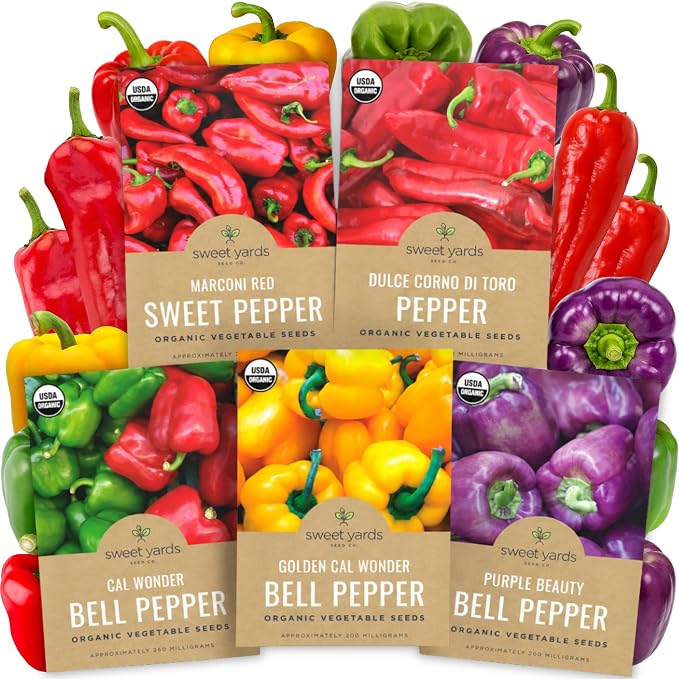
Organically grown seeds make up this sweet pepper variety pack, designed for gardeners seeking colorful and flavorful additions to their garden. It suits anyone wanting a range of pepper types with rich colors and sweet tastes as the standout feature.
Starting the peppers requires planting in varied soil types, with a spot that gets partial sun. Regular watering is necessary to keep the soil moist enough for steady growth. The pack includes five different seed packets, making it simple to plan a diverse garden.
Watching the different varieties grow side by side adds visual interest day by day.
Germination rates are high thanks to the 2026 season freshness of the seeds, which means most seeds sprout successfully. The plants deliver a mix of rich colors like purple, gold, and red, bringing vibrancy to the harvest. A common downside from reviews mentions that they need careful moisture attention.
Otherwise, the seed quality is impressive for home gardeners.
These seeds offer bright and tasty peppers with a high success rate due to their freshness. Most users find that they must maintain regular watering to avoid drying out the plants. Paying attention to moisture is key throughout growth to get the best results.
Gardeners who can provide partial sunlight and keep soil consistently moist will enjoy a rich, colorful harvest from these seeds. Those lacking ideal light conditions or regular watering may want to consider easier-to-grow options.
Pros
- Includes five distinct sweet pepper varieties
- Seeds fresh for the 2026 growing season
- Suitable for planting in varied soil types
- Produces vibrant colors and sweet flavors
Cons
- Requires consistent moisture for optimal growth
- Needs partial sun, limiting planting locations
| Specification | Details |
|---|---|
| Sunlight Exposure | Partial Sun |
| Soil Type | Varried |
| Moisture Needs | Regular Watering |
9. Survival Garden Pepper Seed Variety Pack

A rich variety of ten heirloom pepper seeds brings a colorful mix of sweet bells and spicy chile peppers for garden enthusiasts. Perfect for those who want a range of peppers in one pack, its biggest strength lies in adapting well across USDA zones 3 to 12 while attracting pollinators and resisting deer.
Starting seeds in spring or early summer fits nicely with standard gardening routines. These peppers thrive in full sun and loam soil, and regular watering keeps them healthy.
They fit well in outdoor gardens, raised beds, or containers, making them versatile for different spaces. Low maintenance and a high germination rate simplify growing for those wanting a dependable harvest.
Plants regularly reach about 30 inches high and typically bloom in summer, showing a smooth transition to fruiting. The variety pack covers both sweet and hot types in vibrant colors, adding options for fresh eating or cooking.
The pack’s untreated seeds appeal to organic growers. Common feedback praises the range and ease of growth, while some note the need for consistent watering without much tolerance for neglect.
The variety pack receives praise mainly for its extensive selection of sweet and spicy peppers and its ability to grow across many outdoor setups. The most common downside mentioned is the need for consistent watering, as drought stress can affect plant health. Seeds being untreated means careful handling at planting.
Those looking for a colorful and diverse pepper garden in outdoor spaces will enjoy this collection. It suits gardeners ready to commit to regular care and watering. Individuals seeking peppers that tolerate drought or want fully treated seeds might consider more specialized options.
Pros
- Covers sweet and hot peppers in one pack
- High germination rate for consistent plants
- Deer resistant and attracts pollinators
- Adaptable to outdoor gardens and containers
Cons
- Requires regular watering without drought tolerance
- Untreated seeds may require more care initially
| Specification | Details |
|---|---|
| USDA Hardiness Zone | 3-12 |
| Expected Plant Height | 30 inches |
| Expected Blooming Period | Summer |
| Sunlight Exposure | Full Sun |
| Soil Type | Loam Soil |
| Moisture Needs | Regular Watering |
10. Sow Right Seeds Emerald Giant Bell Pepper Seeds

Perfect for both beginners and seasoned gardeners, Sow Right Seeds Emerald Giant Bell Pepper Seeds stand out thanks to their large, crisp peppers and high yields. Ideal for those who want a reliable green bell pepper variety that grows well across many climates and offers substantial fruit size.
Planting requires soil temperatures between 75-85°F and about 1/4” depth for the seeds. Spacing each plant 24-36” apart ensures enough room for growth. Full sun exposure helps the plants reach their 18-24” height and 24-30” spread.
Germination happens within 14-28 days, making it straightforward to monitor progress and care for the pepper plants regularly through the growing period.
This variety matures in 60-80 days, producing peppers up to 4 1/2 inches long and 3 1/2 inches wide. The plants are strong with a solid spread that produces high yields of flavorful, crunchy bell peppers.
Among reviews, praise often mentions the volume of peppers produced, while some wish for even faster germination speed or larger fruit size.
These pepper seeds reliably produce a considerable number of crisp, flavorful peppers, appreciated for their consistent high yield. Common feedback notes that the germination period can take up to four weeks, which requires a bit of patience when starting the seeds.
People seeking a dependable green bell pepper plant with good production across various climates will find these seeds suitable. Those wanting quicker sprouting or significantly larger fruit may want to explore other varieties.
Pros
- High yield of large green bell peppers
- Suitable for novice and experienced gardeners
- Plants grow well in diverse USDA zones 3-13
- Clear planting instructions with reliable germination
Cons
- Germination speed varies between two to four weeks
- Peppers may not reach larger sizes some expect
| Specification | Details |
|---|---|
| Unit Count | 1 Count |
| Seeds per Packet | Minimum 300mg (about 40 seeds) |
| Plant Height | 18-24 inches |
| Plant Spread | 24-30 inches |
| Days to Maturity | 60-80 days |
| Germination Time | 14-28 days |
11. Gardeners Basics California Wonder Bell Pepper Seeds

Growing bell peppers at home can be tricky, especially when finding seeds that are both reliable and easy to handle. These Gardeners Basics California Wonder Bell Pepper Seeds are a great option for anyone wanting a straightforward growing experience outdoors.
Their biggest strength lies in clear growing instructions that make the process almost foolproof.
Planting the seeds outdoors in full sun between May and June fits well with most home gardens. The packet has quite a generous amount of seeds, giving you more chances to get healthy plants.
The water-resistant packaging means you won’t have to worry about moisture damaging the instructions or seeds, which is handy during regular garden care. Moderate watering is all they need to thrive in loam soil.
The seeds grow into sturdy plants about 2 feet tall and are resistant, making them a solid choice across many climates, from USDA zones 3 to 10. The clear growing instructions printed right on the packet take the guesswork out of the process, which is great for beginners.
The common hiccup noted is that these seeds are for outdoor use only, so indoor growers will need a different option.
Most praise goes to how easy the growing instructions make starting the pepper plants, which cuts down on uncertainty. The most frequent downside is that they are only meant for outdoor use, which doesn’t work for those wanting indoor peppers.
Gardeners with outdoor space in USDA zones 3 to 10 who want a straightforward seed packet will find this a solid match. Those needing indoor options or year-round planting flexibility might want to look at other seed varieties tailored for those conditions.
Pros
- Clear growing instructions on water-resistant packaging
- Large quantity of seeds per packet
- Resistant plants suitable for many climates
- Perfect for outdoor growing in full sun
Cons
- Not designed for indoor growing
- Limited to planting season of May to June
| Specification | Details |
|---|---|
| Sunlight Exposure | Full Sun |
| Expected Plant Height | 2 feet |
| Soil Type | Loam Soil |
| Moisture Needs | Moderate Watering |
| USDA Hardiness Zone | 3-10 |
| Indoor/Outdoor Usage | Outdoor |
12. Mixed Sweet Bell Pepper Seeds

Containing 100 seeds in one packet, this mix is ideal for gardeners wanting colorful bell peppers with variety. The biggest strength lies in its assortment of block-shaped fruits in several colors that can brighten any home garden.
Starting seeds indoors with warmth is best, then moving them outside once frost is gone suits the planting needs well. It thrives in full sun and fertile, well-drained soil.
Regular watering is key, but directly moistening the soil avoids plant issues. Supporting the plants as fruits appear keeps growth steady and healthy.
The mixed peppers grow with a branching habit that supports the blocky fruits nicely. They generally produce well and the color variety adds visual interest to the garden. A common criticism is that the exact distribution of colors depends heavily on seed and growing conditions, so results can vary.
The mix offers lots of seeds and colorful peppers, making for a lively garden display. Some find the color variety unpredictable because it depends on specific seed genetics and growing conditions. Regular watering without overdoing it is crucial for healthy plants and better yields.
Gardeners who enjoy growing multiple pepper colors and can provide full sun and well-drained soil will appreciate this seed mix. Those wanting a guaranteed color pattern or less finicky watering needs might want to consider other options.
Pros
- Large quantity of seeds per packet
- Variety of fruit colors adds visual appeal
- Block-shaped peppers for easy slicing and stuffing
- Branching growth habit supports fruit well
Cons
- Color distribution varies with conditions
- Requires careful watering to avoid saturation
| Specification | Details |
|---|---|
| Fruit Form | Blocky Pepper Form |
| Planting Setting | Outdoor |
| Sunlight Exposure | Full Sun |
| Soil Type | Well-drained, fertile soil |
| Moisture Needs | Regular Watering |
13. California Wonder Bell Pepper Seeds

Gardeners looking for a reliable bell pepper variety with sweet flavor and crisp texture will appreciate these seeds. Perfect for those who want large, thick-walled peppers with good color and flavor for fresh eating or cooking, their standout quality is consistent heavy yields of tasty peppers.
Starting seeds indoors 8 to 10 weeks before the last frost offers a head start in the growing season. Planting them about 1/4 inch deep in full sun and spacing plants 18 to 24 inches apart keeps growth healthy.
Regular care and sunlight result in vibrant pepper plants suited for outdoor gardens. Their size and sweetness make them versatile in everything from salads to grilling.
These seeds produce large green peppers that mature to a rich red, delivering a good balance of sweet flavor and crisp texture. They perform well outdoors in full sun and grow strong, healthy plants.
The most noted benefit is the reliable heavy yield, while some may find the growing process requires patience and consistent attention to sun and spacing.
The seeds reliably produce large, sweet bell peppers with thick walls and a crisp texture, making them ideal for fresh eating. Growing them demands starting indoors well before the last frost and careful attention to spacing in full sun. These steps are key to heavy yields and healthy plants.
Gardeners wanting large, tasty bell peppers for fresh use or cooking will find these seeds rewarding. Those who prefer easier or faster options may consider varieties requiring less planning or indoor preparation.
Pros
- Produces heavy yields of large peppers
- Thick walls with crisp texture
- Sweet and versatile for meals
- Suitable for outdoor gardens in full sun
Cons
- Requires early indoor starting for best results
- Needs consistent spacing and sun exposure
| Specification | Details |
|---|---|
| Indoor Outdoor Usage | Outdoor |
| Sunlight Exposure | Full Sun |
| Seed Planting Depth | Approximately 1/4 inch |
| Plant Spacing | 18 to 24 inches apart |
| Start Seeds Indoors | 8 to 10 weeks before last frost |
14. Bonnie Plants Sweet Red Bell Pepper Live Plants

Bright red bell peppers with thick walls make these live plants ideal for anyone wanting peppers that are great for stuffing. Perfect for container growing, these sweet red bell peppers offer a nice crisp bite and a mild, sweet taste that can suit a variety of dishes.
The biggest strength lies in their ready-to-use feeding system, simplifying plant care.
Setting up involves placing the live plants in containers or garden beds, with staking recommended to support the pepper plants as they grow. Feeding happens easily every 10 to 14 days using included Miracle-Gro Pour & Feed Singles.
No measuring or mixing needed, just snap and pour. Watching the peppers ripen from green to a bright red adds a satisfying visual cue to the routine.
These peppers perform well as flavorful additions to meals, with thick walls that hold up nicely for stuffing recipes. The plants are sturdy but do benefit from occasional staking to keep them upright when loaded with fruit.
Most users praise the convenience of the feeding system, while a common note is the plants’ need for support which some gardeners must provide.
Many highlight the ease of feeding with the Miracle-Gro Pour & Feed Singles, making care straightforward. A common issue is the need to stake the plants, especially when fruit becomes heavy, requiring extra attention.
Gardeners looking for a convenient, flavorful pepper plant that grows well in containers will be satisfied. Those wanting multiple color varieties or less maintenance might prefer different options.
Pros
- Thick-walled peppers ideal for stuffing
- Includes ready-to-use Miracle-Gro feeding
- Suitable for containers
- Sweet flavor with a hearty crunch
Cons
- Plants may require staking for support
- Limited to red bell pepper variety
| Specification | Details |
|---|---|
| Brand | Bonnie Plants |
| Manufacturer | Bonnie Plants |
| Number of Items | 8 |
| Unit Count | 8 Count |
| Item Type Name | Bonnie Plants Live Plants |
15. Burpee Sweet Candy Apple Hybrid Bell Pepper Seeds

Burpee Sweet Candy Apple Hybrid Bell Pepper Seeds are a great match for indoor gardeners looking for sweet red peppers with thick walls. Their standout feature is a high germination rate, making it easier to see your pepper plants sprout and thrive in sandy soil under full sun.
Starting these seeds indoors in spring lets you get a head start on your pepper garden. They need regular watering and sandy soil to do well.
Using a self-watering kit like Burpee’s 72 Cell setup can simplify care, keeping moisture consistent without much daily fuss. These peppers grow best with plenty of sunlight and steady attention to watering.
Plants grown from these seeds produce sweet and thick-walled bell peppers from spring through summer. The seeds themselves are non-GMO and low maintenance, making them suitable for beginner or casual growers. A common downside in reviews is that they require indoor growing initially, which might not suit all gardeners.
Otherwise, their strong germination and sweet flavor get consistent positive notes.
Consistent praise focuses on the seeds’ strong germination and sweet, thick-walled peppers. The most frequent drawback mentioned is the need to start plants indoors, which limits growing options for some gardeners.
People wanting to grow sweet peppers indoors with minimal fuss will find these seeds rewarding. Anyone lacking space or the right indoor conditions should look for varieties better suited to outdoor or flexible environments.
Pros
- High germination rate for reliable sprouting
- Thick pepper walls ideal for stuffing
- Sweet red peppers perfect for many recipes
- Non-GMO seeds ensure natural growth
Cons
- Indoor starting required to succeed
- Needs sandy soil and full sun exposure
| Specification | Details |
|---|---|
| Indoor Outdoor Usage | Indoor |
| Sunlight Exposure | Full Sun |
| Soil Type | Sandy Soil |
| Moisture Needs | Regular Watering |
| Expected Blooming Period | Spring to Summer |
| Special Features | High Germination Rate, Low Maintenance, Non-GMO |
Comparison of the Best Bell Peppers to Grow
| Product | Sunlight Exposure | Indoor/Outdoor Usage | Special Features | USDA Hardiness Zone |
|---|---|---|---|---|
| Premium Rare Pepper Seeds | Full Sun | – | Premium Rare Seeds | – |
| RDR California Wonder Seeds | Full Sun | Outdoor | Attracts Pollinators | 3 |
| Back to Roots Keystone Seeds | Partial Sun | – | Moderate Watering | – |
| California Wonder Sweet Seeds | Full Sun | Indoor | Disease Resistant, High Yield | 10,4,7,8 |
| Mixed Hot & Bell Kit | Full Sun | Indoor, Outdoor | High Germination Rate | 5-12 |
| Patio Snack Mini Sweet Peppers | Full Sun | Outdoor | Attracts Pollinators, Deer Resistant | 3-12 |
| Organic California Wonder Seeds | Full Sun | Outdoor | Attracts Pollinators, High Germination | – |
| Organic Sweet Pepper Variety | Partial Sun | – | Regular Watering | – |
| Survival Garden Pepper Pack | Full Sun | Outdoor | Deer Resistant, Drought Tolerant | 3-12 |
| Sow Right Emerald Giant Seeds | – | – | 1 Count | – |
| Gardeners Basics CA Wonder Seeds | Full Sun | Outdoor | Resistant | 3-10 |
| Mixed Sweet Bell Seeds | Full Sun | Outdoor | Mixed Fruit Colors | – |
| Classic California Wonder Seeds | Full Sun | Outdoor | – | – |
| Bonnie Plants Red Bell Live | – | Live Plants | 8 Count | – |
| Burpee Sweet Candy Apple Seeds | Full Sun | Indoor | High Germination, Non-GMO | – |
- Sunlight ExposureFull Sun
- Indoor/Outdoor Usage–
- Special FeaturesPremium Rare Seeds
- USDA Hardiness Zone–
- Sunlight ExposureFull Sun
- Indoor/Outdoor UsageOutdoor
- Special FeaturesAttracts Pollinators
- USDA Hardiness Zone3
- Sunlight ExposurePartial Sun
- Indoor/Outdoor Usage–
- Special FeaturesModerate Watering
- USDA Hardiness Zone–
- Sunlight ExposureFull Sun
- Indoor/Outdoor UsageIndoor
- Special FeaturesDisease Resistant, High Yield
- USDA Hardiness Zone10,4,7,8
- Sunlight ExposureFull Sun
- Indoor/Outdoor UsageIndoor, Outdoor
- Special FeaturesHigh Germination Rate
- USDA Hardiness Zone5-12
- Sunlight ExposureFull Sun
- Indoor/Outdoor UsageOutdoor
- Special FeaturesAttracts Pollinators, Deer Resistant
- USDA Hardiness Zone3-12
- Sunlight ExposureFull Sun
- Indoor/Outdoor UsageOutdoor
- Special FeaturesAttracts Pollinators, High Germination
- USDA Hardiness Zone–
- Sunlight ExposurePartial Sun
- Indoor/Outdoor Usage–
- Special FeaturesRegular Watering
- USDA Hardiness Zone–
- Sunlight ExposureFull Sun
- Indoor/Outdoor UsageOutdoor
- Special FeaturesDeer Resistant, Drought Tolerant
- USDA Hardiness Zone3-12
- Sunlight Exposure–
- Indoor/Outdoor Usage–
- Special Features1 Count
- USDA Hardiness Zone–
- Sunlight ExposureFull Sun
- Indoor/Outdoor UsageOutdoor
- Special FeaturesResistant
- USDA Hardiness Zone3-10
- Sunlight ExposureFull Sun
- Indoor/Outdoor UsageOutdoor
- Special FeaturesMixed Fruit Colors
- USDA Hardiness Zone–
- Sunlight ExposureFull Sun
- Indoor/Outdoor UsageOutdoor
- Special Features–
- USDA Hardiness Zone–
- Sunlight Exposure–
- Indoor/Outdoor UsageLive Plants
- Special Features8 Count
- USDA Hardiness Zone–
- Sunlight ExposureFull Sun
- Indoor/Outdoor UsageIndoor
- Special FeaturesHigh Germination, Non-GMO
- USDA Hardiness Zone–
How to Choose the Best Bell Peppers to Grow
Choosing bell peppers suited to your climate, soil type, and available space ensures healthy growth and higher yields. Paying attention to disease resistance and maturity time helps prevent problems and reduces wasted effort, saving money and avoiding frustration during the growing season.
Climate Adaptability
Growing peppers in an area prone to unexpected cold snaps or intense heat waves can quickly kill young plants or stunt fruit development. Choosing a variety with climate adaptability means the plant can endure heat above 85°F without dropping flowers or survive brief dips below 50°F without damage.
This actually affects how reliably you get peppers throughout the season. Some types come from warmer regions and cannot handle frost or chilly nights, while others tolerate heat stress better, which is crucial in southern gardens.
Plants that resist common weather-related stresses like wind or heavy rain save you from constant replanting or support tying. Practical traits to check are documented USDA zones or grower reports that mention tolerance to temperature swings. A variety that handles your local climate will grow steadily, flower consistently, and avoid common weather damage that leads to poor yields or sickly plants.
Growth Habit and Size
Plants with determinate growth usually stop growing once their main flower set appears, making them more compact and suitable for small spaces or containers. Indeterminate types keep growing and producing fruit longer but can get tall and sprawling, needing more room and support.
This means assessing your garden size first is key: smaller spaces do better with compact varieties under 24 inches tall, while bigger plots can handle plants reaching 3 feet or more.
Time to maturity varies widely, some peppers mature in as little as 60 days, allowing for quick harvests, while others need 90 days or more but yield steadily over weeks. Understanding these traits affects how many plants you grow and when to expect peppers.
Knowing the mature plant’s spread is important too; a wide-spreading plant can crowd neighbors or require extra staking, so look for height and width specs on seed packets or labels to match your garden setup.
Fruit Characteristics
Shapes of peppers range from blocky and square to elongated or tapered, impacting how you plan to use them. A common bell shape works well for stuffing or salads, while longer types suit slicing for cooking. The size can vary from small snack-sized pods to large peppers over 4 inches wide.
Color changes during ripening, green, red, yellow, and even purple, also influence flavor and dish appearance.
Flavor profiles matter because some types are more bitter or grassy when unripe, while mature fruit tends to be sweeter and milder. Varieties with built-in resistance to pests and diseases keep the fruit unblemished, which makes them fresher and less wasteful.
Peppers with known resistance to common problems like bacterial leaf spot or thrips prevent slow decay of the fruit, which is especially helpful during humid or wet conditions.
Seed Viability and Germination Rate
Seed packets that have been stored too long or exposed to moisture often show poor germination rates, which can frustrate growers who then have to reseed repeatedly. Fresh seeds with a germination rate above 80% are common for reliable starts.
Seeds with thinner seed coats sprout quicker and more uniformly, which makes the seed-starting process less time-consuming and reduces failures.
The vigor of emerging seedlings is critical, too. Uniform, healthy seedlings have a better chance of thriving outdoors and result in consistent plant sizes, making care and harvest timing easier.
Some varieties come with treated seeds, either coated for easier sowing or primed for better germination, so checking for labeling related to seed treatment helps.
Maintenance and Care Requirements
Regular watering is necessary, but some varieties tolerate brief drought periods better, reducing the risk of blossom end rot or fruit drop during heat waves. How often you water can vary from daily in containers to every few days in well-mulched garden beds. Soil rich in organic matter with good drainage keeps roots healthy, so heavier soils or poor fertility will require amendments and regular feeding.
Pruning strong side shoots and removing old leaves improves airflow and lowers disease incidence. Some types are more prone to common problems like powdery mildew or aphids, demanding greater vigilance. Understanding the specific care needs, such as fertilizer amounts and pest susceptibility, helps avoid wasted effort and improves overall plant health for consistent yields.
Optimal Growing Conditions for Bell Peppers in Different Climates
Bell peppers need warm soil to start growing effectively, ideally between 70°F and 85°F. Soil temperature below 60°F can stunt seed germination. In cooler climates, using raised beds or black plastic mulch helps warm the soil early in the season.
Consistent moisture is key, as peppers dislike drying out or waterlogging. Well-drained, loamy soil with a pH near 6.0 to 6.8 suits them best.
Sunlight also plays an important role. Peppers perform well with 6 to 8 hours of direct sun daily, which supports fruit development and color formation.
- In hot climates, afternoon shade can reduce heat stress and fruit drop.
- In humid areas, good air circulation helps prevent fungal diseases commonly triggered by moisture.
- In short growing seasons, transplanting indoors 6-8 weeks before the last frost extends the harvest window.
These adjustments make a noticeable difference and help bell peppers thrive across various environments.
Common Pests and Diseases Affecting Bell Pepper Plants and How to Prevent Them
Several pests commonly target bell pepper plants, including aphids, flea beetles, and pepper weevils. Aphids cluster on new growth, sucking sap and transmitting viruses. Flea beetles leave small holes on leaves, weakening plants.
Preventative steps focus on maintaining plant health and applying physical or organic controls. Insecticidal soaps or neem oil help manage many pests without harsh chemicals.
Floating row covers keep insects away during the early stages.
Diseases such as bacterial spot, powdery mildew, and blossom end rot affect peppers regularly. Practicing crop rotation reduces soil-borne diseases. Avoid overhead watering and overcrowding to minimize leaf wetness and fungal growth.
- Remove and destroy infected plants or debris after harvest.
- Apply balanced fertilizer to avoid excessive nitrogen that favors leaf growth over fruit.
- Good garden hygiene and proper spacing lower the risk for most problems.
Comparing Sweet Bell Peppers to Hot Pepper Varieties for Culinary Use
Sweet bell peppers differ from hot pepper varieties mainly in the level of capsaicin, the compound that causes heat. Bell peppers have none, making them mild and suitable for fresh eating, salads, and stuffing.
Their thick walls hold up well during grilling or roasting.
Hot peppers offer a varying heat range, from mild to intense, which can dramatically change a dish’s flavor profile. They are commonly used dried, powdered, or fresh to add spice rather than bulk.
- Sweet bell peppers provide crunch and color without altering the dish’s temperature.
- Hot peppers contribute heat and distinct flavors, often requiring cautious use.
- In recipes like salsas or sauces, combining both can balance heat and sweetness.
Choosing between them depends on whether the recipe benefits from a bell pepper’s texture and mildness or a spicy pepper’s pungency and heat.
People Also Asked
How Do I Properly Care for Bell Pepper Plants at Home?
Bell pepper plants need full sun and consistent watering to thrive. Water deeply but avoid soggy soil to prevent root rot, and use mulch to keep soil moisture steady.
What Size Bell Pepper Plants Should I Buy for My Garden?
Choose young plants around 6 to 12 inches tall, as they adapt better and have a stronger root system than seedlings or very mature plants. Proper spacing is important to allow air circulation.
Are Bell Peppers Safe to Grow Near Other Vegetables?
Bell peppers grow well near tomatoes, carrots, and onions, but avoid planting near beans and fennel that can hinder their growth. Companion planting helps reduce pests naturally.
How Long Do Fresh Bell Peppers Stay Good After Harvesting?
Fresh bell peppers generally stay good for about 1 to 2 weeks if stored in the refrigerator crisper drawer. Avoid washing before storing as moisture speeds up spoilage.
What Are Common Problems When Growing Bell Peppers Outdoors?
Common issues include aphids, blossom end rot, and fungal diseases. Regularly inspect plants, maintain good spacing, and avoid overwatering to reduce these problems.
Conclusion
Choosing the best bell peppers to grow depends mainly on climate suitability, disease resistance, and taste preference. Peppers that handle your local weather well and show fewer problems with pests or diseases will save time and effort. Think about the flavor you want for cooking, as some varieties are sweeter while others have a more classic bell pepper taste.
Consider how much space you have and how often you plan to cook with peppers before planting. Smaller spaces might call for compact plants, while a big garden can support larger varieties. Refer back to the comparison table and the detailed picks above to find the one that fits your needs best.