Top 15 Best Water Filtration for Camping You Can’t Miss!
Camping with a cheap or poorly chosen water filter often means wasting time on slow filtration or worrying whether the water is truly safe to drink. The best water filtration for camping avoids these issues by providing quick, reliable access to clean water.
Experienced campers know that untreated water can carry harmful bacteria, protozoa, and sometimes even viruses, making a good filter an essential part of any outdoor trip.
What sets a good camping water filter apart is the filter’s pore size, flow rate, and durability. Most effective filters use hollow fiber membranes with pore sizes around 0.1 to 0.2 microns to block bacteria and protozoa. A typical flow rate of about one liter per minute strikes a balance between speed and thorough cleaning.
Materials like BPA-free plastic or stainless steel make the filters tough enough to withstand regular use and easy to clean without harboring mold or bacteria. Compact size and lightweight design are important, but safety and ease of maintenance matter the most for reliable hydration outdoors.
Need a Quick Check?
| Image | Product | Price |
|---|---|---|
Our Top Picks 1  | Waterdrop Gravity Straw | Check Price |
Our Top Picks 2  | Gravity Filter 6L Set | Check Price |
Our Top Picks 3  | Sawyer SP128 Mini | Check Price |
Our Selected Top 15 Water Filtration for Camping You Can Trust
This list features reliable water filtration options designed for camping, covering various types and styles to meet different outdoor needs. Each review details how well the product performs, who it is best suited for, and highlights its main advantages and potential drawbacks.
1. Waterdrop Gravity Water Filter Straw
Filtering water with a 0.1 um ultrafiltration membrane makes the Waterdrop Gravity Water Filter Straw a solid choice for campers focused on safety in the outdoors. It suits those looking for a no-electric, gravity-fed filter that handles sediment, chlorine, and bad tastes to improve drinking water quality.
Setup involves filling the included 1.5-gallon bag with untreated water and hanging it so gravity pushes water through the straw. The filter runs without any power source, pulling water efficiently through five filtration stages.
Cleaning is straightforward since it uses a hollow fiber ultrafiltration membrane that reduces exposure to dirt and sediment.
It performs reliably with a maximum flow rate of 700 milliliters per minute, which delivers drinkable water fairly quickly compared to some other camping filters. The build quality leans on lightweight, durable materials fit for outdoor use. Praise often centers on its effective removal of bad odors and particulates, while a common complaint involves its limited suitability for water with TDS levels above 300 ppm.
The strongest praise is for how well it cleans odor and bad tastes, providing safe drinking water with ease. A frequently mentioned downside is that it doesn’t work well with highly contaminated or very mineral-heavy water above 300 ppm TDS.
This filter will satisfy campers who want simple gravity filtration without batteries or pumps and mostly clean natural water sources. Those planning to filter very murky or mineral-rich water may need a more heavy-duty purification system.
Pros
- Filters down to 0.1 microns for safety
- 1.5-gallon gravity-fed capacity
- No electricity required for operation
- Reduces chlorine, sediment, taste, and odor
Cons
- Not suitable for water over 300 ppm TDS
- Bulky when carrying full water bag
| Specification | Details |
|---|---|
| Purification Method | Hollow Fiber Ultrafiltration Membrane |
| Maximum Flow Rate | 700 milliliters_per_minute |
| Supported Water TDS Level Maximum (PPM) | 300 |
| Container Type | Bag |
| Installation Type | Freestanding |
| Power Source | Non Electric |
2. Gravity Water Filter Set 6L Hanging Bag
Camping enthusiasts who need a simple way to filter water for groups will find this gravity water filter ideal. It suits situations where carrying and filtering decent volumes at once matters most.
Its biggest benefit is the large 6-liter capacity that holds enough water to serve multiple people without frequent refilling.
Setting up involves hanging the flexible bag off a tree or pole and filling it with raw water. Gravity pulls the water through a hollow fiber membrane filter into a clean container below. The bag’s lightweight polyether TPU material folds easily, making it simple to pack and carry.
It works well in a range of temperatures from near freezing to mild heat, making daily filtration straightforward in most camping environments.
Filtration works reliably without power, removing many common contaminants using gravity and membrane technology. The build feels sturdy yet remains lightweight at about 5.57 oz, so it is portable on long hikes. Most users praise the large capacity and easy hanging design, while the main complaints focus on occasional slow flow and care needed to avoid punctures during use.
The water filter reliably provides clean water with a convenient 6-liter setup that doesn’t need power. Some users noted the water flow occasionally slows, requiring patience, and the flexible bag must be handled carefully to avoid damage.
Those camping in groups or needing a stable water supply on extended trips will appreciate the large capacity and portability. Anyone looking for faster filtration or super rugged gear might want to explore more heavy-duty options.
Pros
- Large 6-liter capacity for group use
- Lightweight and foldable TPU bag
- No external power required at all
- Works in cold and warm conditions
Cons
- Flow rate can be slow at times
- Bag material requires careful handling
| Specification | Details |
|---|---|
| Capacity | 6 Liters (1.59 gallons) |
| Filtration Method | Gravity Filtration, Hollow Fiber Membrane |
| Material | Polyether TPU |
| Weight | Approximately 5.57 oz |
| Temperature Range | 4 °F to 104 °F |
3. Sawyer SP128 Mini Water Filtration System
Lightweight and compact, the Sawyer SP128 Mini Water Filtration System fits in the palm of your hand and is perfect for those who need reliable water filtration on the go. Its most impressive feature is the high-performance 0.1 micron filter that removes nearly all bacteria and protozoa, making it ideal for camping, hiking, and emergency preparedness.
Setup is straightforward since it comes with a drinking pouch and works with standard 28 mm water bottles or hydration packs. You can also use the included straw to drink directly from a water source.
Daily use means quick filtering without any power source, and cleaning involves backflushing the filter, which keeps everything running smoothly during extended trips.
Performance-wise, it removes 99.99999% of bacteria like Salmonella and Cholera, plus 99.9999% of protozoa such as Giardia. Build quality is solid for something this light, with every filter tested three times to ensure performance. The main praise lies in its reliable filtration and tiny size.
Complaints sometimes mention the slow flow rate and the need for careful cleaning.
This filtration system is praised for its highly effective cleaning ability and minimal weight, making it simple to carry on any outdoor trip. Users have mentioned that its flow rate can slow down during use, which means taking time to clean and backflush the filter is important to keep it working well.
Those who want a lightweight, dependable filter for camping or travel will appreciate this unit. People needing faster water flow or willing to handle more complex equipment might want to consider alternate options designed for higher output.
Pros
- Removes 99.99999% of bacteria and 99.9999% of protozoa
- Compact and weighs only 2 ounces
- Works with multiple container types and direct drinking
- All units tested three times for quality assurance
Cons
- Flow rate can feel slow when filtering water
- Requires regular cleaning to maintain performance
| Specification | Details |
|---|---|
| Purification Method | Hollow Fiber Membrane |
| Power Source | Manual Operation |
| Maximum Flow Rate | 100000 gpm |
| Upper Temperature Rating | 100 °F |
| Supported Water TDS Level Maximum (PPM) | 1000 |
4. Gravity Water Filter Bag

Gravity Water Filter Bag suits campers or small outdoor groups needing reliable water filtration. Its gravity-fed design eliminates the need for hand-pumping or electricity, simplifying water purification in remote locations.
Setting up involves filling the bladder with freshwater from natural sources, hanging it above a clean container, and letting gravity handle the filtration process. The choice of multiple capacities means you can pick sizes right for solo trips or small groups. Filtration improves water clarity and taste thanks to its multi-stage system featuring a 0.1-micron hollow fiber filter, carbon, and a pre-filter.
Filtration performs well for appropriate freshwater sources by removing particles and improving taste. The bag’s construction as a water bladder makes it lightweight and easy to pack. Most praise focuses on the no-pumping convenience and reliable filtration, while the most frequent drawback is needing compatible bottles or hoses to connect, depending on the set type.
Most praise highlights the convenience of hands-free gravity filtration making camp water handling easier. The main complaint centers on compatibility issues needing specific bottles or hoses to connect the filter bag properly.
Those camping solo or in small groups who want simple, effective filtration without manual pumping will appreciate this setup. Larger groups or those needing universal bottle compatibility might look at other options better suited for diverse container needs.
Pros
- Multiple capacity options for different group sizes
- Gravity-fed system avoids hand-pumping or electricity
- Multi-stage filtration improves clarity and taste
- Flexible setup with hanging and compatible connections
Cons
- Requires suitable containers for output depending on set
- Only works with appropriate freshwater sources
| Specification | Details |
|---|---|
| Container Type | Water bladder |
| Purification Method | Gravity Water Filter Bag |
| Filtration Design | Multi-Stage: 0.1-micron hollow fiber, carbon, pre-filter |
| Capacity Options | 1Gal Set, 6L Set, 12L Set, or 2pcs 5L Bladders |
| Setup Type | Gravity-fed, no pumping required |
5. LifeStraw Personal Water Filter

Easy to carry and use on any trip, this water filter straw suits hikers and campers who want safe drinking water without fuss. Its biggest strength is removing nearly all bacteria and parasites, letting you drink directly from streams or lakes without worries about getting sick.
Setup means just sticking the straw into the water source and sipping through it like a regular straw. There’s no need for batteries or electricity, making it lightweight and simple.
The hollow fiber membrane works quietly in the background, clearing out microplastics, dirt, and tiny particles while you drink.
Filtering out 99.999999% of bacteria and 99.999% of parasites makes it extremely effective for survival situations. Its build is sturdy enough for rough outdoor use, though some find spitting out the first few sips required to clear the taste an extra step. It consistently provides safe water, but the straw format limits how fast you can drink at once.
The product consistently removes nearly all harmful bacteria, parasites, and microplastics, making water safe to drink directly from natural sources. The most common complaint is about the need to spit out the first few sips due to taste from the filter.
Those spending days hiking or camping who want a reliable, no-power needed water filter will appreciate the compact design. People needing high volume or faster water intake may want to consider other options with higher flow rates or larger capacity.
Pros
- Removes nearly all bacteria and parasites
- No battery or power needed
- Lightweight and portable straw design
- Filters microplastics and dirt effectively
Cons
- Slower sipping speed due to straw size
- Some users notice initial taste to spit out
| Specification | Details |
|---|---|
| Purification Method | Hollow Fiber Membrane |
| Maximum Flow Rate | 4000 liters per hour |
| Power Source | No Electricity Or Battery Power Required |
| Removes Bacteria | 99.999999% (Including E.coli, Salmonella) |
| Removes Parasites | 99.999% (Including Giardia, Cryptosporidium) |
| Removes Microplastics | 99.999% |
6. Practical Survival Reusable Water Filter Straws

Perfect for campers and hikers who need safe drinking water on the go, these Practical Survival Reusable Water Filter Straws stand out for their exceptional filtration ability. They remove over 99.99% of waterborne bacteria and parasites, making it easier to stay hydrated in the wild without carrying heavy gear.
Setup is as simple as it gets, just take the 8-inch, 2 oz straw with you and use it directly in natural water sources. Each filter includes a flushing plunger that helps keep the membrane clean.
Its lightweight and portable design makes it easy to slip into a backpack for camping, hiking, or emergencies.
They perform strongly by using a hollow fiber membrane that effectively filters out dangerous bacteria. The build is solid enough to last years, boasting a filter life cycle of 10 years and a shelf life of 6 years. Common praise highlights how well it cleans water, but some users note that gush speed can feel slow compared to other methods.
The filter’s strongest point is its high level of bacteria removal and portability, making safe water accessible outdoors or in emergencies. The most common drawback is the relatively slow water flow, which can be a minor inconvenience during quick hydration needs.
Those venturing into areas with questionable water quality and needing a lightweight, durable filter will find this straw effective. People requiring faster water intake or filtering highly contaminated water might want to look at alternatives.
Pros
- Removes over 99.99% of bacteria and parasites
- Lightweight and easy to carry anywhere
- Flush plunger included for filter maintenance
- Long filter and product life span
Cons
- Water flow rate can feel slow
- Only supports water with TDS under 500 PPM
| Specification | Details |
|---|---|
| Filtration Method | Hollow Fiber Membrane |
| Weight | 2 oz |
| Filter Length | 8 inches |
| Filter Life Cycle | 10 years |
| Product Shelf Life | 6 years |
| Supported Water TDS Level Maximum | 500 PPM |
7. 3-Stage Portable Hand Pump Water Filter

Built with a 3-stage filtration system including PP cotton, activated carbon, and an ultrafiltration membrane, this hand pump water filter suits campers needing dependable freshwater purification without electronics. Its greatest strength lies in the thorough filtering process, which handles a variety of natural water sources safe from heavy chemical pollution.
Setup involves connecting the hand pump to the water source, priming the device manually before pumping. Day-to-day use focuses on pumping to force water through progressively finer filtration layers, effectively removing sediment and microbes.
The portability and hand pump operation make it practical for off-grid settings, especially where power isn’t available.
Effectiveness at cleaning water from rivers, lakes, and streams is solid, leaning on the 0.01-micron ultrafiltration membrane. The build feels rugged enough for outdoors, though some users mention the manual pumping can be tiring during prolonged use. Its main benefit is reliable filtration in diverse environments, balanced by occasional pump effort needed.
The 3-stage filtration system delivers clean water effectively from various fresh sources, praised for clarity and taste improvements. The common drawback mentioned is the physical effort involved with continuous hand pumping, which can be tiring during extended usage.
Campers and off-grid enthusiasts who often access clear natural water will find this filter reliable and convenient. Users dealing with heavily polluted or chemically contaminated water should explore other solutions designed for those conditions.
Pros
- Handles multiple fresh water sources without chemicals
- Compact and portable for off-grid use
- Triple filtration stages improve water clarity and safety
- Does not require electricity or batteries
Cons
- Manual pumping may cause fatigue over time
- Unsuitable for heavily contaminated or chemical-laden water
| Specification | Details |
|---|---|
| 3-stage Filtration | PP cotton, activated carbon, 0.01-micron membrane |
| Purification Method | Distillation |
| Operation | Hand Pump Operated |
| Container Type | Pitcher |
8. Membrane Solutions 6L Gravity Water Filter Pro

Designed for group camping trips, the Membrane Solutions 6L Gravity Water Filter Pro shines brightest with its large 6-liter capacity and gravity-fed system. It suits small groups of 3–6 people who need reliable access to clean drinking water without complicated setup or power sources.
Setting it up is straightforward with no installation needed, just pour water into the top container and let gravity do the work. Its 4-stage filtration, including a 0.1-micron hollow fiber membrane and activated carbon, runs quietly and steadily, filtering out chlorine, sediment, and odors.
Daily use feels practical, especially at basecamps, where keeping water flowing for a group is critical without constant attention.
Performance-wise, the filter handles typical freshwater sources effectively, meeting NSF/ANSI 42, 372, and 401 standards, which shows it covers common contaminants well. The build is solid yet lightweight enough for carrying on trips.
Reviews praise its reliable filtration and easy-to-use gravity design but commonly note that the flow rate of 500 milliliters per minute can slow things down when larger quantities are needed quickly.
The filter is highly dependable for reducing common contaminants and odors in fresh water sources, delivering clean water by gravity. It reliably supports small groups with minimal fuss. Flow speed is the main drawback, as it processes water slowly, especially when filling water bottles or larger containers.
Groups camping at basecamps or using it for emergency preparedness will find this filter effective in providing safe drinking water. Those needing faster filtration speeds or handling very muddy water may want to look at other options better suited to higher flow or filtration capacity.
Pros
- Large 6L capacity perfect for group use
- Four-stage filtration removes chlorine and sediments
- No installation or external power required
- Certified by NSF and SGS for filtration standards
Cons
- Flow rate limited to 500 milliliters per minute
- Not suitable for highly turbid water over 500 PPM TDS
| Specification | Details |
|---|---|
| Purification Method | Hollow Fiber Membrane |
| Power Source | Gravity |
| Maximum Flow Rate | 500 milliliters_per_minute |
| Supported Water TDS Level Maximum (PPM) | 500 |
| Container Type | Box |
| Special Features | Chlorine Reduction |
9. Katadyn Hiker Pro Hand Pump Water Filter

Perfect for camping or backpacking trips that demand reliable clean water, the Katadyn Hiker Pro Hand Pump Water Filter is lightweight and easy to carry. Its biggest strength lies in its ability to pump a full liter per minute while filtering out harmful particles, making it a solid choice for anyone who needs dependable filtration on the trail.
Setup involves connecting the filter directly to most water bottles or hydration packs, letting you draw water straight from natural sources. The transparent body shows the cartridge clearly, so keeping track of when to clean or replace it is straightforward. The pre-filter on the intake hose keeps debris out, helping to maintain smooth operation during everyday outdoor use.
Filtration happens through a durable 0.2-micron glass fiber cartridge capable of processing up to 1,150 liters before replacement. Activated carbon granules reduce unpleasant tastes, and a filter protector extends cartridge life. Build quality is solid and feels durable for extended trips.
The strongest praise centers on its reliable flow rate, while some note the manual pumping can be tiring over long periods.
The filter’s ability to deliver a consistent 1-liter-per-minute flow rate makes it reliable in the field, which is praised across reviews. The transparent cartridge housing is handy for knowing when cleaning or replacement is needed. Some mention that the manual pumping effort can become tiring during continuous use.
Anyone prioritizing a lightweight, portable water filter with a clear visual of filter status will find this well suited to their needs. Those expecting a pump that requires minimal effort might want to look at other models with different power sources or designs.
Pros
- Lightweight and portable at 11.2 oz
- Clear view of the filter cartridge
- Pumps 1 liter of clean water per minute
- Activated carbon improves water taste
Cons
- Manual pumping can feel tiring over time
- Filter replacement needed after around 1,150 liters
| Specification | Details |
|---|---|
| Purification Method | Pleated glassfiber |
| Maximum Flow Rate | 1 liters per minute |
| Weight | 11.2 oz |
| Power Source | manual winding |
| Supported Water TDS Level Maximum (PPM) | 1000 |
| Filter Capacity | up to 1,150 liters |
10. Pro Portable Water Filter

Finding clean water outdoors can be a real challenge for groups camping or hiking together. A hand-powered water filter pumping 1.5 liters per minute makes life easier, perfect for feeding 4-6 people quickly. It works well for base camps, hunting trips, or any time you need a reliable water source without electricity.
Setup is straightforward: just place the intake hose in a stream, lake, or rain barrel and start pumping by hand. No batteries or power required, which suits backcountry trips where electricity isn’t an option. The filter’s three stages handle gritty and murky water while keeping microplastics and bacteria at bay.
Taking it apart for cleaning is manageable, keeping day-to-day use practical.
The filter does a solid job removing bacteria, protozoa, and sediment thanks to the 5-micron pre-filter paired with ultrafiltration at 0.01 microns. It feels sturdy enough for outdoor use but is made of plastic, which keeps it light enough to carry. The best part is the fast flow rate, enough water for several people in no time.
Some users mention the pumping can become tiring over long periods.
Fast water delivery for groups stands out as a huge plus when everyone needs clean water quickly. Most common drawback is the physical effort required to pump continuously, which might be tiring after a while.
The filter suits campers or hunters needing reliable water for several people without power. Those looking for lighter work or less manual pumping may want to consider alternatives with electric or gravity-powered systems.
Pros
- Hand operated, no batteries required
- Filters bacteria, protozoa, and microplastics
- High flow rate suitable for groups
- Portable and fairly lightweight
Cons
- Pumping can be tiring over extended use
- Plastic construction feels less durable to some
| Specification | Details |
|---|---|
| Maximum Flow Rate | 1.5 liters per minute |
| Purification Method | 3 stage PP cotton and Ultra Filtration |
| PP Cotton Filtration Accuracy | 5µm |
| Ultrafiltration Accuracy | 0.01 µm |
| Power Source | Hand Operated |
| Supported Water TDS Level Maximum (PPM) | 100 |
11. 3-Stage Portable Hand Pump Water Filter

A 3-stage advanced filtration system with a 0.01-micron ultrafiltration membrane makes this water filter ideal for camping and hiking. It suits people who need reliable water purification in the wild without relying on electricity. The standout feature is the manual hand pump that works anywhere.
The setup is straightforward, as it operates manually without batteries or power. You just pump the handle to push water through the multi-stage filters: a PP cotton pre-filter, an activated carbon filter, and the ultrafiltration membrane. The leak-proof pitcher design keeps things tidy, and it’s light enough to carry along on trips without hassle.
It does a solid job at removing particles and improving water safety from freshwater sources. The materials feel durable, with carbon spun fiber filtration managing impurities well. Customers praise its reliability in remote spots but often mention the physical effort needed to pump as a downside.
Some also find the flow rate slower than expected.
The filter reliably cleans water and prevents leaks well, making it dependable in the outdoors. At the same time, pumping water through several filtration stages takes noticeable effort and slows the fill rate.
Those camping or hiking spots without electrical access will appreciate its manual design and secure container. Anyone needing quicker filling or less physical exertion may want to consider alternative filters.
Pros
- Manual hand pump works without power
- 3-stage progressive filtration
- Leak proof design
- Filters down to 0.01 microns
Cons
- Pumping requires physical effort
- Slower flow rate through filters
| Specification | Details |
|---|---|
| Purification Method | Carbon Spun Fiber |
| Container Type | Pitcher |
| Upper Temperature Rating | 113 °F |
| Special Features | Leak Proof |
12. Sawyer Squeeze Water Filtration System

Ideal for campers and backpackers who want a lightweight, reliable water filter, the Sawyer Squeeze Water Filtration System excels in removing harmful bacteria and microplastics from natural water sources. Its standout feature is the ease of use combined with a durable, reusable design, making it fit for outdoor adventures and emergencies.
Setup involves filling the durable 2-liter bladder with water, which is straightforward thanks to the wide mouth opening. Day-to-day use revolves around manually squeezing water through the hollow fiber membrane filter. Cleaning is simple due to the thicker fiber walls inside the filter, allowing rigorous backwashing without damage.
This makes it practical for extended trips where access to clean water is unpredictable.
Filtration performance is solid, removing bacteria, protozoa, cysts, sediment, and 100% of microplastics. Built to last, the filter can clean up to 100,000 gallons of water, a durability that stands out in its category. One common complaint is the manual operation requires some effort, especially when water is thick or turbid, which can slow the flow rate during use.
The strongest praise centers on its durable filter capable of handling up to 100,000 gallons and removing harmful contaminants including microplastics. A common complaint is the manual operation can be tiring, especially when filtering murky water that slows the flow rate.
Those looking for a reliable, long-lasting water filter suited for backpacking and camping in areas with relatively clear water will appreciate this system. Individuals frequently encountering very dirty or heavily mineralized water might prefer another filtration method better suited to higher TDS levels or faster flow.
Pros
- Removes 100% of microplastics and harmful pathogens
- Reusable up to 100,000 gallons without replacement
- Durable TPU bladder with wide mouth for fast filling
- Lightweight and easy to carry outdoors
Cons
- Manual squeezing requires effort with turbid water
- Maximum water TDS level supported is 300 ppm
| Specification | Details |
|---|---|
| Purification Method | Hollow Fiber Membrane |
| Container Type | Bag |
| Power Source | Manual Operation |
| Supported Water TDS Level Maximum (PPM) | 300 |
| Weight | Lightweight |
13. Camping Water Filtration System
Designed for outdoor enthusiasts who rely on natural freshwater sources, this filtration system stands out with its thorough 3-stage filtration process. It handles water from rivers to rain, making it perfect for camping trips where chemical contamination isn’t a concern.
Setting up involves filling the portable bottle with water from any fresh source and manually pumping with the hand pump. The progressive filters, including PP cotton and activated carbon, prepare the water before the ultrafiltration membrane completes the process.
It’s straightforward to carry and operate, making it a practical choice for off-grid use.
The filtration effectively reduces impurities and sediment, providing clearer and safer water. Construction feels solid and thoughtfully designed for rugged outdoor use. Positive remarks highlight its reliable filtration, while negatives mention it’s not suited for severely contaminated water, limiting some uses.
This filtration system is praised for effectively improving water clarity and safety using a triple filter setup. A common drawback is the manual pumping required, which might be tiring over extended use and unsuitable for very dirty water sources.
Campers and adventurers who want reliable filtering for fresh, clean water sources will appreciate this system. Those needing to filter heavily polluted or chemically contaminated water might need a different device better suited to those conditions.
Pros
- Works on many freshwater sources without chemicals
- Compact and easy to carry
- Progressive 3-stage filtration
- Simple hand pump operation
Cons
- Not for severely contaminated water
- Requires manual pumping effort
| Specification | Details |
|---|---|
| 3-STAGE FILTRATION | PP cotton, activated carbon, 0.01-micron ultrafiltration membrane |
| Container Type | Bottle |
| Purification Method | Distillation |
| Operation | Hand Pump Operated |
| Suitable Water Sources | River, lake, stream, groundwater, rainwater, surface water |
14. Katadyn Pocket Ceramic Water Filter
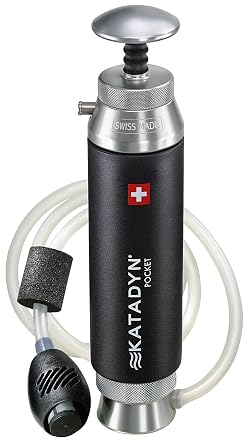
Katadyn Pocket Ceramic Water Filter is a hand-operated pump designed for campers and backpackers who want reliable, clean water on the go. Its biggest strength lies in its durable ceramic cartridge that filters large amounts of water, making it ideal for long trips without access to safe drinking water.
Setting up involves connecting it directly to most water bottles or hydration packs, which feels straightforward. Pumping is steady, with water filtering at about one liter per minute. The filter is lightweight at 20 oz, so carrying it around doesn’t add much bulk.
A built-in wear indicator lets you know when it’s time to clean the cartridge using the included brush, keeping the filter efficient throughout your outings.
The ceramic cartridge filters up to 13,000 gallons and is silver-impregnated to prevent bacteria growth. It’s built tough for years of use, designed to last a lifetime.
Users find it filters water reliably and produces clear, safe water. The most common complaint is that the pumping action requires consistent manual effort, which can tire some people during extended use.
The filter is praised for its durability and ability to provide clean water reliably over thousands of gallons, with users appreciating the wear indicator and ease of cleaning. On the downside, manual pumping can become tiring during longer filtering sessions, limiting convenience in some situations.
Those who want a long-lasting, dependable filter without relying on batteries or complex systems will find this device suitable. People looking for faster or less physically demanding filtration might consider alternative options.
Pros
- Silver-impregnated ceramic cartridge
- Connects to most water bottles
- Built-in wear indicator for easy cleaning
- Lightweight at 20 oz
Cons
- Requires continuous manual pumping effort
- Flows only up to 1 liter per minute
| Specification | Details |
|---|---|
| Weight | 20 oz |
| Purification Method | Ceramic |
| Maximum Flow Rate | 1 liters per minute |
| Filter Life Cycle | 10 years |
| Supports Water TDS Level Maximum (PPM) | 2000 |
| Upper Temperature Rating | 80 °C |
15. CAMPLUX Nano 3 Portable Water Filter

Water filtration feels straightforward with the Camplux Nano 3 Portable Water Filter. Perfect for campers and RV travelers, its biggest strength lies in delivering highly purified water while being lightweight enough to carry along on outdoor trips.
Setup involves placing the unit on a countertop and plugging it into power. The touch controls make operation simple, and the built-in LED display shows real-time TDS levels, so you always know water quality.
The filter gives reminders when it needs replacing, making daily use intuitive and avoiding guesswork during travel.
Filtration is impressive, cutting total dissolved solids by about 98.6% thanks to its reverse osmosis membrane. The build is solid enough for outdoor use, though it requires a power source and is designed as a countertop unit, which can limit portability.
The top praise focuses on its effective purification, while the main complaint is the need for electrical power in remote locations.
The portable reverse osmosis system delivers very clean water and offers clear monitoring through a built-in TDS meter and LED display, making control straightforward. However, the reliance on corded electric power means it isn’t ideal for completely off-grid camping without access to electricity.
Those who camp in RVs or setups with power connections will appreciate the thorough filtration and easy monitoring. Campers heading to remote areas without electricity may want to consider other water filters that do not require a power source.
Pros
- Removes 98.6% of total dissolved solids
- Real-time TDS monitoring on LED display
- Multi-stage filtration for added safety
- Compact and lightweight design
Cons
- Requires a powered outlet for operation
- Designed only for countertop installation
| Specification | Details |
|---|---|
| Purification Method | Reverse Osmosis |
| Maximum Flow Rate | 0.5 gpm |
| Lower Temperature Range | 40 °F |
| Upper Temperature Rating | 100 °F |
| Filter Life Cycle | 6 months |
| Power Source | Corded Electric |
Best Water Filtration Systems for Camping Compared
| Product | Purification Method | Power Source | Maximum Flow Rate | Portable |
|---|---|---|---|---|
| Waterdrop Gravity Straw | Hollow Fiber Ultrafiltration Membrane | Non Electric | 700 ml/min | Yes |
| Gravity Filter 6L Set | Gravity Filtration, Hollow Fiber Membrane | No Power Required | – | Yes |
| Sawyer SP128 Mini | – | – | – | Yes |
| Gravity Water Bag | Gravity Water Filter Bag | – | – | Yes |
| LifeStraw Personal Filter | – | – | – | Yes |
| Practical Survival Straws | Hollow Fiber Membrane | Gravity | – | Yes |
| 3-Stage Hand Pump Filter | Distillation | Hand Pump Operated | – | Yes |
| Membrane Solutions 6L Pro | Hollow Fiber Membrane | Gravity | 500 ml/min | Yes |
| Katadyn Hiker Pro Pump | Pleated glassfiber | Manual Winding | 1 l/min | Yes |
| Pro Portable Filter | 3 stage PP cotton, Ultrafiltration | – | – | Yes |
| 3-Stage Hand Pump | Carbon Spun Fiber | – | – | Yes |
| Sawyer Squeeze System | Hollow Fiber Membrane | Manual Operation | – | Yes |
| Camping Water Filter | Distillation | Hand Pump Operated | – | Yes |
| Katadyn Pocket Ceramic | Ceramic | Hand Operated | 1 l/min | Yes |
| CAMPLUX Nano Portable | Reverse Osmosis | Corded Electric | – | Yes |
- Purification MethodHollow Fiber Ultrafiltration Membrane
- Power SourceNon Electric
- Maximum Flow Rate700 ml/min
- PortableYes
- Purification MethodGravity Filtration, Hollow Fiber Membrane
- Power SourceNo Power Required
- Maximum Flow Rate–
- PortableYes
- Purification Method–
- Power Source–
- Maximum Flow Rate–
- PortableYes
- Purification MethodGravity Water Filter Bag
- Power Source–
- Maximum Flow Rate–
- PortableYes
- Purification Method–
- Power Source–
- Maximum Flow Rate–
- PortableYes
- Purification MethodHollow Fiber Membrane
- Power SourceGravity
- Maximum Flow Rate–
- PortableYes
- Purification MethodDistillation
- Power SourceHand Pump Operated
- Maximum Flow Rate–
- PortableYes
- Purification MethodHollow Fiber Membrane
- Power SourceGravity
- Maximum Flow Rate500 ml/min
- PortableYes
- Purification MethodPleated glassfiber
- Power SourceManual Winding
- Maximum Flow Rate1 l/min
- PortableYes
- Purification Method3 stage PP cotton, Ultrafiltration
- Power Source–
- Maximum Flow Rate–
- PortableYes
- Purification MethodCarbon Spun Fiber
- Power Source–
- Maximum Flow Rate–
- PortableYes
- Purification MethodHollow Fiber Membrane
- Power SourceManual Operation
- Maximum Flow Rate–
- PortableYes
- Purification MethodDistillation
- Power SourceHand Pump Operated
- Maximum Flow Rate–
- PortableYes
- Purification MethodCeramic
- Power SourceHand Operated
- Maximum Flow Rate1 l/min
- PortableYes
- Purification MethodReverse Osmosis
- Power SourceCorded Electric
- Maximum Flow Rate–
- PortableYes
How to Choose the Right Camping Water Filter
Key factors to consider include filtration capability, durability, ease of use, and weight. Choosing the right filter ensures safe drinking water, reduces health risks, and prevents carrying unnecessary gear, saving both money and hassle during your camping trip.
Filtration Method and Effectiveness
Camping near natural water sources means dealing with a mix of contaminants. Some filters only handle sediment and protozoa, but neglect bacteria or viruses, which can cause illness.
The type of filtration technology significantly affects what gets removed. Hollow fiber filters block bacteria and protozoa effectively, but may not remove viruses without additional treatment. Carbon filters improve taste and reduce chemicals but alone don’t protect against all pathogens.
UV purifiers kill viruses and bacteria but require batteries or power sources.
Devices tested by independent labs or certified against standards like NSF protocols provide a reliable way to confirm their effectiveness. The best practical filters balance removing a wide range of contaminants with ease of use.
A combination of hollow fiber filtration with activated carbon stages is common, and some systems include UV treatment for virus protection. Understanding what contaminants a filter handles is essential to avoid health risks on the trail.
Portability and Weight
Water purification gear often needs to fit into limited backpack space without adding bulk. Devices that are bulky or heavy can make long hikes tiring, especially combined with other camping supplies.
Compact and lightweight models, sometimes with collapsible components or integrated storage for hoses and accessories, reduce hassle on the move. Since every ounce counts, many choose options under a pound or that neatly fit into side pockets or hydration packs.
Large, rigid filters can force awkward packing or slow down progress. Smaller units designed with portability in mind blend well with minimalist backpacking kits and make it easier to reach water sources without extra effort. Paying attention to weight and how the device fits in with your gear can prevent strain and frustration throughout the trip.
Flow Rate and Capacity
Filtration speed matters most during refills after a long day or when groups need quick access to drinking water. Some filters process less than one quart per minute, which can cause delays if you need several liters. Faster flow rates around two quarts per minute or more are more practical for groups or emergencies.
Also, knowing how many liters before filters clog or require replacement helps with planning, some units handle hundreds or thousands of liters before needing service.
Trip duration and group size dictate the volume capacity you need. Families or groups camping for a week may want filters with higher capacities to avoid carrying multiple spare cartridges.
Units designed for solo campers can usually be smaller and lower capacity but still deliver water quickly enough to prevent bottle overflow.
Durability and Build Quality
Outdoor use exposes water filtration products to knocks, drops, dirt, and sunlight, which can wear down inferior components. Plastics that crack or UV-sensitive parts degrade fast. Filters made with reinforced, BPA-free plastics and corrosion-resistant metals last longer.
Some advanced models include protective coatings or shock-absorbing casings for rough handling during hikes.
Frequent exposure to murky or silty water brings clogging risks. Filters with self-cleaning cycles or easy backflushing reduce downtime and preserve flow rates. Durable designs prevent cracking or damage while reliably delivering clean water regardless of the water quality encountered.
Products with proven performance under different conditions reduce the chance of failure that could disrupt your water supply.
Ease of Use and Maintenance
Complex assembly can be frustrating on the trail, especially in cold or wet conditions. Filters that quickly connect to bottles, bladders, or hoses without extra tools save time and effort. Simple pump or squeeze designs often require fewer steps.
Cleaning is inevitable and straightforward systems let you clear clogs with rinsing or scrubbing using a provided brush.
Ease of disassembly to replace worn parts extends a product’s life. Filters with widely available and affordable replacement cartridges make continuous use cost-effective without ditching the original unit. Checking how often parts need replacing and the cost involved helps avoid surprises during multi-day trips.
Straightforward maintenance reduces downtime and keeps water flowing.
Proper Maintenance and Cleaning to Extend Your Water Filter’s Lifespan
Regular cleaning is crucial for keeping a water filter working well during a camping trip. Many portable filters come with backflush options, which let you push clean water backward through the filter to remove trapped particles. Doing this after each use prevents clogging and maintains flow rate. Avoid using soap or harsh chemicals on the filter elements, since they can damage the filtration membrane.
Instead, rinsing with clean water is usually sufficient for daily upkeep. Some filters have replaceable cartridges, so keep track of their lifespan according to the manufacturer’s guidelines.
Storing the filter dry when not in use helps stop mold or bacteria growth inside the unit. Following these simple maintenance steps can save money and ensure clean water for the entire camping adventure.
Comparing Portable Water Filters with Chemical Purification Methods
Portable water filters and chemical treatments both make natural water safer, but they work differently and suit different needs.
- Filters physically remove sediment, protozoa, and bacteria by straining particles through a fine membrane. This method preserves taste better than chemicals.
- Chemical purifiers like iodine or chlorine tablets kill viruses, which many filters cannot do. However, they often leave a noticeable taste and require some wait time before drinking.
- Filters demand routine cleaning and may clog in turbid water, while chemical methods don’t require equipment but depend on correct dosing and water temperature.
Choosing between the two depends on available water sources, expected contaminants, and personal preference for taste and convenience.
Common Mistakes to Avoid When Using Water Filters in the Wild
One common error is not pre-filtering or straining water before using a portable filter. Large debris can clog or damage the filter quickly.
Using a bandana or coffee filter to remove visible dirt helps extend the filter’s lifespan. Another mistake is neglecting to follow backflushing or cleaning instructions after each use, which reduces flow rate and effectiveness. People sometimes forget to replace cartridges based on manufacturer recommendations, leading to compromised filtration.
Also, relying solely on filters without considering viruses can be risky in some areas; combining filtration with chemical treatment for questionable sources adds safer protection. Finally, exposing filters to freezing temperatures can cause internal damage, so keeping the filter dry and above freezing is important during cold weather trips.
People Also Asked
How Do I Clean and Maintain My Camping Water Filter?
Rinse the filter with clean water after each use to remove debris and avoid clogging. Some filters come with a backflush syringe that can push water in reverse to clear internal parts. Keep it dry before storage to prevent mold buildup.
What Size Water Filter Do I Need for Backpacking Trips?
Choose a compact and lightweight filter that fits easily in your backpack and matches your daily water needs. Most backpacking filters handle about one liter per minute, which is enough for most solo or small group trips. Check the filter’s weight and size before purchasing.
Is Filtered Camping Water Safe to Drink Without Boiling?
Filtered water is generally safe to drink without boiling if your filter removes bacteria and protozoa. Some filters do not remove viruses, so in areas with poor sanitation or viral contamination risk, you should still boil water or use additional treatment.
How Long Does a Typical Portable Water Filter Last?
A portable water filter typically lasts for about 1,000 liters or more, depending on water quality and filter type. Filters clogged with sediment or algae often need replacement sooner. Carry a backup or replace cartridges as recommended by the manufacturer.
Why Is My Water Filter Slow or Hard to Use?
Slow or hard filtering often results from clogging caused by sediment or biological matter. Backflushing the filter can restore flow rate. Using pre-filters or avoiding cloudy water can help keep the main filter working well longer.
Conclusion
Choosing a water filter for camping comes down to a few key things: how well it removes contaminants, how easy it is to use and maintain on the trail, and how much it weighs for carrying. Durability also matters since it will take some bumps outdoors. Filters that work quickly and don’t clog easily generally make the trip smoother and safer.
Consider how often you camp and how much space you have before picking a filter. A compact option might be best for occasional use or small packs, while a larger one could suit longer trips or groups. Check the comparison table and the selections above to see which fit your needs and budget best before making a decision.