How to Unclog a Dishwasher Drain: A Step-by-Step Guide
Dealing with a clogged dishwasher drain can be frustrating and messy, and you’re not alone—many people struggle with this common household issue.
Luckily, fixing it doesn’t have to be complicated or expensive.
To unclog your dishwasher drain, first unplug the dishwasher and shut off the water supply for safety.
Remove and clean the drain filter at the bottom, then disconnect and clear the drain hose of any buildup.
Use a plunger or drain snake to tackle stubborn blockages.
After thorough cleaning, reassemble all parts securely and run a short cycle to check for leaks.
Following these steps guarantees smoother drainage and less hassle.
Keep going to find helpful tips and more detailed advice.
Key Takeaways
- Unplug the dishwasher and shut off the water supply before starting any unclogging process for safety.
- Remove and clean the dishwasher drain filter to clear trapped food particles and debris.
- Disconnect and flush the drain hose to remove grease and buildup that block water flow.
- Inspect and clear the air gap and garbage disposal to ensure no clogs hinder drainage.
- Use a plunger or drain snake to dislodge or retrieve stubborn clogs from the drain pipe.
How To Identify A Clogged Dishwasher Drain
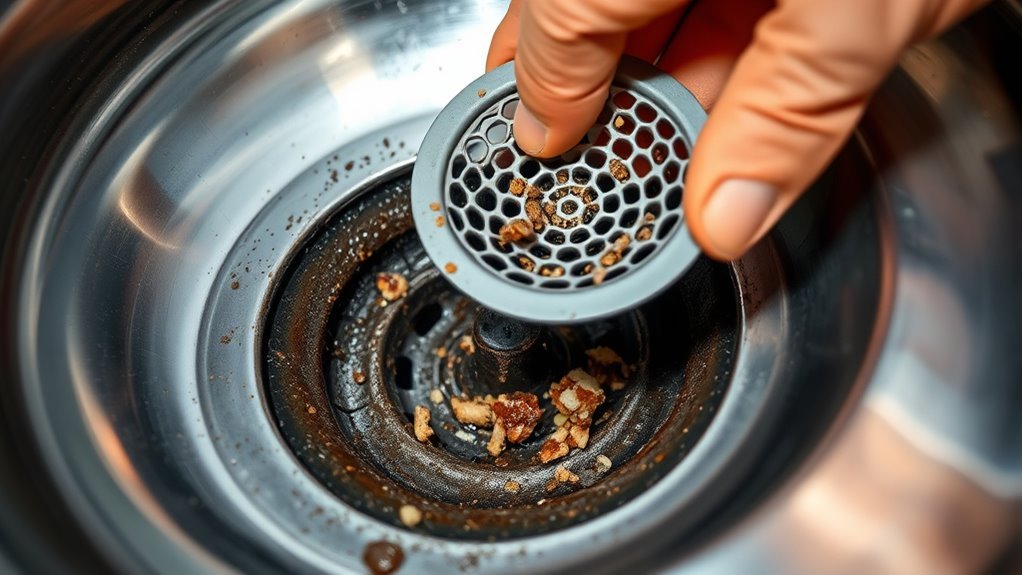
One of the clearest signs you have a clogged dishwasher drain is water pooling at the bottom after a cycle.
Besides this obvious symptom, you might notice unpleasant odors or dishes that aren’t drying properly.
These issues often happen because food debris, grease buildup, or small broken glass pieces block the drain hose or filter.
You might also hear gurgling sounds during draining, which means water is struggling to flow out.
If your dishwasher takes longer than usual to finish or doesn’t drain completely, those are additional signs to watch for.
Spotting these clues early helps you avoid bigger problems like leaks or damage.
How To Gather Tools To Unclog Your Dishwasher Drain
After spotting the signs of a clogged dishwasher drain, the next step is to gather the right tools to tackle the problem effectively. Having the essential tools on hand will save you time and frustration.
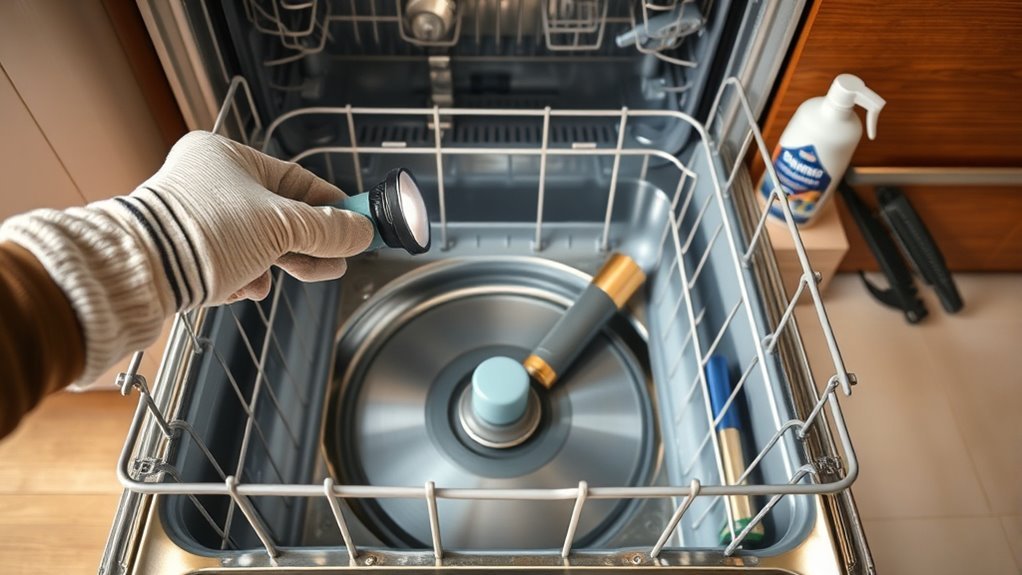
First, grab a screwdriver to remove any panels or screws securing the dishwasher’s drain area. A flashlight is helpful to see inside tight spaces clearly. You’ll also need a plunger or a small hand auger to clear stubborn clogs.
Start with a screwdriver, flashlight, and plunger or hand auger to access and clear dishwasher drain clogs.
Don’t forget a bucket and towels to catch any water spills during your work. Gloves are essential for hygiene and protection.
Following these drain maintenance tips guarantees you’re prepared to handle the clog safely and efficiently. Having the right tools ready keeps the process smooth and prevents damage to your dishwasher.
Once you’ve gathered everything, you’ll be ready to move on to safely unplug and disconnect your dishwasher before starting the unclogging process.
How To Safely Unplug And Disconnect Your Dishwasher
Before you start working on your dishwasher, make sure you unplug it from the power source to avoid any risk of electric shock. Safety is key, so always take electrical precautions seriously.
Find the dishwasher’s power cord, usually behind or underneath the appliance. If your dishwasher is hardwired, turn off the circuit breaker dedicated to it. Don’t rely only on the on/off switch to cut power.
Next, disconnect the water supply line connected to the dishwasher. Use a wrench to carefully unscrew the hose, and keep a towel handy for any water drips. Be sure to close the water valve before disconnecting to prevent leaks.
How To Remove And Clean Your Dishwasher Drain Filter
First, you’ll want to locate the drain filter, which is usually at the bottom of your dishwasher. It might take a little searching, but it’s typically right there under the lower spray arm. Once you’ve found it, carefully remove it—some models require you to twist it out, while others might just lift straight up.
After you’ve taken it out, give it a good clean by removing any gunk, food particles, or soap scum that might have built up. Rinse it thoroughly with water to make sure it’s nice and clean. When you’re done, pop it back in securely, making sure it’s fitted properly so everything runs smoothly again.
Locating The Drain Filter
You’ll find the drain filter at the bottom of your dishwasher, usually beneath the lower spray arm. Knowing exactly where it is makes it easier to access and maintain.
To locate the drain filter, open the dishwasher door fully and remove the bottom rack. Look for a round or rectangular filter near the base, often covered by a mesh screen.
If you don’t see the filter right away, check your dishwasher’s manual for guidance. You can also use a flashlight if the interior is dimly lit.
Understanding where the filter is helps you prepare for cleaning and prevents damage when removing it. Proper access makes clearing debris easier and keeps your dishwasher draining smoothly and efficiently.
Removing The Filter Safely
Removing the dishwasher drain filter involves just a few simple steps that guarantee you don’t damage any parts. First, make sure the dishwasher is off and pull out the lower rack for easy access.
Locate the filter at the bottom of the dishwasher tub. Most filters twist or lift out—check your manual if you’re unsure.
Gently turn the filter counterclockwise or lift it straight up to remove it. Avoid using excessive force to prevent breakage. Proper filter maintenance is essential to keep your dishwasher running smoothly and to avoid frequent filter replacement.
Cleaning And Reinstalling Filter
Start by rinsing the dishwasher filter under warm running water to wash away food particles and debris. Next, gently scrub the filter with a soft brush to remove stubborn grime. Pay close attention to corners where buildup often occurs. Once clean, check for any damage or wear. Common filter issues include clogs, tears, or warping.
Follow these filter maintenance tips to keep your dishwasher running smoothly:
- Clean the filter monthly to prevent blockages
- Avoid using harsh chemicals that can damage the filter
- Inspect the filter regularly for signs of wear
- Reinstall the filter securely to guarantee proper drainage
After cleaning, place the filter back in its slot, locking it firmly. Proper filter care prevents clogs and improves your dishwasher’s efficiency.
How To Clear Food And Grease From The Drain Hose
First off, you’ll want to disconnect the drain hose from your dishwasher. It’s pretty straightforward—just loosen the clamp and gently pull the hose off. Once it’s free, you can start sorting out the gunk inside.
Next, take a look inside the hose and clear out any food bits and grease that might be clogging things up. You can use a long brush or even a straightened coat hanger to help loosen and remove any stubborn buildup.
Finally, give the hose a good flush with water to rinse away any remaining debris. Make sure the water runs clear before you reattach the hose to your dishwasher. This way, you’ll help ensure everything drains properly and your dishwasher stays in top shape.
Disconnecting The Drain Hose
Before you can clear food and grease from the drain hose, you’ll need to disconnect it carefully from your dishwasher and sink drain. Start by turning off the power and water supply to avoid accidents.
Locate the drain hose, which is usually attached under the sink and to the back of the dishwasher. To disconnect it safely, follow these steps:
- Use pliers to loosen the clamp securing the drain hose.
- Gently twist and pull the hose off the dishwasher’s drain outlet.
- Detach the hose from the sink drain or garbage disposal.
- Inspect both ends for cracks or wear before reattaching.
Making sure the drain hose is disconnected without damaging the connections is key. This careful approach prevents leaks and makes cleaning much easier.
Removing Food And Grease
Two simple tools—a flexible brush and a bucket—can make clearing food and grease from your dishwasher drain hose much easier. Start by holding the hose over the bucket to catch any debris or water inside.
Use the flexible brush to gently scrub the interior, focusing on removing food particles stuck along the walls. Pay extra attention to areas with visible grease buildup, as this can block water flow and cause clogs.
Rotate the brush back and forth to loosen stuck-on residue. If the hose is especially greasy, dipping the brush in warm, soapy water can help break down the buildup.
Once you’ve removed as much as possible, shake out any remaining debris into the bucket. This step ensures your drain hose is clean and ready for reassembly.
Flushing And Reassembling
Once you’ve scrubbed the drain hose thoroughly, flush it with warm water to wash away any loosened debris and grease. Proper flushing helps prevent future clogs and ensures smooth drainage. You can use a garden hose or a sink faucet to push water through until it runs clear.
When you’re ready to put everything back together, keep these tips in mind:
- Make sure all clamps are tight to avoid leaks
- Double-check the hose is aligned properly to prevent kinks
- Reconnect any electrical parts carefully if you disconnected them
- Run a short cycle on the dishwasher first to test everything
Following these steps will clear out the drain hose effectively and get your dishwasher running like new again.
How To Inspect And Clear The Air Gap And Garbage Disposal Drain
Start by locating the air gap, usually a small cylindrical fixture mounted near your sink. Remove its cover to check for debris or buildup blocking water flow. Use a small brush or a toothpick to clear any visible clogs. Proper air gap maintenance prevents dirty water from backing up into your dishwasher.
Next, check the garbage disposal drain connected to your dishwasher’s drain hose. If your disposal is full or clogged, it can block the dishwasher drain. Run the disposal to clear small jams, or disconnect the dishwasher hose and look inside for trapped food debris. Use a flashlight for better visibility.
After clearing, reconnect the hose securely and run a short dishwasher cycle to ensure water drains smoothly. Regularly inspecting and clearing both the air gap and garbage disposal drain helps keep your dishwasher draining efficiently and prevents future clogs.
How To Use A Plunger Or Drain Snake On Your Dishwasher Drain
If clearing the air gap and garbage disposal drain doesn’t fix the clog, you’ll need to address the dishwasher drain directly. Using a plunger or drain snake can be effective ways to restore proper drainage and keep your dishwasher running smoothly. Here’s how to do it:
Start by removing the dishwasher’s lower rack to access the drain area. Use a cup plunger over the drain opening, pushing and pulling firmly to dislodge minor blockages.
If the plunger doesn’t do the trick, carefully insert a drain snake into the drain pipe. Twist gently to break up or retrieve debris. Always wear gloves and be careful not to damage the drain pipe or dishwasher parts.
Regular drain maintenance, including plunging and snaking when needed, helps prevent serious clogs. These steps help you tackle stubborn blockages yourself, saving time and money instead of calling a professional.
How To Reassemble Your Dishwasher After Cleaning
After thoroughly cleaning your dishwasher’s drain and components, carefully reassemble everything to ensure it works properly. Start by placing each cleaned part back in its original position, making sure they’re aligned correctly to prevent leaks or blockages.
When putting things back together, double-check that the drain cover, filter, and seals fit snugly and securely. Reconnect any hoses or clamps you removed, tightening them and positioning them properly.
Take your time during reassembly—everything should slide or click into place smoothly without forcing it. Improper alignment can cause water backup or malfunctioning parts.
Finally, close the dishwasher door and run a short cycle without dishes to check for leaks or strange noises. If everything runs smoothly, you’ve successfully reassembled your dishwasher and it’s ready for regular use again.
How To Prevent Dishwasher Drain Clogs In The Future
Once you’ve reassembled your dishwasher and made sure it’s running smoothly, it’s important to keep it that way by preventing future drain clogs. Regular drain maintenance tips can save you time and help you avoid costly repairs.
Start by rinsing dishes before loading them to cut down on food debris that can cause blockages. It’s a simple step that makes a big difference.
Make a habit of cleaning the filter and drain area regularly to prevent buildup. This helps keep everything flowing smoothly and reduces the chances of clogs.
Once a month, run a cleaning cycle using dishwasher cleaner or vinegar. This helps remove any grease or grime that could cause problems down the line.
Lastly, avoid overloading the dishwasher. Giving water enough space to circulate ensures it drains properly and keeps everything working efficiently.
Still Have A Clogged Dishwasher Drain? What To Try Next
Although you’ve tried the basic fixes, a stubborn clog might still be blocking your dishwasher’s drain. If your dishwasher is still draining slowly or not at all, it’s time to dig deeper. First, check the drain hose for kinks or blockages—common causes are trapped food or debris.
Disconnect the hose and run water through it to clear any buildup. Next, inspect the air gap or garbage disposal connection, if you have one, because these can hold clogs too.
If the problem persists, try using a mixture of baking soda and vinegar to break down grease and residue inside the drain. Let it sit for 15 minutes, then flush with hot water.
Regular drain maintenance like cleaning filters and running hot water cycles can help prevent future issues. If these steps don’t work, you might need a professional plumber to check for deeper plumbing problems or a faulty dishwasher drain pump.
Frequently Asked Questions
Can a Clogged Dishwasher Drain Cause Foul Odors Inside the Appliance?
Yes, a clogged dishwasher drain can definitely cause foul odors inside your appliance. When debris or food particles get stuck, they start to decay, producing unpleasant smells.
To keep your dishwasher fresh, you need regular drain maintenance. Cleaning the drain and filter helps prevent buildup that leads to odors.
Taking these steps not only helps prevent odors but also keeps your dishwasher running efficiently and lasting longer.
How Often Should I Clean My Dishwasher Drain to Prevent Clogs?
You should clean your dishwasher drain every one to three months to prevent clogs and keep it running smoothly. Regular drain maintenance tips include removing food debris and checking for buildup.
Sticking to a consistent cleaning schedule helps avoid foul odors and performance issues. If you use your dishwasher heavily, consider cleaning it more often.
Following these simple steps will keep your appliance efficient and odor-free without unexpected blockages.
Are Chemical Drain Cleaners Safe for Use in Dishwashers?
You shouldn’t use chemical drain cleaners in your dishwasher because they can damage the machine’s components and pose chemical safety risks.
Instead, try drain cleaner alternatives like baking soda and vinegar or a mixture of hot water and dish soap. These options are gentler and safer for your dishwasher.
Regular maintenance, like cleaning the filter and running a vinegar rinse cycle, can help prevent clogs without risking harm from harsh chemicals.
Can Using Too Much Detergent Contribute to Dishwasher Drain Clogs?
Imagine your dishwasher as a river, and detergent as the leaves that float downstream. If you toss in too many leaves, the river clogs.
Yes, using too much detergent can cause buildup, blocking the drain over time. It’s a common issue many people don’t realize.
To keep your dishwasher flowing smoothly, use the right amount of detergent. Regularly cleaning filters also helps prevent clogs.
This way, you’ll avoid problems and keep your dishwasher working efficiently.
Is It Normal for My Dishwasher to Make Loud Noises When Draining?
It’s normal for your dishwasher to make loud drain noises sometimes. These sounds usually come from the drain pump working hard to push out the water.
But if the noise keeps going or becomes really loud, it’s a good idea to check for clogs or debris blocking the drain.
Try inspecting the drain hose and filter to see if anything’s obstructing them. Clearing out any blockages usually quiets the noise and helps your dishwasher drain properly again.
Conclusion
Clogged dishwasher drains are more common than you might think. About 30% of dishwasher issues involve drainage problems.
By following these steps, you can fix most clogs yourself. This will save you time and avoid costly repairs.
Remember, regular maintenance keeps your dishwasher running smoothly and prevents buildup.
If your drain still won’t clear, don’t hesitate to call a professional.
Taking quick action ensures your dishwasher stays efficient and your kitchen stays clean.
And for persistent drainage issues, addressing a clogged dishwasher drain early is key to keeping everything running smoothly.