Washer and Dryer in Kitchen Guide: What to Know Before You Buy
Many people struggle with finding space for laundry appliances, especially when their kitchens are already busy. If you’re thinking about installing a washer and dryer in your kitchen, you’re not alone. It’s a popular solution for saving space and multitasking more efficiently.
Choose compact, ventless, or stackable models that fit your kitchen layout and style.
Make sure plumbing, electrical outlets, and ventilation are properly set up to avoid moisture and safety issues.
Planning carefully helps keep installation costs manageable.
Keep going to uncover how to pick the right appliances and avoid common pitfalls for a smooth setup.
Key Takeaways
- Choose compact, ventless, or stackable washer and dryer models to save space and fit seamlessly into your kitchen layout.
- Make sure you have proper plumbing access and dedicated electrical circuits for safe and efficient operation.
- Think about ventilation options like ducted or hybrid systems to handle moisture and prevent mold buildup.
- Plan where to place your appliances for easy multitasking and a look that matches your kitchen cabinets and countertops.
- Budget between $500 and $2,000 for installation, considering existing hookups and any custom work that might be needed.
Benefits of Installing a Washer and Dryer in Your Kitchen
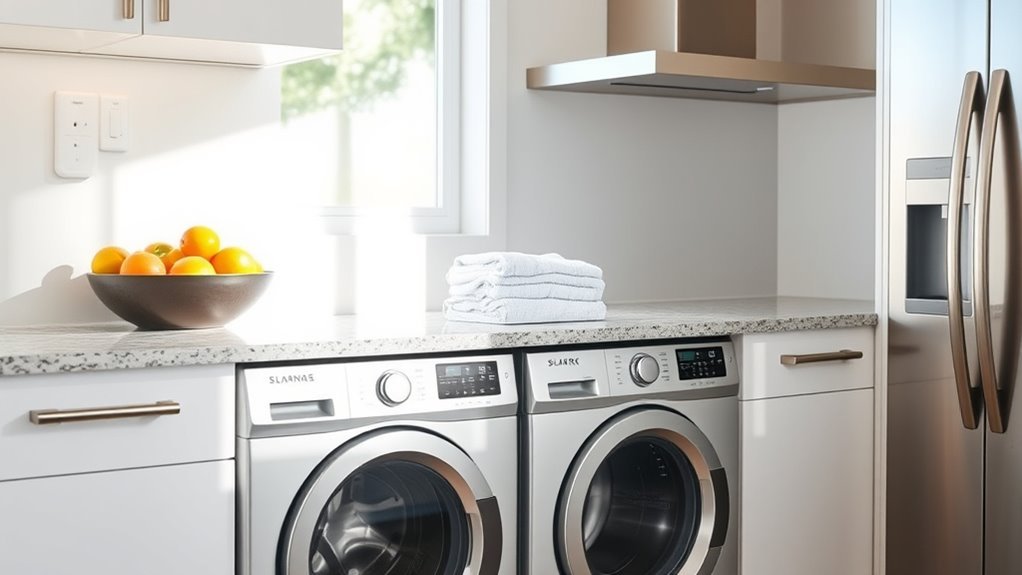
Although it might seem unconventional, installing a washer and dryer in your kitchen can save you valuable time and space. When you choose this setup, you’re embracing smart space-saving solutions that make your home more efficient.
Instead of dedicating a separate laundry room, you free up square footage for other uses. Plus, having laundry appliances close to where you spend a lot of your day means you can multitask easily—cook while washing clothes without missing a beat.
Design integration plays a vital role here. You can seamlessly blend your washer and dryer with existing cabinetry and countertops, maintaining your kitchen’s aesthetic without bulky interruptions.
Thoughtful placement and matching finishes help your appliances look like a natural part of the room. This approach not only maximizes functionality but also keeps your kitchen stylish and organized.
Which Washer and Dryer Types Work Best in Kitchen Spaces?
When you’re picking out washers and dryers for your kitchen, compact models are a great choice. They save space but still do a solid job when it comes to cleaning and drying your clothes. It’s like getting the best of both worlds—small footprint, big performance.
You might also want to consider ventless dryers. They’re pretty handy because they don’t need an external vent, giving you more flexibility to place your appliance pretty much anywhere in the kitchen. Overall, these options are really practical for making the most of your kitchen space without giving up on functionality.
Compact Washer Options
Choosing the right compact washer and dryer can turn your kitchen into a super functional laundry space without taking up too much room.
Features like smaller footprints, stackable setups, and front-loading doors make these washers perfect for tight kitchen spots.
Many models come with multiple wash cycles and energy-efficient options, so you don’t have to sacrifice performance.
Space-saving designs ensure your laundry setup fits nicely under countertops or inside cabinets.
When picking a compact washer, pay close attention to dimensions and look for noise-reduction features to keep your kitchen peaceful.
With the right compact washer, you get convenience and efficiency without cluttering your cooking space, making your kitchen a true multitasker.
Ventless Dryer Benefits
Compact washers fit well in kitchens, but pairing them with the right dryer makes all the difference. Ventless dryers are perfect for kitchen spaces because they don’t need an external vent, giving you more placement options.
Thanks to ventless technology, these dryers recycle air during drying, so you won’t need extra ductwork or holes in your walls. You’ll also notice they use less energy compared to traditional vented models.
Plus, ventless dryers produce less heat and moisture, helping keep your kitchen comfortable. If space is tight or venting is tricky, a ventless dryer is your best choice.
You get a compact, efficient solution that fits seamlessly into your kitchen setup.
Choosing Washer and Dryer Models That Fit Your Kitchen
Finding washer and dryer models that fit your kitchen layout and style can make a big difference in both function and aesthetics. Start by evaluating your space considerations—measure the area carefully to ensure the appliances won’t crowd your kitchen or block cabinets and walkways.
You’ll want models that slide easily into tight spots without sacrificing capacity. Next, think about appliance aesthetics. Choose finishes and colors that complement your kitchen’s design, whether that’s sleek stainless steel, minimalist white, or bold black.
Matching or coordinating your washer and dryer with existing appliances creates a cohesive look. Don’t forget to consider stackable or compact units if you’re working with limited space.
Finally, pick models with controls and door placements that won’t interfere with your kitchen workflow. By focusing on these practical and visual factors, you’ll find washer and dryer options that blend seamlessly into your kitchen, making laundry less of a chore and more of a convenience.
Plumbing and Electrical Needs for Kitchen Washer and Dryer Installation
Before you install a washer and dryer in your kitchen, make sure your plumbing and electrical systems can handle the new appliances. You’ll need access to hot and cold water lines, proper drainage, and a reliable water shutoff valve.
On the electrical side, check that your kitchen has the correct voltage, dedicated circuits, and grounded outlets to support the washer and dryer safely.
Here’s a quick overview:
| Requirement | Washer Needs | Dryer Needs |
|---|---|---|
| Water Supply | Hot and cold lines | None |
| Drainage | Dedicated drain | None |
| Voltage | 120V | 240V (electric) |
| Circuit | Dedicated 15-20 amp | Dedicated 30 amp |
| Outlet Type | Grounded 3-prong | Grounded 4-prong |
Checking your kitchen’s plumbing and electrical setup before buying helps avoid costly upgrades later.
Handling Ventilation and Moisture in Your Kitchen Laundry Area
When it comes to your kitchen laundry area, it’s really important to think about how you’re ventilating the space. You want to make sure air keeps moving around so that moisture doesn’t get trapped and cause problems. Good airflow isn’t just about comfort—it actually helps prevent mold growth and damage from all that humidity that can build up.
Ventilation Options Explained
Proper ventilation is essential when installing a washer and dryer in your kitchen to prevent excess moisture and maintain air quality. Understanding the different types of ventilation and how to install them helps you pick the best setup for your space.
You’ll typically encounter these options:
- Ducted Ventilation: Vents moisture outside. It requires proper duct installation to avoid backflow and ensure everything works efficiently.
- Ventless Systems: Use condensation drying technology. They’re great if venting outdoors isn’t an option, but they can increase indoor humidity.
- Hybrid Ventilation: Combines ducted and ventless features for more flexibility. However, it needs careful planning to meet local building codes.
Each option impacts your kitchen’s airflow and moisture control differently. Make sure to follow local building codes and manufacturer guidelines during installation to keep your kitchen comfortable and safe.
Managing Kitchen Moisture
When you add a washer and dryer to your kitchen, managing moisture is key to protecting your space from mold and damage. Make sure your laundry area has proper ventilation, like an exhaust fan or vented dryer.
These help remove excess humidity and stop condensation from building up. It’s also a good idea to check humidity levels regularly and use a dehumidifier if needed. Keeping the air dry and comfortable is important.
Sealing gaps around appliances and using moisture-resistant materials on walls and floors can make a big difference. These steps help prevent dampness, protect your cabinets and floors, and keep your kitchen healthier.
Proper moisture control not only safeguards your home but also makes your washer and dryer last longer and work better.
Best Layouts for Efficient Kitchen Laundry Setups
Finding the best layout for a kitchen laundry setup can really change how you handle chores. Focus on space-saving ideas and smart layout choices to create a functional area that fits seamlessly into your kitchen.
Choosing the right kitchen laundry layout transforms chores with smart, space-saving design for seamless functionality.
Think about where to place your washer and dryer to make everything efficient without disrupting your kitchen flow.
Here are three great layout options:
- Stacked units: Perfect for small spaces. Stacking your washer and dryer saves floor space for storage or prep areas.
- Under-counter installation: Put your appliances beneath the counter for a clean, streamlined look. It keeps laundry close and out of sight.
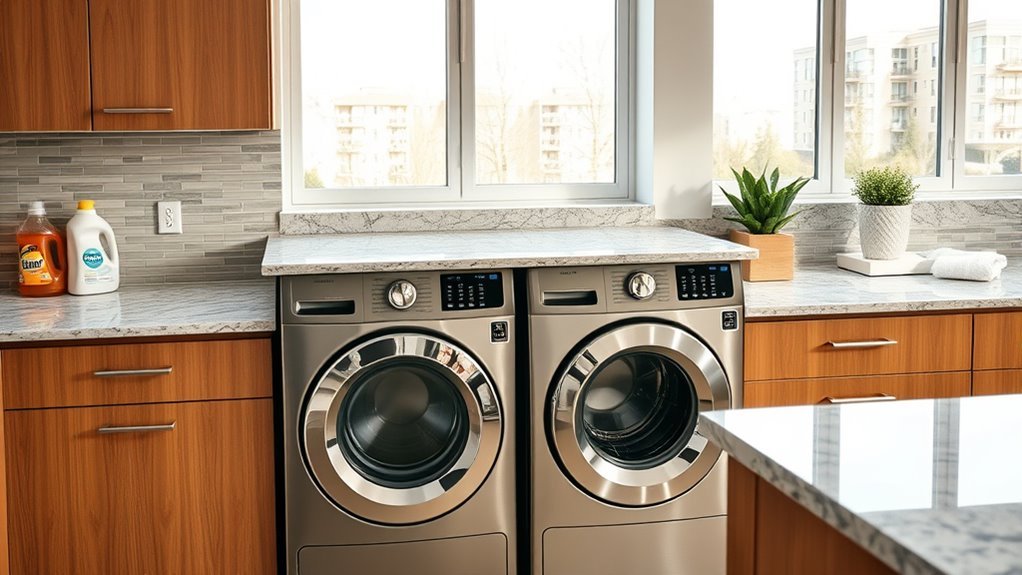
- Adjacent placement with folding station: Set the machines side by side with a countertop above. It’s ideal for folding and sorting clothes easily.
Each setup makes multitasking easier, turning laundry into a less tedious task while matching your kitchen’s style. Prioritize smart space use and thoughtful layout choices for both convenience and good looks.
Cost to Install a Washer and Dryer in Your Kitchen?
Installing a washer and dryer in your kitchen can be a game-changer, but it’s important to understand the costs involved before you start. Installation costs vary depending on your kitchen layout and existing plumbing and electrical setups.
If your kitchen already has the necessary hookups, you’ll save money since the work will be minimal. But if you need to add water lines, drainage, or upgrade electrical circuits, expect higher costs.
On average, installation costs range from $500 to $2,000, but complicated layouts can push that higher.
Your kitchen layout also affects whether you need custom cabinetry or additional ventilation, which can add to the expense. Planning your washer and dryer placement carefully helps minimize structural changes and keep costs down.
How to Avoid Common Installation and Usage Mistakes
To steer clear of common mistakes, it’s really important to set up proper ventilation for your dryer. This helps prevent moisture from building up, which can cause issues down the line.
Also, before you install your washer and dryer, make sure to double-check all your electrical connections and plumbing. It’s a small step that can save you a lot of trouble later on.
Proper Ventilation Setup
Because proper ventilation directly impacts both the efficiency and safety of your washer and dryer, you’ll want to make sure the setup is done correctly. Poor ventilation can lead to moisture buildup, mold growth, and even fire hazards.
To verify your ventilation system works effectively, follow these tips:
Use rigid or semi-rigid metal ducts instead of flexible plastic ones. This promotes better air circulation and reduces lint buildup.
Keep duct runs short and straight, avoiding unnecessary bends that can restrict airflow and strain your dryer.
Install a vent cap with a backdraft damper on the outside. This helps prevent outside air, pests, and debris from entering your kitchen.
Electrical and Plumbing Checks
Although setting up your washer and dryer in the kitchen might seem straightforward, overlooking electrical and plumbing requirements can lead to costly mistakes and safety hazards.
First, check that your kitchen’s electrical specs match your appliances’ needs. Most washers need a 120V outlet, while dryers often require a 240V connection. Using the wrong voltage can damage your machines or trip breakers.
Next, review plumbing requirements carefully. Your washer needs hot and cold water hookups with proper drainage to avoid leaks or flooding. Make sure the water pressure is adequate and hoses are securely connected.
If you’re unsure, it’s a good idea to consult a professional. Taking these steps helps ensure your installation goes smoothly, and your washer and dryer perform reliably. This keeps your kitchen safe and functional.
Maintenance Tips to Keep Your Kitchen Laundry Appliances Running Smoothly
Keep your kitchen laundry appliances running smoothly by performing regular maintenance. Preventive care helps avoid costly repairs and keeps your appliances working well for years to come.
Start by regularly cleaning the lint filter and vacuuming around the dryer vent. This helps prevent clogs and reduces fire hazards. Also, check hoses and connections for leaks or wear to avoid water damage and ensure everything runs efficiently.
Finally, run a monthly cleaning cycle on your washer using specialized detergents. This helps remove residue and keeps odors at bay, so your laundry stays fresh and your machine stays in top shape.
- Clean lint filter and vent to improve airflow
- Inspect hoses for leaks or cracks to prevent water damage
- Use washing machine cleaner monthly for ideal hygiene
Pros and Cons of Having a Kitchen Washer and Dryer Setup?
Wondering whether a kitchen washer and dryer setup is right for you? It can be a smart choice if you’re tight on space. Combining laundry with your kitchen means you save room elsewhere, which is vital for small apartments or homes. Plus, modern appliances often come in sleek designs, so appliance aesthetics won’t clash with your kitchen’s style.
On the downside, you’ll need to carefully consider space considerations. Kitchens tend to have limited room, and adding laundry machines might make the area feel cramped or disrupt your cooking workflow. Noise can also be an issue since washers and dryers aren’t the quietest appliances. You may find yourself dealing with moisture and humidity, which could affect kitchen cabinets or flooring over time.
Ultimately, weigh the convenience of having laundry nearby against potential disruptions in your kitchen’s function and look before making your decision.
Frequently Asked Questions
Can I Use My Kitchen Washer and Dryer for Delicate Fabrics?
Yes, you can use your kitchen washer and dryer for delicate fabrics, but you’ll need to pay close attention to laundry care settings.
Choose the gentle or delicate cycle on your washer to avoid damage, and use a low heat or air-dry option on your dryer.
Always check your garment labels and consider using mesh laundry bags to protect these fabrics while washing and drying in your kitchen appliances.
How Noisy Are Washer and Dryer Units in a Kitchen Setting?
Worried about noise levels when your washer and dryer run in the kitchen? They can be louder than you think, especially during spin cycles. But don’t worry—you can handle this by picking models with good sound insulation.
Many modern units are designed to cut down on noise, so your kitchen won’t sound like a construction site. Adding extra insulation or placing the units on vibration pads can also help keep things quieter while you cook or relax.
Do Kitchen Washer and Dryer Units Affect Home Insurance Policies?
Yes, installing a washer and dryer in your kitchen can affect your insurance coverage. You should let your insurance company know about these appliances because they might need to update your policy to cover water damage or electrical risks.
If you don’t update your policy, you could be underprotected if something goes wrong. So, it’s a good idea to check with your insurer first. That way, you’ll know what changes are needed and keep your coverage complete and current.
Are There Any Eco-Friendly Washer and Dryer Options for Kitchens?
Like finding a secret garden in a bustling city, you’ll encounter eco-friendly washer and dryer options that blend energy efficiency with space-saving designs. These compact units use less water and electricity, helping you shrink your carbon footprint without sacrificing convenience.
You’ll love how they fit seamlessly into your kitchen, turning a small space into a powerhouse of green living. These machines are both practical and planet-friendly, making eco-conscious choices easy and stylish.
Can I Integrate Smart Technology With Kitchen Laundry Appliances?
Yes, you can integrate smart appliance features with kitchen laundry appliances. Many modern washers and dryers come with laundry automation options that let you control cycles, monitor progress, and get alerts right from your smartphone.
This means you can schedule washes or adjust settings remotely, making things more convenient. These smart features save you time and energy, helping your kitchen laundry setup run more smoothly and stay high-tech.
Conclusion
You might think squeezing a washer and dryer into your kitchen is tricky, but it’s totally doable with the right planning.
By choosing compact models and addressing plumbing, ventilation, and electrical needs upfront, you’ll save space and time.
Just remember, proper installation and regular maintenance are key to avoiding headaches.
So, if you’re debating whether a kitchen laundry setup works for you, it’s worth giving it a serious shot!