How to Get Rid of Cockroaches in Kitchen: A Step-by-Step Guide
Dealing with cockroaches in your kitchen can be incredibly frustrating. Many people struggle with these pests invading their space, making it hard to feel comfortable cooking or eating.
If you’re looking for effective ways to get rid of cockroaches in your kitchen, you’re not alone—there are simple steps that can help you reclaim your space.
To get rid of cockroaches in your kitchen, start by thoroughly cleaning to remove crumbs and spills, and store food in airtight containers.
Seal cracks, gaps, and vents where they can enter and hide, especially near appliances.
Use gel baits or natural repellents like essential oils in dark, damp areas.
Apply chemical treatments safely at night if needed, then monitor with sticky traps to track progress.
Follow these steps, and you’ll soon uncover even more ways to keep your kitchen pest-free.
Key Takeaways
- Keep the kitchen clean by wiping surfaces, sweeping floors, and storing food in airtight containers. This helps remove the food sources cockroaches thrive on.
- Inspect and seal cracks, gaps, and entry points around pipes, vents, and baseboards to stop cockroaches from sneaking in.
- Identify the cockroach species so you can choose effective baits and traps. Place them in dark, moist areas and in crevices where they hide.
- Use natural repellents like essential oils or baking soda mixtures. Apply chemical treatments safely at night when cockroaches are most active.
- Monitor activity with sticky traps after treatment, and keep up regular cleaning and sealing to prevent them from coming back.
Why Are Cockroaches Attracted to Your Kitchen?
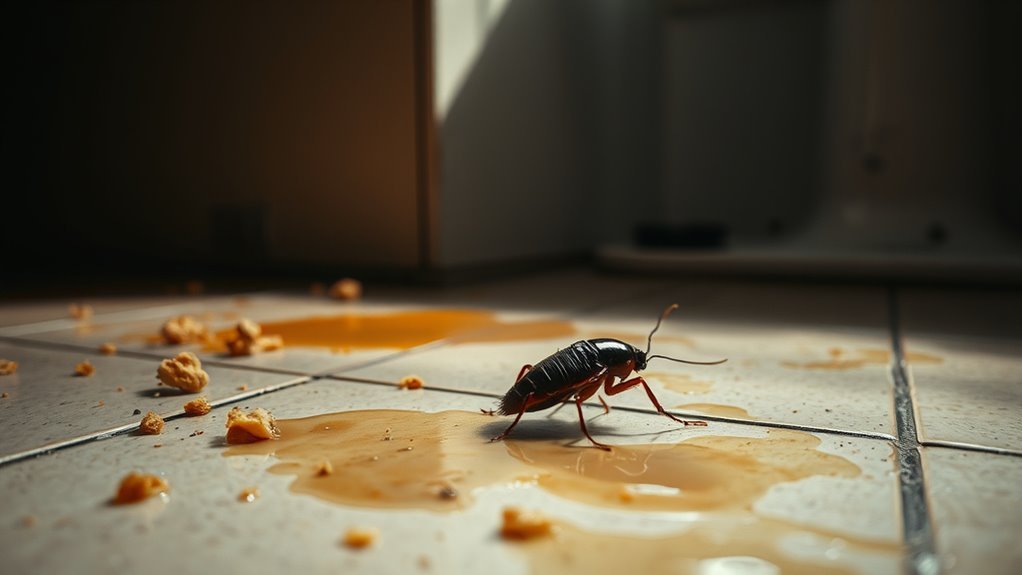
Because your kitchen provides food, water, and shelter, cockroaches find it particularly appealing. Their behavior revolves around survival, and your kitchen offers the perfect environment to meet their needs.
You might not realize it, but even small crumbs, spills, or a damp sink can attract these pests. Cockroaches are nocturnal, so they stay hidden during the day and come out at night to forage for food and water.
Poor kitchen sanitation creates an inviting habitat for them to thrive and reproduce rapidly. If you don’t clean surfaces regularly, leaving dirty dishes and food scraps out, you’re essentially inviting them in.
Understanding cockroach behavior helps you recognize why maintaining strict sanitation is essential. By keeping counters clean, fixing leaks, and disposing of garbage promptly, you make your kitchen less attractive.
This reduces their access to resources and helps prevent infestations before they start.
Where Cockroaches Hide and How to Find Them
Many cockroaches hide in dark, tight spaces where you least expect them. To find these pests, focus on their favorite spots: cracks in walls, behind appliances, inside cabinets, and under sinks.
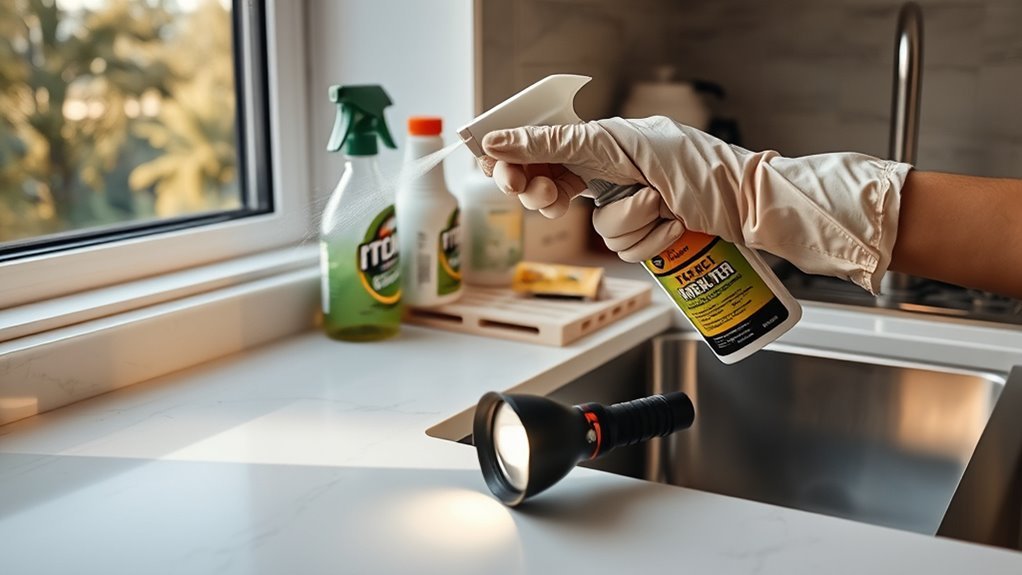
Since they’re nocturnal, they’re mostly active at night. Using a flashlight when inspecting your kitchen after dark can help you spot movement or droppings. Look for grease marks and egg cases in corners and crevices.
Pay close attention to areas with moisture and food crumbs, as these attract cockroaches. Don’t forget to check behind the refrigerator, stove, and dishwasher—these warm, humid spots are ideal for them.
How to Spot Different Cockroaches in Your Kitchen
How can you tell which type of cockroach has invaded your kitchen? Start by identifying species based on their distinct features. The most common kitchen invaders are German, American, and Oriental cockroaches.
German cockroaches are small, about half an inch long, light brown with two dark parallel stripes on their backs. American cockroaches are larger, reddish-brown, and have a yellowish figure-eight pattern on the back of their heads.
Oriental cockroaches are darker, almost black, and slightly smaller than American cockroaches with a shiny, smooth appearance. Pay attention to size, color, and markings to tell these species apart.
Identifying the species helps you choose the right treatment since some are more resistant to certain methods. Look for cockroaches in typical hiding spots and observe their appearance in natural light or with a flashlight.
How to Clean Your Kitchen to Remove Cockroach Food Sources
If you want to keep cockroaches away, the first thing you should do is get rid of any food crumbs. Wiping down your counters and surfaces regularly makes a big difference. It’s all about making your kitchen less appealing to them, you know?
Also, try to store all your food in airtight containers. That way, even if some crumbs fall, the pests won’t be able to get a proper meal. And don’t forget about the trash. Cleaning out your trash areas often is super important because they’re a major food source for cockroaches. Keeping everything tidy and sealed up really helps prevent those unwanted visitors!
Eliminate Food Crumbs
Since cockroaches are attracted to even tiny food particles, you need to clean your kitchen thoroughly to remove crumbs and spills. Start by wiping down countertops, tables, and stovetops after every meal.
Sweep or vacuum floors daily, especially in corners and under appliances where crumbs tend to gather. Incorporate cleaning routines that focus on crumb prevention, like immediately cleaning up dropped food and not leaving dirty dishes out overnight.
Don’t forget to clean inside cabinets and drawers regularly because crumbs can build up unnoticed. Using a damp cloth or mop helps pick up small particles that sweeping might miss.
Sticking to these habits consistently will cut down on the food sources cockroaches depend on. This makes your kitchen less inviting and helps keep your space pest-free.
Store Food Properly
Properly storing food is one of the best ways to keep cockroaches out of your kitchen. Start by putting all dry goods like cereals, flour, and snacks in airtight containers to block easy access.
Avoid leaving opened packages exposed because cockroaches are attracted to crumbs and strong odors. Refrigerate perishable items right away and keep your pantry neat so you can quickly spot spills or damaged packaging.
Good food storage helps preserve your groceries and plays a big role in pest prevention. By removing easy food sources, you make your kitchen less inviting to cockroaches.
Clean Trash Areas
Keeping your trash areas clean is key to stopping cockroaches from finding food. Empty your trash can and recycling bin regularly to keep buildup at bay. Using liners in both helps contain spills and odors that attract pests.
After emptying, wash the trash can and recycling bin with hot, soapy water. Pay close attention to corners and lids where food particles can hide. Dry them thoroughly before putting in new liners to avoid moisture, which cockroaches love.
Be sure to store these bins away from kitchen walls and floors to cut down on hiding spots. Finally, don’t leave food scraps or dirty containers in the trash overnight. Keeping your trash areas spotless makes your kitchen less inviting for cockroaches.
How to Seal Entry Points to Keep Cockroaches Out
First things first, take a good look around your space to find those sneaky entry points—cracks, gaps, and vents where cockroaches might slip in. Once you’ve spotted them, grab some strong sealants and make sure to seal those openings up tightly. It’s a good idea to check these spots regularly and fix any new gaps before those unwanted guests decide to move in.
Identify Common Entry Points
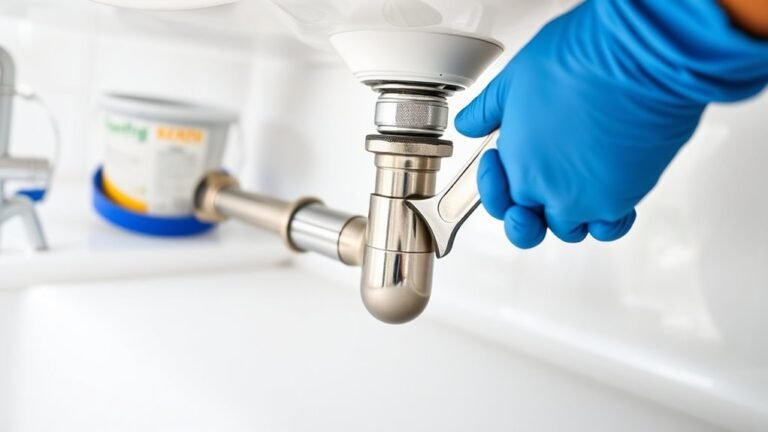
Although cockroaches can enter your kitchen through many places, focusing on common entry points helps you block their access effectively. Start by inspecting gaps around pipes, cracks in walls, openings near baseboards, and spaces under doors.
Don’t forget to check vents, windows, and areas where utilities enter your home. Finding these spots is key to creating effective prevention strategies.
Once you know where cockroaches are slipping in, you can target those areas to stop future infestations. Regularly monitoring these entry points also helps you catch new vulnerabilities early.
Use Effective Sealants
After finding where cockroaches are sneaking into your kitchen, the next step is to seal those entry points properly. Picking the right sealant and knowing how to apply it ensures a solid barrier against pests.
Silicone-based sealants are flexible and water-resistant, making them perfect for cracks around sinks. Acrylic sealants dry quickly and can be painted over, which is great for wall gaps. Expanding foam works well for bigger holes but can be a bit messy.
Apply sealants evenly and press firmly to fill all spaces completely. Here’s a quick guide:
| Sealant Type | Best For | Application Tips |
|---|---|---|
| Silicone | Moist areas, sinks | Use with a caulking gun |
| Acrylic | Walls, small cracks | Smooth with a putty knife |
| Expanding Foam | Large gaps, vents | Wear gloves; trim excess foam |
| Latex Caulk | General sealing | Cleanup is easy with water |
Maintain Regular Inspections
Regular inspections are key to keeping your kitchen cockroach-free by making sure all entry points stay sealed. It’s important to regularly check for gaps or cracks where cockroaches might sneak in.
Take a look at door frames, window sills, and plumbing areas for any new openings. If you spot worn or cracked sealants, reapply them right away.
Keeping your kitchen clean is just as important. Follow sanitation tips to reduce food and water sources that attract pests.
Use flashlights and mirrors during inspections to find hidden crevices you might otherwise miss. Regular checks help maintain an effective pest control strategy.
How to Choose Effective Cockroach Baits and Traps
Choosing the right cockroach baits and traps can make all the difference in effectively controlling an infestation. You need to understand bait types—gel baits, bait stations, and sticky traps—to pick what suits your kitchen best.
Remember, trap placement is essential. Cockroaches prefer dark, moist areas near food sources. Place baits along walls, under sinks, and behind appliances for maximum impact.
Here’s a quick guide to help you choose:
| Bait/Trap Type | Best Placement |
|---|---|
| Gel Baits | Cracks, crevices |
| Bait Stations | Cabinets, corners |
| Sticky Traps | Under appliances |
| Powder Baits | Baseboards, behind fridge |
| Electronic Traps | Open areas, pathways |
Safe Natural Ways to Get Rid of Cockroaches
You can get rid of cockroaches safely by trying out some natural methods like essential oils, baking soda, and herbal repellents. These options are great because they do the job without putting harsh chemicals into your kitchen.
Let’s take a look at how each one works to help keep your space pest-free.
Essential Oils That Work
Although cockroaches are resilient pests, you can repel them effectively using certain essential oils. These oils disrupt their scent trails and make your kitchen uninviting. Here are four essential oils that work best:
- Peppermint oil. Its strong smell overwhelms roaches, keeping them away.
- Tea tree oil. Known for its antimicrobial properties, it also deters cockroaches.
- Eucalyptus oil. Its sharp scent irritates and repels these pests.
- Lavender oil. Besides smelling great, it acts as a natural cockroach deterrent.
To use, mix 10-15 drops of any oil with water in a spray bottle. Spray around kitchen corners, under appliances, and near entry points. Reapply every few days for consistent protection without harsh chemicals.
Baking Soda Remedies
Two common kitchen staples, baking soda and sugar, can work together as a safe and effective remedy to get rid of cockroaches. The sugar attracts the cockroaches, while the baking soda’s effectiveness lies in its ability to react with the acid in their stomachs, ultimately killing them.
For baking soda application, mix equal parts of baking soda and sugar, then sprinkle the mixture in areas where you’ve seen cockroaches, such as under sinks, behind appliances, and along baseboards. Make sure to keep it dry and out of reach of children and pets.
Repeat this process regularly until you notice a decline in roach activity. This simple remedy offers a natural alternative to harsh chemicals, making it a smart choice for your kitchen.
Herbal Cockroach Repellents
When dealing with cockroaches, herbal repellents are a safe and natural alternative to chemical treatments. Using these remedies helps keep your kitchen free of harsh toxins while still effectively deterring pests. You can rely on natural ingredients that cockroaches dislike to protect your space.
Here are four effective herbal options to try:
- Bay leaves – Scatter dried bay leaves in corners and cupboards. Their scent repels roaches.
- Peppermint oil – Mix a few drops with water and spray around entry points.
- Cucumber slices – Place fresh cucumber peels where roaches appear. They dislike the smell.
- Catnip – Spread catnip in hidden spots or make a tea spray. It contains nepetalactone, a natural insect repellent.
These herbal remedies are safe, easy, and environmentally friendly ways to keep cockroaches at bay.
How and When to Use Chemical Treatments
Before applying any chemical treatments, make sure you’ve identified the areas where cockroaches are most active. This helps you target your efforts and makes the treatment more effective.
Always prioritize safety. Read labels carefully and use gloves or masks as recommended. Apply treatments during nighttime when cockroaches are most active, and avoid spraying food prep surfaces directly.
Here’s a quick guide to common chemical treatments:
| Treatment Type | Application Area | Precautions |
|---|---|---|
| Gel Bait | Cracks, crevices | Use sparingly; keep away from pets |
| Spray Insecticide | Baseboards, corners | Ventilate area; avoid food |
| Boric Acid | Under sinks, appliances | Avoid inhalation; keep dry |
| Insect Growth Regulator | Entry points | Use as directed; non-toxic to humans |
| Sticky Traps | Along walls, cabinets | Replace regularly; not chemical |
Use chemicals responsibly to ensure safety and get the best cockroach control.
How to Monitor Cockroach Activity After Treatment
Monitoring cockroach activity after treatment helps you see if your efforts are working or if you need to take more steps. Knowing how cockroaches behave is key to effective monitoring. Since they are nocturnal and hide in dark, damp places, it’s best to check for activity at night.
Here’s how to keep track of cockroach activity after treatment:
- Use sticky traps in corners and near hiding spots to catch any remaining cockroaches.
- Check traps every day, and note how many you catch and where. This helps you see if the problem is getting better.
- Regularly inspect common hiding spots like under sinks and behind appliances for droppings or shed skins.
- At night, use a flashlight to watch for movement or signs of cockroach retreat to see if they’re still active.
How to Prevent Future Cockroach Infestations in Your Kitchen
Since cockroaches thrive where food and water are easy to access, you should eliminate these attractants to keep them away. Start by sealing food in airtight containers and cleaning crumbs or spills right away. Fix leaky faucets and avoid leaving standing water in sinks or pet bowls overnight.
Make sure to take out the trash regularly and use bins with tight-fitting lids. Preventive measures go beyond just cleaning. Check and seal cracks around pipes, walls, and cabinets to block their entry points.
Keep proper ventilation to reduce moisture buildup, which attracts pests. Stick to a regular kitchen cleaning routine—wiping counters, sweeping floors, and cleaning appliances—so there are no hiding spots or food sources left behind.
Frequently Asked Questions
Can Cockroaches Cause Allergies or Asthma?
Yes, cockroaches can cause allergies and act as asthma triggers. When you’re exposed to their allergens—like saliva, droppings, or shed skin—it can irritate your respiratory system.
If you have asthma, these allergens might make your symptoms worse or even cause attacks. So, keeping your living space clean and free of cockroaches is really important.
This helps protect you and your family from these health risks.
Do Cockroaches Carry Diseases Harmful to Humans?
Imagine inviting a thief into your house who not only steals but spreads germs everywhere. That’s what cockroaches do—they’re vectors of disease transmission, carrying bacteria and pathogens on their bodies.
While cockroach bites are rare, they can cause irritation and allergic reactions. You shouldn’t underestimate their impact; these pests can contaminate your food and surfaces, increasing the risk of diseases harmful to you and your family.
How Long Do Cockroaches Live Without Food or Water?
Cockroaches can survive without food for about a month, but their lifespan without water drops sharply—they usually last only about a week.
Their survival tricks include slowing down their metabolism and finding tiny water sources, which makes them pretty tough to get rid of.
If you want to cut down their numbers, it’s important to cut off both food and water sources. Their dependence on moisture is a key weakness you can take advantage of.
Are Certain Kitchen Materials More Prone to Cockroach Infestations?
You know what they say, “Cleanliness is next to godliness.” Certain kitchen materials like cardboard boxes and untreated wood are more likely to attract cockroaches because they absorb moisture and hide in tiny spaces.
To keep roaches away, focus on keeping your kitchen clean and storing food properly. Use airtight containers and wipe down surfaces regularly.
This helps reduce things that attract pests and makes your kitchen less inviting to these pesky invaders.
Can Pets Attract or Repel Cockroaches in the Kitchen?
Pets can attract cockroaches if you leave pet food out because it’s a tempting snack for them. You’ll want to store pet food in sealed containers and clean up crumbs promptly.
On the other hand, pets don’t naturally repel cockroaches. Your cleaning habits matter more—regularly wiping surfaces and taking out trash will keep cockroaches away.
Conclusion
Getting rid of cockroaches in your kitchen might feel like chasing shadows, but with the right steps, you can turn the tide. Keep your space clean, seal every crack, and choose treatments wisely.
Remember, persistence is your best ally. Monitor regularly and prevent their return. By staying vigilant, you’ll transform your kitchen from a roach haven into a fortress.
Make sure those unwelcome guests don’t come knocking again by tackling cockroach infestations head-on.