Built in vs. Freestanding Dishwasher: Which Is Better?
Many people struggle with choosing the right dishwasher for their home, feeling overwhelmed by the options.
Whether you want a sleek, quieter model that saves energy or need something more flexible and budget-friendly, you’re not alone.
If you want a sleek, quieter dishwasher that saves energy, a built-in model fits flush under your countertop and blends with your kitchen design.
It needs professional installation and dedicated space but offers long-term efficiency and adds home value.
Freestanding dishwashers are easier to install, more flexible with placement, and cost less upfront.
They’re perfect if you move often or want something quick and simple to set up.
Choosing the right one depends on your kitchen layout, budget, and lifestyle.
Explore which suits you best next.
Key Takeaways
- Built-in dishwashers give your kitchen a sleek, integrated look but need professional installation and dedicated cabinet space.
- Freestanding dishwashers are flexible with placement, easy to install, and have finished sides so you can use them as standalone units.
- Built-in models tend to be quieter and more energy-efficient, helping you save water and cut utility costs.
- Freestanding units are easier to maintain and faster to repair because their parts are more accessible.
- Your choice depends on your budget and kitchen layout. Built-ins cost more upfront but can boost your home’s resale value.
Built-In vs Freestanding Dishwashers: Key Differences Explained
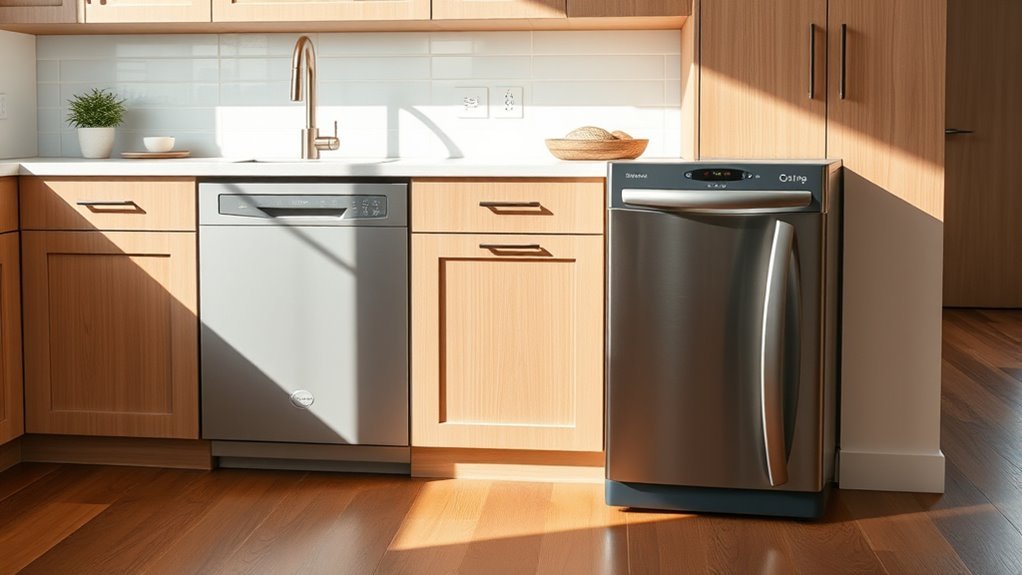
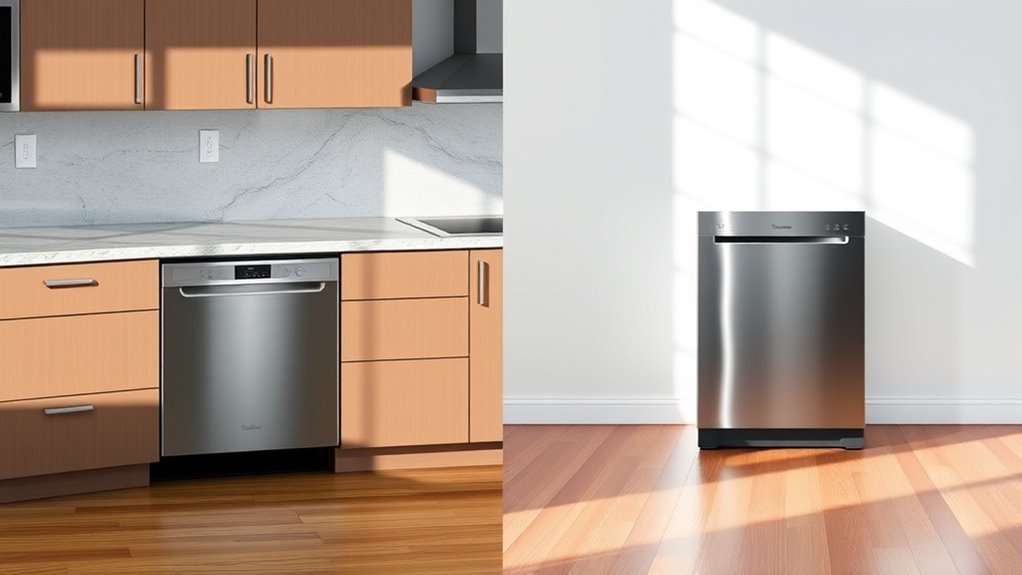
Although both built-in and freestanding dishwashers serve the same basic purpose, they differ quite a bit in design, installation, and flexibility.
Built-in models are designed to fit seamlessly under your countertop, giving your kitchen a sleek, integrated look. They require professional installation since they connect directly to your plumbing and electrical systems.
Built-in dishwashers blend perfectly under countertops and need professional plumbing and electrical setup.
Freestanding dishwashers, on the other hand, offer more versatile installation options. You can place them anywhere with access to water and power, making them great if you’re renting or want a portable solution.
Freestanding units often have finished sides and tops so they don’t need to be tucked under counters. Built-ins usually don’t have finished sides, so they’re best hidden within cabinetry.
Knowing these differences helps you decide which style fits your kitchen layout and lifestyle without complicating installation.
How to Choose Between Built-In and Freestanding Dishwashers
Where should you place your dishwasher to best suit your needs? Choosing between built-in and freestanding dishwashers depends on your space and preferences. Keep these key points in mind:
- Available Space: Measure your kitchen area carefully. Built-in models need a dedicated cabinet space, while freestanding units offer more flexibility.
- Installation: Built-in dishwashers require professional installation, which could impact your budget and timeline. Freestanding ones are easier to set up—just plug and go.
- Aesthetic Preferences: Built-ins blend seamlessly with your cabinetry for a streamlined look. Freestanding dishwashers stand out more but are easier to move or replace.
- Usage Frequency: If you wash dishes often, a built-in might be better for its durability and integrated design. For occasional use, a freestanding model is practical.
How Kitchen Layout Affects Your Dishwasher Choice
Your kitchen layout plays a big role in deciding which dishwasher fits best. Start by measuring your space to see how much room you have for a dishwasher. If your kitchen is small, a built-in model can save space by fitting neatly under your countertop.
Measuring your kitchen space is key to choosing a dishwasher that fits perfectly, especially in smaller kitchens.
If your layout is more flexible, a freestanding dishwasher might be easier to move and reposition as needed. Think about how you move around your kitchen and where your sink and prep areas are.
Positioning the dishwasher near your sink and prep zones helps cut down on steps and makes your workflow smoother. Built-in dishwashers blend seamlessly with your cabinets, giving your kitchen a cohesive look.
Freestanding models, on the other hand, are versatile and easier to move if your layout changes later on. Ultimately, your space, how you use it, and your style preferences will help you pick the right dishwasher for your lifestyle.
Installation: What to Expect for Each Dishwasher Type
Since installation differs between built-in and freestanding dishwashers, knowing what to expect can save you time and hassle. Built-in dishwashers often come with installation challenges because of their fixed cabinetry and plumbing connections, while freestanding models are generally easier to set up. Here’s what you should keep in mind:
- Built-in dishwashers require precise measurements and may need cabinet modifications to fit properly.
- Freestanding dishwashers just need access to a water source and a power outlet, making them more flexible.
- Both types might need a professional to help ensure plumbing and electrical connections meet local codes and avoid leaks or shorts.
- Installation time varies: built-in models usually take longer because they need to be integrated with cabinetry, while freestanding units can often be installed within an hour.
Understanding these differences helps you prepare for installation challenges and decide if you want to do it yourself or hire a pro.
Which Dishwasher Is Quieter: Built-In or Freestanding?
You’ll probably find that built-in dishwashers are quieter than freestanding ones, mainly because of how they’re installed. When they’re built into your cabinetry, they tend to be better at muffling sound, so you don’t hear them as much during a cycle.
Plus, the design and materials used in built-in models also help cut down on noise. All in all, these factors really make a difference in how loud the dishwasher is when it’s running.
Noise Levels Comparison
How much noise a dishwasher makes can really impact how comfortable your kitchen feels. When comparing built-in and freestanding dishwashers, noise insulation is a big factor in how loud they are. Built-in models usually have better soundproofing materials that cut down on vibrations and noise, so they tend to be quieter.
Freestanding units generally rely more on their outer casing to control noise. The effectiveness of noise insulation can vary a lot depending on the brand and model within both types. Also, how well the dishwasher is installed plays a role, especially for built-ins fitted closely under countertops.
Knowing about noise insulation helps you pick a dishwasher that matches your comfort level for sound.
Design Impact on Sound
Although both built-in and freestanding dishwashers aim to clean quietly, their design differences significantly affect how much sound they produce. Built-in models are installed flush with your cabinetry, which naturally adds extra sound insulation. The surrounding cabinets help absorb and block noise, making them quieter overall.
In contrast, freestanding dishwashers stand alone and lack this natural sound buffer, so they tend to be noisier. However, some freestanding units include advanced sound insulation materials to help reduce noise. When choosing between the two, think about how important a quiet kitchen environment is to you.
If you want a quieter experience, a built-in dishwasher’s design usually provides better noise reduction thanks to the sound insulation from your cabinetry.
Design and Aesthetic Differences Between Dishwashers
Design plays a key role when choosing between built-in and freestanding dishwashers, as each offers distinct aesthetic benefits that can impact your kitchen’s overall look. Think about how each style complements your kitchen’s design and matches your personal taste.
Modern aesthetics: Built-in dishwashers give a sleek, seamless look that blends in with your cabinetry, perfect for a minimalist vibe.
Space integration: Built-ins tuck neatly under counters, creating a streamlined appearance. Freestanding units stand alone and can sometimes interrupt your kitchen flow.
Color options: Freestanding dishwashers come in a variety of colors and finishes, giving you more freedom to match or contrast with your decor.
Visual impact: A built-in dishwasher stays subtle and understated, while a freestanding one can become a focal point, especially if it has a unique design.
Energy and Water Efficiency: Which Dishwasher Saves More?
When choosing between built-in and freestanding dishwashers, you might wonder which one uses less energy and water. Both types have models with excellent efficiency ratings, but built-in dishwashers often offer better energy and water savings thanks to advanced technology and integration with your kitchen’s plumbing.
Many built-in options come with eco-friendly features like soil sensors and energy-saving modes that cut down on environmental impact without sacrificing cleaning power. While some freestanding dishwashers are also designed to be efficient, they may not always match the lower resource use of built-in models.
Cost Comparison: Upfront Price and Long-Term Expenses
Since choosing a dishwasher involves more than just the purchase price, you’ll want to evaluate both upfront costs and ongoing expenses. Built-in dishwashers usually have higher upfront costs because they need professional installation, while freestanding models tend to be more budget-friendly at first.
Choosing a dishwasher means weighing initial costs against long-term expenses and installation needs.
But long-term savings depend on factors like energy use and durability. Consider these points when comparing costs:
- Purchase Price: Freestanding dishwashers generally cost less upfront than built-in units.
- Installation Fees: Built-in models often require professional installation, which can increase initial expenses.
- Energy Efficiency: More efficient models can lower utility bills, helping you save money over time.
- Resale Value: Built-in dishwashers may add value to your home, which can indirectly save you money later on.
Maintenance and Repairs: What’s Easier to Handle?
When it comes to maintenance and repairs, think about how easy it is to get to your dishwasher for fixing or cleaning. Freestanding models usually make it pretty straightforward to access the parts, so you might find it easier to handle any issues yourself. On the other hand, built-in units can be a bit trickier—they might need more effort or even a professional to take care of repairs.
Also, consider how easy it is to find replacement parts for each type. Some models have readily available parts, making repairs less of a hassle. And don’t forget to think about how much upkeep each one needs—some dishwashers might require more regular maintenance than others. All in all, it’s worth weighing these factors to figure out which option will be easier to maintain in the long run.
Accessibility for Repairs
Although built-in dishwashers blend seamlessly with your cabinetry, they can be tricky to access for repairs. Usually, you’d need to remove parts of the cabinetry, which takes time and might cost more if repairs are needed often.
On the other hand, freestanding dishwashers are easier to access because you can pull them out easily. This makes repairs quicker and less disruptive.
Keep in mind, built-in models often require partial disassembly of surrounding cabinets for a technician to reach the parts. Freestanding units allow direct access, simplifying the process.
Higher service costs can come with built-in dishwashers due to their complicated access. Freestanding models tend to have less downtime and fewer service hassles because repairs are simpler.
Choosing between the two depends on how often you expect repairs and how important easy access is to you.
Replacement Part Availability
Anyone who owns a dishwasher knows that having replacement parts readily available can make maintenance much easier. With freestanding dishwashers, you’ll often find parts compatibility across various models, making it simpler to source what you need quickly. Plus, these units usually come with straightforward warranty options that cover common components, so repairs won’t break the bank.
Built-in dishwashers, on the other hand, may require more specific parts due to their custom installation. This can limit your options and potentially delay repairs. Warranty coverage might vary more widely depending on the brand and installation type.
Cleaning and Upkeep
Since dishwashers need regular cleaning to work well, think about how easy each type is to maintain. Freestanding models are usually easier to access for cleaning, while built-in units might take more effort because they’re fixed in place.
Here are some tips for upkeep and how often to clean:
- Clean filters and spray arms once a month to avoid clogs.
- Wipe down door seals weekly to prevent mold buildup.
- Run a cleaning cycle with dishwasher cleaner every 1-3 months.
- Check for leaks or loose parts every three months so you catch repairs early.
Freestanding dishwashers can be pulled out for deep cleaning, making maintenance and small repairs easier. Built-in models might need professional help more often, so keep that in mind when choosing.
Which Dishwasher Fits Your Lifestyle Best?
How do you decide which dishwasher fits your lifestyle best? Start by thinking about your space and what works for your kitchen. If it’s small, a built-in model might look seamless, while freestanding units give you flexibility if you move often.
Family size matters too—big families might need larger built-in dishwashers, while singles or couples may prefer smaller, freestanding options. Think about how your kitchen is laid out and your cooking habits. If you cook a lot and generate many dishes, a built-in dishwasher with advanced features could be the right choice.
Budget is important as well. Freestanding dishwashers usually cost less upfront, but built-in models might save energy over time. Your style preferences count, too. Built-in units blend with your cabinets, while freestanding ones can make a statement.
Finally, consider energy efficiency. Models that save energy can lower utility bills and help the environment. By matching these factors to your daily routine, you’ll find the dishwasher that fits your lifestyle perfectly.
Frequently Asked Questions
Can I Convert a Freestanding Dishwasher Into a Built-In Model?
Yes, you can convert a freestanding dishwasher into a built-in model with some modifications. Just be prepared for a few installation challenges along the way.
You’ll need to remove the top and side panels, adjust the door hinges, and possibly secure the dishwasher under your countertop. Keep in mind, this process isn’t always straightforward.
You might also need to reroute plumbing and electrical connections to fit the new setup. If you’re not comfortable making these changes, hiring a professional can save you time and frustration.
Are There Dishwashers Specifically Designed for Small Apartments?
Think of your kitchen like a puzzle where every piece must fit perfectly. Yes, you’ll find compact options designed just for small apartments. These dishwashers have space-saving designs that fit neatly into tight spots without losing cleaning power.
They’re perfect if you don’t have room for a full-size model but still want the convenience of a dishwasher. You’ll love how they make the most of your limited space, keeping it efficient and stylish.
How Do Dishwasher Detergents Differ for Built-In Versus Freestanding Models?
Dishwasher detergents don’t differ much between built-in and freestanding models. You’ll find the detergent composition is generally the same, designed to optimize cleaning efficiency regardless of your dishwasher type.
What really matters is choosing a detergent that matches your water hardness and soil level. So, focus on detergent quality and formula rather than the dishwasher style, and you’ll get great cleaning results every time.
Can Built-In Dishwashers Be Relocated After Installation?
Yes, you can relocate built-in dishwashers, but it can be tricky. Since they’re integrated into your cabinets and plumbing, moving one means carefully disconnecting water, drain lines, and electrical connections.
You’ll also need to patch or modify the cabinetry where the dishwasher was originally installed. While relocating is possible, it often involves extra labor and some remodeling work.
Be prepared for potential costs and complications during the move. Planning ahead can help you avoid surprises and ensure a smoother process.
What Are the Common Warranty Differences Between Built-In and Freestanding Dishwashers?
You’ll usually find built-in dishwashers come with longer warranty durations, often around 1 to 3 years, covering more components like the motor and racks. Freestanding models might offer shorter warranties with more limited coverage.
Manufacturers tend to focus on the coverage differences based on installation type, so built-ins often get more extensive protection. Always check the specifics, as some warranties exclude wear and tear or issues related to installation.
Conclusion
Choosing between a built-in and freestanding dishwasher depends on your kitchen’s flow and your lifestyle. Built-in models blend seamlessly into your space but need a bit of commitment to install. Freestanding ones are more flexible and easy to move around.
Think of it like choosing a dance partner—do you want steady and sleek or adaptable and quick? Both options can make your dishwashing routine smoother and less of a chore.
When it comes to main keyword, built-in vs. freestanding dishwasher, your choice will influence how your cleanup process fits into everyday life. Whichever you pick, your dishes will come out clean and your kitchen looking sharp.