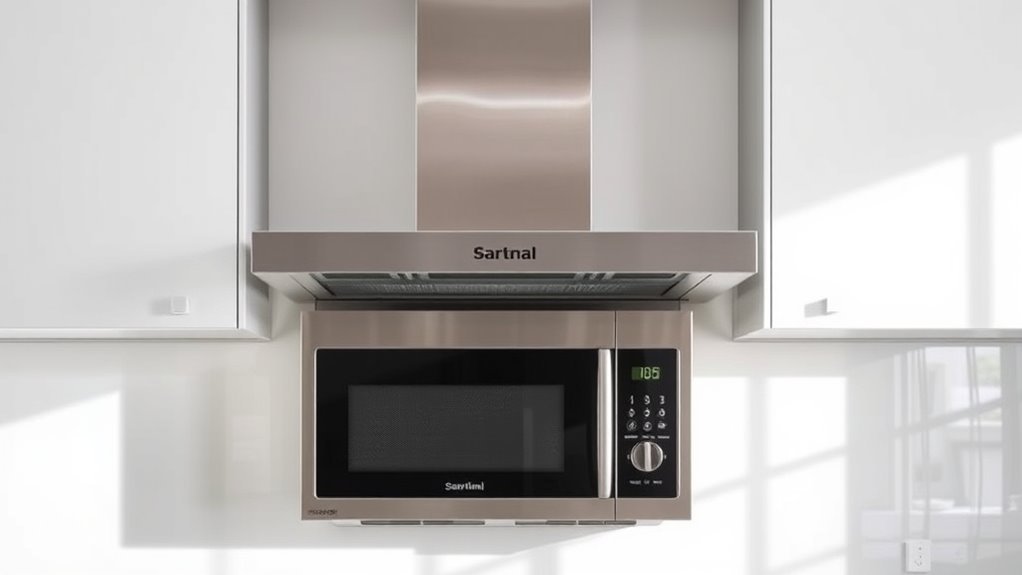
Microwave With Extractor Hood Guide: What to Know Before You Buy
Are you tired of dealing with lingering cooking odors and cluttered countertops? You’re not alone—many people struggle to find the right appliances that fit seamlessly into their kitchens while effectively managing smoke and smells.
A microwave with an extractor hood can be a game-changer, but choosing the right one can feel overwhelming.
When choosing a microwave with an extractor hood, measure your kitchen space carefully to guarantee a perfect fit and proper vent clearance.
Decide between ducted or recirculating vents based on your setup. Look for strong extraction power, quiet operation (aim under 45 dB), and useful cooking modes.
Trusted brands like GE and Samsung offer reliable performance with sleek designs that save countertop space.
Investigate installation tips and maintenance advice to keep it working smoothly and improve your kitchen experience.
Key Takeaways
- Combine a microwave and extractor hood to save space and cut down on countertop clutter in your kitchen.
- Be sure to measure your kitchen space accurately and check for enough clearance for proper ventilation and installation.
- Decide whether ducted or recirculating venting works best for your layout and air quality needs.
- Look for models with strong extraction power, multiple cooking modes, and low noise levels for a more comfortable cooking experience.
- Compare brands like GE, Whirlpool, and Samsung to find quality, good warranties, and features that are easy to use.
How a Microwave With Extractor Hood Saves Space and Adds Convenience
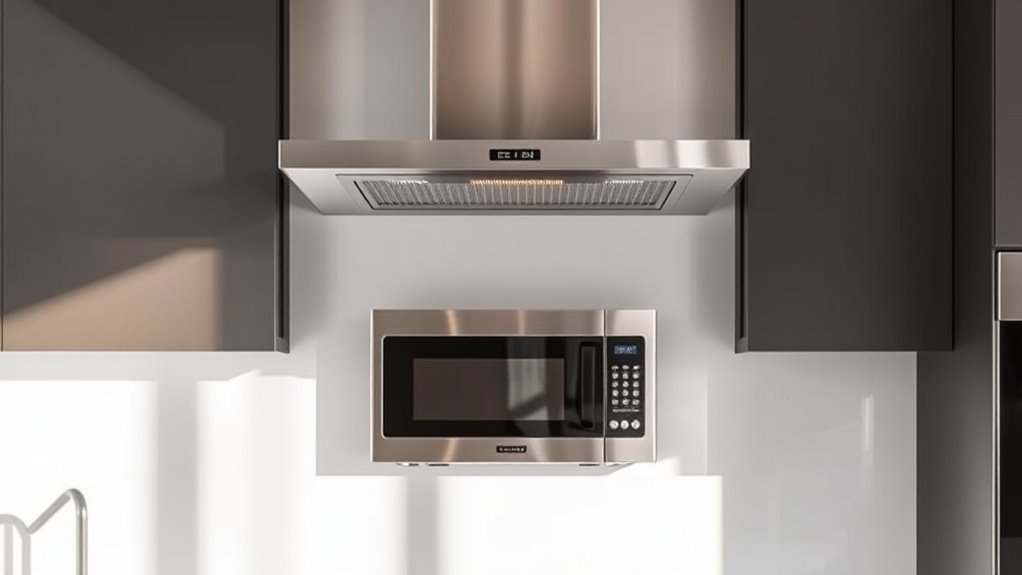
When you combine a microwave with an extractor hood, you save valuable kitchen space by eliminating the need for separate appliances. This clever design boosts space efficiency, freeing up your countertops and making your kitchen feel less cluttered.
You’ll appreciate the convenience features like user-friendly controls that let you switch between cooking and ventilation effortlessly. The sleek design aesthetics blend seamlessly into modern kitchens, enhancing overall visual appeal.
Cooking flexibility improves too, as you can prepare meals and remove odors simultaneously, making your cooking experience smoother. Regarding installation tips, guarantee proper venting and secure mounting to optimize performance and safety.
Maintenance requirements are straightforward since both appliances share components, reducing cleaning time. Plus, energy consumption stays efficient because you’re using one combined unit rather than two separate devices.
This smart setup makes your kitchen more functional without sacrificing style or ease of use.
How to Measure Your Kitchen Space for the Perfect Fit
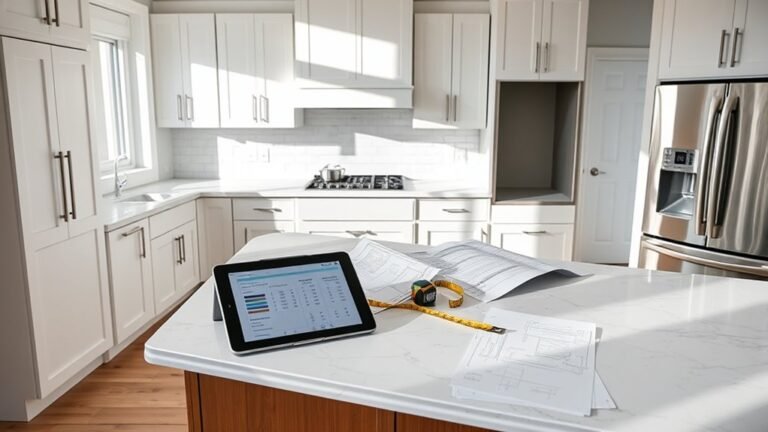
Maximizing your kitchen’s functionality starts with making sure your microwave with extractor hood fits perfectly. Begin by evaluating your kitchen layout to identify the best spot for installation, usually above the stove or on a countertop.
Use reliable measuring tools like a tape measure or laser distance measurer to get accurate dimensions of the available space. Measure the width, height, and depth of the area, and note any obstructions like cabinets, light fixtures, or switches.
Use precise tools like a tape measure to capture width, height, depth, and note any obstructions carefully.
Don’t forget to check the clearance above your cooking surface and ensure there’s enough room for the extractor hood’s ventilation system. Record all measurements carefully and compare them with the microwave with extractor hood’s specifications before buying.
Taking these steps helps you avoid installation issues and makes sure your new appliance fits seamlessly into your kitchen. Accurate measuring saves time and frustration and gives you confidence in your choice.
How to Choose Size and Venting Options for Your Kitchen
Since your kitchen’s size and layout directly impact your choice, selecting the right microwave with extractor hood involves carefully considering both the appliance’s dimensions and venting options. Start by evaluating your available space to make sure the microwave fits comfortably without overcrowding.
Size considerations include height, width, and depth. Make sure these match your kitchen’s design and your functionality needs. This way, the appliance won’t feel out of place or cramped.
Next, look into venting options—ducted or recirculating. Ducted vents expel air outside, which is perfect if you already have ducts in place. Recirculating systems filter and recycle air and are better for spaces without external venting.
| Size Considerations | Venting Options |
|---|---|
| Measure height, width, depth | Choose ducted for external venting |
| Ensure the appliance fits your space | Opt recirculating if no ducts are available |
| Match style and capacity | Check filter maintenance requirements |
Balancing size and venting options helps ensure efficient extraction and a seamless fit into your kitchen.
Key Features to Look For: Extraction Power, Cooking Modes, and Noise Levels
Although size and venting are important, you should also focus on key features like extraction power, cooking modes, and noise levels to get the most out of your microwave with extractor hood. Extraction efficiency directly impacts how well the unit removes odors and grease, so pick a model with strong yet energy-efficient fans.
Focus on extraction power, cooking modes, and noise levels for an efficient microwave with extractor hood.
Cooking versatility matters too—look for microwaves that offer multiple cooking modes such as defrost, grill, and convection. This makes meal prep more flexible and convenient, fitting different cooking needs.
Noise levels can affect your kitchen’s comfort, especially if you spend a lot of time cooking. Choose models known for quieter operation to avoid disruption and keep your space peaceful.
Balancing these features ensures your microwave with extractor hood matches both your cooking needs and lifestyle. Prioritize extraction efficiency, diverse cooking modes, and quiet operation for a smarter, more effective kitchen appliance every day.
What CFM Ratings Mean for Extraction Power
Understanding CFM ratings is key when you’re looking at the extraction power of a microwave with an extractor hood. CFM, or cubic feet per minute, tells you how much air the fan moves. This directly affects how well your kitchen gets ventilated. When you check CFM ratings, you’re essentially seeing how fast the fan can clear smoke, steam, and odors.
But keep in mind, a high CFM doesn’t always mean better performance. You also need good fan efficiency and extraction efficiency for the hood to work well. These factors ensure it removes airborne particles effectively without making too much noise or wasting energy. Airflow dynamics are important too; how the hood channels air affects its overall ventilation.
Which Cooking Modes and Settings Matter Most for Your Needs?
How do you know which cooking modes and settings will best suit your daily kitchen tasks? Start by thinking about what you cook most often: reheating leftovers, steaming vegetables, or baking small dishes.
Microwaves with extractor hoods come with different modes like grill, convection, and sensor cooking. Grill mode is great for browning, convection allows you to bake or roast, and sensor cooking adjusts time and power automatically based on moisture levels.
Check user reviews to see how these settings perform in real kitchens. People often share if sensor cooking is accurate or if convection heats evenly, which can help you decide.
Also, look for customizable power levels and preset menus for added convenience. The best combination depends on your cooking habits and which features will save you time without sacrificing results.
How Noise Levels Affect Your Microwave Hood Combo Experience
When you’re picking out a microwave hood combo, it’s a good idea to look at the decibel ratings. Why? Because noise levels can really influence the vibe of your kitchen. If the extractor is loud, it can become pretty distracting, especially if your kitchen is open-plan and connected to other living spaces.
Decibel Ratings Explained
Noise levels are important for your microwave hood combo experience and can affect your kitchen’s comfort. Knowing decibel ratings helps you make a smarter choice.
Decibels (dB) measure how loud a sound is, but how you perceive that noise depends on factors like distance and background sounds. For example, a microwave hood rated at 50 dB will sound noticeably quieter than one rated at 65 dB.
A 10 dB increase roughly doubles the perceived loudness. So, when comparing models, look for lower ratings if you want a quieter kitchen.
Even small differences in dB can change how loud it feels and affect the overall comfort during cooking.
Impact on Kitchen Ambiance
The sound your microwave hood combo makes really affects your kitchen’s vibe. When the extractor hood is loud, it can break the calm atmosphere you’re going for and make the space feel less welcoming.
A quieter unit, on the other hand, helps your kitchen look and feel better by blending in smoothly without noisy distractions. You’ll find it easier to chat, listen to music, or just enjoy the peace while cooking.
Noise levels can impact your mood—too much noise can cause stress or fatigue during meal prep. When choosing your microwave hood combo, think about more than just how it works.
Consider how its noise might influence the overall feel of your kitchen. A good balance in sound helps keep your kitchen a pleasant place that matches your style and comfort.
Comparing Quiet Models
Although selecting a microwave hood combo often focuses on features and design, paying close attention to noise levels can really improve your cooking experience. Quiet operation means you can chat or listen to music without any disruptions. Some models come with noise reduction technology that helps minimize distractions, making your kitchen more enjoyable.
Here’s a quick comparison of popular quiet models:
| Model | Noise Level (dB) |
|---|---|
| WhisperQuiet 300 | 45 |
| SilentBreeze X1 | 48 |
| CalmCook Pro | 42 |
| HushFlow 2000 | 44 |
Choosing a model with lower decibels means better noise reduction. Look for those with quiet operation to keep your kitchen peaceful while you cook.
Top Microwave Hood Combo Brands and Models for Reliable Performance
When you’re shopping for a microwave hood combo, it’s all about finding brands you can trust—ones that are built to last and do a great job of removing smoke, steam, and odors. You want something reliable that won’t let you down, right? Comparing the top models out there can help you strike the perfect balance between the features you want and the performance you need for your kitchen.
Let’s take a look at some of the standout options. These brands and models are known for their durability and powerful extraction capabilities, making them great choices whether you’re a casual cook or a serious foodie. Finding the right fit is easier when you know which options stand out for their performance and reliability.
Leading Brands Overview
Choosing a reliable microwave hood combo means trusting brands known for quality and performance. When you look at your options, focus on microwave efficiency to ensure quick cooking and good ventilation.
Brand reliability is key too. Established manufacturers often back their products with strong warranties and consistent performance. Pay attention to design aesthetics since your microwave hood combo should match your kitchen style.
User reviews give honest insights about real-world use, highlighting pros and cons you might not see in specs alone. Brands like GE, Whirlpool, and Samsung tend to score high on these factors, making them safe bets.
Top Models Comparison
When comparing top microwave hood combos, focus on models that balance powerful ventilation with efficient cooking features. Leading brands like GE, Samsung, and Whirlpool offer options that excel in airflow capacity, noise levels, and cooking presets.
For example, GE’s Profile series combines a 400 CFM extractor with sensor cooking. Samsung’s models emphasize sleek design alongside multi-speed ventilation. Whirlpool often features easy-to-clean filters and user-friendly controls.
When comparing features, prioritize CFM ratings, noise output, and microwave wattage to match your kitchen needs. Also, look for extras like LED lighting and delay start to make your life easier.
Easy Installation Tips for Your Microwave Hood Combo
Installing a microwave hood combo can be pretty straightforward if you follow a few key steps. Often, problems come from not measuring properly or unclear instructions. Learning from others’ experiences can help you avoid common mistakes.
Start by carefully measuring the space. Use a tape measure twice to make sure the unit will fit. Check for existing electrical and vent connections to confirm compatibility. Secure the mounting bracket firmly to support the microwave’s weight.
Measure twice, check electrical and vent connections, then securely fasten the mounting bracket for a safe microwave installation.
It’s a good idea to enlist a helper for lifting and positioning the unit. This can prevent damage or injury and make the process easier. Use a level to ensure the bracket is aligned properly, which helps keep the microwave stable.
Ask someone to assist you when positioning the microwave. This reduces the risk of dropping or scratching the device. Following these simple tips will make your installation smoother and save you headaches down the line.
Maintenance and Cleaning to Keep Your Microwave Hood Combo Working Well
Keep your microwave hood combo running smoothly by regularly cleaning and maintaining its key components. Stick to a consistent cleaning schedule, ideally once a month, to prevent buildup.
Focus on filter maintenance by removing and washing grease filters in warm, soapy water or replacing charcoal filters as recommended. Grease removal is essential; wipe down surfaces daily with a degreaser or mild detergent to avoid sticky residue.
For odor control, clean the interior regularly to ensure no food splatters linger. Surface care extends to the exterior—use non-abrasive cloths to keep the finish looking good.
Don’t forget about the fan. Check the blades and motor for dust or grease and clean them as needed to keep airflow efficient. Vent cleaning is also critical; inspect and clear vents periodically to prevent blockages.
Frequently Asked Questions
Can a Microwave With Extractor Hood Be Used Without External Venting?
Yes, you can use a microwave with an extractor hood without external venting by choosing a recirculating venting option. This setup filters air through charcoal filters and recycles it back into your kitchen, which works well in spaces where external venting isn’t possible.
When installing, you’ll need enough clearance and to keep the filters properly maintained. Keep in mind, recirculating hoods might not remove odors and moisture as effectively as external venting options.
Are There Energy Efficiency Ratings for Microwave Hood Combos?
Yes, microwave hood combos often come with energy ratings that help you see how much energy they use. These ratings make it easier to compare different models so you can choose one that’s more efficient.
Looking for good energy ratings means you’re picking appliances that save electricity and help lower your utility bills. When shopping, keep an eye out for models with high efficiency scores.
Choosing an appliance with a good rating ensures it performs well while using less energy. This way, your microwave with an extractor hood will work effectively and be kinder to your energy costs.
Do Microwave Extractor Hoods Interfere With Wi-Fi or Bluetooth Signals?
Imagine your Wi-Fi and Bluetooth signals dancing around your kitchen, weaving through walls and devices. You don’t have to worry—microwave extractor hoods rarely cause signal interference.
They’re designed with microwave safety in mind, containing emissions to prevent leaks that could disrupt your wireless connections. So, go ahead and enjoy your cooking without fearing that your signals will drop or stutter because of your microwave extractor hood combo.
Can I Replace Just the Extractor Hood if the Microwave Breaks?
You usually can’t replace just the extractor hood if the microwave breaks because the extractor compatibility depends on specific models and designs. Most units come as combined systems, so swapping out only the hood might not fit or work correctly.
Instead, look for microwave options that offer separate extractor hoods or modular designs. These make future replacements easier and more straightforward. Always check compatibility before buying to avoid any issues.
Are Microwave Hood Combos Safe for Use in Mobile Homes or RVS?
Yes, microwave hood combos can be safe for mobile home safety and RV installation if you pick models designed specifically for those environments.
Make sure the unit is securely mounted to handle movement and vibrations. Proper ventilation and electrical compatibility with your RV or mobile home are also important.
Following the manufacturer’s guidelines and local codes will help you avoid potential hazards and keep your cooking area safe and working well.
Conclusion
Choosing a microwave with an extractor hood is like planting a tree in a small garden. It saves space while providing shade and fresh air.
Just as a tree balances beauty and function, your microwave hood combo blends cooking and ventilation seamlessly. Measure well, pick the right size and power, and keep it maintained.
That way, your kitchen stays fresh and efficient. A microwave with extractor hood can turn your space into a place where convenience and comfort grow together.