How to Degrease Kitchen Cabinets: A Step-by-Step Guide
Are you tired of looking at greasy, dull kitchen cabinets? You’re not alone—many people struggle with keeping their cabinets clean and shiny. Luckily, a simple degreasing routine can make a big difference.
To degrease your kitchen cabinets, start by clearing surfaces and protecting nearby areas.
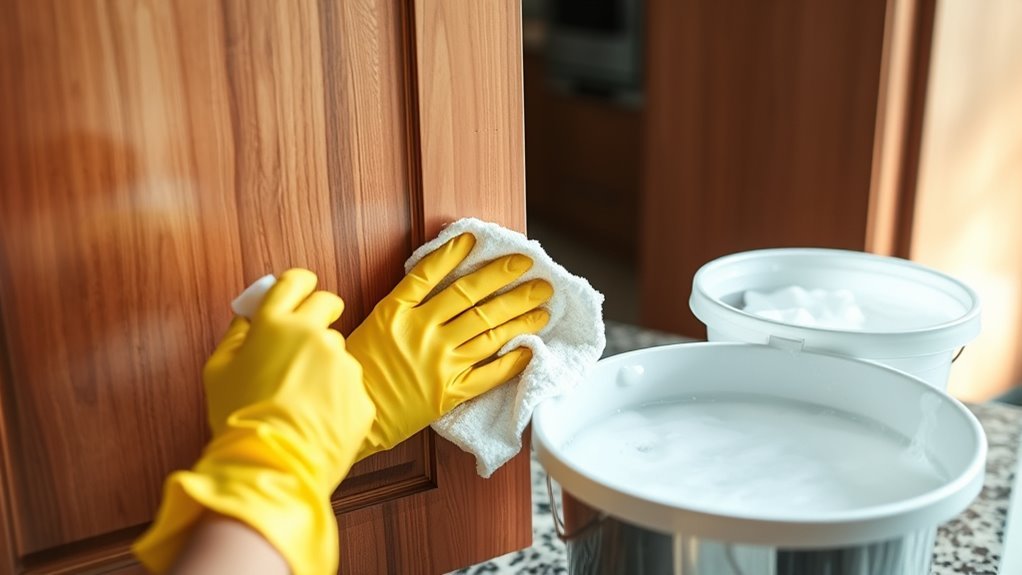
Use a mild dish soap or vinegar solution with a soft cloth to gently scrub grease in circular motions, testing any cleaner first on a hidden spot. Rinse with lukewarm water and dry immediately to avoid water damage.
Avoid harsh chemicals and scrubbing tools that can harm finishes. Keep this routine up to maintain your cabinets’ shine and hygiene—there’s more detailed guidance to help you perfect the process.
Key Takeaways
- Remove all items from your cabinets and protect the surrounding areas before you start degreasing. This keeps everything clear and prevents messes.
- Use mild dish soap, a vinegar-water mix, or eco-friendly degreasers with soft microfiber cloths for cleaning. These are gentle but effective.
- Apply the cleaner gently, scrub in circular motions, and try it on a small hidden spot first. This helps avoid any damage.
- Rinse with lukewarm water, wring out your cloths to prevent excess moisture, and dry the cabinets immediately to prevent water spots.
- Deep cleaning should be done monthly or as needed. Avoid harsh chemicals or abrasive tools to keep your cabinet surfaces looking great.
Why You Need to Degrease Kitchen Cabinets Regularly
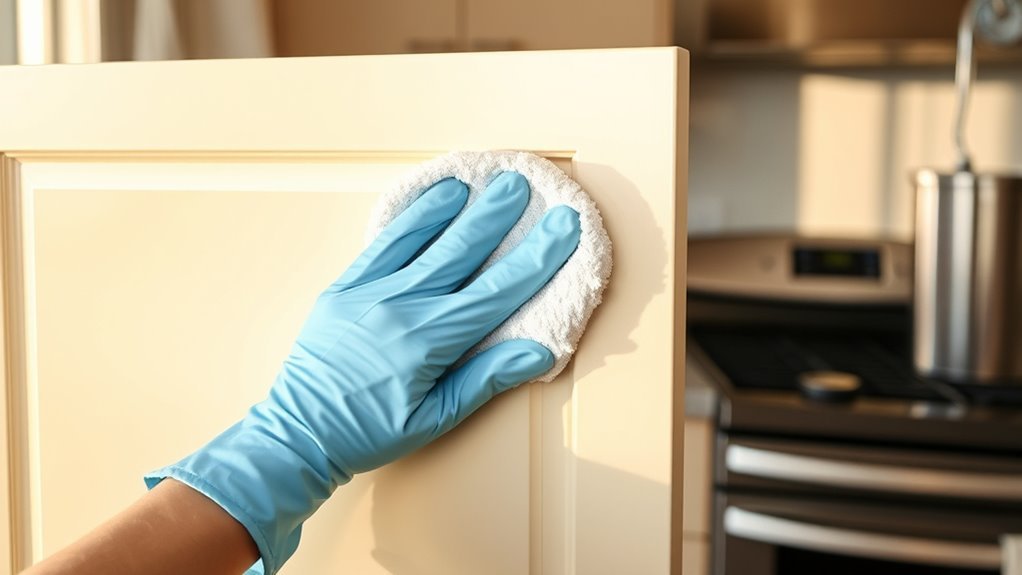
You should degrease your kitchen cabinets regularly because grease buildup not only dulls their look but also hides bacteria and attracts dirt.
When you skip this step, your kitchen hygiene takes a hit, creating a perfect environment for germs to thrive.
Grease traps dust and food particles, making your cabinets sticky and harder to clean over time.
Grease collects dust and food debris, leaving cabinets sticky and more difficult to clean as time passes.
This buildup can cause bad odors and even damage the cabinet surfaces, which might lead to costly repairs or replacements.
Preparing Cabinets for Safe Degreasing
Before you get started with degreasing, it’s a good idea to clear off the surfaces of your cabinets. This way, you’ll have plenty of space to work and won’t have to worry about knocking things over or missing spots.
Don’t forget to protect the areas around your cabinets, like the countertops and floors. A little drop of cleaner here or there can cause stains or damage, so laying down some protective sheets or towels is a smart move.
Finally, gather all your cleaning supplies beforehand. Having everything within reach makes the process smoother and helps you stay focused on tackling that grease safely and efficiently.
Clear Cabinet Surfaces
Anyone tackling kitchen cabinet cleaning knows that clearing the surfaces is a crucial first step. Before you degrease, focus on removing everything from your cabinets to protect both your organization and the surface finishes. Follow these steps:
- Empty all cabinet shelves and drawers, placing items on a nearby table or counter.
- Sort through your belongings to spot anything that might get damaged by cleaning solutions.
- Use a soft cloth to wipe away loose dust and crumbs from the cabinet surfaces.
- Check the surface finishes for cracks or chips to avoid further damage during degreasing.
Protect Surrounding Areas
Since degreasing solutions can be harsh and messy, it’s important to protect the surrounding areas to avoid damage and extra cleanup. Cover your countertops, appliances, and floors before you start.
Use painter’s tape and plastic sheeting or old towels to shield these surfaces from drips and splashes. This simple step keeps your kitchen safe and makes cleanup much easier.
Visualize your setup:
| Area to Protect | Suggested Covering |
|---|---|
| Countertops | Plastic sheeting |
| Appliances | Old towels |
| Floor beneath cabinets | Drop cloth or newspaper |
Taking these easy precautions helps you focus on degreasing without worrying. Proper preparation ensures the best results and keeps your kitchen looking great.
Gather Cleaning Supplies
With your kitchen protected from drips and spills, you can focus on gathering the right cleaning supplies to safely degrease your cabinets. Choosing eco-friendly options helps protect your home and the environment while keeping your kitchen organized.
Here’s what you’ll need:
- Mild dish soap or an eco-friendly degreaser. These are effective yet gentle on surfaces.
- Soft microfiber cloths. They prevent scratches and trap grease.
- A spray bottle filled with a vinegar-water solution. It’s natural and safe for cabinets.
- A soft-bristled brush or old toothbrush. Perfect for cleaning crevices and detailed areas.
Having these eco-friendly supplies ready guarantees you can tackle grease buildup efficiently without damaging your cabinets or cluttering your kitchen.
Best Household Products for Degreasing Cabinets
Many common household products can quickly cut through the grease on your kitchen cabinets without harsh chemicals. You can rely on natural degreasing alternatives like white vinegar, baking soda, and lemon juice. White vinegar’s acidity breaks down grease effectively, while baking soda acts as a gentle abrasive to lift grime. Lemon juice not only cuts grease but also leaves a fresh scent. These options are safe, eco-friendly, and inexpensive.
If you prefer commercial degreasing products, look for ones labeled safe for wood or painted surfaces to avoid damage. Brands with biodegradable formulas often balance effectiveness and safety. Avoid harsh chemicals like ammonia or bleach unless your cabinets are very tough to clean, as they can strip finishes or cause discoloration. Choosing the right product guarantees your cabinets get clean without harm, preserving their appearance and longevity. Use these household products to tackle grease efficiently and maintain your kitchen’s fresh look.
Step-by-Step Method to Degrease Cabinets Safely
First things first, you’ll want to pick out cleaning solutions that are gentle and safe for your cabinets. You don’t want anything too harsh that could harm the finish or the wood itself. Once you’ve got your cleaner ready, it’s time to prepare the cabinets. Take out all the items and give them a quick wipe to remove any loose dirt or dust—this makes the cleaning process much easier.
Now, when you’re ready to clean, apply the cleaner carefully using a soft cloth or sponge. Be gentle to avoid scratching the surface. After you’ve scrubbed away the grease, make sure to rinse the cabinets thoroughly with clean water to remove any leftover cleaner or residue. This way, your cabinets stay looking fresh and clean without any streaks or buildup!
Choose Safe Cleaning Solutions
Before tackling the grease buildup, choose cleaning solutions that are both effective and safe for your cabinet surfaces. Going for natural options helps protect your cabinets and the environment.
Start by prioritizing eco-friendly choices with safe ingredients to avoid harsh chemicals that could damage your finishes. Homemade solutions like vinegar mixed with water can be great because vinegar naturally breaks down grease.
Baking soda is also helpful because of its gentle abrasive qualities. It lifts grime without scratching the surfaces. For a fresh scent and extra grease-cutting power, try citrus cleaners or add a few drops of essential oils to your cleaning routine.
Prepare Cabinets Properly
Although it might seem straightforward, preparing your kitchen cabinets properly is essential for effective and safe degreasing. Start by removing all items from the cabinets and wiping away loose dust and debris with a dry cloth.
This step ensures cleaning solutions work directly on greasy surfaces without interference. Next, protect your countertops and floor with old towels or plastic sheets to catch drips.
Use gentle cleaning techniques like soft sponges or microfiber cloths to avoid scratching the cabinet finish. Also, open windows or turn on fans for proper ventilation while you work.
Taking these preparation steps sets the stage for thorough degreasing and helps preserve your cabinets’ appearance and durability.
Apply And Rinse Thoroughly
Start by applying your chosen degreasing solution evenly across the cabinet surfaces using a soft cloth or sponge. Be careful to avoid damaging the finish while applying.
Follow these steps for an effective rinse:
- Let the solution sit for 5–10 minutes to break down grease.
- Use a clean, damp cloth to wipe off the degreaser thoroughly.
- Rinse the cloth frequently in warm water to remove residue.
- Dry the cabinets immediately with a microfiber cloth to prevent water spots.
Tips for Removing Tough Grease From Cabinets
When grease has deeply settled into your kitchen cabinets, simple wiping won’t do the job. You’ll need effective grease removal techniques to tackle those stubborn stains. Start by mixing a solution of warm water and a few drops of dish soap, which breaks down grease without damaging surfaces. For tougher spots, add a splash of white vinegar or baking soda to boost cleaning power.
Apply your mixture with a soft cloth or sponge, scrubbing gently in circular motions to lift grime without scratching. If grease persists, try using a degreaser specifically designed for kitchen cabinets—always test it on a small, hidden area first.
Avoid harsh abrasives that can damage the finish. After treating the stains, rinse thoroughly to remove any residue. With these stubborn stain solutions, you’ll restore your cabinets’ shine and keep them grease-free longer, making future cleanups easier and more effective.
Cleaning Different Cabinet Materials Without Damage
Because each cabinet material reacts differently to cleaning agents and methods, you’ll need to tailor your approach to avoid damage. Start by identifying your cabinet type—wood finishes, laminate, metal, painted surfaces, or glass cabinet doors. Then, follow these guidelines:
- For wood finishes, use a mild cleaner and a soft cloth to protect the finish and prevent warping from moisture or harsh chemicals.
- Laminate care requires gentle, non-abrasive cleaners to avoid scratches. Avoid soaking to preserve the adhesive.
- Metal cleaning is best done with a vinegar-water solution or a specific metal cleaner to prevent corrosion. Focus also on handle maintenance for smooth operation.
- Painted surfaces and glass cabinets need delicate cleaning agents to prevent peeling or streaks. Protecting the hardware is essential to maintain their look.
Always consider environmental factors like humidity and temperature, as they affect your cleaning results and the longevity of your cabinets.
How to Rinse and Dry Degreased Cabinets Safely
After you’ve finished degreasing your cabinets, it’s a good idea to rinse them with lukewarm water. Just make sure you’re gentle so you don’t damage the surface. You want to wash away any leftover residue without being too rough.
Once they’re rinsed, it’s important to dry everything thoroughly. You can use a soft towel or a clean cloth to wipe them down. This helps prevent moisture from sitting on the surface, which could cause damage over time.
Use Lukewarm Water
Two key steps guarantee you rinse and dry your degreased cabinets safely: using lukewarm water and drying them promptly.
Lukewarm water is gentle on cabinet surfaces but still effective at removing leftover cleaning residues. The right temperature also helps prevent warping or damage to wood finishes.
Follow these steps to use lukewarm water properly:
- Fill a bucket with water around 90°F (32°C) to confirm the ideal temperature.
- Dip a clean cloth in the water, then wring it out to avoid excess moisture.
- Wipe down cabinet surfaces carefully to rinse off degreaser without soaking the wood.
- Immediately dry cabinets with a soft, dry towel to prevent water spots or damage.
This method keeps your cabinets looking great and makes sure you clean them effectively.
Gentle Wiping Techniques
Although rinsing and drying might seem straightforward, using gentle wiping techniques is key to protecting your cabinets from damage. After applying your degreaser, rinse the surface carefully with a damp soft sponge or gentle cloth soaked in lukewarm water.
Avoid harsh scrubbing, which can wear down the finish. Instead, wipe in smooth, even strokes to lift away residue without causing abrasion. When drying, use a clean, dry gentle cloth to blot the surface rather than rubbing aggressively.
This helps prevent moisture from seeping into the wood or laminate, which could cause warping or discoloration. Handling your cabinets with soft sponges and gentle cloths during rinsing and drying keeps them clean and well-preserved without risking damage from rough treatment.
Thorough Drying Methods
Since moisture left on cabinets can cause damage over time, you’ll want to dry them thoroughly after rinsing. Proper drying techniques help prevent warping, mold, and paint peeling.
To dry your degreased cabinets safely, follow these steps:
- Use a clean, dry microfiber cloth to wipe down all surfaces immediately after rinsing.
- Open windows or turn on fans to promote air drying and improve ventilation.
- Leave cabinet doors and drawers open for several hours so moisture can escape completely.
- Check for any damp spots and wipe them again if needed to avoid trapped moisture.
Mistakes to Avoid When Degreasing Cabinets
When you start degreasing your kitchen cabinets, avoiding common mistakes can save you time and frustration. One misconception is that any cleaner will do, but using the right degreaser and tools like microfiber cloths and soft brushes really makes a difference. Also, don’t rush—letting the cleaner sit for a few minutes helps break down grease more effectively.
Here’s a quick look at mistakes to avoid:
| Mistake | Why to Avoid It |
|---|---|
| Using harsh scrubbing tools | Can damage the cabinet finish |
| Skipping a test spot | Might cause discoloration or damage |
| Neglecting proper ventilation | Fumes can irritate you and reduce cleaning efficiency |
Stay mindful of these pitfalls to keep your cabinets looking fresh without causing damage or extra work.
How Often Should You Deep Clean and Degrease Cabinets?
How often should you deep clean and degrease your kitchen cabinets to keep them looking their best? The ideal cleaning schedule really depends on your cooking habits and your kitchen environment. Regularly tackling grease buildup helps prevent stains and damage over time.
Here are some guidelines to help you decide when to deep clean:
- Do this monthly if you cook daily with oils or fry foods often, since grease can build up quickly.
- Every 3 months is good if your cooking routine is moderate with occasional frying or grilling.
- Biannually works if you cook lightly or mainly use the microwave, as grease buildup is minimal.
- Clean immediately after any spills or splatters to avoid stubborn stains and damage.
Adjust your cleaning schedule based on how fast grime appears. Staying consistent keeps your cabinets looking great and extends their lifespan, saving you effort in the long run.
Maintaining Cabinet Shine After Degreasing
Keeping your cabinets clean is a great start, but maintaining their shine after degreasing helps them look fresh and inviting for longer. You’ll want to use cabinet polishing techniques that restore luster without leaving any residue.
Choose a polish that’s suited for your cabinet material, whether it’s wood or laminate. Use a soft, lint-free cloth to apply it evenly across the surface. Be gentle and take your time for the best results.
Select the right polish for your cabinets and apply gently with a soft, lint-free cloth for a smooth finish.
Let the polish dry completely before touching the cabinets again. This prevents smudges and ensures the finish sets properly. Applying protective finishes like wax or sealants can add lasting protection against grease and daily wear.
These finishes also make future cleaning easier. Regularly maintaining your cabinets with these steps keeps them looking shiny and new for years to come.
Frequently Asked Questions
Can Degreasing Cabinets Help Eliminate Kitchen Odors?
Yes, degreasing cabinets can help eliminate kitchen odors. When you clean off grease buildup, you remove the sticky residue that traps smells, making your kitchen smell fresher.
This also prevents odors from lingering and spreading. Regularly degreasing your cabinets supports odor prevention and keeps your cooking area cleaner.
Are There Eco-Friendly Degreasing Products for Cabinets?
Yes, you can definitely find eco-friendly degreasing products for cabinets. Natural solutions like vinegar, baking soda, and lemon juice work wonders without harsh chemicals.
You can even make homemade cleaners by mixing these ingredients with water to create a safe, effective degreaser. These options not only clean well but also protect your indoor air quality and the environment.
How Do You Handle Grease Buildup Behind Cabinet Doors?
You know that grease hiding behind cabinet doors like it’s on a secret vacation? To tackle it, grab your cabinet cleaning tools—think microfiber cloths and a soft brush—and use grease removal techniques like a vinegar-water mix or gentle degreaser.
Open those doors wide, scrub carefully, and don’t forget to dry thoroughly. You’ll outsmart that sneaky buildup and restore your cabinets’ shine without any drama or damage.
Can Degreasing Damage Cabinet Hardware or Hinges?
Degreasing won’t damage your cabinet hardware or hinges if you’re careful with hardware protection. Avoid harsh chemicals that can corrode metal parts, and opt for gentle cleaners or diluted solutions instead.
Make sure to protect hinges by wiping them dry after cleaning to prevent rust. Regular hinge maintenance, like lubricating moving parts, helps everything work smoothly and lasts longer.
What Is the Best Time of Day to Degrease Kitchen Cabinets?
You’ll find that the best time to degrease kitchen cabinets is during your morning routine. Studies show people are 40% more productive in the morning, so tackling greasy buildup early fits perfectly into your cleaning schedule.
Starting fresh helps you spot stubborn spots better and prevents grease from settling throughout the day. Set aside 20-30 minutes after breakfast to make your cabinets shine without feeling rushed or tired.
Conclusion
Now that you know how to degrease your kitchen cabinets safely and effectively, cleaning becomes less intimidating. Your kitchen will look fresher than ever.
It’s no coincidence that regular care keeps grease buildup at bay and helps your cabinets last longer. By following these simple steps, you’ll restore their shine and enjoy a cleaner, healthier cooking space.
Keep up the habit of degreasing your cabinets regularly, and they’ll thank you every day with their fresh appearance.