Best Over the Range Microwave: Top Picks and Buying Tips
Many people struggle with cluttered countertops and limited kitchen space. If you’re tired of your microwave taking up valuable counter real estate, an over the range microwave might be just what you need.
You’ll love an over the range microwave for saving counter space and combining cooking with ventilation above your stove. Look for models with at least 900 watts, multiple power levels, and effective ventilation.
Ducted options provide better air quality, while ductless models are easier to install.
Make sure to measure carefully, check mounting requirements, and follow cleaning tips to keep it running well.
Keep exploring to uncover the best options and insider tips for installation and maintenance.
Key Takeaways
Over the range microwaves save counter space by combining cooking and ventilation functions in a compact, eye-level design.
Choose microwaves with at least 900 watts and multiple power levels for efficient, customizable cooking.
Select between ducted or ductless ventilation based on your kitchen layout and venting needs for optimal odor and smoke management.
Make sure the size, mounting surface strength, and ventilation compatibility are right to avoid installation issues and safety hazards.
Maintain daily cleaning and regularly clean or replace ventilation filters to keep performance high and prevent grease buildup.
How Over the Range Microwaves Save Space and Add Convenience
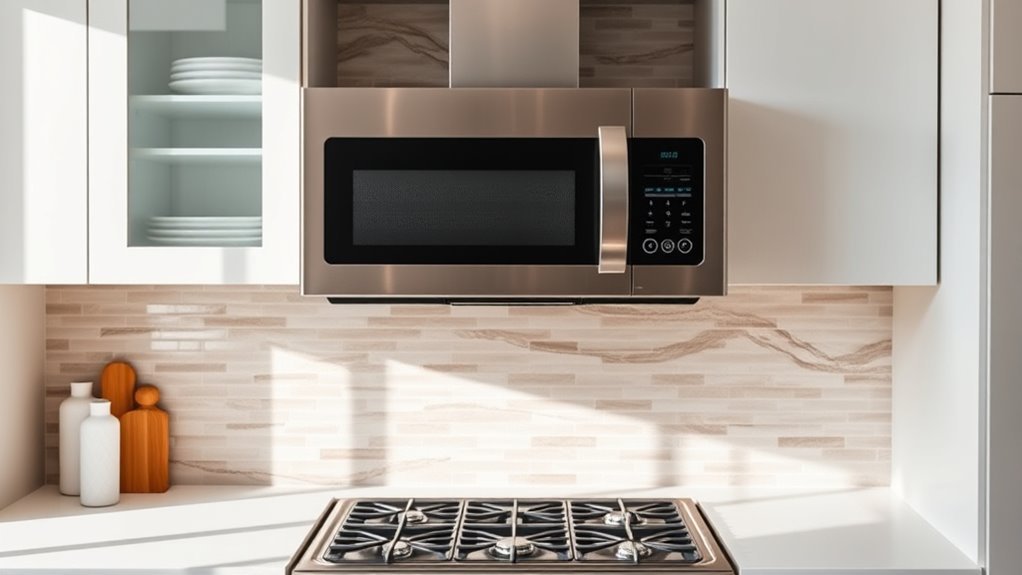
While you cook, an over the range microwave frees up your valuable counter space, giving you more room to prep meals or place other kitchen essentials. It’s one of the smartest compact kitchen solutions, especially if you’re working with limited space.
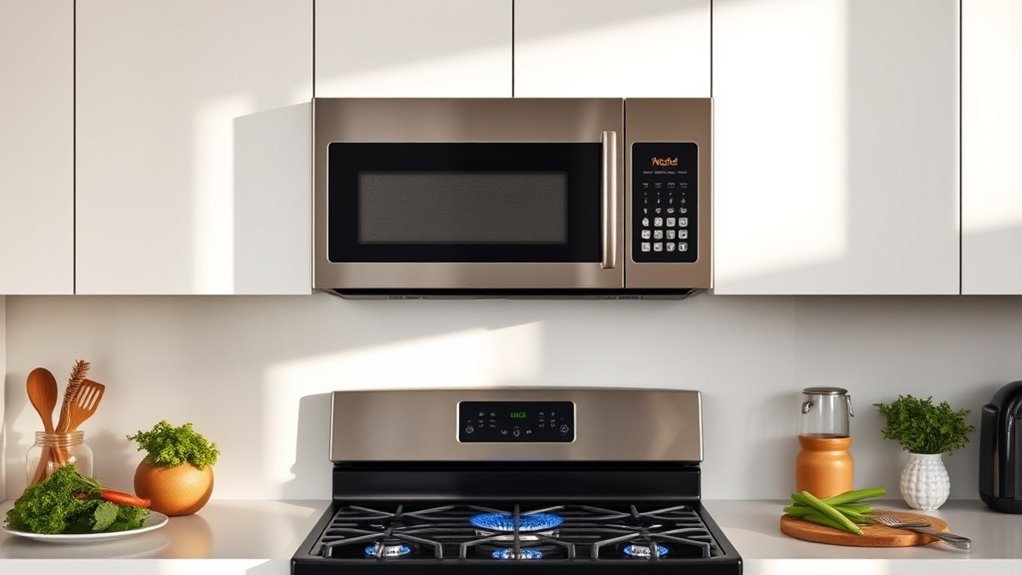
By mounting the microwave above your stove, you eliminate the need for bulky countertop models, keeping your kitchen looking clean and organized. These space-saving appliances also combine microwave functions with built-in ventilation, so you can reduce clutter by replacing separate range hoods.
This dual functionality not only saves space but also adds convenience, allowing you to control ventilation and cooking from one unit. Plus, having your microwave at eye level means you don’t have to bend down to access it, making meal prep quicker and safer.
Key Features to Consider When Choosing an Over the Range Microwave
When you’re picking out an over-the-range microwave, one of the first things to think about is the ventilation system. You want to make sure it’s powerful enough to handle smoke, steam, and cooking odors effectively. A good ventilation system makes a big difference in keeping your kitchen fresh and clean.
Next up is the microwave’s cooking power levels. The more power it has, the faster and more evenly your food will cook. It’s worth checking the wattage to find a model that can handle your cooking needs without taking forever. Getting these features right will help you choose a microwave that fits perfectly into your kitchen.
Ventilation System Types
Because proper ventilation is essential for keeping your kitchen fresh and odor-free, it’s important to understand the different types of ventilation systems available in over-the-range microwaves.
Ventilation efficiency, fan noise, and air circulation can vary between ducted and ductless options. Ducted systems vent air outside, offering better ventilation and quieter operation.
Ductless models filter and recirculate air, making installation easier but sometimes providing lower air circulation performance.
| System Type | Pros |
|---|---|
| Ducted | High ventilation efficiency |
| Quieter operation | |
| Ductless | Easy installation |
| No external vent needed |
Think about your kitchen setup and ventilation needs carefully to choose the right system.
Cooking Power Levels
Although ventilation is important, don’t forget about cooking power levels when choosing an over-the-range microwave. The power directly affects how quickly and evenly your food heats.
Look for microwaves with at least 900 watts for everyday use. Higher wattage means faster cooking and better results. Multiple power levels let you adjust heat, which is great for delicate tasks like defrosting or simmering without overcooking.
Power levels also contribute to microwave safety. Lower settings help prevent overheating or burning, reducing risks. Understanding these options helps you pick a model that fits your cooking needs while keeping safety in mind.
Choose microwaves with clear power settings for better control and performance, ensuring your kitchen experience is smooth and efficient.
Understanding Ventilation Types: Which Works Best?
How do you choose the right ventilation type for your over-the-range microwave? You’ll want to focus on ventilation efficiency and installation requirements first.
There are generally two types: ducted and ductless. Ducted vents expel air outside your home, offering better ventilation by removing smoke, steam, and odors effectively.
However, they need a proper exhaust duct system, which can make installation tricky if your kitchen isn’t already set up for it.
Ductless vents recirculate air through filters back into your kitchen, making installation simpler since you don’t need external ductwork.
But keep in mind, their ventilation isn’t as strong as ducted systems. If your kitchen layout allows, ducted options usually work best for keeping the air fresh.
Still, if installation constraints exist, a ductless microwave can be a practical alternative. Understanding these differences helps you pick the ventilation type that fits your kitchen and cooking needs perfectly.
Common Mistakes When Buying Over the Range Microwaves
When shopping for an over-the-range microwave, you might overlook key features that affect both performance and installation. Avoiding common mistakes can save you time and frustration.
Many buyers fall into traps like size misconceptions, which lead to microwaves that don’t fit the available space or look awkward above the stove. Installation errors are another frequent issue, often caused by ignoring the manufacturer’s guidelines or underestimating the complexity of venting requirements.
Watch out for these pitfalls:
- Assuming all microwaves fit standard cabinet dimensions
- Skipping ventilation compatibility checks
- Underestimating the need for professional installation
- Overlooking the microwave’s weight limits for your mounting surface
Best Over the Range Microwaves for Small Kitchens
Choosing the right over-the-range microwave is especially important in small kitchens where space is tight. You need a model that’s compact enough to fit above your stove without taking up too much room.
Look for microwaves built to maximize functionality while keeping their footprint small. Energy efficiency matters, too—it saves power and keeps your kitchen cooler, especially when airflow is limited.
Prioritize microwaves that combine compact design with energy efficiency to save power and maintain a cool kitchen.
Features like sensor cooking and multiple power levels are great for cooking different meals without wasting energy. Easy-to-clean surfaces and simple controls make your kitchen routine smoother.
Brands that offer compact, energy-efficient microwaves often include essential ventilation systems. This helps manage odors and steam effectively, keeping your space fresh.
When you choose a microwave suited for small spaces, you can maintain a sleek, organized kitchen without sacrificing performance or convenience.
High-End Over the Range Microwaves With Advanced Features
If you want to improve your kitchen experience, luxury over-the-range microwaves deliver powerful performance combined with cutting-edge technology. These models often incorporate smart tech, letting you control settings via your smartphone or voice assistant.
You’ll also appreciate their energy efficiency, which helps cut down electricity bills without sacrificing power. Their design aesthetics are outstanding, blending seamlessly with modern kitchens while offering installation flexibility to fit various spaces.
The user interface is intuitive, making cooking and ventilation easier than ever. Before buying, check brand reputation and customer reviews to ensure reliability and satisfaction. Noise levels tend to be lower in premium models, creating a quieter cooking environment.
Key features to keep in mind:
- Smart technology integration for convenience
- Energy efficiency ratings for cost savings
- Sleek design aesthetics matching your kitchen
- Installation flexibility and low noise levels
Choosing a luxury microwave means investing in quality, innovation, and style that lasts.
Affordable Over the Range Microwaves That Don’t Skimp on Quality
Although budget-friendly options might seem limited, affordable over-the-range microwaves offer reliable performance without sacrificing key features. When shopping on a tighter budget, you’ll find several brands that provide sturdy construction, easy-to-use controls, and good ventilation.
These models often include sensor cooking and multiple power levels, helping your meals cook evenly and efficiently. Don’t let the lower price tag fool you—quality is still a priority among budget brands.
Many affordable microwaves go through rigorous testing to meet safety and durability standards, so you can trust they’ll last in your kitchen. Plus, manufacturers usually back these products with solid warranties, giving you extra peace of mind.
Wattage and Cooking Performance Compared Across Models
Understanding the wattage of an over-the-range microwave helps you gauge how quickly and evenly it cooks your food. Higher wattage usually means better cooking consistency and shorter cooking times, but it’s important to balance power efficiency with your kitchen needs.
When comparing models, focus on how wattage impacts performance rather than just the number itself. Microwaves typically range from 700 to 1300 watts; higher wattage cooks food faster.
Some models use wattage smartly to avoid energy waste through advanced power efficiency. Cooking consistency improves with wattage, but design and technology also play a role.
Many microwaves offer adjustable power levels, allowing you to fine-tune cooking for different dishes. This helps you get the best results based on what you’re preparing.
Installing Your Over the Range Microwave: Tips and Tricks
When installing your over-the-range microwave, careful preparation ensures a smooth process and safe setup. Start by reviewing an installation checklist that includes verifying the wall’s sturdiness, confirming electrical requirements, and gathering necessary tools.
Follow mounting tips like securing the bracket firmly and making sure the microwave is level to avoid vibrations or damage. Don’t skip safety precautions: disconnect power before starting and double-check that wiring meets local codes.
Secure the bracket firmly, ensure the microwave is level, disconnect power, and verify wiring meets local codes.
Pay attention to aesthetic details by aligning the microwave with your cabinetry and choosing a finish that matches your kitchen. If you run into issues like uneven mounting or electrical problems, consult the manual or seek professional help quickly to avoid hazards.
Stay organized and cautious throughout the process, and you’ll enjoy the benefits and sleek look of your new microwave without any hassle.
Maintaining and Cleaning Your Over the Range Microwave
To keep your over-the-range microwave running smoothly, it’s a good idea to clean it regularly. Just a quick daily wipe-down can go a long way in preventing that stubborn grease buildup. Honestly, tackling it often makes cleaning much easier and keeps your microwave looking and working great.
And don’t forget about the ventilation filters! They’re pretty important because they help keep the microwave functioning properly by preventing dust and grease from clogging things up. So, give those filters a quick check and clean when needed—that way, your microwave stays in tip-top shape for years to come.
Daily Cleaning Techniques
Keeping your over the range microwave clean doesn’t have to be a chore. By adding simple daily routines, you can keep it looking and working like new.
Use gentle cleaning products made for kitchen appliances to avoid any damage. After each use, wipe down surfaces to prevent buildup.
Here’s a quick daily cleaning checklist:
- Wipe the interior with a damp cloth to remove food splatters.
- Clean the microwave door and handle using a mild cleaning product.
- Dry surfaces with a clean microfiber cloth to avoid streaks.
- Check and empty the drip tray if your model has one.
Following these steps daily saves you from tough stains and keeps your microwave hygienic without extra effort.
Removing Grease Buildup
Since grease buildup can quickly gather on your over-the-range microwave, it’s important to clean it regularly. This helps keep it looking good and working properly. Regular cleaning prevents sticky residue and keeps your microwave fresh.
Start by picking the right cleaning solutions—mild dish soap or vinegar-based sprays work well and won’t damage the surface. Spray your cleaner on greasy areas evenly, then let it sit for a few minutes.
After waiting, wipe the surface with a soft cloth or sponge. Finish by drying with a clean, dry cloth to avoid streaks. Regular grease removal keeps your microwave efficient and looking great.
Maintaining Ventilation Filters
Grease buildup doesn’t just settle on the microwave’s exterior; it also clogs the ventilation filters, which can reduce airflow and efficiency. To keep your over-the-range microwave working at its best, regular filter cleaning is really important.
If you ignore this, it can lead to poor ventilation or even damage. Here’s how you can maintain your filters:
- Carefully remove the filters as per your manual.
- Soak them in warm, soapy water for about 10-15 minutes.
- Use a soft brush to scrub away stubborn grease.
- Replace filters if they’re torn or no longer effective.
Frequently Asked Questions
Can Over the Range Microwaves Be Used Without a Stove Below?
Yes, you can use over the range microwaves without a stove below, but you’ll need to think carefully about where to place it.
These microwaves need proper ventilation, so if you don’t have a stove, make sure the unit vents either outside or recirculates air effectively.
Without a stove, you’ll miss some traditional benefits, but with the right setup, your microwave will still work well and keep your kitchen space efficient.
Do Over the Range Microwaves Require a Dedicated Electrical Circuit?
Yes, over the range microwaves usually need a dedicated electrical circuit to work safely and efficiently.
When you’re installing a microwave, it’s important to check your kitchen’s electrical requirements carefully. A dedicated circuit helps prevent overloads and protects your appliances.
If you’re unsure, it’s a good idea to consult an electrician. They can verify if your wiring can handle the microwave’s power needs, helping you avoid potential hazards or performance problems after installation.
Are Over the Range Microwaves Compatible With All Kitchen Cabinet Styles?
Think of fitting an over the range microwave like finding the perfect hat — it needs the right size and style. Over the range microwaves aren’t compatible with all kitchen cabinet styles because cabinet height and installation needs vary.
If your cabinets are too low or too high, installation can get tricky. You’ll need to measure carefully and sometimes modify your cabinets to ensure a snug, safe fit that looks good with your kitchen’s design.
How Loud Are the Vent Fans on Over the Range Microwaves?
You’ll find vent fan noise varies by model, but most over the range microwaves keep it moderate. When you adjust fan speed options, quieter low settings usually hum softly, while higher speeds can get noticeably louder, sometimes similar to a range hood.
If noise bothers you, look for microwaves with multiple fan speed options so you can choose a quieter setting when you don’t need maximum ventilation. This balance helps control vent fan noise effectively.
Can You Use an Over the Range Microwave as a Primary Cooking Appliance?
Yes, you can use an over the range microwave as your primary cooking appliance. About 70% of households rely heavily on microwave cooking for quick meals, showing how versatile these appliances are.
While they excel at reheating and defrosting, their versatility also includes cooking full meals with features like convection cooking. Just remember, they might not replace traditional ovens for complex recipes but work great for everyday use.
Conclusion
So, you want the perfect over the range microwave that saves space, cooks like a pro, and doesn’t break the bank? Easy, right? Just avoid the ventilation disasters and installation nightmares that turn kitchens into obstacle courses.
Remember, buying a microwave isn’t rocket science unless you want it to be. With these tips, you’ll be heating leftovers like a champ while pretending you’re a culinary genius.
Bon appétit, space-saver extraordinaire!