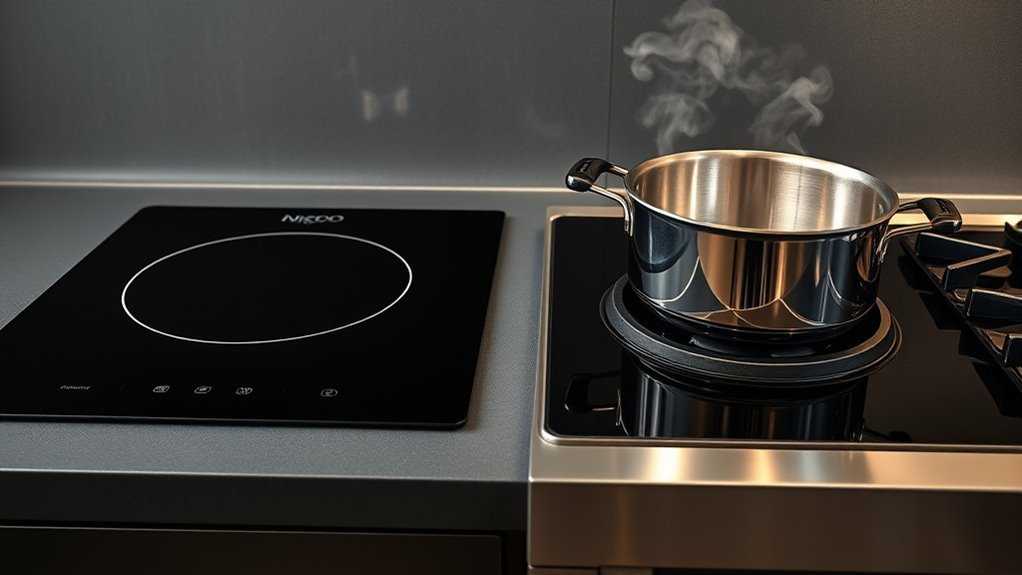
Induction Cooker vs. Electric Stove: Which Is Better?
Many people struggle with choosing the right stove for their kitchen, especially with so many options out there. You want something that’s efficient, safe, and easy to use, but it can be overwhelming to decide what fits best with your cooking style.
You’ll find induction cookers cook faster and offer precise temperature control while using energy more efficiently than electric stoves. They’re safer too, with cooler surfaces and automatic shut-off features.
However, induction requires compatible magnetic cookware and has a higher upfront cost.
Electric stoves are more affordable initially and work with a wider range of pots but heat slower and waste more energy.
Exploring these differences will help you decide which suits your kitchen and cooking style best.
Key Takeaways
- Induction cookers heat up faster and give you precise temperature control. Electric stoves tend to heat more slowly and are less responsive to adjustments.
- With induction, you need magnetic cookware, but electric stoves can work with a wider variety of pots and pans.
- Induction is more energy-efficient — up to 90% — but it usually comes with a higher upfront cost. Electric stoves are generally more budget-friendly.
- The surface of an induction cooker stays cooler and has safety features like automatic shut-off, which helps reduce burn and fire risks. Electric stoves don’t always have these features.
- Induction cookers have smooth, easy-to-clean surfaces, making cleanup simple. Electric stoves, especially coil types, require more effort to maintain and clean.
How Do Induction Cookers and Electric Stoves Work?
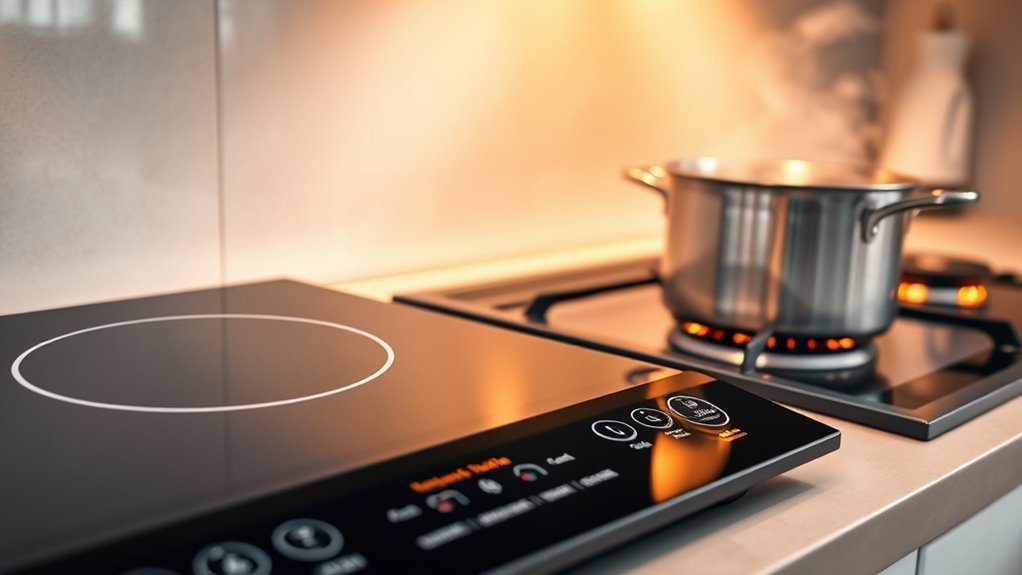
Although both induction cookers and electric stoves use electricity to generate heat, they do so in very different ways. When you use an induction cooker, it creates a magnetic field that directly heats your cookware. This means the heat transfers quickly and efficiently, allowing for precise temperature control.
On the other hand, electric stoves work by heating coils or a ceramic surface, which then warms your pots and pans through conduction. Your cooking techniques might shift depending on which appliance you prefer.
If you like quick adjustments and energy efficiency, an induction cooker suits you well. But if you’re used to traditional stovetops and don’t mind slower heat changes, electric stoves might match your user preferences better.
Understanding how they work helps you choose the right tool for your kitchen, ensuring your cooking style feels natural and effective.
Which Heats Up Faster: Induction or Electric Stove?
Since induction cookers heat cookware directly through magnetic fields, they reach cooking temperatures much faster than electric stoves, which rely on heating elements to transfer heat indirectly. If you want quick heating, induction is the clear winner, providing almost instant temperature changes.
Here’s why induction cookers excel in heating speed and cooking performance:
- Direct heat transfer means less energy loss and faster response.
- Precise temperature control lets you adjust heat instantly for better results.
- Even heat distribution reduces hot spots, so food cooks uniformly.
- Rapid cooldown prevents overcooking and improves safety.
In contrast, electric stoves take longer to heat up and cool down because of their indirect heating method. This lag affects how quickly you can start and adjust cooking. So if speed and responsiveness matter to you, induction cookers will make a noticeable difference in your cooking.
Energy Efficiency: Induction Cookers vs. Electric Stoves
When you’re cooking, how efficiently your appliance uses energy can make a big difference in your utility bills and environmental impact. Induction cookers usually use less energy because they heat cookware directly through electromagnetic fields. This means there’s less wasted heat and better cooking performance.
Electric stoves rely on heating elements that transfer heat indirectly, which causes more energy loss. Here’s a quick comparison:
| Feature | Induction Cooker |
|---|---|
| Energy Use | Lower (up to 90% efficient) |
| Cooking Speed | Fast and precise |
| Heat Loss | Minimal |
| Cost Savings | Save money over time |
| Environment | Smaller carbon footprint |
Choosing an induction cooker means better energy efficiency without sacrificing cooking quality. It’s a smart way to cut down on power use while still cooking effectively.
Which Offers Better Temperature Control?
When you’re cooking, being able to control the temperature precisely can really make a big difference. You’ll want to see how quickly each stove reacts when you change the settings and how consistent the heat stays once you’ve set it. Let’s take a closer look at which option gives you the best control over your cooking temperature.
Precision Levels Compared
Temperature control is crucial in cooking, and you’ll notice a big difference between induction cookers and electric stoves. When comparing precision, keep these points in mind:
- Induction cookers use electromagnetic fields for direct heating, giving you better precision methods.
- Electric stoves rely on radiant heat, which can cause more temperature swings.
- Induction maintains more stable temperatures, so you can keep consistent heat for delicate dishes.
- Electric stoves often have fewer small adjustments, making fine-tuning during cooking a bit harder.
Because of these differences, induction cookers give you more control over exact temperatures. This helps you perfect recipes that need precise heat. Electric stoves are reliable but may not offer the same steady temperature control as induction.
Response Time Differences
Although both induction cookers and electric stoves heat your cookware, their response times differ quite a bit, affecting how quickly they adjust to your temperature changes. Induction cookers have a clear advantage here because they heat cookware directly through electromagnetic fields. This allows for near-instant temperature shifts when you change the settings.
This means you get better temperature control and can react quickly to avoid burning or undercooking. On the other hand, electric stoves are slower because their heating elements warm up and cool down more gradually. This lag makes it harder to fine-tune cooking temperatures, which can lead to inconsistent results.
While electric stoves still provide decent heat, their slower response limits how precisely you can control temperature changes during cooking.
Consistency In Heat
Consistent heat is key to achieving precise cooking results, and choosing between an induction cooker and an electric stove can really make a difference. When it comes to temperature control, here are some points to consider:
Induction cookers allow for quick adjustments and maintain steady heat, which helps cook everything evenly.
Electric stoves tend to lag when changing temperatures, which can affect the consistency of your dish.
Heat retention favors electric stoves because of their coils and ceramic surfaces. They cool down gradually but don’t offer precise control.
Induction cookers focus energy directly on the cookware, reducing heat loss and providing consistent temperatures.
If you want precise, instant heat control, induction is your best option.
For slower adjustments and decent heat retention, electric stoves work but might challenge your control over uniform cooking.
How Safe Are Induction Cookers Compared to Electric Stoves?
When it comes to safety, it’s good to think about how heat exposure and electrical safety differ between induction cookers and electric stoves. Induction cookers heat up quickly and directly transfer energy to the cookware, so the surface stays cooler compared to traditional electric stoves. This can reduce the risk of burns if you accidentally touch the surface while cooking.
On the other hand, electric stoves have heating elements that stay hot for a while after turning off, which means there’s a lingering burn hazard. Plus, because electric stoves can get quite hot, there’s a higher chance of accidental fires if flammable materials are nearby.
Heat Exposure Risks
Since induction cookers heat cookware directly through magnetic fields, they expose you to less ambient heat compared to electric stoves, which warm the burner elements and surrounding surfaces. When you look at heat exposure risk, induction cookers usually come out better. Here’s why:
- You avoid accidental burns because the cooktop stays relatively cool.
- There’s less residual heat, so there’s a lower chance of fire hazards.
- The quick cooling of induction surfaces means you’re exposed to heat for less time.
- Electric stoves keep their burners hot even after turning off, which increases the risk.
Electrical Safety Features
Although both induction cookers and electric stoves need electricity to work, induction cookers have advanced safety features that help reduce electrical hazards.
When you use an induction cooker, circuit protection systems monitor the electrical flow and cut power immediately if something goes wrong. This helps prevent shocks and electrical fires.
Induction cookers also detect overheating in the cookware or the unit itself. They automatically lower the power or shut off to keep everything safe.
Electric stoves, on the other hand, rely on simpler safety measures that may not respond as quickly to electrical issues or overheating.
Fire Hazard Comparison
If you want to minimize fire risks in your kitchen, understanding how induction cookers and electric stoves compare is key. Induction cookers usually pose less fire risk because they heat cookware directly, so the surface stays cooler.
They automatically shut off if no pan is detected, which helps prevent accidental fires. Electric stoves, on the other hand, keep hot surfaces even after you’re done cooking, increasing the chances of burns or fires.
Both appliances need to meet strict safety standards, but induction cookers often include advanced sensors to prevent overheating. Spills on electric stove coils can cause flare-ups, while induction surfaces are easier to clean and safer in that regard.
Cleaning Induction Cookers vs. Electric Stoves: What’s Easier?
When you clean an induction cooker, you’ll notice it’s much easier to wipe down compared to an electric stove. The smooth, flat glass surface resists spills and stains, so you can quickly use a damp cloth or a gentle cleaner without scrubbing hard.
In contrast, electric stoves, especially coil models, require more involved cleaning methods. You have to remove coils and drip pans, then clean those parts separately, which takes extra time and effort.
The ease comparison clearly favors induction cookers for daily maintenance. You avoid dealing with burnt-on food stuck in crevices or around heating elements. Plus, induction surfaces cool faster, so you can clean them shortly after cooking without waiting long.
What Cookware Works Best With Each Appliance?
When you’re picking out cookware, it’s a good idea to think about what kind of appliances you’ll be using. Different stoves and cookers have their own preferences, so choosing the right material can really make a difference in how well your cookware performs and how long it lasts.
For example, if you’re using an induction cooker, you’ll want to go for pots and pans that are magnetic—like those made from cast iron or certain types of stainless steel. These work best because induction heats through magnetic fields, so if your cookware isn’t compatible, it just won’t heat up properly. On the other hand, electric stoves are a bit more flexible—they can handle a wider range of materials, from glass and ceramic to aluminum and copper.
Compatible Materials
Choosing the right cookware is key to getting the best performance from your induction cooker or electric stove. Induction compatible materials must be magnetic, while electric stove suitability is broader.
Cast iron and stainless steel perform excellently on induction cookers because of their magnetic properties. Nonstick cookware works well on electric stoves but needs a magnetic base to be induction compatible.
Copper bottom and aluminum pans generally aren’t induction compatible unless they have a magnetic layer. Ceramic cookware is great for electric stoves but often isn’t suitable for induction cookers.
Cookware Durability
Although both induction cookers and electric stoves can handle various cookware, durability is key for performance and longevity. Picking the right material can help your cookware last longer and avoid damage.
Induction cookers need ferromagnetic materials, which tend to be more durable. Electric stoves are more flexible with materials but might cause warping over time.
| Cookware Material | Best Appliance |
|---|---|
| Cast Iron | Induction |
| Stainless Steel | Both |
| Aluminum | Electric Stove Only |
| Copper | Electric Stove Only |
| Non-stick | Both (Check Base) |
Choosing durable cookware ensures you get the most out of your appliance without sacrificing its lifespan.
Heat Distribution Efficiency
Durable cookware sets the stage for better performance, but how heat spreads across your pots and pans really impacts your cooking results. When it comes to heat distribution efficiency, choosing the right cookware makes a big difference in heat transfer and overall performance.
For induction cookers, you’ll want magnetic-based cookware like cast iron or stainless steel with a magnetic layer. This ensures efficient heat transfer and proper cooking.
Electric stoves work best with materials like aluminum or copper, which spread heat evenly across the surface. Flat-bottomed pots and pans also help improve contact and heat distribution on electric stoves.
Avoid glass or ceramic cookware on induction cookers, as they don’t support heat transfer well. Choosing cookware that matches your appliance helps maximize efficiency and gives you consistent, great results.
Upfront and Long-Term Costs: Induction vs. Electric Stoves
When comparing induction cookers and electric stoves, understanding their upfront and long-term costs can help you make a smarter investment. Induction cookers usually require a higher upfront cost because of their advanced technology and need for specialized cookware. But this initial expense can be balanced out over time since induction cookers are more energy-efficient and cook food faster, which can lower your electricity bills.
Electric stoves tend to have a lower upfront cost, making them more budget-friendly. However, they are less energy-efficient, which might mean higher utility bills over the long run. Plus, electric stoves often don’t require special cookware, so you won’t need to replace your pots and pans.
Thinking about the initial investment versus the potential savings over time can help you figure out which appliance suits your financial goals better. In the end, it’s all about balancing the upfront costs with ongoing expenses to get the best value.
Which Appliance Fits Your Cooking Style and Needs?
How do you usually cook, and what matters most in your kitchen? Your cooking style and lifestyle really influence whether an induction cooker or an electric stove is better for you. To find the perfect fit, think about these points:
- Cooking Speed: If you want quick heat and precise temperatures, induction is great for your fast-paced cooking.
- Cookware Compatibility: Make sure your pots and pans work with induction. Electric stoves can use almost any cookware.
- Safety and Cleanliness: Induction stays cooler and is easier to clean. It’s a good choice if safety and convenience are top priorities.
- Meal Types: For delicate simmering or high-heat searing, consider which appliance handles your favorite recipes best.
How to Choose Between an Induction Cooker and Electric Stove
Choosing between an induction cooker and an electric stove really depends on your cooking style and kitchen space. First, think about what you prefer in your cooking. If you like quick heating and precise temperature control, an induction cooker could be the better choice. It heats up faster and lets you adjust the temperature accurately, which is great for recipes that need exact heat.
Choosing between induction and electric depends on your cooking style and need for precise, quick heating.
On the other hand, if you enjoy a more traditional cooking experience and don’t mind waiting a bit longer for things to heat up, then an electric stove might suit you better. They tend to be more straightforward and reliable for everyday cooking.
Next, consider your kitchen space. Induction cookers usually have a sleek, compact design, which can save counter space if your kitchen is small. Electric stoves, especially freestanding ones, take up more room but often offer multiple cooking zones, giving you more flexibility.
In the end, think about how you cook daily and how much room you have. Matching your habits and kitchen layout with these appliances’ features will help you pick the right one for your home.
Frequently Asked Questions
Can Induction Cookers Be Used During Power Outages?
You can’t use an induction cooker during power outages because it relies entirely on an electrical power source to generate heat. Without electricity, it won’t function at all.
While induction cookers offer excellent cooking efficiency when powered, they don’t work without power. To keep cooking during outages, you’ll need an alternative fuel source like gas or a backup generator to maintain your meal preparation.
Do Electric Stoves Emit Harmful Radiation?
Imagine you’re standing near a lighthouse, feeling its warm glow but not harmed by its light. Likewise, electric stoves do emit low-level electric field exposure, but it’s nothing like hazardous radiation.
You don’t need to worry about radiation safety with electric stoves—they produce non-ionizing radiation, which is safe for everyday use. So, you can cook away without fearing harmful radiation from your electric stove.
Are Induction Cookers Compatible With All Kitchen Countertops?
Induction cookers aren’t compatible with all countertop materials. You’ll want to check if your countertop can handle the heat and weight. Materials like granite, quartz, and solid surfaces usually work well.
But things like laminate or wood might need extra care. Installation requirements also matter; you’ll need a stable, heat-resistant surface and proper electrical setup.
Make sure your countertop supports these needs to avoid damage and ensure safe, efficient use.
How Noisy Are Induction Cookers Compared to Electric Stoves?
Oh, sure, if you want a concert hall in your kitchen, go for the electric stove! But seriously, induction cookers keep sound levels impressively low, so you won won’t hear much beyond a gentle hum or soft buzz.
While electric stoves tend to clank and sizzle louder, induction cookers deliver better cooking efficiency quietly. So, if you prefer peace alongside precision, you’ll appreciate how an induction cooker minimizes noise without sacrificing performance.
Can Induction Cookers Cause Interference With Electronic Devices?
Yes, induction cookers can cause some interference with electronic devices because they use magnetic fields to heat cookware.
However, this interference is usually minimal and won’t affect most modern gadgets. You’ll benefit from excellent cooking efficiency and lower energy consumption, making it a smart choice despite potential minor disruptions.
Just keep sensitive electronics a bit away, and you’ll enjoy faster, more efficient cooking without significant issues.
Conclusion
Choosing between an induction cooker and an electric stove is like picking between a sports car and a reliable sedan. Do you want speed and precision? Induction is your fast lane, heating up 50% quicker with pinpoint control.
If you prefer steady, simple cooking, electric stoves offer familiar comfort. Think of your kitchen as a racetrack—your choice depends on whether you crave the thrill of speed or the ease of a smooth ride.
Either way, you’re set to cook smart with the right kitchen appliance. When it comes to choosing between an induction cooker and an electric stove, consider which features matter most to you.