How Deep Are Kitchen Counters? The Complete Answer
Are you overwhelmed trying to figure out the perfect kitchen counter depth? You’re not alone. Many people struggle with choosing the right size that balances functionality and comfort.
Kitchen counters are typically about 24 inches deep, giving you enough workspace without causing strain. This depth balances practicality and comfort, letting you prep food and place appliances easily.
Islands and peninsulas often run deeper, between 24 and 48 inches, depending on use and seating needs. Material strength also affects depth choices to avoid sagging.
If you want to understand how depth impacts design, storage, and ergonomics, you’ll find plenty of insights ahead.
Key Takeaways
- Standard kitchen counters are usually 24 inches deep, which provides a good balance of workspace and ergonomic reach.
- Kitchen island depths range from 36 to 48 inches, depending on whether they’re mainly for prep work or seating.
- Peninsula counters typically measure 24 to 30 inches deep, with an extra 12 to 18-inch overhang for seating.
- Deeper counters can accommodate larger cabinets and offer more storage space.
- Shallow counters, on the other hand, limit both workspace and storage options.
- The choice of countertop material affects the ideal depth and overhang support, as durable materials allow for deeper and extended surfaces.
What Is the Standard Depth of Kitchen Counters?
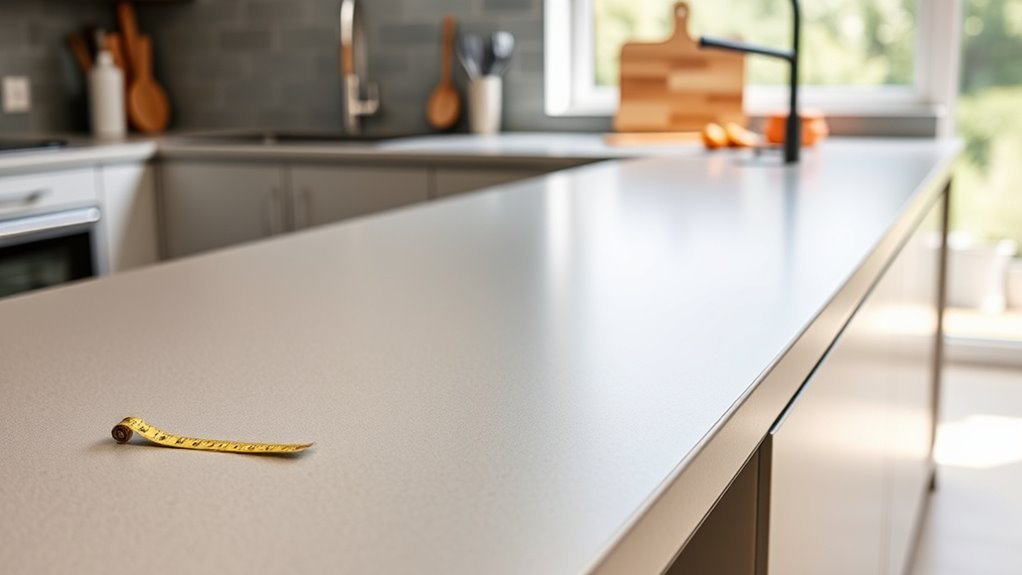
Most kitchen counters have a standard depth of 24 inches. This size is chosen to fit most kitchen layouts comfortably while keeping things efficient.
When thinking about counter depth, it’s more than just fitting appliances or cabinets. It’s about creating a workspace where you can reach everything easily without straining.
A 24-inch depth strikes a good balance. It gives you enough room to prep food, place small appliances, and clean up without feeling cramped.
If your counter is too shallow, you might find yourself with limited workspace, which can slow down your cooking. Too deep, and you might overreach, leading to discomfort over time.
Sticking close to this standard depth helps keep your kitchen ergonomic. It makes your space more functional, helping you work smarter and more comfortably.
Understanding and choosing the right counter depth is key to designing a kitchen that’s both practical and user-friendly.
How to Measure Kitchen Counter Depth Accurately
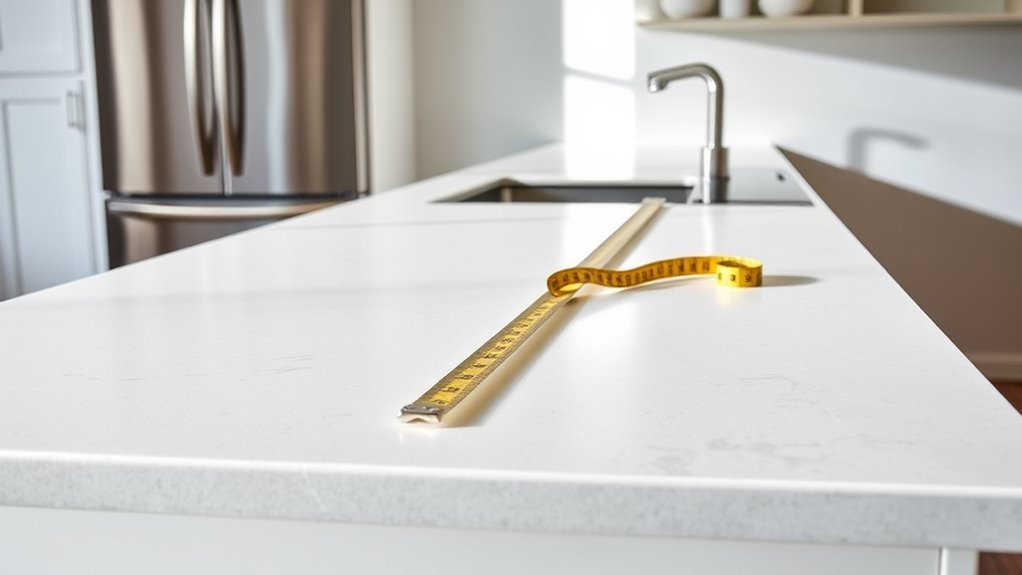
Knowing the standard depth of kitchen counters gives you a good starting point, but measuring your counter accurately guarantees the best fit for your space. Use reliable tools like a tape measure or a laser measure to get precise results.
Start at the wall where the counter meets the backsplash, then extend your tool to the front edge of the countertop. Make sure to note the measurement carefully.
It’s a good idea to check multiple points along the counter, especially if it’s older or custom-built. Record each measurement and compare them to ensure consistency.
| Step | Tool Needed | Tip |
|---|---|---|
| Measure from wall to front edge | Tape measure or laser | Keep the tool level for accuracy |
| Check multiple points | Measuring tools | Record each reading |
| Compare and average | Pen and paper | Use these measurements for fitting |
This method helps you capture precise depth data, making installation or replacement planning much easier and more confident.
Why Does Kitchen Counter Depth Matter in Design?
Although it might seem like a minor detail, the depth of your kitchen counters plays an essential role in both functionality and aesthetics. When you choose the right depth, you maximize space efficiency, making meal prep and cooking more comfortable. Counters that are too deep can create hard-to-reach areas, while shallow counters might limit your workspace.
Balancing depth guarantees you use every inch wisely, avoiding wasted or cramped areas. From a design perspective, the depth affects the overall look and flow of your kitchen. Properly sized counters align with cabinets and appliances, creating a cohesive and pleasing space.
They also influence how open or crowded your kitchen feels, impacting your comfort and enjoyment. Paying attention to counter depth helps ensure your kitchen functions smoothly and looks inviting, making daily use more enjoyable and satisfying in the long run.
How Does Kitchen Style Affect Counter Depth?
The depth of your kitchen counters doesn’t just impact function and space. It also ties closely to your kitchen’s style. If you like modern designs, you’ll probably go for deeper counters that showcase sleek appliances and offer plenty of prep space. This aligns with contemporary trends that focus on both look and practicality.
Traditional styles often stick with standard depths, balancing usefulness with a timeless feel. Minimalist kitchens tend to have shallower counters to keep things looking clean and open, making the space feel uncluttered. Rustic charm might inspire you to choose counters with varying depths, adding character and a handmade vibe.
In the end, your kitchen’s layout and style choices really influence the counter depth. When you consider how your style shapes the size, you’ll create a space that’s both intentional and inviting. Plus, it’ll meet your everyday needs perfectly.
What Are Standard Depths for Kitchen Islands and Peninsulas?
When you’re designing your kitchen island, you’ll typically see depths ranging from about 36 to 48 inches. This range helps you strike a good balance between having enough workspace and keeping the traffic flow smooth.
As for peninsulas, they tend to be a bit more flexible. Their depths can vary more, depending on your kitchen’s layout and whether you want to include seating or extra countertop space. Just remember, things like where you place appliances and how you plan to use the countertops will also play a role in choosing the right depth for both.
Typical Island Depths
You’ll find that typical kitchen island depths range between 36 to 48 inches, depending on the intended use and available space.
If your island mainly serves as extra prep space, a depth of around 36 inches is common. For islands with seating or storage, deeper options up to 48 inches work well and provide more room.
Island functionality really influences the depth you choose. You want enough space for appliances, seating, and workspace without making your kitchen feel crowded.
Current design trends favor islands that balance practicality with style. Many opt for slightly deeper islands to create a focal point and maximize utility.
Ultimately, picking the right depth ensures your island complements your kitchen layout and meets your daily needs efficiently.
Peninsula Size Variations
Kitchen peninsulas are a flexible alternative to islands, especially in layouts where space or flow is limited.
They usually have depths between 24 to 30 inches, similar to base cabinets, but this can change based on your design and how you plan to use the space.
If you want seating, extend the countertop by 12 to 18 inches beyond the base to give enough legroom.
When choosing materials for your peninsula, think about thickness and durability to support overhangs without sagging.
Laminate, quartz, and granite are popular options that offer a good mix of strength and style.
Keep your kitchen’s overall flow and clearance in mind when deciding on the depth.
With a thoughtful design and the right materials, you’ll create a functional and attractive workspace that fits your needs perfectly.
Factors Influencing Depth
Although standard depths provide a helpful starting point, several factors influence how deep your kitchen islands and peninsulas should be. First, think about counter height, as it impacts comfort and usability. Taller counters might need to be deeper to comfortably accommodate seating and prep space.
Next, consider your kitchen’s style. Your design can guide you to choose depths that keep everything looking balanced and cohesive. Also, how you plan to use the island or peninsula matters; if you want extra workspace or seating, a deeper counter can be really helpful.
Don’t forget about traffic flow and room size. You want to make sure your counters don’t crowd the space or make movement tricky. By keeping these factors in mind, you’ll find a depth that works perfectly for your kitchen’s function and style.
How Does Counter Depth Impact Storage and Cabinets?
How much counter depth you choose can really affect your storage options and cabinet design. A deeper counter gives you more surface area, so you can add larger or extra cabinets underneath.
This extra space often allows for versatile storage solutions, like pull-out shelves or deeper drawers, making your cabinets more organized. On the flip side, shallower counters limit the depth of cabinets below, which might restrict what you can store or force you to get creative with space-saving accessories.
When you go with standard or deeper counters, you have more room to customize your cabinet layout. This can improve both accessibility and storage capacity.
This makes a big difference if you need to store bulky kitchen gadgets, pans, or pantry items. Conversely, a shallow counter usually means less cabinet volume, so you’ll want to focus on efficient organization to maximize space.
Ultimately, your choice in counter depth directly affects how practical and organized your kitchen storage can be.
What Are Ergonomic Considerations for Kitchen Counter Depth?
When you spend time cooking or prepping meals, the height and depth of your counters can greatly affect your comfort and efficiency. Ergonomically, your counter depth should allow you to reach the back without straining.
Standard depths around 24 inches often balance accessibility and workspace well. If counters are too deep, you risk leaning forward, which causes back discomfort over time. Conversely, shallower counters might limit your prep area, impacting workflow.
Counter height also plays a key role in user comfort. Typical kitchen counters sit around 36 inches high, which is ideal for most people to work without bending.
Matching counter depth to your height and reach guarantees you don’t have to overstretch or crouch, reducing fatigue. Consider your daily tasks and how you move in your kitchen.
Prioritizing ergonomic counter dimensions helps maintain good posture, prevents strain, and makes cooking more enjoyable and efficient.
When to Choose Deeper or Shallower Kitchen Counter Depth?
Choosing the right kitchen counter depth depends on your specific needs and kitchen layout. If you often prepare large meals, entertain guests, or use multiple appliances at once, deeper counters give you extra workspace to spread out comfortably.
They’re also ideal if you have a spacious kitchen where added depth won’t overcrowd the room. On the other hand, shallower counters work best in smaller kitchens or tight spaces where maximizing floor area is a priority.
They help keep everything within easy reach, reducing the need to stretch or lean over. If you prefer a minimalist look or want to create more walking space, shallower counters are the way to go.
Ultimately, choose deeper counters if you value ample prep area and flexibility. Opt for shallower counters if space efficiency and accessibility matter more to you. Your lifestyle and kitchen size will guide your best choice.
How Does Countertop Material Influence Counter Depth Choices?
Material selection plays a big role in determining the ideal depth for your kitchen counters. Different countertop types come with varying thicknesses and support needs, which directly influence how deep your counters can be.
For example, durable materials like granite or quartz can support deeper overhangs without extra reinforcement. This means you can choose greater depths confidently.
On the other hand, materials with less durability, such as laminate or wood, might require shallower depths or additional support to prevent sagging over time.
When choosing your countertop, think about both its strength and how it affects your overall kitchen layout. Stone countertops often fit standard or custom depths easily.
But softer materials may limit your options. Understanding how material durability impacts counter depth helps you make an informed decision.
This way, you can balance the look you want with practical functionality in your kitchen space.
How to Customize Your Kitchen Counter Depth for Your Needs
Since your kitchen layout and daily habits differ from others, customizing your counter depth ensures the space works perfectly for you. Start by evaluating your personal needs: do you need extra prep space or prefer a compact design to maximize walking room? Think about your appliances, storage, and how you use the counters daily.
Counter customization allows you to adjust depths beyond standard sizes, tailoring surfaces to improve workflow and comfort. Measure your kitchen carefully, noting any overhangs or seating areas that might influence your depth choices.
If you often work with large pots or baking sheets, deeper counters can be a real asset. On the other hand, shallower counters might suit smaller kitchens or minimalist styles. Work with your contractor or designer to specify exact depths, balancing looks with practicality.
Frequently Asked Questions
How Much Does Kitchen Counter Depth Affect Resale Value?
Kitchen counter depth can really impact your resale value because buyers often notice counter aesthetics first. If your counters are too shallow or unusually deep, they might seem impractical and turn off potential buyers.
Following resale trends, standard depths around 25-26 inches usually appeal most because they offer both style and functionality. Sticking to these dimensions helps attract more buyers and maximize your home’s value without sacrificing looks or usability.
Can Counter Depth Impact Kitchen Cleaning Ease?
Think of your kitchen counters as a stage. If it’s too deep, you’re reaching into the shadows. Yes, counter depth can impact cleaning efficiency and accessibility.
A deeper counter might trap crumbs and spills in hard-to-reach spots, making cleaning a chore. On the other hand, shallower counters keep everything within arm’s reach.
This boosts your cleaning speed and makes the whole space easier to maintain. You’ll find cleaning less of a hassle this way.
Are There Eco-Friendly Materials for Deeper Counters?
Yes, you can find eco-friendly materials for deeper counters that combine sustainability with durability. Bamboo and recycled glass are great options—they’re renewable and strong enough to handle daily use.
Reclaimed wood also offers a durable, natural alternative if you want a warm, earthy look. By choosing these materials, you’re not only improving your kitchen’s functionality but also reducing your environmental impact.
And the best part? You don’t have to sacrifice style or strength when going eco-friendly.
How Do Appliances Influence Ideal Counter Depth?
Appliance placement directly affects your ideal countertop depth because you need enough space to comfortably use and access devices like microwaves or mixers. When you think about countertop ergonomics, deeper counters can give you extra room for appliances without making your workspace feel crowded.
But if appliances sit above or below the counter, you might not need extra depth. So, always plan your counter depth based on where and how you’ll position your appliances for easy use.
What Is the Cost Difference for Custom Deeper Counters?
Custom countertop pricing for deeper counters usually runs 20-30% higher than standard depths, so you’ll pay a bit more for those extra inches. Think of it as planting a bigger garden—you get more space to grow your kitchen’s functionality.
The deeper counter benefits, like extra prep area and accommodating larger appliances, often outweigh the extra cost. You’ll want to weigh your budget against how much you value that added room.
Conclusion
Now that you know the standard kitchen counter depth is usually 24 inches, you can make smarter design choices tailored to your space and needs.
Did you know that counters deeper than 25 inches can boost prep space but might make reaching the back tricky for some?
Keep ergonomics in mind to create a kitchen that’s both functional and comfortable.
With these tips, you’ll have a kitchen that works perfectly for you every day. And if you’re curious about how deep your counters should be, understanding kitchen counter depth is key to a well-designed space.