Fridge and Water Dispenser: A Complete Buying Guide
Finding the right fridge with a water dispenser can feel overwhelming. Many people struggle with choosing a model that fits their kitchen and lifestyle while also providing fresh, filtered water daily. You’re not alone in this search—there’s a lot to consider.
You’ll want a fridge that fits your kitchen style and lifestyle, whether it’s a side-by-side, French door, or bottom freezer model with a built-in water dispenser. Look for quality filtration, energy efficiency, and easy maintenance.
Filtered dispensers deliver better-tasting water but need proper installation and regular filter changes. Consider smart features and water line access for hassle-free use.
Keep your dispenser clean and troubleshoot issues quickly to enjoy fresh water every day. There’s plenty more to investigate on picking the perfect fridge with a water dispenser for your needs.
Key Takeaways
- Choose fridge types with built-in water dispensers that fit your kitchen space and style, like side-by-side or French door models.
- Make sure the water dispenser connects to a proper water supply with filtration systems for clean, fresh-tasting water.
- Filtered dispensers improve water quality but need regular filter changes and water line setup.
- Go for energy-efficient models with features like Energy Star certification and smart connectivity to save power.
- When installing, ensure proper water line access, level the fridge correctly, and do routine maintenance to prevent leaks and keep things running smoothly.
Types of Fridges With Built-In Water Dispensers
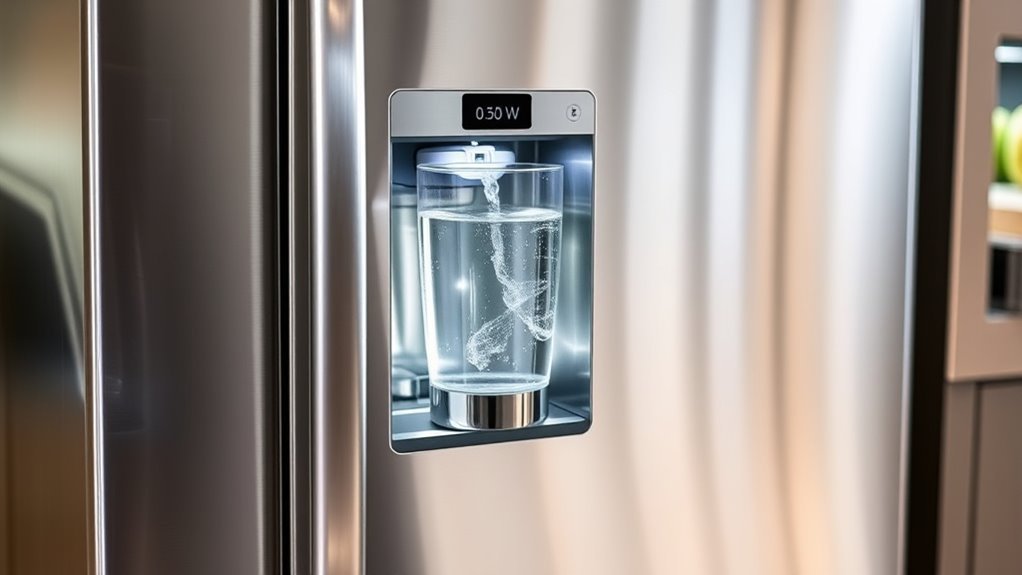
When choosing a fridge with a built-in water dispenser, you’ll find several types designed to fit different kitchen layouts and needs.
Side-by-side refrigerators are popular for their vertical split, making it easy to access both the fridge and freezer. They often have water dispensers conveniently located on the door.
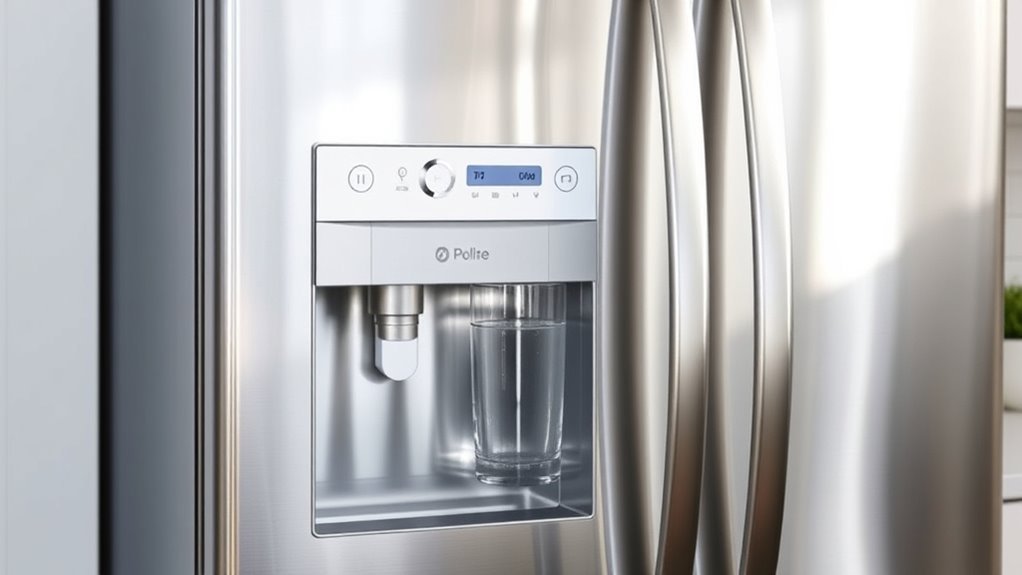
French door models combine style and space, with water dispensers seamlessly integrated into the door panel. They’re perfect if you want wider shelves and a modern look.
French door refrigerators offer stylish design, spacious shelves, and sleek water dispensers integrated into the door panel.
Top freezer fridges with water dispensers are less common but available from some brands. They offer a traditional layout with added convenience.
Bottom freezer units are increasingly including water dispensers, blending practicality with easy access—great if you use the fridge section often.
When shopping, think about how each type’s dispenser style fits your kitchen’s workflow and style.
Checking top fridge brands helps ensure you get reliable water dispenser features that match your needs and habits.
Water Dispenser Mechanisms in Refrigerators
How does the water dispenser in your fridge actually work? It’s a clever system that delivers chilled water right from your appliance, but it depends heavily on water pressure and proper installation requirements. Here’s a basic breakdown:
- Water Supply Connection. Your fridge connects to your home’s water line, which needs enough water pressure to work smoothly.
- Filtration System. The water goes through a built-in filter that removes impurities, making sure your water tastes clean and fresh.
- Dispensing Mechanism. When you press the lever or button, a valve opens and lets the water flow out into your glass.
Essential Features for Fridges With Water Dispensers
When you’re picking out a fridge with a water dispenser, one of the most important things to look at is the water filtration system. You want to make sure it provides clean, fresh-tasting water, so it’s worth checking how good the filter is.
Also, think about the type of dispenser it has. Some are more convenient than others, like touchless or automatically filling options, making it easier to use daily. And don’t forget to see if the fridge lets you control the temperature for both the water and the ice. Having that control can really make a difference in getting your drinks just how you like them.
Water Filtration System Quality
Since you rely on your fridge’s water dispenser for fresh, clean water, the quality of its filtration system is essential. A good filtration system not only removes contaminants but also guarantees taste and safety. When evaluating water filtration system quality, focus on these key points:
- Filtration Technology: Look for advanced methods like activated carbon or reverse osmosis. These effectively reduce chlorine, lead, and other impurities.
- Filter Lifespan: Check how long the filter lasts before needing a replacement. Longer lifespans mean less maintenance and cost savings.
- Certification: Confirm that the filter meets NSF/ANSI standards for reliable contaminant removal.
Dispensing Mechanism Types
Although water quality is important, how your fridge dispenses water is just as crucial. You’ll usually find two main types: gravity feed and pressurized systems.
Gravity feed relies on simple water flow, often needing manual refills. Pressurized systems push water out, offering options like chilled or hot water on demand.
Knowing these types helps you choose a fridge that fits your lifestyle and convenience needs.
Temperature Control Options
How do you make sure your water dispenser delivers that perfect sip every time? It all comes down to temperature control options. Good temperature regulation keeps your water icy cold without freezing or warming up.
When choosing a fridge with a water dispenser, keep an eye on these features:
- Adjustable Thermostats. They let you customize the fridge and dispenser temperature for the best cooling performance.
- Dual Cooling Systems. Separate cooling for the fridge and freezer helps maintain consistent temperatures in both compartments.
- Digital Temperature Displays. These give you real-time temperature readings so you can easily fine-tune your settings.
Filtered vs. Non-Filtered Water Dispensers: What’s Best?
What makes filtered water dispensers stand out compared to non-filtered ones? Filtered benefits include improved taste and reduced contaminants, which are essential health considerations if you want cleaner, safer water.
Non-filtered drawbacks often involve unpleasant tastes and possible impurities, which might not suit your family needs—especially with kids or seniors.
When you weigh cost comparison, filtered dispensers typically cost more upfront and require regular filter replacements, impacting maintenance needs.
Installation differences also matter; filtered models usually need connection to your water line, while non-filtered options are simpler to install.
Checking user reviews and brand recommendations helps you find reliable filtered dispensers that balance quality and price.
Ultimately, your choice depends on your taste preferences and how much effort you want to spend maintaining your dispenser.
If you value health and flavor, filtered is best. If simplicity and lower cost matter more, non-filtered might work for you.
Energy Efficiency in Fridges With Water Dispensers
When you’re shopping for a fridge with a water dispenser, it’s a good idea to look at its energy rating first. That little label can tell you a lot about how much electricity it will use and how it might impact your monthly bill.
And, honestly, those eco-friendly features aren’t just good for the planet—they can save you some money too! So, let’s take a closer look at how these factors really make a difference when it comes to choosing the right fridge with a water dispenser.
Energy Ratings Explained
Why should energy ratings matter when choosing a fridge with a water dispenser? Energy efficiency affects how much power your appliance uses overall. Rating systems help you compare models quickly to find the most efficient one.
Here’s what you should know: Energy ratings show how much power the fridge consumes. Higher ratings mean the appliance is more efficient.
Modern rating labels are clear and easy to understand. They make it simple to spot eco-friendly models.
Choosing an efficient fridge with a water dispenser can lower your environmental impact without sacrificing performance.
Impact on Electricity Bills
Although fridges with water dispensers add convenience to your kitchen, they can also raise your electricity bills if they aren’t energy efficient. These models often use more energy because of extra parts like pumps and cooling systems for the dispenser.
When you’re doing a cost analysis, remember to include not just the purchase price but also how much electricity the fridge will use over time. A less efficient model might save you money upfront but could lead to higher monthly bills.
To keep costs manageable, look for fridges with good energy ratings and think about how often you’ll use the water dispenser. Understanding the impact on your electricity bills helps you make a smarter choice, balancing convenience with long-term savings.
Eco-Friendly Fridge Features
When choosing a fridge with a water dispenser, focusing on eco-friendly features can significantly reduce your energy use and environmental impact.
Look for models that prioritize energy conservation and use sustainable materials in their construction. Here are three eco-friendly features to consider:
- Energy Star Certification guarantees the fridge meets strict energy efficiency guidelines, helping you cut down on electricity use.
- LED Lighting consumes less power and lasts longer than traditional bulbs, boosting overall energy savings.
- Recycled and Sustainable Materials are used in some fridges, reducing environmental harm during manufacturing.
Smart Features for Fridges With Water Dispensers
As you explore fridges with water dispensers, you’ll see that smart features can really boost convenience and efficiency in your kitchen. With smart connectivity, you can control your fridge remotely through apps, so you can check water levels or change settings from anywhere.
A user-friendly touchscreen makes it simple to customize water temperature, set filter reminders, and access extra functions like voice control. It’s all about making your fridge easier and more intuitive to use.
Here’s a quick look at some popular smart features:
| Smart Feature | Benefit |
|---|---|
| Wi-Fi Connectivity | Control your fridge and dispenser from anywhere |
| Touchscreen Display | Easy to navigate and adjust settings |
| Voice Assistant | Use hands-free commands for water dispensing |
| Filter Status Alerts | Get reminders when it’s time to change the filter |
| Energy Monitoring | Keep track of power use and save on bills |
With these features, your fridge with water dispenser becomes more than just an appliance. It’s a connected helper in your kitchen.
Installation Tips for Fridges With Water Dispensers
Smart features can make your fridge with a water dispenser more convenient, but proper installation ensures those features work smoothly from day one. To avoid common installation challenges, focus on key plumbing considerations and setup details. Here are three tips to help you out:
- Check Water Line Accessibility: Make sure your fridge is near a cold water supply with easy access to shut-off valves. This helps prevent leaks and makes future repairs simpler.
- Use Proper Tools and Materials: Use a copper or reinforced plastic tubing recommended by the manufacturer. Steer clear of cheap materials that can cause leaks or blockages.
- Level Your Fridge Correctly: A tilted fridge can mess up water flow and dispenser operation. Use a level to adjust the feet so it sits flat and stable.
Maintaining Your Fridge’s Water Dispenser
Keeping your fridge’s water dispenser in good shape is pretty straightforward. Just remember to clean it regularly and swap out the filter when it’s time. Doing these simple things can really help prevent any nasty contamination and make sure you’re always getting fresh, clean water.
Cleaning Tips And Tricks
Keeping your fridge’s water dispenser clean is key to ensuring fresh, safe drinking water. To keep it hygienic, it’s important to stick to a regular cleaning schedule. Here are three simple tips to help you do just that:
- Weekly Wipe Down: Grab a soft cloth and some mild soap to wipe the outside of the dispenser and the drip tray. This helps prevent grime from building up and keeps everything sanitary.
- Monthly Deep Clean: Remove the dispenser nozzle and soak it in a vinegar-water mix for about 15 minutes. This helps dissolve mineral deposits and kill bacteria.
- Rinse Thoroughly: After cleaning, run cold water through the dispenser to wash away any soap or vinegar residue. This way, your water stays tasting fresh and pure.
Filter Replacement Schedule
Although your fridge’s water dispenser might seem low-maintenance, regularly replacing its filter is crucial for clean, great-tasting water. Most filters last about six months, but this can vary based on your usage and water quality.
To avoid unpleasant tastes or slower dispensing, watch for replacement indicators like a change in water taste, a slower flow, or a light on your fridge panel signaling the need for a new filter.
Don’t wait until these signs become obvious—set a schedule to swap out the filter proactively. Staying on top of your filter replacement guarantees your dispenser works efficiently and keeps your water fresh, saving you from potential issues down the line.
Preventing Water Contamination
Replacing your water filter regularly helps maintain water quality, but it’s not the only step to prevent contamination. You also need to ensure your water source is safe and check your plumbing to keep your fridge’s dispenser clean and safe. Here’s what you should do:
- Check your water source regularly for any contamination or changes in quality.
- Inspect plumbing connections for leaks or corrosion that could introduce impurities.
- Clean the dispenser’s nozzles and water lines every few months to prevent bacterial buildup.
Fixing Common Water Dispenser Issues
If your water dispenser isn’t working properly, you can often fix the issue yourself without calling a technician. Common problems include low water pressure and ice blockage.
Start by checking the water supply line for kinks or clogs that might reduce water pressure. If the dispenser isn’t releasing water, ice blockage inside the nozzle could be the cause—defrost it carefully to clear the ice.
Also, make sure the water filter isn’t clogged and replace it if needed. Here’s a quick guide to common issues and their solutions:
| Problem | Cause | Solution |
|---|---|---|
| No water flow | Low water pressure | Check supply line |
| Water leaks | Loose connections | Tighten fittings |
| Ice blockage | Frozen nozzle | Defrost dispenser |
| Slow dispensing | Clogged filter | Replace water filter |
| Strange taste | Old filter | Change filter promptly |
How to Choose the Best Fridge With Water Dispenser on a Budget
Wondering how to find a fridge with a water dispenser that fits your budget without sacrificing quality? Start by focusing on key budget considerations and brand comparisons to get the best value.
First, set a clear spending limit to narrow your options and avoid overspending. Next, compare trusted brands that offer reliable water dispensers within your price range. Brands like Whirlpool, LG, and Samsung often balance cost and quality well.
Finally, prioritize essential features like energy efficiency, dispenser type (built-in or external), and capacity to match your needs without extra costs.
Here’s a quick checklist to guide you:
- Define your budget and stick to it.
- Research and compare brands known for durability and good water dispensers.
- Identify must-have features and skip unnecessary extras.
Frequently Asked Questions
Can Water Dispensers in Fridges Be Used With Hard Water?
You can use water dispensers in fridges with hard water, but you need to be careful. Hard water has minerals that can cause buildup inside the dispenser’s pipes and filters, which might affect performance and water quality.
To keep everything working well, make sure to clean and replace filters regularly, especially those designed for hard water. If you don’t, mineral buildup could cause clogs and damage. Staying on top of maintenance is really important.
Do Fridges With Water Dispensers Require Special Plumbing?
You don’t need plumbing skills worthy of a spaceship engineer, but fridges with water dispensers do require specific installation requirements.
You’ll need a water line with the right water pressure—usually between 20 and 120 psi—to guarantee smooth operation.
If your home’s water pressure is too low or too high, the dispenser might not work properly.
How Often Should the Water Filter Be Replaced?
You should replace your water filter every six months to ensure it lasts as long as possible.
But keep an eye out for signs like reduced water flow, strange tastes, or cloudy water. These are clues it’s time to change the filter sooner.
If you don’t, contaminants can build up and affect the quality of your water.
Staying on top of filter replacements helps you enjoy clean, fresh water without any hassle.
Are There Health Risks Associated With Fridge Water Dispensers?
Think of your fridge water dispenser as a clear stream. If you don’t maintain it, the water quality can decline, leading to health risks like bacteria or mold growth.
You’re responsible for regular filter changes and cleaning to keep that stream pure. Following simple maintenance tips guarantees your water stays fresh and safe.
This helps protect you from potential illnesses tied to contaminated water. Keep it clean, and you’ll enjoy crisp, healthy hydration every time.
Can I Connect a Fridge Water Dispenser to a Bottled Water Source?
You generally can’t connect a fridge water dispenser directly to a bottled water source because most models aren’t designed for bottled water compatibility. They usually need a direct water line connection.
If you want to use bottled water, you’ll need a special setup or adapter. This can make installation more complicated.
It’s best to check your fridge’s manual or talk to a professional to make sure you’re installing everything safely and correctly.
Conclusion
When choosing a fridge with a water dispenser, keep in mind that 59% of households prefer models with built-in filtration for cleaner, better-tasting water.
You’ll want to consider features like energy efficiency, filter type, and how easy it is to maintain the unit to find the perfect fit for your needs.
By thinking about your budget and installation requirements, you can enjoy fresh, chilled water right from your fridge every day.
With the right choice, convenience and health go hand in hand, making your kitchen more functional and enjoyable.