Your Guide to Washing Machine Drain Hose: Choosing With Confidence
Are you tired of dealing with leaks, clogs, or water damage from your washing machine? You’re not alone—many people struggle with choosing the right drain hose and ensuring it works properly.
You need the right washing machine drain hose to avoid those frustrating issues. Pick one that fits your washer’s specs—usually a 5/8-inch diameter—and choose durable materials like reinforced rubber or flexible plastic.
Measure carefully to get the right length, leaving extra for bends. Make sure your connections are tight and secure to prevent backups and leaks.
Proper installation and regular checks are key to keeping your system running smoothly.
Keep reading to find helpful tips on types, materials, and installation tricks for the best performance.
Key Takeaways
- Choose a drain hose that matches your washer’s diameter, length, and material for a secure, leak-free connection and optimal drainage.
- Pick durable materials like reinforced rubber or flexible plastic to resist kinks, punctures, and high water pressure.
- Measure the hose length carefully, considering bends and height, and add some extra length for flexibility and movement.
- Make sure the hose is compatible with your washing machine model to prevent leaks and improve performance by sticking to recommended brands.
- Regularly check your hoses for cracks, stiffness, or clogs to avoid water damage and keep drainage running smoothly.
Why The Right Washing Machine Drain Hose Makes All The Difference
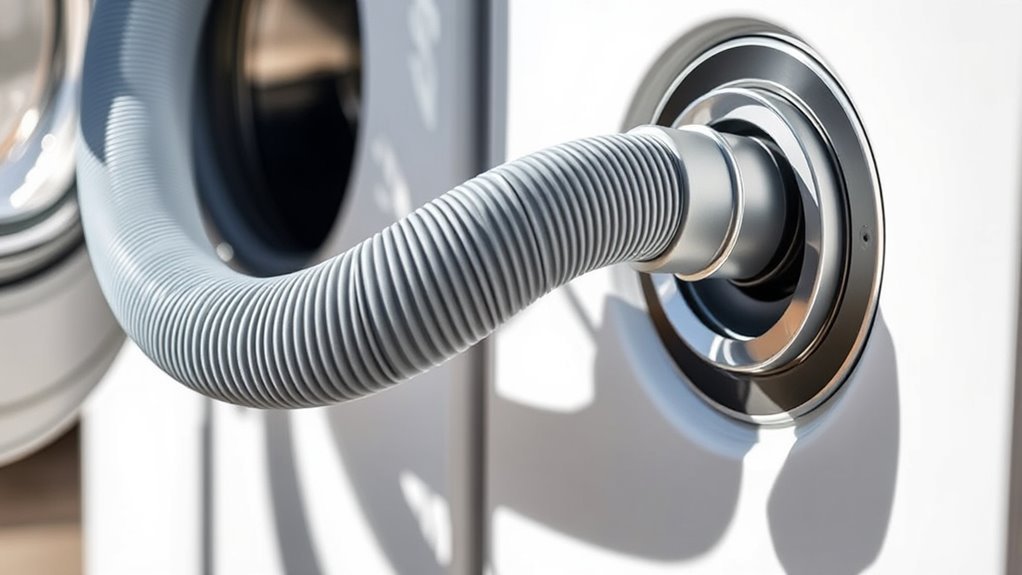
Although it might seem like a small detail, choosing the right washing machine drain hose can prevent leaks, clogs, and water damage in your home. You want to focus on drain hose performance to guarantee your washer drains efficiently without backups or bursts.
Selecting the right washing machine drain hose is key to avoiding leaks, clogs, and water damage.
A high-quality hose made from durable materials resists kinks and punctures, which keeps water flowing smoothly and protects your floors from damage. When installing, follow tips like securing the hose properly and avoiding sharp bends that could restrict flow or cause wear over time.
Make sure the hose is the correct length and connected tightly to both your washing machine and drain pipe. This improves performance and reduces the risk of leaks. By paying attention to these details, you’ll keep your drainage system reliable and trouble-free.
It’ll help your laundry run smoothly and keep your home safe from water issues.
How To Choose The Right Washing Machine Drain Hose
Choosing the right washing machine drain hose starts with understanding your washer’s specific needs and your plumbing setup. First, check the hose specifications like diameter, length, and material to make sure they match your machine and drain system. Most washers need a 5/8-inch diameter hose, but it’s best to double-check your model.
Go for durable materials like reinforced rubber or flexible plastic to prevent leaks and kinks. When installing, look for hoses with secure fittings that match your washer’s connectors and the drain outlet. Some hoses come with clamps or quick-connect attachments, making installation easier and saving you time.
Also, pick a hose resistant to high water temperatures and pressure to avoid damage over time. By paying attention to the hose specs and installation tips, you’ll choose a drain hose that fits well and works reliably, keeping your laundry area safe and efficient.
How To Measure Your Washing Machine Drain Hose Length
Sure! Here’s a more conversational version of the text:
—
To figure out how long your washing machine drain hose should be, start by measuring from the machine’s drain outlet. Then, think about the path the hose will take to reach your drain—this includes any bends or changes in height along the way. Making sure to consider these details will help you get the perfect hose length for a snug and proper fit.
Measuring Hose From Machine
Measuring your washing machine drain hose length accurately helps ensure a proper fit and prevents leaks or drainage problems.
Start by disconnecting the existing hose from the machine and fully stretching it out without any kinks.
Next, measure from the machine’s drain outlet to where you plan to connect the hose to the drain system.
Add about 6 to 12 inches extra to account for bends or movement.
Finally, check for any sharp turns or obstacles that might mean you need a longer hose.
Considering Drain Location
Once you’ve figured out the hose length from the machine itself, it’s important to consider where your drain is located. Check the drain height carefully because if it’s too low or too high, it can affect proper drainage and cause backups.
Measure the vertical distance from the washing machine’s drain outlet to the top of your drain pipe. Also, keep in mind the horizontal distance and any bends along the route.
Don’t forget to account for hose flexibility. A more flexible hose can navigate corners and tight spaces better, which might reduce the length you need. Just be careful not to overstretch or sharply bend the hose, as that can cause kinks and restrict water flow.
Common Types Of Washing Machine Drain Hoses
There are three main types of washing machine drain hoses you’ll encounter: corrugated plastic, smooth vinyl, and reinforced rubber. Each offers flexible options and comes in standard sizes, so you can find one that fits your machine without compatibility issues. When choosing, consider pressure ratings and drainage solutions to prevent overflow.
Here are key points to keep in mind:
- Corrugated Plastic: Lightweight and flexible, ideal for tight spaces. Use hose adapters for secure connections.
- Smooth Vinyl: Easier to clean and maintain, reducing clog risks. Follow installation tips for proper slope.
- Reinforced Rubber: Durable with excellent pressure ratings, perfect for heavy-duty use.
- Maintenance Advice: Check for cracks regularly and replace hoses at recommended intervals to avoid leaks.
What Materials Are Best For Washing Machine Drain Hoses
When it comes to washing machine drain hoses, you’ll mainly find them made from materials like rubber, vinyl, and reinforced plastic. Each of these has its own perks and quirks, so it’s good to know what they’re made of before making a choice.
Rubber hoses are pretty common because they’re flexible and durable. They can handle a lot of bending and movement without cracking, which is great if your setup isn’t perfectly straight. Vinyl hoses are usually lighter and less expensive, but they might not last quite as long since they can be more prone to cracking over time. Reinforced plastic hoses often strike a good balance—they’re sturdy and resistant to kinks, thanks to internal reinforcement, which helps them stay in good shape longer.
Common Hose Materials
Choosing the right material for your washing machine drain hose can help prevent leaks and ensure it lasts longer. When picking a hose, make sure it’s compatible with your machine and follow maintenance tips for better durability.
Here are four common materials you’ll come across:
PVC (Polyvinyl Chloride): Lightweight, flexible, and budget-friendly. It works with most washers but might stiffen over time.
Rubber: Known for excellent flexibility and durability. It resists cracking and is easy to care for.
Reinforced Plastic: Has an internal mesh that adds strength, lowering the risk of bursts under pressure.
Stainless Steel: Very durable and puncture-resistant. It’s less flexible and tends to be more expensive.
Choosing the right material helps ensure smooth water flow and reduces damage, making your washing machine easier to maintain.
Material Durability Comparison
Although all washing machine drain hoses serve the same basic purpose, their durability varies a lot depending on the material. When choosing, you’ll want to look at hose flexibility and corrosion resistance to find the best fit for your needs. Here’s a quick breakdown:
| Material | Flexibility | Corrosion Resistance |
|---|---|---|
| Rubber | High flexibility | Excellent corrosion resistance |
| PVC | Moderate flexibility | Good corrosion resistance |
| Stainless Steel | Low flexibility | Superior corrosion resistance |
Rubber hoses bend easily, making installation simpler, and they resist corrosion well. PVC hoses are stiffer but still reliable and affordable. Stainless steel offers the best corrosion resistance but sacrifices flexibility, which can make installation trickier. Choose based on your space and durability needs.
How To Find Drain Hoses Compatible With Your Washer Model
Finding the right drain hose for your washing machine starts with knowing your washer’s make and model. This info helps you narrow down compatible drain hose brands and avoid mismatches. To find a perfect fit, follow these steps:
- Check your washing machine’s manual or label for model details.
- Visit manufacturer websites to access compatibility charts listing suitable drain hoses.
- Compare drain hose brands that match your washer’s specifications.
- Read product descriptions carefully to confirm size, length, and connection type.
Compatibility charts are your best friend. They clearly show which hoses work with your model, saving you from guesswork. Don’t settle for generic hoses, as they might not fit securely or could cause leaks. Sticking to recommended drain hose brands guarantees durability and performance.
How To Install A Washing Machine Drain Hose
Start by gathering the necessary tools and making sure your washing machine is unplugged and turned off.
Next, detach the old drain hose if you have one, then attach the new hose tightly to the washing machine’s drain outlet. Use a clamp to secure it and prevent leaks.
Place the other end of the hose into the drain standpipe or laundry sink. Make sure it’s at the right height to avoid any backflow issues.
Keep these tips in mind to avoid common mistakes:
| Installation Tips | Common Mistakes |
|---|---|
| Use a hose clamp for a tight fit | Not securing the hose causes leaks |
| Verify proper hose height (usually 30-40 inches) | Placing the hose too low can lead to backflow |
| Avoid kinks or sharp bends | Bending the hose too much restricts drainage |
Following these steps will help you install your washing machine drain hose confidently and efficiently, preventing water damage and drainage problems.
Signs Your Washing Machine Drain Hose Needs Replacement Or Repair
Once you’ve installed your washing machine drain hose correctly, it’s important to keep an eye on its condition to avoid surprises. Over time, the hose can wear out, so recognizing signs of damage or clogs is essential to prevent leaks and malfunctions.
After installation, regularly check your washing machine drain hose for wear to prevent leaks and malfunctions.
Here are four signs your drain hose might need repairs or replacement:
- Visible Cracks or Holes: Look for any cracks or holes that could cause leaks.
- Water Backflow or Slow Drainage: If water isn’t draining properly, a clog might be the cause.
- Hose Stiffness or Brittleness: A hose that feels rigid or brittle is likely past its prime and could break.
- Unpleasant Odors: Bad smells near the hose can point to trapped debris or mold buildup.
Tips To Prevent Washing Machine Drain Hose Leaks And Damage
Although washing machine drain hoses are designed to be durable, regular maintenance is key to preventing leaks and damage. To keep everything running smoothly, perform regular inspections and hose maintenance.
Check for cracks or weak spots and make sure the hoses are installed correctly with secure connections. Using flexible materials helps maintain proper drainage alignment and ensures smooth water flow.
Follow usage guidelines and double-check compatibility to avoid unnecessary strain on the hoses. Tighten clamps and fittings regularly to prevent leaks and keep everything secure.
Where To Buy Reliable Washing Machine Drain Hoses
If you’re looking to get a reliable washing machine drain hose, it’s a good idea to stick with trusted retailers. That way, you can be pretty confident you’re getting a quality and durable product. You’ve got options—shopping online or heading to a store—and each has its perks. Let’s take a quick look at where you might find the best hoses for your needs.
Trusted Retailers Overview
Finding reliable washing machine drain hoses starts with choosing the right retailer. To get quality products from trusted brands, check out these top options:
- Home improvement stores – They carry durable hoses from reputable manufacturers and have staff who can offer expert advice.
- Appliance specialty shops – These stores focus on washing machine parts, offering a wide selection and knowledgeable staff.
- Large retail chains – They usually stock popular brands and provide customer reviews to help you make a decision.
- Local hardware stores – Supporting local businesses, you’ll find reliable hoses and get personalized service.
Online Vs. In-Store Options
Where should you buy your washing machine drain hose: online or in-store? Online shopping offers convenience and a wide variety of options, letting you compare brands, prices, and reviews from home. You can easily find hoses that fit your specific machine without rushing.
On the other hand, shopping in-store lets you inspect the hose’s material and quality firsthand, making sure it meets your needs. Plus, you can ask staff for immediate advice or recommendations.
If you value speed and variety, shopping online is a great choice. But if you prefer seeing the product before buying and getting personalized help, visiting a store works better.
Both options can give you reliable hoses, so just pick what suits your priorities—convenience or hands-on selection.
Frequently Asked Questions
Can I Use a Universal Drain Hose for All Washing Machines?
You can use a universal drain hose for many washing machines, but compatibility isn’t guaranteed for all models.
Universal hoses are made to fit standard connections, but some washers have unique fittings or specific length needs.
Before you buy, check if the hose matches your machine’s inlet size and drainage requirements.
This will help you avoid leaks or drainage issues and make sure your washer works smoothly without any hassle.
How Often Should I Clean the Washing Machine Drain Hose?
Imagine clear water rushing freely through your washing machine’s drain hose. For proper drain hose maintenance, you should clean it every three to six months. This helps prevent buildup, mold, and clogs that can cause bad odors or slow drainage.
Regularly inspecting and flushing the hose keeps your machine running smoothly and extends its life. Don’t wait for a problem—make cleaning part of your routine so you can avoid messy surprises.
What Should I Do if My Drain Hose Gets Clogged?
If your drain hose gets clogged, start by disconnecting it carefully and flushing it with warm water to clear out any debris.
Use hose maintenance tips like inspecting and cleaning the hose regularly to prevent buildup.
Avoid pouring grease or lint down the drain, as these can cause clogs.
You can also use a flexible brush or a mild vinegar solution to break down blockages.
Sticking to these steps helps your washing machine drain smoothly and last longer.
Are There Any Safety Concerns With Improper Hose Installation?
Yes, improper hose installation can lead to serious safety issues. You might experience water leaks, which could cause electrical hazards or water damage.
If the hose isn’t secured properly, it could disconnect during a cycle, leading to flooding in your laundry area. Always make sure the hose is tightly connected and positioned properly to avoid kinks.
Regularly check the hose for signs of wear or damage. Taking these simple steps helps protect your home and ensures your washing machine works smoothly.
Can a Damaged Drain Hose Cause Water Damage to My Floor?
Oh, sure, a damaged drain hose causing water damage sounds like a fun surprise! But seriously, yes, it can flood your floor if you ignore leak prevention.
When your hose cracks or wears out, water escapes where it shouldn’t, leading to costly repairs. You don’t want that headache, so keep an eye out for damage and don’t hesitate to do a hose replacement.
It’s a small step that saves you big trouble.
Conclusion
Choosing the right washing machine drain hose is like giving your laundry setup a sturdy lifeline. When you pick the perfect fit and material, you’re wrapping your machine in a gentle, reliable hold that keeps water flowing smoothly.
By measuring carefully and installing with care, you’ll avoid unwelcome surprises and leaks. Keep an eye out for wear and tear, and replace the hose when needed.
This way, your laundry routine stays as fresh and worry-free as a spring breeze, with your washing machine drain hose working perfectly every time.