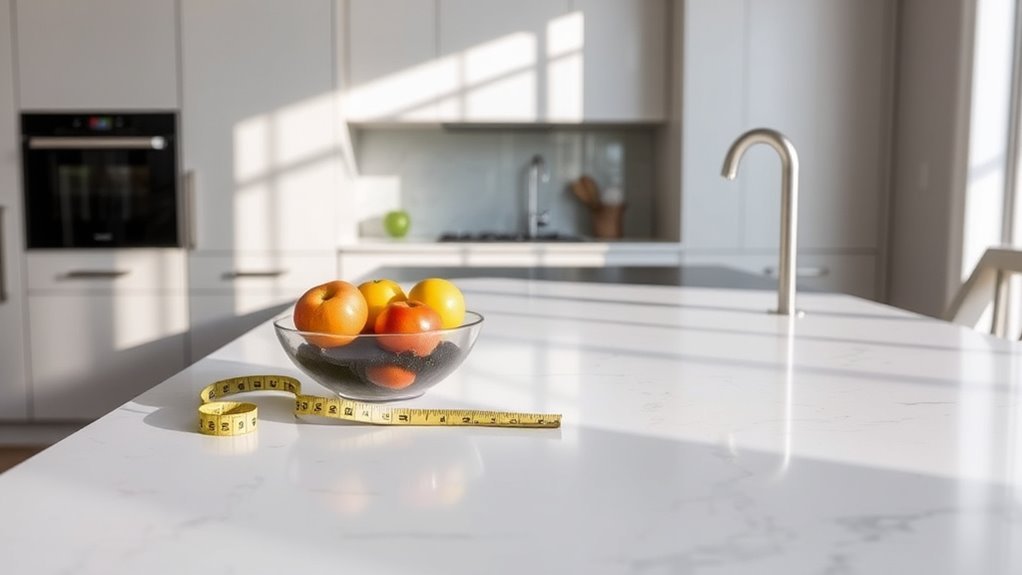
How High Are Kitchen Counters? The Complete Answer
Feeling comfortable while working in your kitchen can be a challenge, especially if your counters aren’t the right height. Many people struggle with back or wrist discomfort during meal prep, which can turn cooking into a chore. You’re not alone—finding the perfect counter height makes a big difference.
Kitchen counters are typically 36 inches high, which suits most people for comfortable meal prep and reduces strain on your back and wrists. You should measure your elbow height to customize the perfect fit, especially for tasks like chopping or baking.
Remember, island counters might be taller, up to 42 inches, for dining or bar use.
Getting the right height boosts your kitchen’s efficiency and comfort. Keep exploring to find tips on customizing and avoiding common height mistakes.
Key Takeaways
- Standard kitchen counters are usually 36 inches high, which works well for most people to do their tasks comfortably.
- If you do a lot of chopping or baking, you might want to adjust the counter height for better comfort and efficiency.
- Kitchen islands tend to range from 36 to 42 inches high, with higher surfaces great for casual dining or bar seating.
- Choosing the right counter height can help reduce back and wrist strain, making your time in the kitchen more comfortable.
- ADA-compliant counters are limited to a maximum height of 34 inches and include specific knee clearance for accessibility.
What Is the Standard Height for Kitchen Counters?
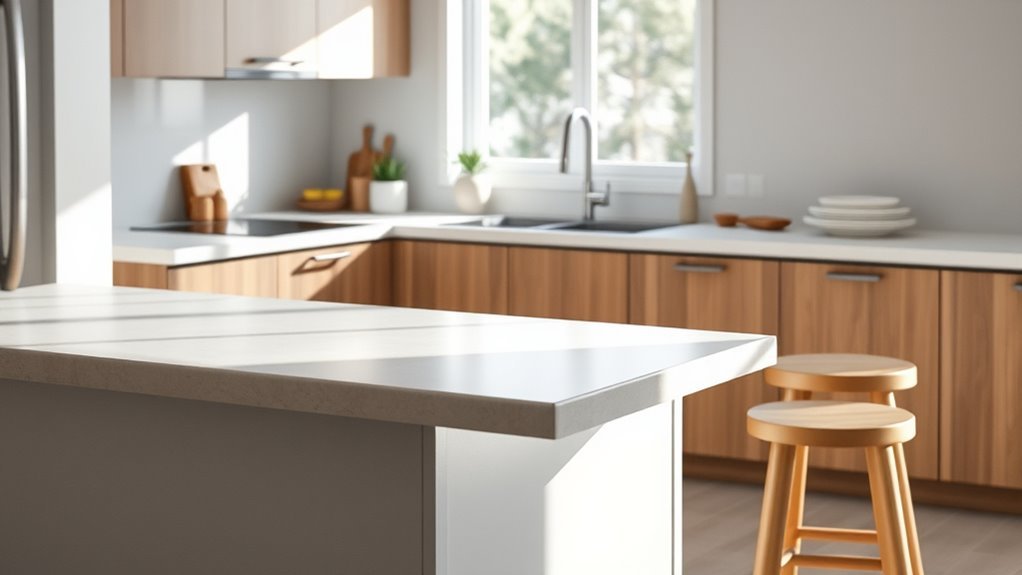
Anyone working in the kitchen will find that the standard height for kitchen counters is typically 36 inches from the floor. This measurement has become a common benchmark because it suits most people’s average height, allowing you to work comfortably without straining your back.
However, counter height variations do exist to accommodate different needs or preferences. Some counters might be set a bit lower or higher depending on the user’s stature or specific tasks like baking or chopping.
When thinking about the best ergonomics for your kitchen, it’s important to consider how your counter height supports your posture and reduces fatigue. If you’re taller or shorter than average, a slight adjustment can make a big difference in comfort.
While 36 inches works well for many, measuring your own reach and comfort level can help ensure your counters fit you perfectly.
Why Kitchen Counter Height Matters for Comfort and Efficiency
You’ll see that having the right counter height can really make a difference in how comfortable you feel while cooking. It helps cut down on strain on your back and wrists, so meal prep doesn’t leave you feeling sore or tired.
Plus, when your counter height is just right, your kitchen workflow stays smooth and efficient. You can move easily from one task to the next without awkward reaching or bending.
All in all, these ergonomic benefits not only make cooking more comfortable but also help you get things done more quickly and with less hassle.
Ergonomic Benefits Explained
Although kitchen counter height might seem like a minor detail, it plays an essential role in your comfort and efficiency while cooking or preparing meals. An ergonomic design tailored to your height reduces strain on your back, shoulders, and wrists, allowing you to work longer without discomfort.
Counters set at the right height incorporate comfort features that help maintain proper posture and minimize fatigue. When your kitchen counters match your body’s natural working position, you avoid bending or reaching awkwardly, which can lead to aches or repetitive stress injuries.
Choosing the ideal counter height guarantees that every task from chopping to mixing feels smoother and less tiring. Prioritizing ergonomic design in your kitchen setup ultimately supports your health and improves your overall cooking experience.
Impact on Kitchen Workflow
Matching your kitchen counter height to your body doesn’t just make things more comfortable—it makes your whole workflow smoother. When your counters are at the right height, you won’t need to bend or stretch as much, which helps you chop, mix, and plate faster.
This boost in efficiency means less fatigue and more time enjoying cooking. An ergonomic design that fits your height also reduces strain on your back and wrists, helping you keep a steady, productive rhythm.
You’ll find it easier to move seamlessly between prep, cooking, and cleaning zones, making your kitchen feel like a well-oiled machine. Choosing the right counter height isn’t just about style — it’s a smart investment in comfort and efficiency for every cook.
How to Choose the Right Kitchen Counter Height for Your Height
How do you find the best kitchen counter height for your comfort and efficiency? It all starts with your height and personal preferences. The right counter height can reduce strain and make cooking and prepping more enjoyable.
First, measure your elbow height. Stand straight and measure from the floor to your bent elbow. This gives you a good starting point for your ideal counter height.
Think about the tasks you do most. If you spend a lot of time chopping or kneading dough, a slightly higher counter might be better. Lower counters are great for sitting or light prep work.
Finally, try out different heights. Use adjustable surfaces or temporary setups to see what feels most comfortable during actual use.
Common Mistakes Setting Kitchen Counter Heights
Many people make avoidable errors when setting kitchen counter heights that can lead to discomfort and inefficiency. One common mistake is ignoring your specific height, which results in counters that are too high or too low.
Another mistake is neglecting how different countertop materials affect durability and feel, impacting comfort over time. Failing to evaluate future adjustments can also limit flexibility if your needs change.
Here’s a quick look at common mistakes and their impacts:
| Mistake | Impact | Solution |
|---|---|---|
| Ignoring personal height | Causes back strain | Measure and customize height |
| Overlooking countertop materials | Durability and comfort issues | Choose materials wisely |
| No allowance for adjustments | Limits future flexibility | Plan for adjustable designs |
| Setting uniform height | Inefficient work zones | Vary heights by task |
Avoid these pitfalls to create a kitchen that’s both functional and comfortable.
How Kitchen Counter and Island Heights Differ
So, most kitchen counters are typically about 36 inches tall. That’s a pretty standard height, making it comfortable for most prep work and everyday tasks. It’s like that sweet spot that works well for a lot of people.
Now, kitchen islands can be a bit more flexible when it comes to height. They usually sit around the same 36 inches, but if you’re planning to use your island as a casual dining spot or bar area, you might want it taller—say, 42 inches. Knowing these differences can really help you pick the perfect height for your space and how you plan to use it.
Standard Counter Height
Standard counter height usually measures around 36 inches, making it a comfortable workspace for most kitchen tasks. It’s great for chopping, mixing, and prepping because it matches the average person’s arm length and posture.
When looking at different counter heights, remember that small changes can impact comfort and usability. Also, thicker materials like granite or quartz can add to the overall height, so keep that in mind.
Here’s what to consider with standard counters:
- Slightly adjusting the height for your comfort or specific tasks
- Choosing durable materials that don’t compromise ergonomic height
- Making sure appliances and sinks fit seamlessly within the 36-inch height
This standard height remains the most popular choice for a balanced mix of functionality and comfort.
Island Height Variations
Although kitchen counters are usually around 36 inches high, island heights often vary to serve different purposes and make things more comfortable. When planning your island, think about your height preferences carefully.
Some islands match standard counter height for food prep, while others go up to 42 inches, which is great for bar stools and casual meals. You might also consider a multi-level island, combining a lower workspace with a higher seating area.
This flexibility allows you to customize your island based on how you use your kitchen daily. Just keep ergonomic comfort in mind—if it’s too high or too low, it can cause discomfort. By understanding these height options, you can create a kitchen that’s both functional and stylish, perfectly suited to your needs.
Adjusting Kitchen Counter Heights for Cooking vs. Baking
When you spend time in the kitchen, adjusting counter heights can make a big difference between comfort and strain. Different tasks call for different ergonomics. Your cooking setup needs to support chopping and stirring, while your baking work benefits from a stable surface for rolling dough or kneading.
To optimize your workspace, consider these adjustments:
- Cooking counters: Set around 36 inches high to minimize bending during chopping and stirring.
- Baking counters: Slightly lower at about 34 inches to make rolling dough and mixing easier.
- Customizable options: Use adjustable or multi-level counters so you can switch between tasks effortlessly.
Key ADA Guidelines for Kitchen Counter Heights
While adjusting counter heights can make cooking and baking more comfortable, it’s also important to think about accessibility standards. This helps ensure your kitchen is usable for everyone. Following ADA guidelines guarantees your counters meet key dimensions for wheelchair users and those with limited mobility.
The ADA recommends a maximum counter height of 34 inches. For accessibility, there should be knee space of at least 27 inches high, 30 inches wide, and 19 inches deep. These measurements help create a kitchen that is both functional and inclusive.
Here’s a quick summary of the key ADA specifications:
| ADA Guideline | Specification |
|---|---|
| Max Counter Height | 34 inches |
| Knee Clearance Height | 27 inches |
| Knee Clearance Width | 30 inches |
| Knee Clearance Depth | 19 inches |
| Accessible Reach Range | 15 to 48 inches from floor |
Keeping these guidelines in mind will help you design a kitchen that everyone can enjoy and use comfortably.
Customizing Kitchen Counter Heights in Your Remodel
Choosing the right kitchen counter height can really change how you cook, prep, and clean. When you’re remodeling, customizing your counters ensures they fit your needs perfectly. For example, a custom bar might be slightly higher for comfortable seating, while your main prep area could be lower to reduce strain during chopping.
Here are some tips to customize your kitchen counter heights effectively:
- Adjust the prep area height to match your comfort, usually between 34 to 36 inches.
- Design a custom bar height around 40 to 42 inches for casual dining or entertaining.
- Consider varying heights in different zones to support multiple tasks and users.
How Counter Height Affects Kitchen Workflow
Since your kitchen counter height directly influences how you move and work, it plays an essential role in your overall kitchen workflow. When your counters are set at the right height, you’ll experience better ergonomics, reducing strain on your back and wrists.
This means you can prep, cook, and clean more comfortably without unnecessary fatigue. Proper counter height improves workflow efficiency by allowing smoother transitions between tasks.
You won’t have to constantly adjust your posture or reach awkwardly, which speeds up meal prep. If your counters are too low, you might hunch over, causing discomfort and slowing you down. Too high, and tasks like chopping or mixing become cumbersome.
Tools and Tips to Measure and Test Your Ideal Kitchen Counter Height
Finding your ideal kitchen counter height starts with accurate measurement and practical testing. You’ll want reliable tools like a tape measure or laser level to get precise dimensions.
Accurate measurement and practical testing are key to determining your perfect kitchen counter height.
Once you have your baseline height, test it by simulating your daily kitchen tasks. This hands-on approach helps you see if adjustments are needed for comfort and efficiency.
Here are three tips to guide you:
- Use a sturdy stool or adjustable workbench to mimic different counter heights.
- Perform common activities like chopping or mixing to see how the height feels with your posture.
- Note any discomfort or awkward angles, then adjust the height accordingly. You can raise or lower the countertop or use anti-fatigue mats.
Frequently Asked Questions
What Materials Are Best for Durable Kitchen Countertops?
For durable kitchen countertops, you’ll want materials that stand up to daily use. Quartz is a great choice because it’s non-porous, scratch-resistant, and low maintenance.
Granite is known for its ability to handle heat and heavy wear without losing its appeal. Both materials offer long-lasting beauty and strength, so you can cook and clean without worry.
Choose quartz if you want easy upkeep, or go with granite if you prefer natural stone’s rugged resilience.
How Do I Maintain and Clean Different Countertop Surfaces?
To maintain and clean different countertop surfaces, you’ll want to follow specific care tips. For granite and quartz, use a mild soap and warm water, and avoid harsh chemicals.
Laminate surfaces clean well with gentle all-purpose cleaners. For wood, regularly oil it to prevent drying, and use a damp cloth for spills.
Always wipe up stains quickly to keep your countertops looking fresh and durable.
Can Kitchen Counter Height Impact Home Resale Value?
Imagine a buyer walking into your home and instantly noticing awkwardly low kitchen counters. That can hurt your chances.
Yes, kitchen counter height can impact home resale value because modern buyers prefer standard heights around 36 inches for comfort and functionality.
When your kitchen design meets these expectations, buyers feel more at home. That makes your property more attractive and could boost its market value.
What Are Popular Countertop Edge Styles and Their Benefits?
Popular countertop edge styles include eased, bullnose, and beveled edges. Eased edges give a clean, simple look and are easy to maintain.
Bullnose edges offer a smooth, rounded finish that’s safe for kids. Beveled edges add a touch of elegance with angled cuts.
When choosing an edge style, think about your kitchen’s overall design and aesthetic. This helps ensure the edge complements your space and fits your lifestyle perfectly.
Are There Eco-Friendly Options for Kitchen Countertops?
Yes, you can definitely choose eco-friendly options for your kitchen countertops. Look for sustainable materials like bamboo, recycled glass, or reclaimed wood, which help reduce environmental impact.
You’ll also want to consider countertop finishes that use non-toxic, low-VOC sealants. This keeps your space healthier and safer.
These choices not only support sustainability but also give your kitchen a unique, stylish look. You can feel good knowing your countertops are both beautiful and earth-friendly.
Conclusion
Now that you know the standard kitchen counter height and why it matters, you might wonder if one size really fits all. The truth is, it doesn’t. Your comfort and efficiency depend on customizing heights to suit your needs.
Don’t just accept the norm—test, measure, and adjust. This way, you’ll create a kitchen that works perfectly for you, making cooking and cleanup easier and more enjoyable every day.
When it comes to kitchen counters, the right height can make a big difference. Personalizing your counters ensures you’re comfortable and can work more efficiently.