How to Defrost a Freezer Fast: A Step-by-Step Guide
Many people struggle with the hassle of defrosting their freezer, especially when ice buildup slows down your appliance and makes everything more difficult.
You’re not alone—finding quick and easy solutions is a common goal for busy households.
You can defrost your freezer fast by first unplugging it and removing all food, storing it in coolers.
Place towels at the base to catch melting ice and open the door to speed up thawing.
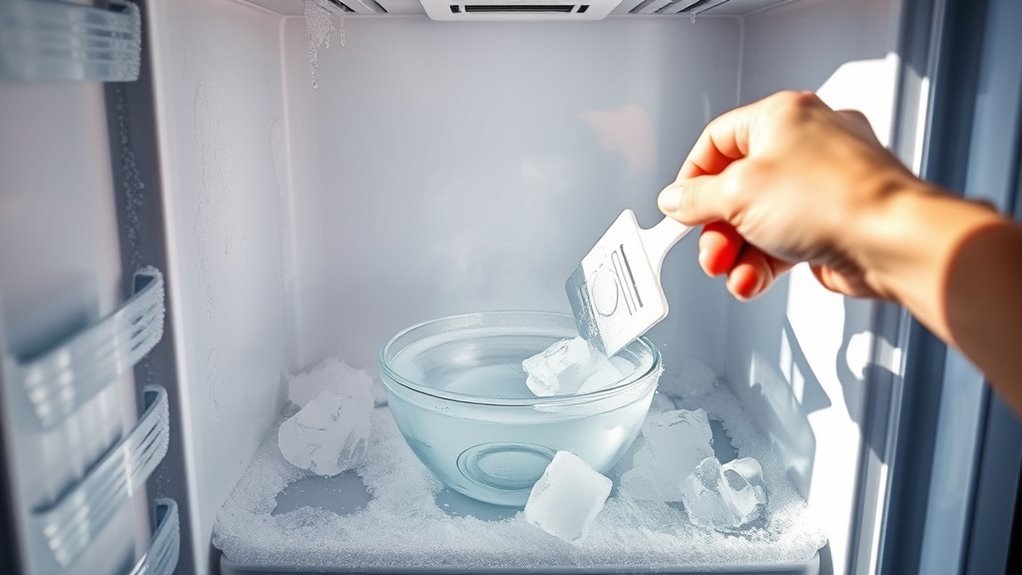
Use a bowl of hot water inside to melt ice quicker, but don’t use sharp tools to chip away frost.
Once melted, wipe everything dry before plugging it back in and restocking.
Keep going to uncover tips for lasting frost prevention and maintenance.
Key Takeaways
- Empty the freezer and unplug it to keep things safe and prevent food from spoiling during the defrost process.
- Place towels or shallow pans at the bottom to catch melting ice and water as the freezer defrosts.
- Keep the door open and set a bowl of hot water inside to help melt the ice faster.
- Remove any detachable shelves or drawers — this makes cleaning easier and speeds up access to ice buildup.
- Once the ice has melted, wipe down everything thoroughly to remove moisture, which helps prevent mold and odors before turning it back on.
How to Know When Your Freezer Needs Defrosting
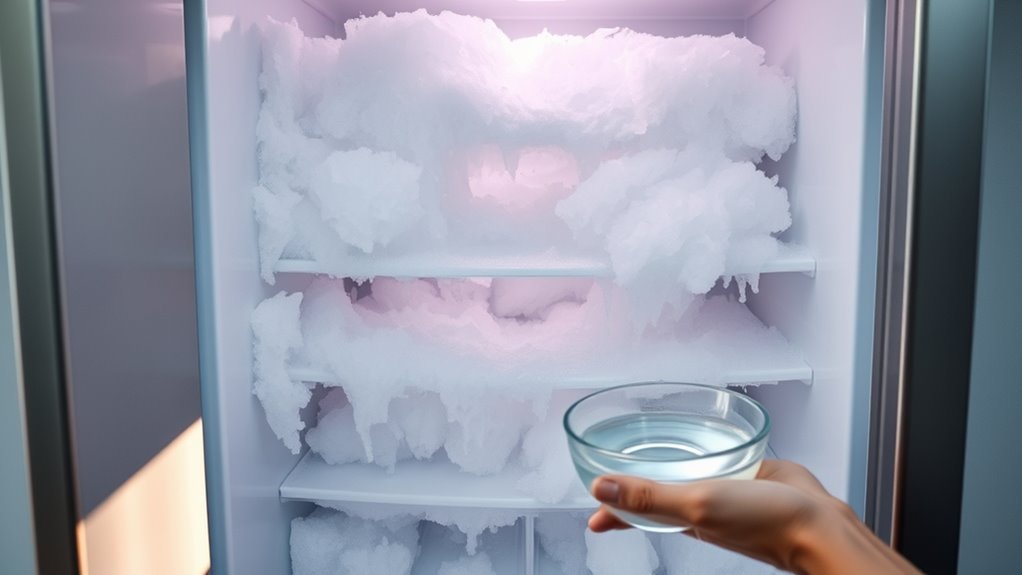
How do you know when your freezer needs defrosting? The most obvious sign is frost buildup inside. If you see a thick layer of ice on the walls or shelves, it’s time to act.
Frost buildup makes your freezer less efficient, forcing it to work harder and use more energy. You might also notice uneven cooling or that your food is taking longer to freeze.
If your freezer door won’t close properly because of ice blocking it, that’s another clear sign. Don’t ignore these warning signs; letting frost build up can damage your freezer over time.
Check for visible ice regularly and pay attention to how well your freezer is performing. Spotting these signs early helps keep it running smoothly and can save you from costly repairs.
Stay alert to frost buildup and defrost before it turns into a bigger problem.
How Often to Defrost Your Freezer
Regularly checking for frost buildup is a good habit, but knowing when to defrost your freezer can help keep it running efficiently and last longer. The right time depends on how much ice you see inside.
If frost is more than a quarter-inch thick, it’s time to defrost. Too much frost makes the freezer work harder and uses more energy.
When frost exceeds a quarter-inch, defrost to boost efficiency and save energy.
Most freezers need a good defrost about every six months. But if you live somewhere humid or open the door often, you might need to do it every three to four months.
Keep an eye on the ice buildup and adjust your schedule as needed. Sticking to a regular routine prevents excessive frost and keeps your freezer working smoothly.
How to Prepare Your Freezer: Emptying and Safety Steps
Before you get started with defrosting, it’s a good idea to empty out your freezer first. This way, you won’t have to worry about your food getting spoiled or stuck in the way. Just pull out everything and set it aside, maybe in a cooler if you want to keep it cold.
Next, make sure to unplug the freezer or turn off the power at the socket. Safety first, right? This step helps prevent any electrical accidents while you’re working on defrosting. Once that’s done, you’re all set for a smooth and safe process!
Remove All Contents
Start by clearing out everything inside your freezer to make the defrosting process easier and safer. Remove all frozen foods and place them in coolers or insulated bags to keep them cold while you work.
This step helps improve freezer organization, making it simpler to clean and defrost thoroughly. As you empty it, check for spoiled or freezer-burned items and toss them out.
Keep similar foods together to speed up restocking later. Label containers or bags before putting them back to stay organized over time. Taking the time now to organize your food storage will make future defrosting sessions easier.
Once your freezer is completely empty, you’re ready for the next step in the defrosting process.
Ensure Power Safety
Although you’ve emptied your freezer, you still need to confirm power safety by unplugging it before defrosting.
Disconnecting your freezer from the power source is vital to prevent electrical hazards and avoid damaging the appliance. Always locate the plug and pull it out carefully—never yanking the cord.
This simple step guarantees electrical safety and protects you from accidental shocks during the defrosting process. Also, avoid using extension cords or power strips, as they can increase the risk of electrical faults.
Once unplugged, you can safely proceed with defrosting without worrying about power interruptions or hazards. Prioritizing power safety keeps both you and your freezer protected throughout the entire defrosting procedure.
Step-by-Step Method to Defrost Your Freezer Quickly
Now that your freezer is empty and safe to work with, it’s time to start defrosting. Don’t worry, I’ll walk you through a simple, step-by-step process to make the ice melt faster and get your freezer back in shape in no time. Following these easy steps will save you some hassle and help you get everything up and running quickly.
Prepare Freezer for Defrost
Clear out your freezer by removing all food items and storing them in a cooler or another freezer to keep them fresh. Preparing your freezer properly is key to a smooth defrosting process and helps you get the most benefits.
Follow these freezer maintenance tips to get started:
- Unplug the freezer to guarantee safety and prevent electrical hazards.
- Place towels or a shallow pan at the bottom to catch melting ice and water.
- Remove any detachable shelves or drawers for easier cleaning later.
- Keep the freezer door open to speed up the melting of ice naturally.
Speed Up Ice Melting
One effective way to speed up melting ice in your freezer is to use hot water safely and strategically. Start by boiling water and pouring it into a shallow tray or bowl. Place this inside the freezer and close the door, letting the steam soften the ice quickly.
This method works well with other ice removal techniques, like gently scraping softened ice with plastic defrosting tools. Never use sharp objects to avoid damaging your freezer. You can also speed things up by wiping away melted water often to prevent it from refreezing.
For stubborn ice, repeat the hot water step as needed. Using these tools and techniques helps you clear ice faster and get your freezer back in action without waiting hours.
How to Speed Up Defrosting Your Freezer Safely
Although defrosting your freezer naturally takes time, you can speed up the process safely by using a few effective techniques. Proper freezer maintenance and ice removal tips help you avoid damage while clearing ice faster.
First, unplug your freezer and remove all food items to prevent spoilage. Then, place towels or a shallow pan at the bottom to catch melting water.
Next, put a bowl of hot water inside the freezer. The steam will loosen ice buildup without the need for harsh tools. Gently wipe away the loosened ice with a plastic or wooden spatula—avoid metal tools to protect surfaces.
These steps help accelerate defrosting while keeping your freezer’s surface safe. Regular maintenance like controlling humidity and removing ice buildup promptly also reduces future defrost time.
Removing Stubborn Ice Blocks From Your Freezer Safely
When the usual steaming method and gentle scraping don’t fully remove thick ice blocks, you’ll need to tackle them carefully to avoid damaging your freezer. Start by softening the ice using a bowl of hot water placed inside the freezer for 10-15 minutes. This helps loosen stubborn ice without harsh tools.
Next, apply safe scraping methods: use a plastic or wooden spatula instead of metal tools, which can puncture or scratch surfaces. Work slowly, prying small chunks of ice at a time rather than forcing large pieces loose.
Avoid sharp, sudden movements that could harm your freezer’s interior. If ice persists, repeat the hot water softening process and continue gentle scraping. These ice removal techniques minimize risk while efficiently clearing thick ice blocks.
Remember to stay patient. Rushing can cause unnecessary damage. By combining heat and careful scraping, you’ll safely clear stubborn ice buildup and keep your freezer in good shape.
How to Clean and Dry Your Freezer After Defrosting
Once all the ice has melted away, make sure to wipe down any remaining moisture. This helps prevent mold and funky odors from taking hold. After that, it’s a good idea to give everything a quick clean with a gentle cleaner. It keeps your freezer fresh and safe for your next batch of frozen goodies. Taking these simple steps will help keep your freezer in great shape before you start restocking it.
Removing Residual Moisture
After defrosting your freezer, you’ll want to deal with any leftover moisture quickly to prevent mold and odors. Keeping your freezer dry is key to keeping it fresh and working well.
Use these simple drying techniques to remove residual moisture fast:
- Wipe down all surfaces with a clean, dry cloth to soak up water.
- Use a hairdryer on a low, cool setting to evaporate hidden damp spots.
- Leave the freezer door open for about 30 minutes to air out and help it dry.
- Place a few moisture-absorbing packets or a bowl of baking soda inside to trap dampness.
Following these steps helps your freezer stay dry and ready to use, avoiding lingering moisture that could cause future problems.
Sanitizing Freezer Surfaces
Removing all moisture sets the stage for a thorough cleaning that keeps your freezer hygienic and odor-free. Once dry, use a mild sanitizing solution—like a mix of warm water and baking soda or a commercial freezer-safe cleaner—to wipe down every surface.
Pay close attention to corners and seals where bacteria and mold can hide. Apply the solution with a soft cloth or sponge, then rinse with clean water to avoid residue.
After sanitizing, dry all surfaces completely with a clean towel to prevent moisture buildup. This step guarantees your freezer stays fresh and safe for food storage.
Regularly sanitizing your freezer surfaces helps maintain cleanliness and prolongs your appliance’s life.
Restart Your Freezer Properly After Defrosting
Before plugging your freezer back in, make sure the inside is completely dry. This helps prevent ice buildup and keeps your freezer running efficiently.
A proper restart helps maintain the right temperature and keeps your food fresh longer. Follow these simple steps to restart your freezer correctly:
- Check for moisture: Wipe down all surfaces to remove any water.
- Plug in the freezer: Connect it to a power source and turn it on.
- Set the temperature: Adjust the thermostat to about 0°F (-18°C), or the manufacturer’s recommendation.
- Wait before restocking: Let the freezer reach the right temperature before adding food, which usually takes a few hours.
How to Prevent Ice Buildup in Your Freezer
If you want your freezer to run smoothly and avoid constant defrosting, it’s important to prevent ice buildup. The main focus is on reducing moisture and controlling humidity inside the freezer.
Start by sealing the door tightly and avoid leaving it open for long periods. Check the door gasket regularly for damage to keep warm air out. Keep food covered to cut down on moisture release and prevent excess ice.
Also, don’t put hot or warm food directly into the freezer. Let it cool first to avoid condensation and extra ice formation. These simple steps can make a big difference in keeping your freezer ice-free.
Here’s a quick reference table to help you implement these tips effectively:
| Ice Prevention Tip | Why It Matters | How to Do It |
|---|---|---|
| Seal Door Properly | Prevents warm air entry | Check and replace faulty gasket |
| Control Humidity | Reduces moisture buildup | Use moisture absorbers |
| Cover Food | Limits moisture release | Wrap or use airtight containers |
| Avoid Warm Food Entry | Limits condensation | Cool food before freezing |
| Regular Cleaning | Removes frost and debris | Wipe down freezer weekly |
Tips to Keep Your Freezer Frost-Free Longer
Although frost can build up quickly, you can keep your freezer frost-free longer by adopting a few simple habits. Using effective frost prevention tips and freezer maintenance techniques, you’ll reduce ice buildup and extend your freezer’s efficiency. Here are four essential steps to follow:
Prevent frost buildup and boost freezer efficiency with simple maintenance habits and frost prevention tips.
- Keep the door closed as much as possible to prevent warm air from entering and causing condensation.
- Check the door seal regularly; replace it if cracked or damaged to maintain a tight seal.
- Avoid placing hot or warm food inside, as this raises humidity and speeds up frost formation.
- Defrost your freezer periodically before frost gets thick, to keep it working at its best.
Frequently Asked Questions
Can I Use a Hairdryer to Defrost My Freezer?
Yes, you can use a hairdryer to defrost your freezer, but you need to prioritize hairdryer safety. Keep the dryer at a safe distance from water and avoid overheating any plastic parts.
Use defrosting tips like unplugging the freezer first and placing towels to catch melting ice. This method speeds up the process, but always stay cautious to prevent electrical hazards and damage to your freezer.
Is It Safe to Eat Food Partially Thawed in the Freezer?
Eating food partially thawed in the freezer is like playing with fire when it comes to food safety. You shouldn’t eat it unless it’s been kept cold enough to stop bacteria from growing.
Always follow thawing guidelines—thaw food in the fridge, not at room temperature. If the food still feels cold and has ice crystals, it’s usually safe to cook right away.
When in doubt, it’s best to toss questionable items to protect your health.
What Causes Ice to Build up so Quickly in Freezers?
Ice formation happens quickly in freezers when warm, moist air gets inside, causing water vapor to freeze on surfaces. Every time you open the door or leave it slightly open, you let in humid air, which speeds up frost buildup.
To slow this down, try to prevent frost by sealing the door tightly and avoiding frequent openings. Also, check the door gasket for any damage because that’s often what causes rapid ice buildup.
Can Vinegar Help Prevent Ice Buildup in Freezers?
Yes, vinegar can help with ice prevention in your freezer. Wiping down surfaces with a vinegar solution reduces mineral buildup and mold, which can lead to ice formation.
Incorporating this into your freezer maintenance routine can help keep frost at bay. Just be sure to dry the freezer thoroughly afterward.
While vinegar isn’t a magic fix, it’s a simple and natural way to support your efforts in preventing ice buildup.
How Do I Dispose of Large Amounts of Melted Freezer Water?
Think of melted water disposal like steering a river—you want to guide it smoothly without flooding your space. To handle large amounts of melted freezer water, grab a mop and towels to soak it up quickly.
Then pour any excess down a floor drain or sink. Using buckets helps keep the process tidy. Staying proactive guarantees an efficient cleanup, preventing water from pooling and causing damage or slippery floors.
Conclusion
Defrosting your freezer doesn’t have to feel like climbing a mountain. Just follow these simple steps to melt away ice buildup quickly and safely, keeping your freezer in top shape.
Remember, a little regular care goes a long way in preventing frost from taking over. Treat your freezer like a trusted friend—give it some attention, and it’ll reward you with fresh, efficient performance for years to come.
If you need to defrost your freezer fast, these tips will help you get the job done quickly and easily.