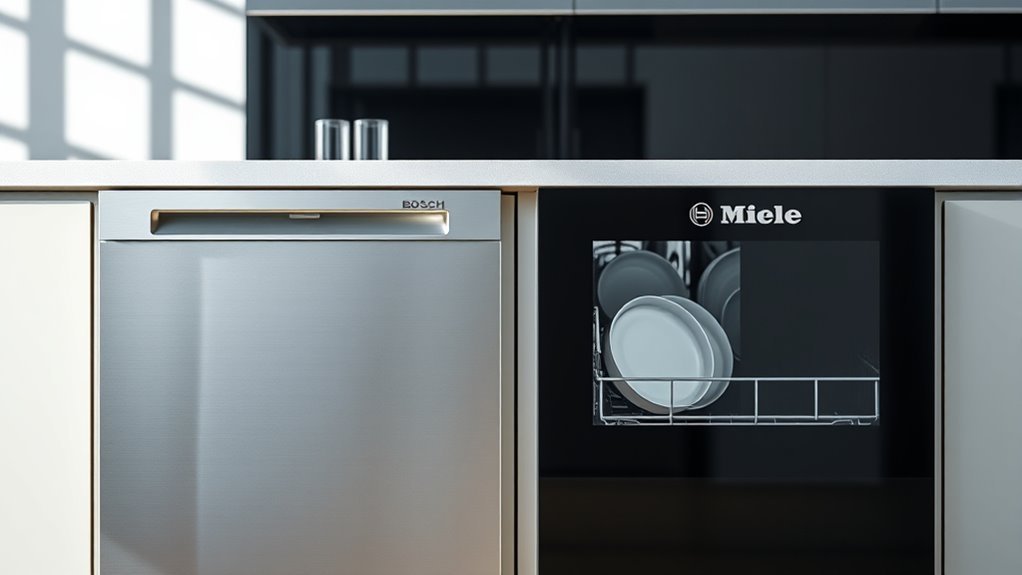
Bosch vs. Miele Dishwasher: Which Is Better?
Many people struggle with finding a dishwasher that balances quiet operation, reliable cleaning, and good value. It can be overwhelming with so many options out there.
If you want a reliable dishwasher with quiet operation and great value, Bosch is a solid choice. It offers consistent cleaning, energy efficiency, and smart features like flexible racks and low noise levels.
But if you need powerful cleaning for tough messes and long-lasting durability, Miele stands out with advanced sensors and premium design. Though it comes at a higher price, it’s built to last.
Keep exploring to see how each brand matches your budget and cleaning needs.
Key Takeaways
- Miele offers superior cleaning power with advanced wash systems, making it great for tough stains and heavily soiled cookware.
- Bosch dishwashers are quieter, running around 38-44 dB, thanks to effective sound insulation and vibration reduction.
- Bosch also provides better energy efficiency with eco modes and many models certified by Energy Star.
- Miele dishwashers are built for exceptional durability, tested for up to 20 years, and feature self-cleaning filters that reduce maintenance.
- Bosch offers modern designs and strong value at mid-range prices, while Miele focuses on premium features and higher cost points.
Bosch vs. Miele Dishwashers: Performance Comparison
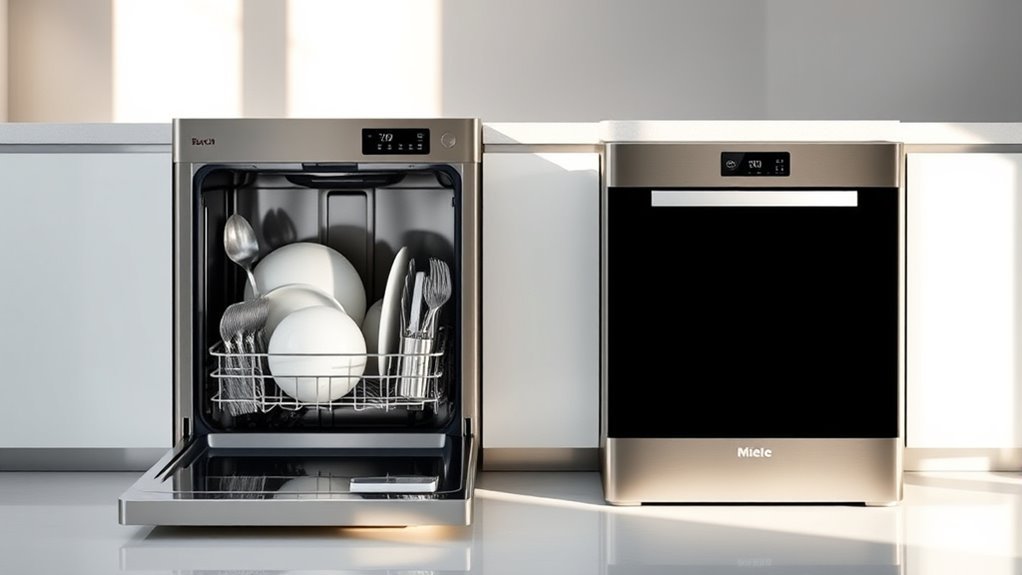
While both Bosch and Miele dishwashers do a good job cleaning, you’ll notice some key differences in how they perform. When it comes to cleaning power, Miele often has the edge with its intense wash cycles that handle tough stains more effectively.
Miele really shines at thoroughly cleaning heavily soiled pots and pans, while Bosch does a solid job on everyday dishes with consistent results. Noise levels are also different between the two brands. Bosch dishwashers are known for being super quiet, making them great if you want minimal kitchen noise.
Miele models are quiet too, but some cycles can be a bit louder because of their powerful wash mechanisms. If noise is a big deal for you, Bosch might be the better choice. Overall, both brands provide strong cleaning, but your decision depends on whether you want maximum cleaning power or ultra-quiet operation.
Bosch Dishwasher Features and Advantages
Because Bosch designs its dishwashers with user convenience and efficiency in mind, you’ll find a range of features that make your kitchen tasks easier. Bosch innovations focus on delivering quiet operation, smart sensors, and flexible loading options. You’ll appreciate Bosch reliability, ensuring your dishwasher performs consistently over time without frequent repairs. The sleek Bosch design complements modern kitchens, blending seamlessly with your style while offering intuitive controls. Plus, Bosch noise reduction technology means your dishwasher runs nearly silently, so it won’t disturb your home’s peace.
Bosch dishwashers combine quiet operation, smart sensors, and sleek design for effortless, reliable kitchen convenience.
Key Bosch features and advantages include:
- Quiet operation: Operates at low decibel levels for minimal disturbance
- Precision sensors: Adjust wash cycles based on load and soil level
- Flexible racks: Customize the interior for various dish sizes and shapes
- Energy efficiency: Saves water and electricity without sacrificing cleaning power
With Bosch, you get a dependable, thoughtfully designed appliance that makes daily dishwashing easier and quieter.
Miele Dishwasher Technology and Key Benefits
Bosch sets a high standard with its thoughtful features, but Miele brings its own advanced technology and benefits for those seeking top-tier performance and durability. When you choose Miele, you get innovative features like the AutoDos system, which automatically dispenses the right amount of detergent for spotless results.
Their 3D MultiFlex trays offer flexible loading options, making it easier to fit all your dishes without hassle. Miele dishwashers also have a unique Wash System that adapts to your load’s soil level, saving water and energy.
Reviews from users consistently highlight Miele’s long-lasting quality and exceptional cleaning power, giving you peace of mind that your investment will stand the test of time. Plus, their robust build and self-cleaning filters reduce maintenance needs.
Which Dishwasher Brand Is Quieter and Why?
How quiet do you want your dishwasher to be? When comparing Bosch and Miele, noise levels are an important factor in your decision. Both brands focus on quiet operation, but their design choices and sound insulation methods make a difference.
Bosch dishwashers usually have advanced sound insulation, reaching lower decibel ratings around 38-44 dB. Many users find these models impressively quiet. Miele models also perform well, often staying near 40-44 dB, thanks to strong insulation and motor technology designed to cut down noise.
Here’s what impacts how quietly a dishwasher runs:
- Sound insulation quality, like thicker panels and special materials that absorb noise.
- Decibel ratings, with lower numbers meaning less disturbance.
- Motor design, where quieter motors help reduce vibration sounds.
- User experiences confirm how peaceful each model operates.
Energy Efficiency Differences Between Bosch and Miele Dishwashers
When you’re comparing Bosch and Miele dishwashers, you’ll see that Bosch models usually use less energy per cycle. That means they can help you save on your utility bills over time. Miele, on the flip side, puts a lot of effort into making their dishwashers as power-efficient as possible with some pretty advanced tech. So, it’s interesting to see how these different approaches can affect both your wallet and the environment.
Bosch Energy Consumption
Although both Bosch and Miele dishwashers are designed to save energy, you’ll find that Bosch models generally use less power during typical cycles. Bosch’s energy ratings are consistently high, showing their focus on eco-friendly performance.
When you use Bosch eco modes, you can optimize water and electricity use without sacrificing cleaning quality. These settings are great if you want to lower your utility bills and be kinder to the environment.
Key points about Bosch energy consumption include:
- Many Bosch dishwashers have Energy Star certification
- Eco modes adjust water temperature and cycle length for better efficiency
- Their energy use averages around 240 kWh per year, which is below industry averages
- Intelligent sensors help reduce unnecessary energy use by detecting load size
Choosing Bosch means reliable, energy-saving dishwashing every time.
Miele Power Efficiency
Since Miele dishwashers focus on premium performance, they balance power efficiency with thorough cleaning. You’ll appreciate how Miele energy-saving features reduce electricity use without sacrificing wash quality. Their advanced sensors adjust water and temperature, making sure each cycle uses only what’s necessary.
This smart approach makes Miele dishwashers highly eco-friendly, earning top marks for energy conservation. If you want a machine that combines excellent cleaning with responsible power use, Miele really stands out. While Bosch also offers efficiency, Miele’s commitment to sustainable technology often means better long-term savings on your utility bills.
Choosing Miele means investing in a dishwasher that cares for both your dishes and the environment.
Cleaning Cycles and Custom Options Compared
When you’re trying to decide between Bosch and Miele, one of the things to look at is the range of cleaning cycles they offer. Both brands really let you customize your wash to fit your needs, which is pretty handy. You’ll find options that are tailored for different types of dishes and how dirty they are, so you can get everything sparkling just right.
Cycle Variety Offered
While choosing a dishwasher, you’ll want to see how many cleaning cycles it offers and if those cycles match your needs. Both Bosch and Miele have a good range of cycle types, but they differ in variety and wash times.
Bosch tends to focus on efficiency with straightforward options, while Miele offers more specialized settings.
Think about these key factors: Bosch provides standard, heavy, eco, and quick wash cycles with moderate durations. Miele includes delicate, intensive, auto, and rapid cycles, often with customizable wash times.
Both brands feature sensor-based cycles that adjust the wash time based on how dirty the dishes are. Miele generally offers more niche cycle types for specific dishware.
Customization Settings Available
Although both Bosch and Miele offer various cleaning cycles, their customization options are quite different. Bosch focuses on simple custom options that let you adjust drying intensity and delay start times, making it easy to match your preferences without too much complexity.
Miele, on the other hand, provides more advanced settings. You can tweak wash temperatures, extra drying, and even water hardness to suit specific needs. If you prefer a straightforward interface with essential options, Bosch might be a better fit.
But if you want detailed control to fine-tune each cycle according to your preferences, Miele’s flexibility really stands out. Ultimately, it depends on how much control you want and which features match your routine best.
Specialized Wash Programs
If you want your dishwasher to handle different cleaning challenges, both Bosch and Miele have specialized wash programs designed for that. Their settings offer great versatility, letting you clean everything from delicate glassware to heavily soiled pots.
You’ll appreciate how these cycles adapt to specific tasks, optimizing water and energy use. Bosch’s “Silence” mode ensures quiet, efficient cleaning for fragile dishes.
Miele offers a “SensorWash” cycle that automatically adjusts to soil levels. Both brands also have intensive cycles for stubborn, baked-on food.
Quick wash options let you clean lightly soiled items fast. With these specialized settings, you’ll get performance tailored perfectly to your lifestyle.
Bosch vs. Miele: Durability and Long-Term Reliability
When you invest in a dishwasher, durability and long-term reliability matter just as much as performance. Bosch and Miele both undergo rigorous durability testing to guarantee their models withstand daily use over many years. Bosch emphasizes robust engineering with high-quality components designed to resist wear and tear, helping you avoid frequent repairs.
Miele takes durability further by testing their dishwashers for up to 20 years of use, reflecting their confidence in long-term maintenance requirements staying minimal. If you want peace of mind, Miele’s commitment to extended durability testing means you’re less likely to face unexpected breakdowns.
Bosch still offers strong reliability, but you might need to keep an eye on occasional maintenance sooner. Ultimately, both brands deliver solid longevity, but Miele’s thorough approach to durability testing and long-term maintenance often gives it a slight edge if you prioritize long-lasting performance.
Your choice depends on how much value you place on durability over initial cost.
Bosch vs. Miele: Design and Interior Layout Compared
Both Bosch and Miele offer thoughtfully designed dishwashers, but their interior layouts cater to different user preferences and needs. Bosch focuses on sleek, modern lines with intuitive controls that are easy to use.
Miele, on the other hand, provides a premium feel with high-quality materials and a luxurious finish inside. When it comes to storage solutions, both brands excel but in different ways.
Bosch offers flexible racks, including adjustable tines and a third rack for utensils, to maximize space. Miele has its unique Cutlery Tray and height-adjustable baskets for customized loading.
Bosch’s interior lighting improves visibility, making loading and unloading simpler. Miele provides a more spacious tub design, easily accommodating larger pots and pans.
When choosing, think about whether you prefer Bosch’s practical, user-friendly layout or Miele’s upscale interior aesthetics and versatile storage options for greater customization.
Pricing Breakdown: What You Get for Your Money
How much should you expect to invest in a Bosch or Miele dishwasher? Bosch models generally start around the mid-$700 range and can go up to $1,200 for higher-end versions. Miele dishwashers tend to be pricier, typically ranging from $1,000 to over $2,000. When weighing your budget, it’s important to look beyond the sticker price and focus on feature comparisons.
Bosch offers great value with strong cleaning, quiet operation, and convenient features like flexible racks. Miele, on the other hand, often includes advanced tech such as longer-lasting build quality, specialized wash cycles, and options like AutoDos detergent dispensing. While Miele’s premium price reflects these extras, Bosch provides solid reliability at a more accessible price.
Ultimately, your budget will guide how much you’re willing to spend. Comparing features helps you decide which brand fits best with your priorities and wallet.
Which Dishwasher Brand Is Best for Your Needs and Budget
Choosing the right dishwasher means balancing what you need with what you can afford. When deciding between Bosch and Miele, think about your budget and user preferences carefully. Bosch often offers reliable, efficient models at a more accessible price, making it a great choice if you want solid performance without overspending.
Miele, on the other hand, appeals to those who want premium features and long-term durability, though it comes with a higher upfront cost. Consider these factors to find the best fit for your home:
- Budget considerations: How much are you willing to invest initially and over time?
- Cleaning performance: Do you need specialized cycles or intensive cleaning?
- Noise levels: Are you sensitive to dishwasher noise during operation?
- Design and features: Which brand offers the features that match your daily routine?
Frequently Asked Questions
How Do Bosch and Miele Dishwashers Differ in Warranty Coverage?
You’ll find that Bosch dishwashers typically offer a warranty of one year, covering parts and labor. Some models include extended coverage on specific components like the racks.
Miele generally provides a longer warranty, often up to two years. Their coverage tends to be more extensive, including parts, labor, and sometimes additional services.
Knowing these differences can help you decide which warranty option works best for your needs.
Are Bosch or Miele Dishwashers Easier to Repair?
You’ll find Bosch dishwashers generally easier to repair because they have a lower repair frequency and widely available parts. When something goes wrong, you won’t have to wait long for replacements or service.
Miele models, while durable, often require specialized parts that can take longer to source, increasing downtime. So, if quick and convenient repairs matter to you, Bosch usually offers better parts availability and fewer repair visits.
What Are the Typical Installation Requirements for Bosch vs. Miele Dishwashers?
Did you know about 60% of dishwasher installation issues come from improper space planning? When installing Bosch or Miele dishwashers, you’ll need a similar amount of space—usually a 24-inch wide cabinet spot.
Both brands require standard plumbing, like a hot water supply and a drain connection. Just make sure your kitchen setup can handle these. If so, you’ll have an easy installation process for either brand.
Do Bosch and Miele Dishwashers Have Smartphone App Controls?
Yes, both Bosch and Miele dishwashers have smart features, including smartphone app controls. You can start, pause, or monitor your dishwasher remotely, making your kitchen routines more convenient.
User reviews say these apps improve usability by letting you receive cycle notifications and troubleshoot issues easily. It’s a handy way to stay on top of your dishwasher’s performance.
Keep in mind, the app experience can vary a bit between brands. Checking specific model compatibility and app features will help you find the best fit for your smart home setup.
Which Brand Offers Better Customer Service and Support?
You’ll find Miele generally offers better customer service and support, according to customer feedback. They focus on quick responses and thorough help, often going above and beyond to fix issues.
Bosch also provides solid support but sometimes gets mixed reviews about response times. If responsive, attentive service is important to you, Miele is probably the safer choice for a smoother, more satisfying experience when you need help.
Conclusion
When choosing between Bosch and Miele, you’re really picking the kind of quiet confidence and lasting grace you want in your kitchen. Bosch offers solid performance with smart features that keep things running smoothly.
Miele’s craftsmanship whispers durability and cutting-edge technology. Both bring their own charm to the table, so it’s less about right or wrong and more about which subtle excellence fits your lifestyle and budget best.
If you’re after a dishwasher that combines reliable operation with innovative touches, Bosch is a great pick. But if you want top-tier craftsmanship and advanced features, Miele might be the better choice for you.
When it comes to Bosch vs. Miele dishwashers, consider what matters most to you—performance, durability, or tech. That way, you’ll find the perfect fit for your home and budget.