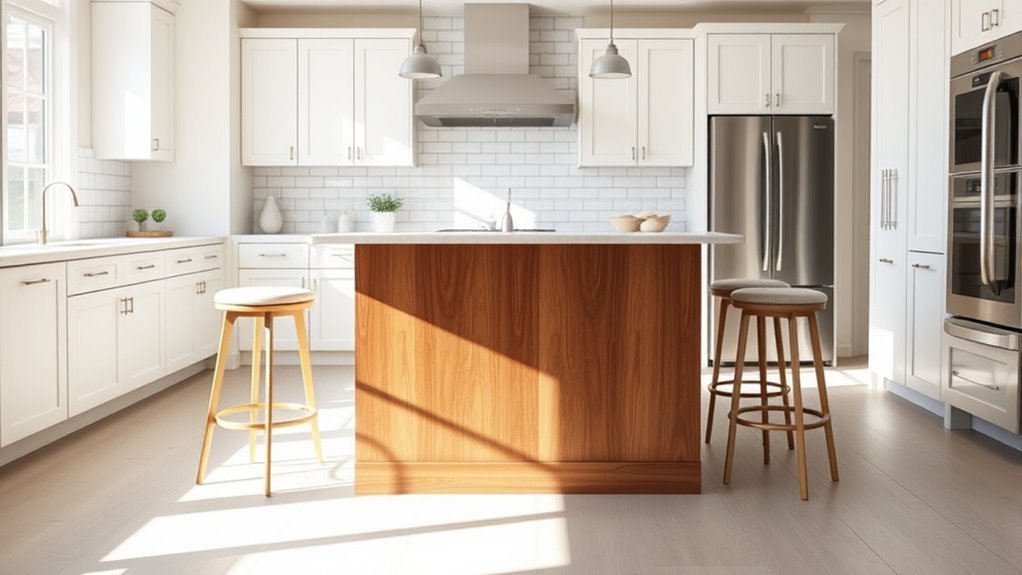
How Tall Is a Kitchen Island? The Complete Answer
Are you feeling overwhelmed trying to figure out the perfect height for your kitchen island? You’re not alone—many people struggle with creating a space that’s both functional and comfortable.
The right height can make a huge difference in how you cook, prep, and even dine in your kitchen. You’ll want your kitchen island to be about 36 inches tall to match standard countertops and give you a comfortable workspace for cooking and prepping.
This height suits most users and keeps everything ergonomic, helping prevent strain. If you plan to use the island for dining, consider going up to 42 inches with taller stools.
Adjusting height based on your tasks and preferences makes a huge difference. Keep exploring to find the perfect fit for your kitchen and lifestyle.
Key Takeaways
- The standard kitchen island height is about 36 inches, matching typical countertop height for comfortable cooking and prepping.
- The height should also depend on what you mainly use the island for. For cooking and prep, 36 inches works well. For dining or casual seating, 42 inches is better.
- Choosing the right stool height is important—24-inch seats are ideal for 36-inch islands, while adjustable stools work well for islands up to 42 inches.
- To stay comfortable, the island height should match your elbow height, especially if you’ll be using it for extended periods.
- Multi-level islands are a smart choice—they make the space more versatile and comfortable for different tasks and users of various heights.
What Is the Standard Height for a Kitchen Island?
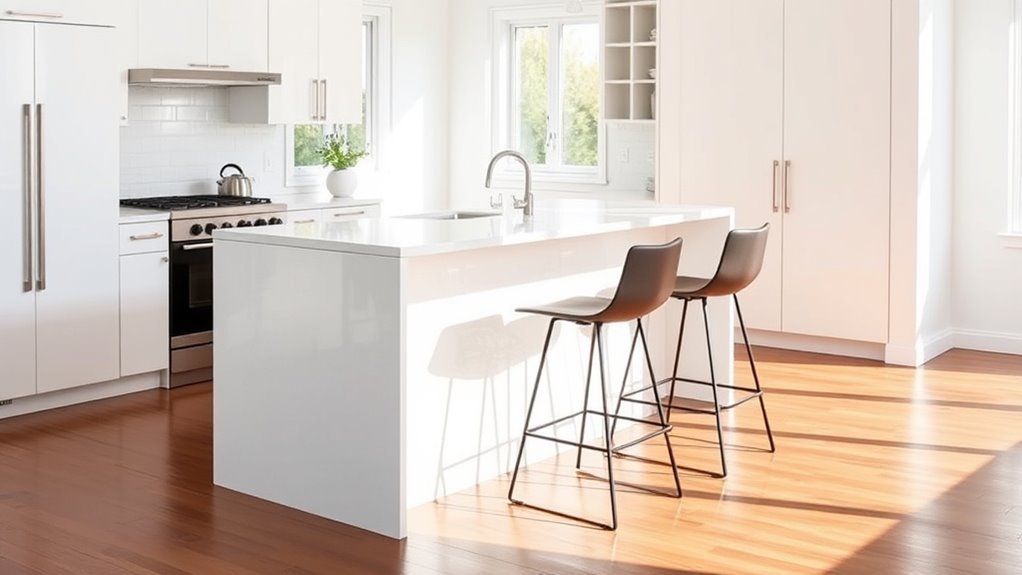
The standard height for a kitchen island is usually about 36 inches, which matches the height of most kitchen countertops. This makes for a comfortable workspace whether you’re cooking, prepping, or even eating.
A 36-inch kitchen island height creates a comfortable, versatile workspace matching standard countertops.
When choosing materials for your island, keep in mind that countertop thickness can impact the overall height. For example, thick granite or quartz might add an extra inch or two, so you may need to adjust the base height.
Wood, laminate, and other materials also come in different thicknesses. Measure carefully to keep everything ergonomic and comfortable to use.
Sticking close to the 36-inch mark helps your island match existing countertops and standard cabinet sizes. This consistency ensures a cohesive look and practical use across your kitchen.
How to Choose the Right Kitchen Island Height for You
Choosing the right kitchen island height goes beyond sticking to the standard 36 inches. You need to consider your kitchen style and personal preferences to find what truly fits your space.
If you have a modern kitchen with sleek, minimal lines, you might prefer a taller island that doubles as a bar or casual dining spot. On the other hand, a traditional kitchen style might benefit from a standard or slightly lower height for easier food prep.
Think about how you’ll use your island—whether it’s for cooking, eating, or working—and pick a height that suits those activities. Don’t forget to consider the height of your stools or chairs if you plan to sit at the island.
Why Kitchen Island Height Affects Comfort and Function
Because you’ll spend a lot of time at your kitchen island, its height directly impacts your comfort and how easily you can work or socialize there. Proper kitchen ergonomics help prevent back or wrist strain when chopping, prepping, or eating.
If the island’s too tall or short, you might find yourself hunching or reaching awkwardly, which can cause discomfort over time. Your user preferences matter, too. Maybe you like sitting and chatting with friends or kids while cooking, so a height that works for both standing tasks and seating is key.
A well-chosen height creates a natural flow, making it easier to switch between cooking, eating, and socializing without constantly adjusting your posture. Paying attention to these details improves your kitchen’s function and makes it a more enjoyable space.
Ultimately, the right kitchen island height balances comfort with practical use, tailored to how you live and work in your kitchen.
Measuring Your Ideal Kitchen Island Height
Looking to find the perfect height for your kitchen island? Well, a good starting point is the standard range, which is usually between 34 and 36 inches. But of course, everyone’s different, so it’s a good idea to tweak that based on your height and how you’re planning to use the space.
A quick and easy way to get it just right is by measuring — you can do this by sitting or standing at the height you’d like your island to be and seeing what feels most comfortable. Little adjustments can make a big difference, so don’t be afraid to customize it until it’s just right for you!
Standard Kitchen Island Heights
Three standard heights dominate kitchen island designs, helping you find the perfect fit for your space and needs. Knowing these will guide your choice of island dimensions and complement your design aesthetics effectively. The typical heights are:
- 36 inches: Matches standard countertop height and is great for food prep.
- 42 inches: Suitable for bar-style seating with taller stools.
- 30 inches: Lower option, perfect for kids or sitting on regular chairs.
- Adjustable islands: Offer flexibility but are less common.
- Custom heights: Tailored to specific needs or ergonomic preferences.
Choosing one depends on how you use your kitchen island. These standard heights help your island fit well with cabinetry and appliances, balancing functionality and style.
Keeping these in mind simplifies your decision-making and improves your kitchen’s overall flow.
Adjusting For User Comfort
Standard kitchen island heights provide a good starting point, but your comfort is what really matters when choosing the perfect height.
Think about how you’ll use the island—whether for cooking, dining, or working—and pick a height that reduces strain on your back and wrists.
If you mainly prep food while standing, around 36 inches usually works for most people, but adjust if you’re taller or shorter.
If you plan to use stools, aim for a counter height that feels comfortable for sitting.
Ultimately, customizing the island height based on your body and habits makes it easier to use and helps prevent fatigue.
Putting ergonomic design and your preferences first turns your kitchen island into a practical, comfy workspace.
Measuring Techniques And Tips
Finding your ideal kitchen island height starts with accurate measurements tailored to your needs. Use the right measuring tools, like a tape measure or laser level, to guarantee precision.
Consider the height of the primary users and what you want to do with the island—prep, dining, or both. Make height adjustments based on your kitchen’s countertop height to keep things comfortable and functional.
Here are some key tips:
- Measure from the floor up to your preferred working surface height.
- Think about stool height if you plan to sit at the island.
- Try out different heights with adjustable furniture or mock-ups.
- Leave enough clearance space around the island for easy movement.
- Double-check your measurements before finalizing your design.
These steps will help you create a kitchen island that fits just right and feels comfortable to use.
Kitchen Island Heights for Cooking vs. Dining
When deciding on the ideal height for your kitchen island, think about how you plan to use it—whether for cooking or dining. If you’re focusing on meal prep and various cooking styles, a standard height of 36 inches usually works best. This height makes it easy to access appliances and provides enough workspace without causing back strain.
If your island is mainly for dining or casual seating, you might prefer a taller surface, around 42 inches. This height is more comfortable for seating and better suited for socializing.
Balancing design preferences with space constraints is important. A cooking-height island often creates a nice visual balance with the surrounding counters. A dining-height island can become a lively social spot in your kitchen.
Think about how each height supports your daily routines and the overall flow of your space. Prioritizing function and style will help your island fit seamlessly into your kitchen.
How Counter Stool Height Influences Island Height
When you’re picking out a kitchen island, it’s important to think about the height of your counter stools. You want to make sure the island’s height lines up well with those stools so sitting feels comfortable. If everything is matched up just right, you’ll be able to enjoy your space without any awkward postures or strain. It’s all about making your kitchen both functional and cozy!
Standard Counter Stool Heights
A kitchen island’s height depends largely on the counter stools you plan to use. Standard counter stool heights typically range from 24 to 27 inches, designed to fit most kitchen counters and islands around 36 inches tall.
When choosing stools, think about both styles and materials, as they influence comfort and durability. Here’s what to keep in mind:
- Measure the stool seat height to ensure enough legroom and comfort.
- Match stool height with your island, usually 9-13 inches below the counter.
- Pick materials like wood, metal, or upholstery for style and function.
- Select styles that complement your kitchen’s overall look.
- Consider adjustable stools if you want seating that can change in height.
Following these tips can help you find stools that fit perfectly with your island’s height.
Matching Stool And Island
Selecting the right counter stool height directly influences the perfect kitchen island height. When you match stool styles with your island designs, you ensure both functionality and style.
For example, taller stools go well with higher islands, while shorter stools fit standard counters. Think about how the seat height of your stool matches the island’s height to avoid awkward spacing.
| Stool Style | Seat Height (inches) | Recommended Island Height (inches) |
|---|---|---|
| Backless | 24 | 36 |
| Swivel | 26 | 38 |
| With Armrests | 28 | 40 |
| Adjustable | 24-30 | 36-42 |
| Upholstered | 25 | 37 |
This table makes it easy to match stool styles with island heights, boosting your kitchen’s overall look.
Comfort And Ergonomics
Because comfort directly impacts how often you use your kitchen island, choosing the right counter stool height is essential for ergonomic seating. Proper kitchen ergonomics help you enjoy meals or work without strain or fatigue. When selecting stools, consider the height difference between the island and the seating.
Keep these points in mind for ideal comfort and kitchen ergonomics:
- Guarantee 9 to 13 inches of space between the stool seat and the island surface.
- Choose stool height based on whether your island is counter or bar height.
- Opt for adjustable stools to fit different users comfortably.
- Prioritize footrests on stools to reduce leg strain.
- Make sure there’s enough legroom under the island for easy movement.
This approach ensures user comfort and encourages frequent use of your kitchen island.
Adjusting Island Height for Different User Heights
When you adjust the height of your kitchen island to match your own stature, you’ll find cooking and prepping far more comfortable. Tailoring the island height to your needs reduces strain on your back and wrists, making everyday tasks easier.
Since user preferences vary, it’s essential to take into account who uses the island most often. If multiple people with different heights share the space, you might need a compromise or investigate adjustable options.
Consider who uses the island most to find the best height or explore adjustable solutions for shared spaces.
Ergonomic adjustments, like raising or lowering the countertop to align with your elbow height, help maintain a natural posture. Typically, a height between 36 and 42 inches suits most users, but measuring your ideal working height guarantees better comfort.
You can also test different heights by standing at a makeshift surface to feel what works best. Remember, customizing your kitchen island height based on your unique user preferences improves both functionality and enjoyment in your kitchen workspace.
Benefits of Multi-Level Kitchen Islands
Adjusting your kitchen island height to fit different users can sometimes be tricky, especially if multiple people use the space regularly. That’s where multi-level kitchen islands really shine. They offer multi-level functionality, making your kitchen more adaptable and user-friendly. You can create specific zones for food prep, dining, and socializing, all at comfortable heights.
Here are some benefits you’ll appreciate:
- Accommodates various tasks like chopping, eating, and working
- Provides ergonomic comfort for users of different heights
- Enhances design aesthetics with dynamic visual interest
- Offers dedicated space for kids to do homework or crafts
- Separates cooking mess from dining areas, keeping the space tidy
How Your Kitchen Layout Affects Island Height
Although your kitchen island’s height might seem like a simple choice, your overall kitchen layout plays a crucial role in determining the ideal measurements. When planning your kitchen design, you need to consider how the island interacts with other elements like countertops, appliances, and seating areas.
For example, if your kitchen has lower countertops, a standard 36-inch island height might feel awkward. Adjusting it to match ensures smooth workflow and visual harmony.
Layout considerations also include traffic flow and space between the island and surrounding cabinetry. If your kitchen is compact, a lower island height can make the space feel more open and accessible.
In larger kitchens, you can opt for multi-level islands to accommodate different functions without disrupting the layout. Paying attention to these details guarantees your island height complements your kitchen design, making the space both functional and comfortable.
Common Mistakes to Avoid When Choosing Island Height
Your kitchen layout sets the stage for choosing the right island height, but it’s easy to overlook some common pitfalls that can affect both comfort and functionality. When selecting island height, considering user preferences and practical use is essential.
Choosing the right kitchen island height requires balancing user comfort with practical use and layout considerations.
Avoid these mistakes to guarantee your kitchen island fits your needs perfectly:
- Ignoring the average height of primary users can lead to discomfort.
- Choosing a height based solely on aesthetics might neglect ergonomic factors.
- Failing to account for the island’s intended purpose, like prep work, dining, or storage.
- Overlooking clearance space around the island can result in cramped movement.
- Selecting a one-size-fits-all height without considering multiple user preferences in the household.
Frequently Asked Questions
What Materials Are Best for Kitchen Island Countertops?
You’ll want to choose materials for your kitchen island countertops that offer great durability.
Quartz is a top pick because it resists stains and scratches well. Granite provides natural beauty and strong durability.
If you prefer something budget-friendly, laminate works but isn’t as tough. Marble looks elegant but can stain easily.
When comparing materials, think about how much wear your island will get. Pick one that balances durability with style for your needs.
How Much Does a Kitchen Island Typically Cost?
Think of a kitchen island as the centerpiece of your culinary stage. Its cost varies like a melody. Typically, you’ll spend between $1,000 and $5,000, depending on styles and sizes.
Smaller, simple islands tend to be on the lower end of that range. Large, custom designs with premium materials can push the price up.
You get to choose the perfect blend of function and flair that fits your budget and space beautifully.
Can a Kitchen Island Include Built-In Appliances?
Yes, you can definitely include built-in appliances in your kitchen island. Island appliance options like cooktops, ovens, or dishwashers offer great convenience and save space.
What Lighting Is Ideal Above a Kitchen Island?
You should choose pendant lights for your kitchen island because they provide great task lighting and add style.
Make sure to consider height—hanging them about 30-36 inches above the surface helps prevent glare.
Combining pendant lights with ambient lighting creates a well-balanced atmosphere.
Opt for dimmable options so you can easily adjust the brightness to suit your needs.
How Do I Maintain and Clean a Kitchen Island Surface?
To maintain and clean your kitchen island surface, start by wiping it daily with a soft cloth and mild soap. This helps prevent buildup and keeps it looking fresh.
Use surface care products that are designed for your island’s material—whether it’s granite, wood, or quartz. This way, you avoid any accidental damage.
Stay away from harsh chemicals and abrasive tools, which can scratch or dull your surface. For tougher stains, a gentle scrub or a baking soda paste can work wonders.
Regularly sealing stone surfaces helps protect them from stains and damage over time. Just a quick sealant refresh now and then keeps everything in top shape.
Following these simple tips will help your island stay beautiful, durable, and easy to enjoy every day.
Conclusion
Regarding kitchen islands, keep in mind that “measure twice, cut once.” Choosing the right height isn’t just about style—it’s about comfort and functionality tailored to you.
Whether you’re cooking, dining, or entertaining, the perfect island height makes all the difference.
Don’t settle for a one-size-fits-all approach. Take your time, consider your space and needs, and create a kitchen island that truly works for you every day.
When it comes to a kitchen island height, understanding what works best for your space and how you plan to use it is key.
Getting it just right ensures your kitchen becomes more comfortable and functional for daily use and special occasions alike.