How High Is a Kitchen Counter? The Complete Answer
Feeling overwhelmed trying to figure out the perfect kitchen counter height? You’re not alone—many people struggle with making their kitchen both functional and comfortable.
The right counter height can make a huge difference in your cooking experience and overall kitchen vibe. A standard kitchen counter stands about 36 inches high, fitting most people comfortably for prepping and cooking.
Islands can vary from 36 to 42 inches, while bar counters usually reach 42 to 44 inches. Your ideal height might differ if you’re shorter, taller, or need space for special tasks, and adjustable options can offer great flexibility.
If you want to tailor your kitchen for comfort and efficiency, there’s plenty more to investigate about counter heights and design.
Key Takeaways
- Standard kitchen counters are usually 36 inches high, making them perfect for most cooking and prep tasks.
- Kitchen islands can range from 36 to 42 inches, while bar counters tend to be around 42 to 44 inches tall.
- The ideal counter height depends on the user and specific tasks, usually falling between 34 and 39 inches.
- Choosing the right height can improve ergonomics, helping to reduce strain on your back and wrists while cooking.
- Adjustable and mixed-height counters are great options for increasing accessibility and making your kitchen more versatile for everyone.
What Is the Standard Kitchen Counter Height?
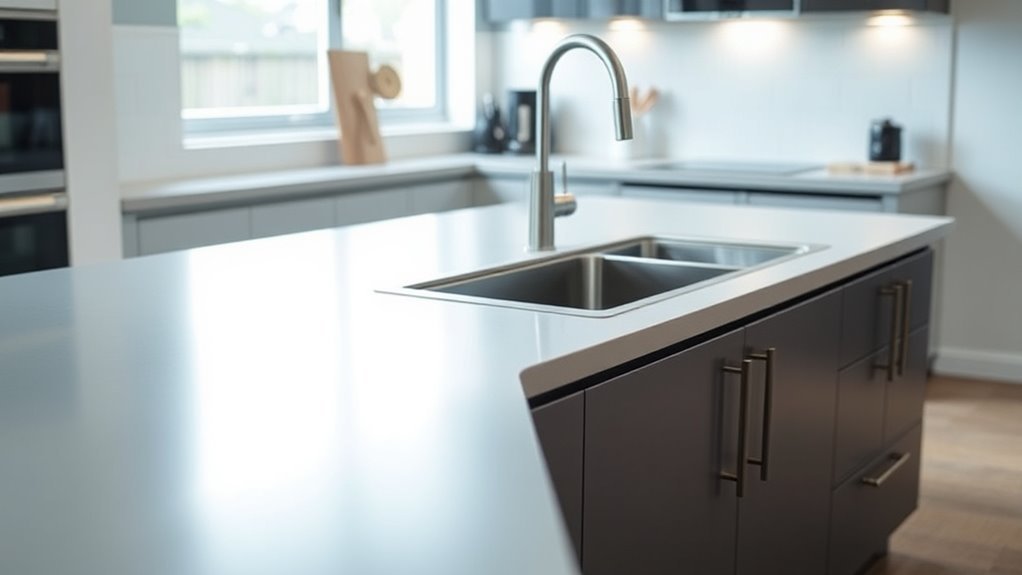
When you’re planning your kitchen, knowing the standard counter height helps you create a comfortable and functional workspace. Typically, kitchen measurements set the standard counter height at 36 inches from the floor. This measurement suits most people for everyday tasks like chopping, mixing, and cooking. Understanding this baseline lets you choose counter styles that fit your space and needs.
Keep in mind, while 36 inches is standard, some homeowners adjust heights to match their preferences or specific uses, such as baking or seating areas. Different counter styles like island counters or bar-height counters may require variations in height, but the 36-inch standard remains the most common starting point. By sticking to this measurement, you guarantee compatibility with most appliances and cabinetry. This helps your kitchen feel balanced and efficient.
Ultimately, knowing these kitchen measurements guides you in selecting counters that work well in your design and daily routine.
Why Counter Height Matters for Comfort and Ergonomics
You’ll see that choosing the right counter height really makes a difference in how comfortable you feel while working in the kitchen. When your counters match your body, it helps reduce strain on your back and wrists as you go about your daily tasks.
Think about it—when you’re cooking or prepping food, having the right height means you won’t be bending or reaching awkwardly. It just makes everything feel a lot easier and more natural. So, let’s take a closer look at how the right counter height can support your ergonomics and make your everyday chores a lot more comfortable.
Ergonomic Benefits Explained
Although kitchen counters might seem like simple surfaces, their height plays a crucial role in your comfort and health while cooking or prepping food. When your counter height matches your body, it encourages better posture and reduces strain on your back, shoulders, and wrists.
Using ergonomic tools works even better when your workspace suits your height. This allows you to work efficiently without discomfort or awkward movements.
If your counter is too low or high, you might hunch over or reach out awkwardly. Over time, this can cause fatigue or even injury.
Choosing the right counter height creates a kitchen environment that supports natural movements and minimizes physical stress. This thoughtful design helps you stay comfortable and focused, making cooking more enjoyable.
Impact on Daily Tasks
Matching your kitchen counter height to your body doesn’t just improve posture, it also makes everyday tasks more comfortable. When your counters are the right height, you put less strain on your back and wrists, making chopping, mixing, and cooking easier.
This comfort helps you work more efficiently, so you can move through kitchen tasks smoothly without unnecessary pauses or discomfort. If counters are too low or too high, you might hunch over or reach awkwardly, slowing you down and risking injury over time.
Proper counter height supports natural movement and keeps your energy levels up. This way, you stay focused and productive, making meal prep more enjoyable and less tiring.
Differences in Kitchen Counter, Island, and Bar Heights
When planning your kitchen layout, understanding the differences in height between counters, islands, and bars can really improve comfort and functionality. Standard kitchen counters are usually around 36 inches tall, which works well for most food prep.
Knowing counter, island, and bar height differences boosts kitchen comfort and usability.
Kitchen island heights can vary from 36 to 42 inches, depending on how you plan to use them. If you want your island for casual dining or as a workspace, a slightly higher surface might be better.
Bar counters are typically higher, around 42 to 44 inches, to fit bar stools and create a distinct seating area. Picking the right height for each surface helps prevent back or wrist strain during daily tasks.
Keeping these differences in mind allows you to design a kitchen that feels balanced and tailored to your needs. It blends practicality with comfort seamlessly.
Right Counter Heights for Cooking and Food Prep
Since you’ll spend a lot of time chopping, mixing, and preparing meals, choosing the right counter height is key for your comfort and efficiency. The ideal height for cooking and food prep counters is usually between 36 and 38 inches, so you can work without straining your back or shoulders. Your prep space should be designed with ergonomics in mind, especially if you use different materials that affect durability and maintenance.
Here’s a quick guide to help you decide what height works best for your cooking style:
| Counter Height (inches) | Best For |
|---|---|
| 34 | Shorter individuals |
| 36 | Average height users |
| 37-38 | Taller users, intensive prep |
| 39 | Heavy-duty chopping tasks |
| Adjustable | Flexible kitchen setups |
Keep your prep space comfortable to improve your cooking experience and protect your posture. Choosing the right counter materials also matters, as some handle wear better during heavy food prep.
Best Counter Heights for Baking and Special Tasks
Baking and special tasks often need counter heights different from standard prep areas to boost precision and comfort. When you’re rolling dough or decorating cakes, a counter height between 36 to 38 inches usually works best. This slightly higher surface helps you apply even pressure and maintain good posture, reducing strain during repetitive baking techniques.
Choosing the right countertop materials is also important. Surfaces like marble or quartz stay cool, which is great for dough handling and tempering chocolate. Plus, these materials are durable and easy to clean, making messy baking sessions much simpler.
For tasks like kneading or working with confectionery, consider adjustable or multi-level counters. These let you switch heights quickly to suit different steps. Tailoring your counter height and material to your baking needs can make your kitchen more efficient and comfortable, turning it into a true haven for your favorite baking techniques.
Making Counter Heights Accessible for Everyone
Thinking about adjustable counter heights is a smart move to make your kitchen more accessible for everyone. It’s all about considering different needs and making sure everyone can comfortably reach and work at the counters.
Adjustable Counter Height Options
Although traditional kitchen counters come in standard heights, adjustable options let you customize the workspace to fit your needs perfectly. These solutions provide height flexibility, making your kitchen more comfortable whether you’re sitting, standing, or using a wheelchair.
You can find counters with manual cranks or electric controls that raise or lower the surface smoothly. This adaptability helps you maintain proper posture and reduces strain during meal prep or other tasks.
Plus, adjustable counters are great for households with members of different heights or mobility needs. Choosing them creates an inclusive kitchen environment that’s both functional and comfortable, without sacrificing style or design.
Universal Design Principles
Adjustable counters highlight the importance of creating kitchen spaces that work for everyone. When you apply universal design principles, you prioritize inclusive design that accommodates various heights and abilities.
This means carefully considering spatial needs—making sure there’s enough clearance for wheelchairs and easy movement throughout the kitchen. You might want counters at different heights or adjustable surfaces to suit different users.
By doing this, you make the kitchen more functional and welcoming. Everyone can cook, prep, and clean comfortably, no matter their physical limitations. Remember, universal design isn’t just about accessibility; it’s about making your kitchen practical and enjoyable for all users.
This approach increases usability and overall satisfaction with the space.
Ergonomic Kitchen Solutions
When designing your kitchen, think about ergonomic solutions that keep counter heights comfortable for everyone. Proper ergonomics improve your workspace efficiency by reducing strain and letting you work longer without discomfort.
Adjustable counter heights or multi-level surfaces can accommodate different users, from children to tall adults. You can also add pull-out or movable workstations to customize your space as needed.
Pay attention to task-specific heights, like lower counters for chopping and higher ones for cooking. This maximizes comfort and efficiency during your time in the kitchen.
Measuring and Customizing Your Kitchen Counter Height
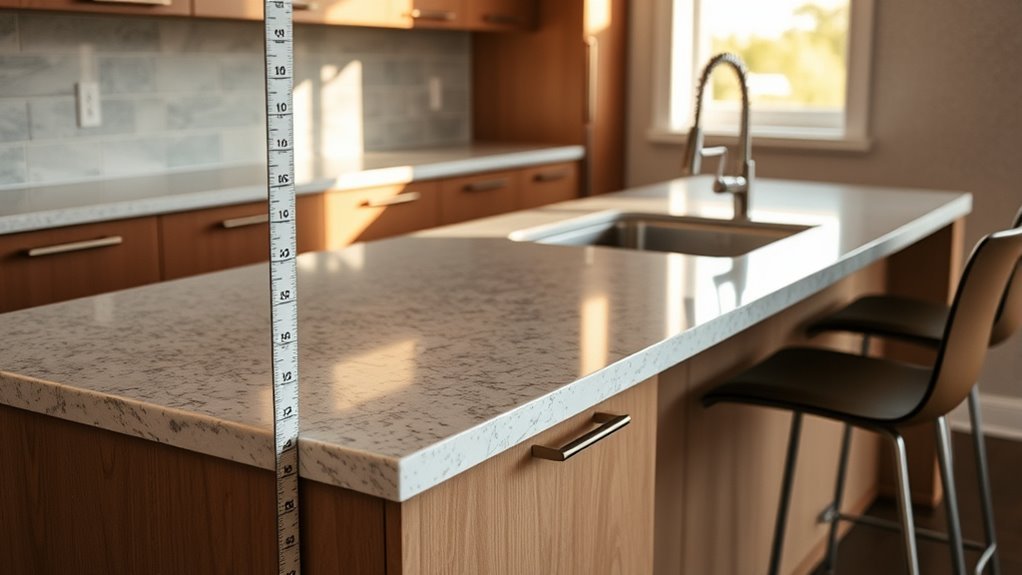
Since kitchen counters are so important for your daily tasks, measuring and customizing their height helps you stay comfortable and efficient. Think about your height and the kinds of activities you do most often to find the best ergonomic level.
Customizing your kitchen counter height ensures comfort and efficiency for your daily tasks.
Different counter materials can affect the final height, so remember to include their thickness when measuring. Your kitchen design also matters, making sure everything fits well with appliances and cabinets.
Here’s how to measure and customize your counter height:
- Stand naturally with relaxed arms at your sides and measure your wrist height.
- Add the thickness of the counter materials you’ve chosen.
- Adjust your measurements based on specific tasks like chopping or baking.
- Talk to a kitchen designer to incorporate your measurements into the overall layout.
Popular Kitchen Counter Height Trends
Most kitchen counters tend to stick to a standard height of about 36 inches, which works pretty well for a lot of tasks. But lately, adjustable counters are becoming more popular. They give you the flexibility to customize the height to suit your needs perfectly.
It’s all about making your kitchen more comfortable and functional. So, whether you’re chopping, baking, or just chatting with family, having the right counter height can really make a difference.
Standard Counter Heights
Most kitchen counters are around 36 inches tall, which strikes a good balance between comfort and functionality for most tasks. This height works well for many people, but if you want something more customized, there are great options available.
Knowing the common counter heights can help you pick the best fit for your kitchen. Here are some standard options:
- 36 inches – The typical height for kitchen work surfaces.
- 42 inches – Often used for kitchen islands or bar counters.
- 28-34 inches – Great for seated workstations or baking areas.
- Custom heights – Made to suit specific needs or ergonomic preferences.
Adjustable Counter Options
Adjustable kitchen counters give you flexible height options that adapt to your needs, making cooking and prep work more comfortable. With counter height adjustment, you can create a workspace that suits different tasks and users.
Whether you’re chopping vegetables or rolling dough, these counters help reduce strain and improve ergonomics. Popular options include manual cranks, electric lifts, and modular designs, making it easy to switch between sitting and standing.
| Type | Height Range (inches) | Best For |
|---|---|---|
| Manual Crank | 30 – 38 | Budget-friendly, simple |
| Electric Lift | 28 – 42 | Effortless adjustment |
| Modular Designs | Customizable | Multi-user households |
| Fixed Adjustable | 34 – 36 (preset) | Semi-flexible, reliable |
These options keep your kitchen versatile and comfortable for everyone.
How to Mix Multiple Counter Heights in One Kitchen
When designing a kitchen with multiple counter heights, balancing functionality and style is important. A multi-level design helps optimize counter space and makes work areas more specific.
Here’s how to mix different heights effectively:
- Assess your needs: Think about tasks like chopping, baking, or casual dining to decide the right heights.
- Create zones: Group counters based on their function. Lower for prep, standard for cooking, higher for seating.
- Ensure smooth connections: Use steps or partial walls to connect different heights without disrupting the flow.
- Maintain visual harmony: Pick materials and colors that tie everything together, even with varying heights.
Choosing the Perfect Counter Height for Your Space
Mixing counter heights can boost your kitchen’s functionality, but choosing the right height depends on your space and needs. Think about what tasks you do daily, who uses the kitchen, and how the counter style and material match your overall look. Taller counters are great for bar seating, while standard heights are ideal for prep areas.
Here’s a quick guide to help you decide:
| Counter Use | Recommended Height (inches) |
|---|---|
| Standard Prep | 36 |
| Bar Seating | 42 |
| Baking Station | 38 |
| Kids’ Area | 30 |
| Accessible Design | 34 |
Consider your kitchen layout and choose materials that match your style and durability needs. This way, your counters will look great and stay comfortable and functional every day.
Frequently Asked Questions
What Materials Are Best for Kitchen Countertops?
When choosing kitchen countertops, you’ll want to weigh granite vs quartz carefully. Granite offers natural beauty and durability, while quartz is low-maintenance and resistant to stains.
If you’re eco-conscious, consider recycled glass or bamboo countertops. They add style and sustainability to your space.
Ultimately, pick a material that fits your lifestyle, budget, and design preferences. That way, you can enjoy a beautiful, functional kitchen for years to come.
How Do I Maintain and Clean Kitchen Counters Properly?
You should start counter cleaning daily with a gentle, non-abrasive cleaner and a soft cloth to avoid scratches.
For maintenance tips, seal stone countertops regularly to prevent stains and use cutting boards to protect surfaces.
Avoid harsh chemicals and wipe spills immediately to keep your counters looking fresh.
Consistent care and quick attention to messes will extend your kitchen counter’s life and keep it hygienic.
What Is the Average Cost of Installing New Kitchen Counters?
Imagine your dream kitchen coming together piece by piece. The average cost to install new countertops typically ranges from $1,500 to $4,000.
Countertop material prices vary a lot, too. Laminate is budget-friendly, while granite or quartz can be more expensive.
You’ll want to find a good balance between style and cost, so it’s a good idea to get quotes based on your preferred materials.
Don’t forget about labor charges—they can significantly impact your total cost.
Can I Install Kitchen Counters Myself or Hire a Professional?
You can definitely try a DIY installation if you’re comfortable with tools and measurements, but keep in mind it can be tricky. Hiring a professional offers benefits like precise cuts, proper fitting, and faster completion.
Professionals also handle unexpected issues, saving you time and stress. If your kitchen counters involve complex materials or layouts, going pro might be the smarter choice to guarantee quality and durability in the long run.
How Do Kitchen Countertop Styles Affect Home Resale Value?
Kitchen countertop styles are like the outfit your home wears to impress buyers. They set the tone and can make or break that first impression.
Choosing popular countertop trends can boost your resale impact, making your kitchen look fresh and modern. Classic materials like quartz or granite tend to attract more buyers.
On the other hand, outdated or overly bold styles might turn them away. So, pick wisely to maximize your home’s appeal and value.
Conclusion
Now that you know the ropes about kitchen counter heights, you’re ready to create a space that fits you like a glove. Whether you’re prepping meals, baking treats, or entertaining guests, choosing the right height keeps comfort front and center.
Don’t be afraid to mix things up. Customizing your counters lets your kitchen work with you, not against you.
After all, a well-designed kitchen makes every task feel like a walk in the park.
And when it comes to kitchen counter height, knowing the right measurement is key to making your space both functional and comfortable.