Fridge Only With No Freezer Guide: What to Know Before You Buy
Are you tired of dealing with a bulky fridge-freezer combo that’s more space than you need? You’re not alone—many people struggle with limited kitchen space and high energy bills.
If fresh foods are your main concern, a fridge-only model might be the perfect solution.
Fridge Only With No Freezer Guide: What to Know Before You Buy
If you prioritize fresh food and shop often, a fridge-only model can save you space, energy, and money compared to traditional fridge-freezers.
You’ll enjoy more usable fridge space, lower electricity bills, and easier maintenance without a freezer section.
Look for adjustable shelves, reliable temperature control, and good seals for efficiency.
Whether you’re in a small household or want a dedicated fresh food fridge, keeping it organized and clean boosts performance.
There’s plenty more to reflect on before you decide.
Key Takeaways
- Fridge-only refrigerators are perfect if you mainly want fresh food and do a lot of grocery shopping, with no need for frozen storage.
- These models help save space in your kitchen and use less energy since they don’t have a freezer compartment.
- When shopping, look for models with advanced cooling, adjustable shelves, and consistent temperature control between 35°F and 38°F.
- To keep your fridge working well and your food fresh, clean it regularly, don’t overload the shelves, and check that door seals are tight.
- You can buy these fridges online, at local stores, warehouse clubs, or even find carefully inspected secondhand units.
Who Should Consider a Fridge-Only Refrigerator?
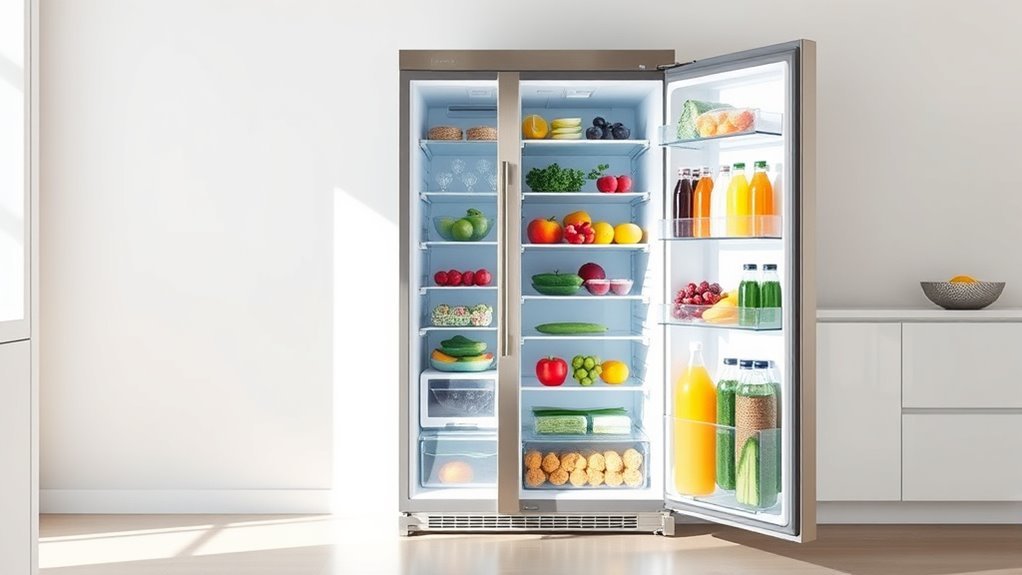
Who benefits most from a fridge-only refrigerator? Ideal users are those who prioritize fresh produce, plan meals carefully, and don’t rely heavily on frozen foods.
If you often go shopping daily or frequently, you’ll appreciate the extra space and convenience a fridge-only model offers. It’s great if you prefer cooking fresh meals rather than batch-cooking or freezing leftovers.
This type of fridge is perfect for small households or individuals who consume perishables quickly and don’t need a freezer. If you already use a separate freezer or buy frozen items in bulk for occasional use, this setup fits right into your routine.
Fridge-Only vs. Traditional Fridge-Freezer: Which Is Right?
Choosing between a fridge-only refrigerator and a traditional fridge-freezer really depends on your lifestyle and how you store your food. If fresh food storage is your priority and you don’t need much frozen space, a fridge-only model might be the way to go.
On the other hand, traditional fridge-freezer combos give you the flexibility to store both fresh and frozen items, which many households find convenient.
When you’re looking at fridge styles, think about how you shop and store food. If you buy frozen meals or tend to bulk freeze leftovers, a fridge-freezer makes sense.
But if you prefer fresh produce and shop often, a fridge-only model could save space and energy.
In the end, your choice depends on how you use your fridge every day. Both styles have their benefits, so consider your food habits carefully.
Matching your needs with the right style will ensure you get the most out of your new appliance and stay satisfied with your choice.
Benefits and Drawbacks of Fridge-Only Models
You’ll notice that fridge-only models are great for saving space and fitting nicely into smaller kitchens. They’re pretty convenient if you’re working with limited room and don’t want a bulky appliance taking up too much space.
On the flip side, you do have to keep in mind that without a freezer, you’ll need to plan your grocery shopping a bit differently. Storing frozen foods isn’t an option here, so it’s all about managing fresh items and shopping more frequently. Let’s take a closer look at how these pros and cons can influence your daily routine.
Space Efficiency Advantages
Although fridge-only models save a lot of space compared to traditional fridge-freezer combos, they do have some trade-offs to consider. One big perk is that without a freezer section, you get more usable fridge space, making it easier to store everything efficiently.
This extra space can be a real game-changer in small kitchens or apartments where every inch matters. Plus, these models often have smarter designs, like adjustable shelves and door bins, to help you organize better.
You’ll find it easier to keep fresh produce, drinks, and leftovers neat and accessible without the bulk of a freezer. Since these fridges focus only on refrigeration, their simple design helps reduce their overall size.
That makes them perfect for tight spaces or secondary kitchens. If saving space is your top priority, a fridge-only model could be just what you need.
Limitations Without Freezer
While fridge-only models offer space-saving benefits, they come with some limitations you should consider. Without a freezer, you’ll have limited storage for frozen goods and need to go grocery shopping more often. Storing perishable items gets trickier since you can’t freeze leftovers or bulk purchases.
This setup is great if you eat fresh regularly but limits your meal prep options. You get more fridge space, a simplified design, and an energy-efficient appliance that’s easy to clean. But, you can’t freeze leftovers or keep frozen foods long-term.
Knowing these pros and cons will help you decide if a fridge-only model fits your lifestyle.
Space and Size Options for Fridge-Only Refrigerators
When choosing a fridge-only refrigerator, you need to evaluate the available space and the size that fits your needs. Compact designs are perfect if you’re working with limited kitchen space or want to place the fridge in smaller areas like an office or dorm room.
Carefully consider layout options by measuring the width, height, and depth of the spot where you plan to put the fridge. This will help ensure it fits comfortably without blocking pathways or cabinets.
Measure your fridge space precisely to avoid blocking pathways or cabinets and ensure a perfect fit.
Think about how much storage you need daily. Larger models provide more room for groceries but also take up more space. If you often buy in bulk or store big items, go for a wider fridge with adjustable shelves.
On the other hand, smaller models are great for singles or couples who don’t require a lot of storage. Matching the fridge size to your lifestyle and kitchen layout will give you the best functionality without overcrowding your space.
Must-Have Features in Fridge-Only Models
Choosing the right size is just the start; you’ll also want to focus on features that improve convenience and efficiency in your fridge-only model. Look for advanced cooling technology, which helps maintain consistent temperatures and keeps your food fresher for longer.
Models with multi-airflow systems distribute cool air evenly, preventing hot spots and ensuring every shelf stays perfectly chilled. Energy efficiency is another key feature to evaluate.
Fridges with high energy efficiency ratings save you money on electricity bills and reduce your environmental impact. Check for LED lighting inside the fridge—it’s brighter and uses less power than traditional bulbs.
Adjustable shelves and door bins add flexibility, letting you customize storage to fit your needs. A good temperature control system allows precise settings, so you won’t risk spoiling delicate items.
Energy Savings and Cost Benefits of Fridge-Only Refrigerators
If you want to cut down on your energy bills, fridge-only refrigerators offer a smart solution. These models usually use less electricity since they don’t have a freezer compartment, which needs more energy to keep very cold.
When you do a cost analysis, you’ll see that fridge-only units often have lower operating costs over time, making them a budget-friendly choice.
Here’s why fridge-only refrigerators can boost energy efficiency and save you money:
- They use less power by focusing only on refrigeration, which cuts down overall energy use.
- Maintenance costs tend to be lower because there’s no freezer to defrost or repair.
- The initial purchase price is often more affordable compared to combo fridge-freezers.
Organizing Your Fridge-Only Space Efficiently
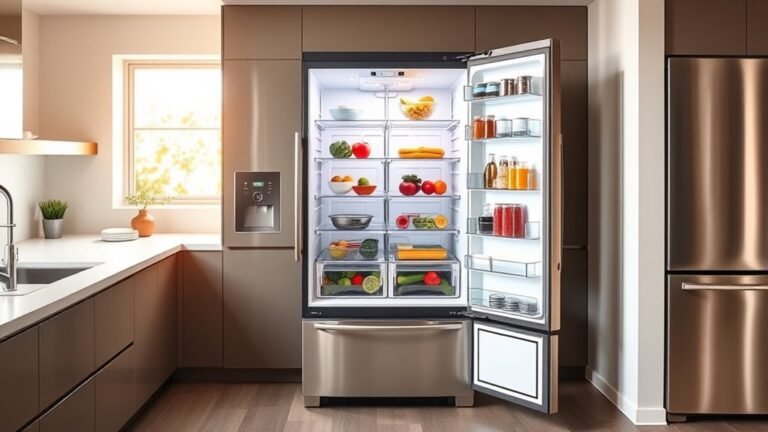
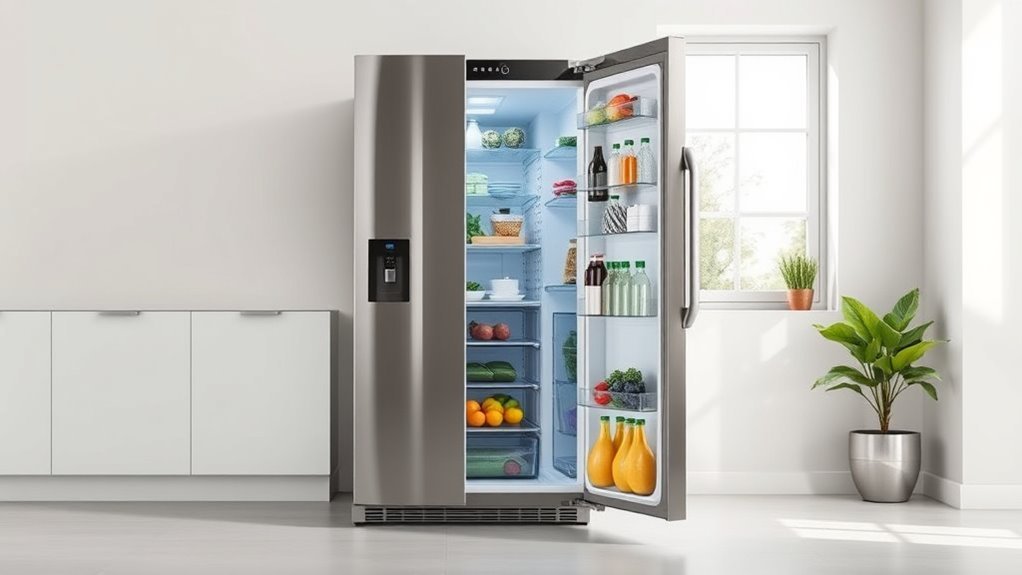
Maximizing your fridge-only space starts with smart organization strategies that make every inch count. Since you won’t have a freezer for bulky frozen goods, efficient fridge storage is essential. Begin by grouping similar items—dairy, fruits, vegetables, and beverages each need their own space.
Use clear, stackable containers to keep smaller items tidy and visible, so leftovers don’t get forgotten. Adjust your shelves to fit taller bottles or larger containers, creating flexible zones tailored to your needs.
Make good use of door compartments by storing condiments and frequently used items there. Don’t forget vertical space—add risers or tiered organizers to improve organization without overcrowding.
Regularly rotate perishables by placing newer items behind older ones. This helps reduce waste and keeps your fridge fresh. With these practical storage tips, you’ll enjoy a clutter-free, efficient fridge that keeps your food fresh and easy to access every day.
Easy Maintenance Tips for Your Fridge-Only Appliance
Want your fridge-only appliance to stay in top shape? Just make sure to clean it regularly and set the right temperature. It’s pretty simple—keeping things tidy inside helps it run more efficiently.
Also, try not to overload the shelves. Giving everything enough space allows the air to circulate properly, so your food stays fresh and your fridge doesn’t get overworked. Follow these easy tips, and you’ll help extend your fridge’s life while keeping your groceries in great condition!
Regular Cleaning Routine
Although a fridge-only appliance needs less upkeep than a full kitchen setup, you still need to clean it regularly to keep it running efficiently and prevent odors. Sticking to a consistent cleaning schedule helps you avoid buildup of spills and stale smells.
Take time to wipe down shelves and door seals, and reorganize items for better shelf organization, which improves airflow and keeps food fresher longer. Here are three easy tips:
- Set a weekly cleaning reminder to clear out expired items and wipe surfaces.
- Use mild soap and warm water to clean shelves and drawers gently.
- Arrange items by type and how often you use them to maintain good shelf organization and reduce clutter.
Following these steps guarantees your fridge stays fresh and functions smoothly without extra hassle.
Proper Temperature Settings
Since your fridge-only appliance relies solely on cooling to keep food fresh, setting the right temperature is essential. You want to maintain an ideal range between 35°F and 38°F (1.7°C to 3.3°C) to prevent spoilage while avoiding freezing delicate items.
Regular temperature monitoring helps you catch any fluctuations early, especially during power outages or frequent door openings. Use a reliable fridge thermometer if your appliance doesn’t have a built-in digital display.
Adjust the settings gradually and check after several hours to guarantee stability. Keeping your fridge within the ideal range not only preserves food quality but also boosts energy efficiency.
Proper temperature control is one of the simplest yet most effective maintenance steps you can take for your fridge-only unit.
Avoid Overloading Shelves
When you overload your fridge shelves, air circulation gets disrupted, which can lead to uneven cooling and faster spoilage. To keep things running smoothly, pay attention to shelf stability and how you distribute weight.
Avoid piling heavy items on a single shelf, as this can cause shelves to bow or break, leading to spills and damage.
Here’s how to keep your fridge organized without overloading it:
Distribute weight evenly across shelves to keep everything balanced and prevent damage.
Place heavier items on the lower shelves, where the support is stronger.
Use smaller containers to stay organized and avoid stacking things too high.
Best Places to Buy Fridge-Only Refrigerators
If you’re looking to buy a fridge-only refrigerator, choosing the right retailer can make all the difference in price, selection, and service. Online retailers often offer a wide variety of models and competitive prices, plus the convenience of home delivery.
If you want to see the fridge in person before buying, local appliance stores are a great option. They let you check build quality and get expert advice. Warehouse clubs can provide excellent deals on fridge-only units, especially if you’re open to buying in bulk or during sales events.
For budget-conscious shoppers, secondhand options like thrift stores, online marketplaces, or local classifieds might surprise you with quality fridges at lower prices. Just be sure to inspect used units carefully.
How to Care for Your Fridge-Only Refrigerator
Proper care keeps your fridge-only refrigerator running efficiently and extends its lifespan. To keep it energy-efficient and your food fresh, focus on a few simple habits.
Proper care ensures your fridge-only refrigerator runs efficiently and keeps your food fresh longer.
First, keep the interior organized to promote good air circulation. This helps maintain consistent temperatures and keeps everything on the shelves stable. Second, clean the coils regularly to prevent dust buildup. If they’re dirty, your fridge has to work harder and uses more energy.
Finally, check the door seals often. Tight seals stop cold air from escaping and boost energy efficiency. Here’s how to care for your fridge-only refrigerator:
- Organize shelves to avoid overcrowding and improve shelf stability
- Clean condenser coils every 6 months to maintain energy efficiency
- Inspect and replace door gaskets if they’re cracked or loose
Frequently Asked Questions
Can I Add a Separate Freezer if I Buy a Fridge-Only Model?
Yes, you can add a separate freezer if you buy a fridge-only model. Just keep in mind the size and capacity that work best for your needs.
Make sure you have enough space in your kitchen or storage area for an extra unit. Separate freezers come in different sizes, so measure carefully before buying.
Also, plan for proper ventilation and easy access. This way, you can customize your setup without sacrificing storage or convenience.
Are Fridge-Only Refrigerators Quieter Than Fridge-Freezer Combos?
Yes, fridge-only refrigerators are generally quieter than fridge-freezer combos because they have fewer components running at the same time. This means less noise overall.
Since they focus only on cooling, they often use less energy too. You’ll notice less humming or clicking sounds, which makes them great if you want a quieter kitchen.
Choosing a fridge-only model can help cut down on noise without sacrificing energy savings.
How Long Do Fridge-Only Refrigerators Typically Last?
A fridge-only refrigerator usually lasts about 10 to 15 years, like a dependable old friend you can count on.
To get the most out of your fridge’s lifespan, make sure to do some simple maintenance. Clean the coils regularly, keep the door seals tight, and avoid overloading it.
Staying on top of these tasks will help your fridge run smoothly and last longer, saving you money and hassle down the road.
Do Fridge-Only Models Come With Smart Technology Features?
Yes, many fridge-only models come with smart features that help you control temperature, monitor energy use, and even get alerts on your phone.
You’ll find options that boost energy efficiency, saving you money and reducing your environmental impact.
These smart fridges often include Wi-Fi connectivity and app integration, making it easier for you to manage your fridge remotely and keep your food fresh without wasting energy.
Can I Use a Fridge-Only Refrigerator for Commercial Purposes?
You might think all refrigerators are created equal, but that’s not true when it comes to commercial use.
While you *can* use a fridge-only refrigerator for your business, it really depends on what you need. Commercial refrigerators often need specific temperature controls and larger capacity.
If your store or restaurant stores perishable goods that need freezing, a fridge-only model might not be enough. Always check local health codes and consider your storage needs before making a choice.
Conclusion
Choosing a fridge-only refrigerator is like picking a sleek, streamlined sailboat for your kitchen—simple, efficient, and tailored to your needs. If you don’t need a freezer, this model saves space and energy while keeping your fresh foods perfectly chilled.
Remember to organize smartly and maintain it regularly to keep it running smoothly. With the right choice and care, your fridge-only fridge will be a reliable companion, making daily life a breeze.