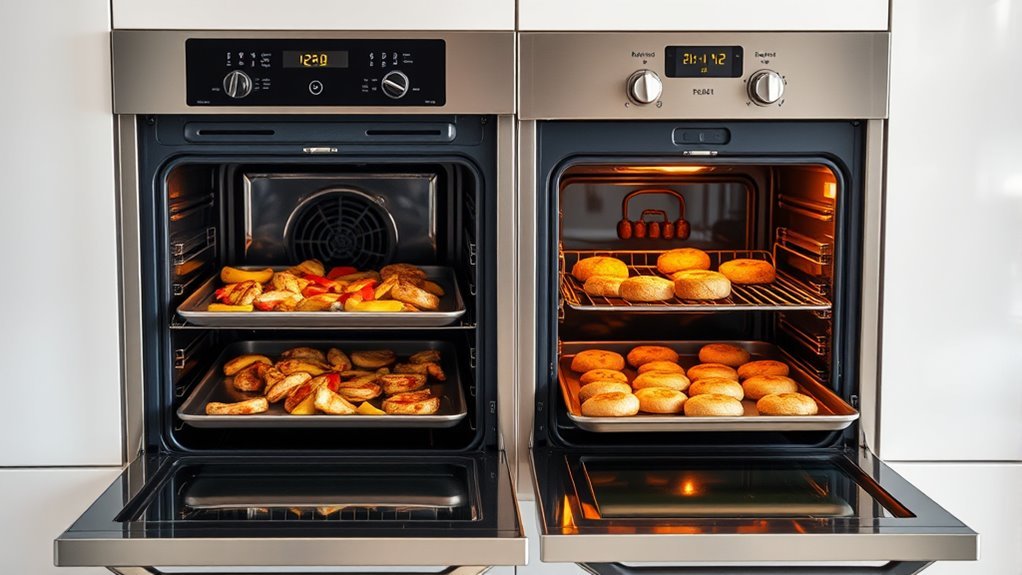
Convection Oven vs. Regular Oven: Which Is Better?
Many people struggle with choosing the right oven for their cooking needs, and it can feel overwhelming with so many options out there.
If you’re looking for faster, more even cooking with crispy results, a convection oven might be your best bet. It uses a fan to circulate hot air, cutting cook times and saving energy.
But if you prefer classic baking like bread or slow roasting veggies with moist, stable heat, a regular oven suits you better.
Each oven has unique benefits for different meals and textures, so understanding how they work helps you choose the right fit for your cooking style.
Key Takeaways
- Convection ovens cook faster and more evenly by circulating hot air, which helps reduce hot spots compared to regular ovens.
- Regular ovens are great for baking bread and roasting vegetables because they help preserve moisture and traditional textures.
- To get the best results with a convection oven, lower the temperature by 25°F and cut cooking times by about 25%.
- Even though convection ovens tend to be more expensive at first, they’re more energy-efficient because they cook faster.
- Go for a convection oven if you’re roasting or doing multi-tray baking, but stick with a regular oven for classic baking and slow roasting.
How Does a Convection Oven Work vs. a Regular Oven?
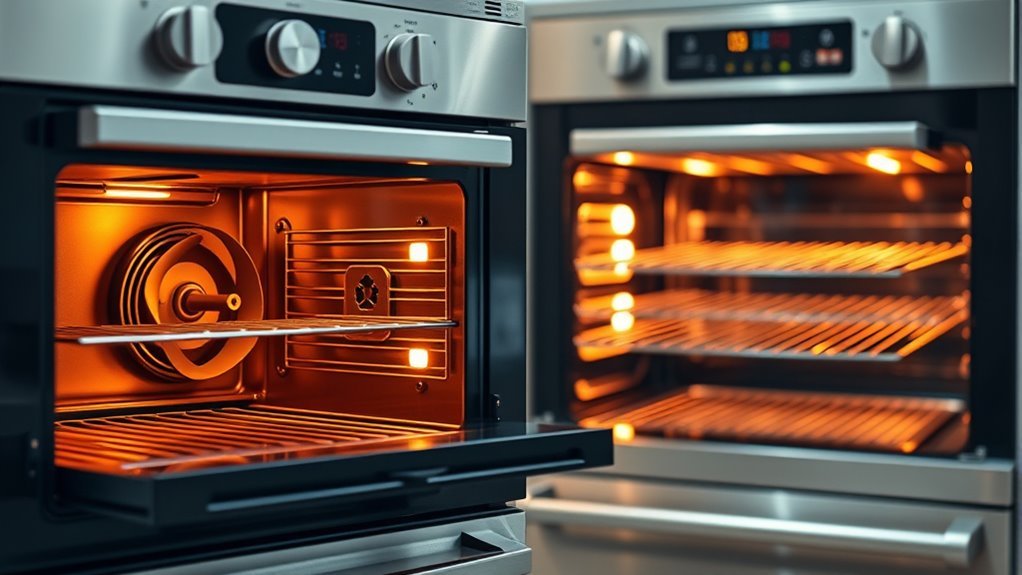
Although both convection and regular ovens cook food using heat, convection ovens have a fan that circulates hot air. This helps your food cook more evenly and quickly.
This difference in oven technology means convection ovens rely on forced-air heating methods, while regular ovens use radiant heating. In a regular oven, heat rises from the bottom or top elements, creating pockets of warmer air that can lead to uneven cooking.
You might notice that some parts of your dish cook faster than others. On the other hand, a convection oven’s fan constantly moves hot air around, reducing hot and cool spots inside the oven chamber.
This airflow speeds up the cooking process and can give you more consistent results. When you understand these heating methods, you can see how convection ovens are a more advanced approach to oven technology, improving temperature distribution and efficiency compared to traditional regular ovens.
Benefits of Using a Convection Oven
Because convection ovens circulate hot air efficiently, they cook your food faster and more evenly than regular ovens. This means shorter cooking times and perfectly browned dishes, saving you energy and effort. One of the biggest benefits is consistent heat distribution, which helps avoid hot spots and unevenly cooked meals.
You’ll notice crispier exteriors on roasted vegetables and meats, while keeping interiors juicy and tender. Plus, convection ovens are super versatile. You can bake multiple trays at once without flavors mixing or uneven cooking.
Whether you’re roasting, baking, or toasting, a convection oven adapts to different cooking styles. It gives you more options in the kitchen and makes meal prep easier and quicker.
When Is a Regular Oven a Better Choice?
While convection ovens excel at fast, even cooking, regular ovens still have their place in the kitchen. You might find a regular oven better when you want to focus on traditional techniques or specific textures. Here are three scenarios when you should opt for a regular oven:
- Baking bread. The gentle, steady heat helps develop a perfect crust and soft crumb without drying out your dough.
- Roasting vegetables. The slower heat allows veggies to caramelize evenly, preserving their natural sweetness and tenderness.
- Pizza perfection. A regular oven’s consistent heat creates the classic crispy crust and melty cheese that define a great pizza.
Additionally, when preparing holiday meals, you often juggle multiple dishes that benefit from the stable environment of a regular oven. So, while convection ovens have their advantages, using a regular oven for these tasks guarantees you get the best results.
How Do Cooking Times and Temperatures Differ?
How much should you adjust your cooking time and temperature when switching between convection and regular ovens? Generally, you’ll want to lower the temperature by about 25°F (15°C) when using a convection oven. Because convection ovens circulate hot air, they cook food more evenly and often faster than regular ovens.
This means you can shorten cooking times by 25% to get the best baking results. Using proper techniques is important here. For example, reducing both temperature and time helps prevent overcooking or drying out your food.
Keep in mind that delicate baked goods might need smaller adjustments, while dense dishes benefit more from the convection oven’s efficiency. Ultimately, tweaking your times and temperatures ensures you make the most of each oven type.
Best Recipes for Convection vs. Regular Ovens
Adjusting cooking times and temperatures sets you up for success, but choosing the right oven for your recipe can make an even bigger difference. Convection baking speeds up meal prep and makes baking more efficient, while regular roasting gives steady heat that’s great for tender results. Knowing when to use each can boost flavor and texture with smart techniques and tweaks.
Here are the best recipes to match your oven type:
- Convection Baking: Perfect for cookies, pastries, and roasted vegetables. The hot air circulation ensures even browning and crisp edges.
- Regular Roasting: Great for whole chickens, roasts, and casseroles. Slow, even heat helps keep everything moist.
- Flexible Recipes: Dishes like lasagna work well in both ovens with just a few temperature adjustments.
Mastering these choices helps you get the most out of both ovens for delicious results every time.
Which Oven Is More Energy Efficient and Cost-Effective?
When you’re trying to figure out which oven is more energy efficient and cost-effective, it’s good to look at how much energy each one uses while cooking. A convection oven, for example, tends to cook things faster and at lower temperatures, which can help cut down on your electricity bill over time. So, it’s worth comparing their energy consumption and seeing which one ends up saving you more money in the long run.
Energy Consumption Comparison
Although both convection and regular ovens serve the same basic purpose, they differ quite a bit in energy use. Knowing how efficient they are helps you choose the right one for your needs.
Convection ovens use a fan to move hot air around, cooking food faster and more evenly. This means they often use less energy overall because you spend less time cooking.
Regular ovens rely on radiant heat, which usually requires longer cooking times and higher temperatures. That can lead to more energy consumption.
Since convection ovens cook quicker, they usually use less energy per meal. Despite sometimes needing a bit more power initially, they tend to be more energy-efficient overall.
Long-Term Cost Benefits
When choosing between a convection oven and a regular oven, it’s helpful to know their long-term cost benefits. This can help you save both energy and money over time.
A convection oven uses a fan to circulate hot air, cooking food faster and more evenly. This means you’ll spend less time and energy heating the oven, leading to noticeable energy savings.
While convection ovens might cost more upfront, they’re a smart long-term investment because they lower your electricity bills and reduce cooking time. Regular ovens, on the other hand, are usually cheaper initially but use more energy during longer cooking cycles.
Does Oven Size and Capacity Matter for Your Cooking?
How much space do you really need in your oven to cook efficiently? Oven dimensions and cooking space directly impact how well you can prepare meals. If you often cook large meals or entertain, a bigger oven with more capacity might be a better fit. But if your kitchen is tight on space, a smaller appliance can still be functional without sacrificing performance.
Think about these points to help decide what’s right for you:
Consider your cooking needs and kitchen space to choose the perfect oven size for you.
- Meal portioning: Larger ovens can handle bigger trays and let you cook multiple dishes at once, saving you time.
- Appliance footprint: Measure your kitchen carefully to make sure the oven fits comfortably without crowding your workspace.
- Storage capacity: Consider if you need extra space for baking sheets or pans—some ovens come with extra racks or compartments for added flexibility.
Finding the right size for your oven based on your cooking habits and your kitchen space will help you enjoy more efficient and enjoyable cooking sessions.
Maintenance and Cleaning Differences Between These Ovens
Since maintaining your oven regularly can extend its lifespan, knowing the differences in cleaning between convection and regular ovens helps you keep your appliance in top shape. Convection ovens have a fan and exhaust system, so you’ll want to pay special attention to cleaning these parts to avoid grease buildup. Use gentle cleaning techniques, like wiping down the fan cover with a damp cloth and mild detergent.
For regular ovens, focus on cleaning the interior surfaces and racks using oven-safe cleaners or a baking soda paste. Maintenance tips for both ovens include regularly removing crumbs and spills after each use to prevent smoke and odors. Avoid harsh chemicals that can damage surfaces.
For convection ovens, check the fan periodically for any blockages or wear and tear, as this affects performance. By applying these cleaning techniques and maintenance tips, you’ll keep your oven running efficiently and lasting longer, whether it’s convection or regular.
How Do These Ovens Affect Food Texture and Flavor?
Although both convection and regular ovens cook food thoroughly, they affect texture and flavor in different ways that can change your dishes quite a bit. Knowing these differences helps you pick the right oven for what you want to make.
Texture Variations: Convection ovens circulate hot air, which helps with even browning and crispy exteriors. They’re great for roasting or baking cookies. Regular ovens give gentler heat, resulting in softer, moister foods—perfect for casseroles or delicate cakes.
Flavor Amplification: The quick air movement in convection ovens boosts flavor by reducing moisture, which concentrates tastes and creates caramelized surfaces. Regular ovens keep moisture in better, helping preserve subtle flavors in slow-cooked dishes.
Cooking Consistency: Convection ovens reduce hot spots, so your food cooks evenly all over. Regular ovens might need rotation to avoid uneven cooking, which can affect the final result.
Key Factors to Consider When Choosing Your Oven
When choosing between a convection oven and a regular oven, consider factors like how you cook, energy efficiency, and your budget. Think about your cooking style—if you enjoy roasting and baking multiple trays at once, convection ovens provide even heat and faster results.
If you prefer traditional baking or slow roasting, a regular oven might be a better fit. Also, look at the features—some convection ovens have adjustable fans or dual heating elements that add versatility.
Think about your kitchen space and how often you’ll use the oven. Energy efficiency is important too; convection ovens usually use less power because they cook faster, saving you money over time. Lastly, consider the price—regular ovens are typically less expensive upfront.
Frequently Asked Questions
Can I Use the Same Bakeware in Both Convection and Regular Ovens?
Yes, you can use the same bakeware materials in both convection and regular ovens. Just keep in mind that convection ovens cook faster and more evenly, so you’ll probably need to cut down on cooking times or lower the temperature a bit.
Materials like metal, glass, and ceramic work well in both types of ovens. But avoid dark or heavy pans in convection ovens since they can overheat more easily.
Always check your recipe and adjust the cooking times for the best results. That way, your baked goods turn out perfect every time.
Are Convection Ovens Noisier Than Regular Ovens?
Don’t judge a book by its cover—convection ovens are usually a bit noisier than regular ovens because of the fan that circulates air for even heat distribution.
That fan boosts cooking efficiency, helping your dishes cook faster and more evenly. While the gentle hum might be noticeable, it’s a small trade-off for the improved results you get.
Do Convection Ovens Require Special Electrical Outlets?
No, convection ovens don’t usually require special electrical outlets, but it’s a good idea to check their installation requirements first. Most need a standard 120-volt outlet, similar to regular ovens.
However, some larger or built-in models might need higher electrical capacity or a dedicated circuit. Make sure your kitchen’s wiring can handle that load to avoid any issues.
If you’re unsure, consulting an electrician before installing is always a smart move.
Can Convection Ovens Be Used for Dehydrating Foods?
Of course, you can use a convection oven for dehydrating foods because who doesn’t want their oven doubling as a mini desert? But seriously, convection ovens work well with dehydration techniques since their even heat and air circulation help dry food efficiently.
Just make sure to adjust the temperature settings low, usually between 120-140°F, to avoid cooking instead of drying. With patience and the right settings, your oven becomes a handy dehydrator.
What Are Common Safety Tips for Using Convection Ovens?
When using your convection oven, always follow maintenance tips like cleaning the fan and interior regularly to prevent buildup. This helps keep your oven working efficiently and safely.
Don’t overcrowd trays so hot air can circulate evenly. This maximizes the benefits of convection cooking and prevents uneven results.
Use oven mitts to avoid burns, and keep the oven door closed during cooking to maintain a consistent temperature. It’s safer and helps your food cook properly.
Checking seals and avoiding spills will also help your oven last longer and perform better. Keeping it in good shape ensures safe and effective cooking every time.
Conclusion
Choosing between a convection and a regular oven can feel like deciding the fate of your kitchen masterpieces! If you want faster, evenly cooked meals, convection’s your superstar.
But sometimes, the classic regular oven’s gentler touch is just what you need. Remember, it’s all about what suits your cooking style and recipes best.
Whichever you pick, you’re on the path to creating dishes so delicious, they’ll make your taste buds dance like never before! When it comes to oven choices, understanding the differences between convection oven vs. regular oven can help you make the best decision.