How Old Is My Appliance? The Complete Answer
Many people struggle with figuring out how old their appliances really are. It’s a common dilemma that can impact your decisions about repairs, warranties, or when to upgrade. You’re not alone—knowing the age of your appliance is more important than you might think.
To find your appliance’s age, start by locating its model and serial numbers, usually inside the door or on the back panel. These numbers often include date codes indicating when it was made. You can decode these using brand guides or online tools.
Knowing the age helps with warranties, repairs, and deciding when to replace it due to efficiency loss or frequent breakdowns.
Keep tracking its history carefully, and you’ll better manage maintenance and performance over time. There’s more to uncover about your appliance’s lifespan and care.
Key Takeaways
- Locate the appliance’s model and serial numbers, usually on labels inside doors or on back panels.
- Decode serial numbers or model numbers for manufacturing dates using brand-specific guides or online resources.
- Find date codes stamped on the appliance frame or labels, often using letter-number combinations for month and year.
- Appliance age affects warranty coverage, repair costs, and parts availability, so tracking it accurately is important.
- Keep an eye on performance decline and energy efficiency loss to decide when frequent repairs mean it’s time to replace.
How to Find Your Appliance’s Model and Serial Numbers
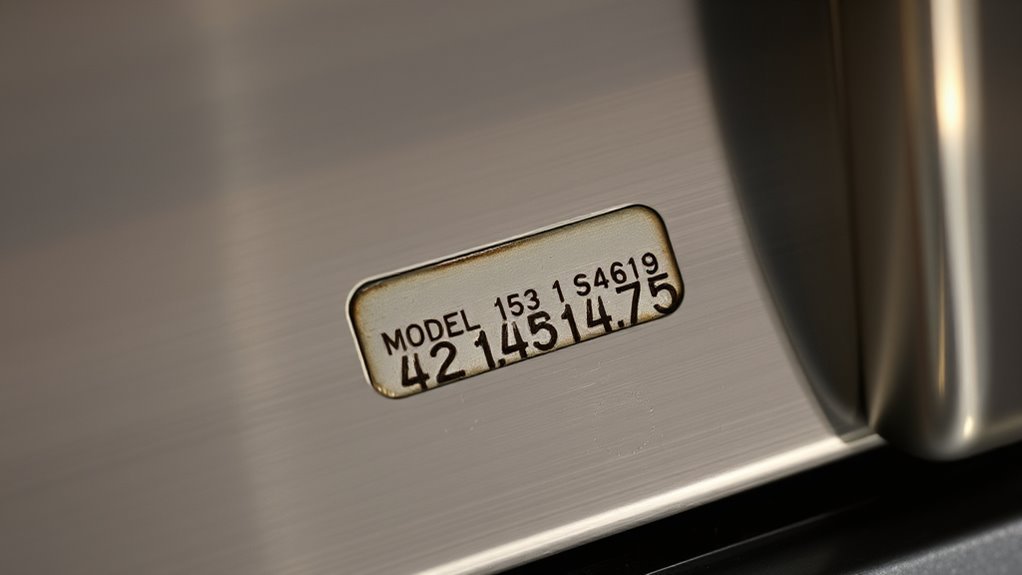
Wondering where to find your appliance’s model and serial numbers? Usually, they’re on a label or plate attached to your appliance. Common spots include the door frame, inside the door, or on the back panel.
Wondering where to find your appliance’s model and serial numbers? Check labels on the door frame, inside the door, or back panel.
For refrigerators, check inside the fresh food compartment near the door or on the ceiling. Washers and dryers often have labels inside the door or on the back. Serial number formats vary by manufacturer but usually combine letters and numbers.
These formats help identify where your appliance was made and its details. Some serial numbers include date or batch codes, but you don’t need to decode them now. Just record both numbers exactly as they appear.
Model numbers identify the appliance type and features, while serial numbers track each unit. Keeping these handy is useful for warranty claims, repairs, or figuring out your appliance’s age later on.
How to Read Model Numbers to Find Appliance Age
Although model numbers can look like a random string of letters and numbers, they often contain clues about your appliance’s manufacturing date. To decode the age, start by finding your appliance’s model number—these are usually located near serial number spots like inside the door frame, on the back panel, or on the sides.
Knowing common model number formats can help you spot date codes hidden inside them. For example, some brands include the year and month of production within the model number itself, often using a letter-number combo or specific digit positions. When you see these patterns, you can figure out when your appliance was made without needing the serial number.
Keep in mind that model number formats vary by brand, so checking the manufacturer’s guide or website can clear things up. Once you understand these patterns and know where to look, you’ll be able to quickly find out your appliance’s age.
Decoding Serial Numbers to Reveal Appliance Age
If model numbers don’t give you a clear date, the serial number can often fill in the gaps. Serial number decoding is a reliable way to pinpoint your appliance’s age when model numbers fall short. Manufacturers embed date information within the serial number, but the format varies widely.
By learning the specific pattern your brand uses, you can extract the manufacturing date directly from the serial number. Some brands embed the year and month in the first few digits, while others use a code that requires a lookup chart.
To get started, locate the serial number on your appliance—usually on a metal plate or sticker—and note it down exactly. Then, use online resources or brand-specific guides focused on appliance dating to decode the numbers.
This approach gives you a clearer picture of your appliance’s age, helping you make informed decisions about maintenance, repairs, or replacement. Serial number decoding is your next best step when model numbers aren’t enough.
Understanding Manufacturer Date Codes and Where to Find Them
Where exactly can you find the date codes on your appliance? Typically, you’ll spot them on the manufacturer’s label or stamped directly on the appliance’s metal frame.
Common locations include inside the door, on the back panel, or near the compressor. These date codes come in various formats depending on the brand, so it helps to familiarize yourself with the manufacturer symbols used.
For example, some brands use letter-and-number combinations to represent the month and year, while others rely on numeric sequences or production week indicators. Recognizing these symbols is essential because they reveal the appliance’s manufacturing date.
Pay attention to subtle differences—some codes might look like random strings but actually follow a logical pattern unique to each maker.
Using Online Tools to Check Appliance Age Quickly
Since decoding manufacturer labels can be tricky, you can use online tools to check your appliance’s age quickly. Many online databases and appliance registries compile serial numbers and model info, letting you pinpoint the manufacture date in seconds. All you need to do is enter the serial number or model number into these sites, and they’ll give you the exact year and sometimes the month your appliance was made.
These tools save you from guessing what date codes mean, especially since each brand uses different formats. Plus, they’re free and easy to access from your phone or computer. Just make sure to use a reputable online database or official registry to get accurate results. This method is perfect when you want a quick, hassle-free way to find out how old your appliance really is without digging through manuals or labels.
Why Appliance Age Matters for Repairs and Warranties
Knowing how old your appliance is can really help you figure out if it’s still covered by the warranty or if fixing it might end up costing more than it’s worth. When appliances get older, they tend to need more repairs, and those repairs can become pretty pricey. Plus, as time goes on, their overall lifespan decreases.
Warranty Coverage Limitations
Although warranties vary by manufacturer and model, your appliance’s age directly affects whether repairs are covered. Most warranty terms specify a coverage period, often one to two years, after which repairs typically aren’t included.
Beyond this timeframe, coverage exclusions kick in, meaning you’re responsible for repair costs. Some manufacturers also limit coverage based on specific parts or types of damage, so older appliances may fall outside these protections.
It’s essential to review your warranty terms carefully to understand when and how coverage ends. If your appliance is past its warranty period, repairs might not qualify, even if the issue seems minor.
Knowing these limitations helps you avoid unexpected expenses and decide when it’s time to repair or replace your appliance.
Repair Cost Considerations
When your appliance ages, repair costs often climb, and warranties may no longer cover the expenses. You’ll notice that repair estimates tend to rise because older appliances often require more extensive parts replacement or specialized labor.
Several cost factors influence these estimates, including the availability of parts and the complexity of the repair. Since manufacturers stop producing parts for older models, technicians might charge more for sourcing them.
Furthermore, labor costs can increase if repairs involve outdated technology or require extra time. Understanding these cost factors helps you decide whether repairing your appliance is worthwhile or if replacement makes more sense.
Keep in mind that without warranty protection, you’ll be responsible for the full repair price. So, knowing your appliance’s age is essential for budgeting and planning.
Appliance Lifespan Impact
Because your appliance’s lifespan directly affects repair options and warranty coverage, understanding its age is essential. When an appliance is newer, warranties often cover repairs, saving you money and hassle.
Older appliances typically fall outside warranty periods, so you’ll pay out of pocket for repairs. Knowing your appliance’s age also helps guide your maintenance routine—older models may need more frequent check-ups to prevent costly breakdowns.
Plus, aging appliances tend to become less efficient, which increases energy use and utility bills. Replacing an old appliance can lead to significant energy savings.
By tracking your appliance’s lifespan, you make smarter decisions about repairs and replacements. This helps you balance costs with performance and longevity.
How Appliance Age Impacts Performance and Energy Efficiency
As your appliance ages, you’ll probably start to notice that it doesn’t perform as well as it used to. It might take longer to do its job or just not work as smoothly. Over time, parts can wear out or break down, which means it has to work harder—using more energy—to get things done. Knowing how your appliance’s age affects its performance and energy use can really help you figure out when it might be time to consider a replacement.
Performance Decline Over Time
Though your appliance may still be running, it probably doesn’t work as efficiently as when it was new. Over time, wear develops on key parts, affecting speed, output, and reliability.
Using it more often speeds up this wear, leading to higher energy use and more repairs. Keep an eye out for signs like strange noises or slower cycles to catch problems early.
Regular cleaning and part replacements can help extend its life, but older models often fall behind newer, more efficient ones. When repair costs climb or performance drops noticeably, it might be time to consider an upgrade for better reliability and less hassle.
Energy Efficiency Degradation
When your appliance ages, it gradually loses energy efficiency, causing your utility bills to rise without you noticing immediately. Over time, wear and tear affect components like motors, compressors, and seals, which increases energy consumption trends.
Even if your appliance still works, its efficiency ratings drop compared to when it was new. You might not see a difference in performance right away, but the device uses more power to achieve the same results.
Monitoring these changes helps you decide when repairs or replacements make sense. By understanding how energy efficiency degradation occurs, you can better manage your energy costs and reduce environmental impact.
Staying aware of efficiency ratings guarantees you get the best value from your appliances throughout their lifespan.
When to Consider Replacing an Old Appliance?
Anyone can tell you that knowing when to replace an old appliance can save you both money and hassle. Watching for clear signs like frequent breakdowns, rising repair costs, and higher energy bills is key.
When maintenance needs spike, it’s usually a sign that your appliance is nearing the end of its life. Instead of constantly fixing it, think about investing in a new, energy-efficient model.
Here’s a quick guide to help you decide:
| Appliance Type | Common Replacement Indicators | Maintenance Frequency |
|---|---|---|
| Refrigerator | Ice buildup, inconsistent cooling | Repairs more than twice/year |
| Washing Machine | Leaks, excessive noise | Service calls every 6 months |
| Oven | Uneven heating, broken controls | Frequent part replacements |
| Dishwasher | Poor cleaning, water leaks | Repairs quarterly |
| Dryer | Long drying times, overheating | Service every 4 months |
Use this table to see when it’s smarter to replace rather than repair.
Tips for Keeping Track of Appliance Age Over Time
Keeping an eye on your appliance’s age helps you make smarter decisions about repairs and replacements before problems pile up. To stay organized, start by creating appliance maintenance logs where you record purchase dates, service history, and any repairs.
This habit lets you spot patterns early and budget for upcoming replacements. You can also use model tracking apps designed to store detailed information about each appliance. These apps notify you about warranty expirations, recall alerts, and recommended maintenance schedules, making it easier to manage multiple appliances without confusion.
Make it a routine to update your logs or apps every time you service or clean your appliances. This consistent tracking guarantees you always know the exact age and condition of your appliances, helping you avoid unexpected breakdowns and costly repairs.
Common Mistakes People Make When Dating Appliance Age
Although it might seem straightforward, many people misinterpret appliance age because they decode serial numbers incorrectly or rely only on purchase receipts. You might think the purchase date is the same as the manufacture date, but that’s not always the case.
Many confuse appliance age by misreading serial numbers or assuming purchase date equals manufacture date.
This leads to common misconceptions about how long appliances last, causing some to replace them too early or keep them longer than they should. Another mistake is ignoring maintenance records, which can give a clearer picture of wear and tear over time.
Neglecting regular upkeep often skews your perception of an appliance’s age and how well it’s functioning, making it harder to decide when it’s time for replacement. Also, don’t rely solely on visible wear; some appliances look fine outside but may be outdated inside.
To avoid these mistakes, combine serial number decoding with maintenance history and performance checks. This balanced approach helps you accurately determine your appliance’s age and make smarter decisions about repairs or replacements.
Frequently Asked Questions
What Are the Best Brands Known for Durable Appliances?
You’ll find that brands like Whirlpool, Bosch, and Maytag are known for brand longevity and durable appliances. They design products to last, saving you money long-term.
To keep your appliances running smoothly, follow maintenance tips like regular cleaning, checking seals, and timely repairs.
How Can I Recycle or Dispose of Old Appliances Responsibly?
You can recycle or dispose of old appliances responsibly by exploring local recycling options first. Many cities offer curbside pickup or drop-off centers that specialize in appliance recycling.
Check if the retailer where you bought your new appliance offers a disposal method for the old one. Avoid dumping appliances in landfills; instead, donate working ones or sell them for parts.
Proper disposal methods help protect the environment and recover valuable materials.
Are There Tax Credits for Upgrading to Energy-Efficient Appliances?
Yes, you can benefit from tax credits, rebates, and upgrade incentives when you switch to energy-efficient appliances. These programs reward you for saving energy and encourage you to choose models that lower your utility bills and help the environment.
Check with federal, state, and local programs to see what credits are available. Taking advantage of these incentives can save you money upfront and lead to long-term energy savings.
Making the upgrade is a smart and economical choice that benefits both your wallet and the planet.
How Do Appliance Recalls Affect Appliance Safety?
Appliance recalls directly impact your safety by addressing defects through the recall process. When a manufacturer finds a safety risk, they notify you to stop using the appliance and offer repairs, replacements, or refunds.
These safety measures protect you from hazards like fires or electric shocks. Staying informed about recalls helps you act quickly, keeping your home safe and preventing accidents from faulty appliances.
What Are Common Signs an Appliance Needs Professional Servicing?
You’ll notice appliance lifespan indicators like frequent breakdowns or inconsistent performance. If your appliance makes unusual noises, that’s a sign it needs professional servicing.
Other signs include strange smells, leaks, or increased energy use. Don’t ignore these warning signs—they often mean internal parts are wearing out or malfunctioning.
Getting a pro to check your appliance promptly can extend its life and keep it running safely and efficiently.
Conclusion
Now that you know how to decode those mysterious numbers, you’re basically an appliance detective! Imagine effortlessly revealing your fridge’s age without calling a tech or guessing wildly.
Knowing your appliance’s age isn’t just trivia. It’s your secret weapon against surprise breakdowns and sky-high energy bills. Don’t let an ancient washer turn your laundry room into a disaster zone.
Keep track, stay savvy, and make smart choices to keep your home running smoothly and efficiently!